
Turkey Viral Hepatitis: Comprehensive Guide For Producers
Understanding the picornavirus threat to young turkey poults: symptoms, transmission, diagnosis, and management strategies for flock health.
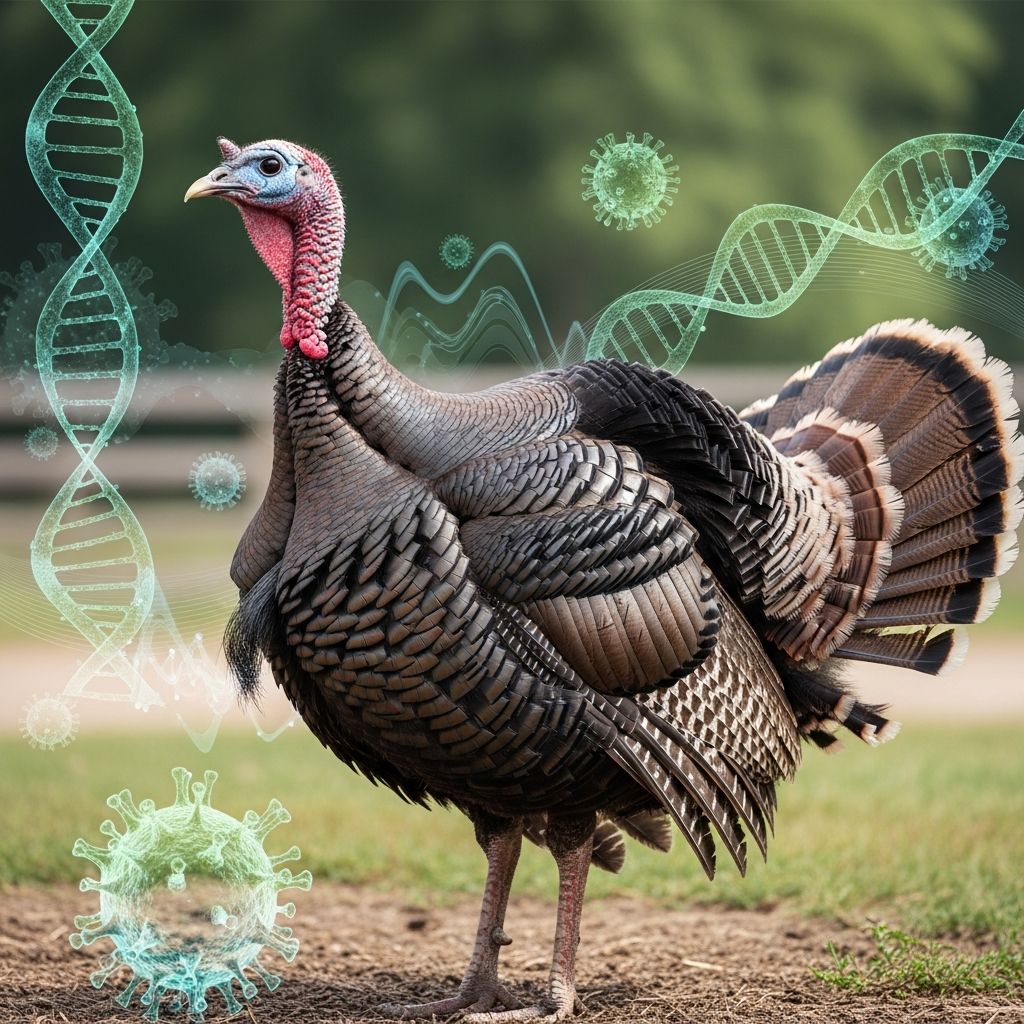
Turkey viral hepatitis (TVH) represents a significant challenge in modern poultry farming, particularly for operations focused on raising young poults. This infectious condition, driven by a resilient picornavirus, targets the liver and sometimes the pancreas, leading to subclinical infections that can escalate under stress into overt disease with notable mortality. Producers must grasp its dynamics to protect flock productivity and minimize losses.
The Pathogen Behind the Disease
At the core of TVH is Melegrivirus A, commonly referred to as turkey hepatitis virus, a member of the Picornaviridae family within the genus Megrivirus. This non-enveloped virus features a positive-sense, single-stranded RNA genome, granting it notable stability. It withstands moderate temperatures, chemical disinfectants like ether and phenol, and survives across a range of pH levels, though it succumbs to formalin and extreme acidity or alkalinity.
Such robustness enables the virus to persist in contaminated environments, complicating eradication efforts in turkey rearing facilities. Unlike enveloped viruses, its lack of a lipid coat makes it less vulnerable to common soaps and alcohols, demanding rigorous biosecurity.
Transmission Dynamics in Turkey Flocks
TVH spreads predominantly via the fecal-oral route, with the virus shedding generously in feces from infected birds. Direct contact between poults facilitates rapid dissemination within a flock, while indirect transmission occurs through contaminated litter, water, feed, equipment, or personnel movement. Vertical transmission from hens to eggs remains unproven experimentally, despite analogies with other picornaviruses.
Young poults under six weeks are most susceptible, experiencing morbidity up to 100% and mortality reaching 25% in severe outbreaks, though typical daily losses hover below 0.1%. Stressors like overcrowding, poor ventilation, temperature fluctuations, or co-infections amplify outbreak severity, transforming mild cases into flock-wide issues.
Recognizing Clinical Manifestations
TVH often manifests subclinically, evading obvious signs until triggered by external pressures. When symptomatic, affected turkeys display nonspecific indicators such as reduced appetite, general weakness, and lethargy. The hallmark is sudden mortality in seemingly healthy poults, underscoring the disease’s insidious nature.
In breeder flocks, potential repercussions include dips in egg production, fertility, and hatchability, though definitive links require further substantiation. Hepatic encephalopathy may arise from profound liver compromise, contributing to neurological signs and rapid decline.
Pathological Changes in Affected Organs
Post-mortem examinations reveal striking gross lesions primarily in the liver, which appears swollen with multiple grayish, depressed foci ranging from pinpoint to several millimeters. These necrotic zones can merge, obscured by congestion or hemorrhage in fatal cases. Pancreatic involvement occurs in about half of instances, presenting as circular, pale pink areas spanning lobes.
Microscopically, livers exhibit hepatocyte coagulative necrosis alongside infiltrates of lymphocytes and macrophages. Pancreata show acinar cell necrosis with similar inflammatory responses. Differentiating TVH from mimics like bacterial infections or other viruses hinges on these patterns.
| Condition | Liver Lesions | Pancreas Lesions | Other Features |
|---|---|---|---|
| TVH | Multiple gray foci, necrosis | Focal necrosis (50% cases) | Sudden deaths, young poults |
| Salmonella spp. | Fibrinous perihepatitis | Rare | Septicemia signs |
| Reovirus | Multifocal necrosis | Variable | Splenomegaly common |
| Histomonas | Enlarged, mottled | Uncommon | Blackhead nodules |
Diagnostic Approaches for Confirmation
Securing a TVH diagnosis demands a multifaceted strategy. Histopathology offers a presumptive call, with dual liver-pancreas lesions strongly indicative, yet overlaps with pathogens like Salmonella, Pasteurella multocida, adenoviruses, reoviruses, and Histomonas meleagridis necessitate advanced tests.
- Virus Isolation: Inoculate 5-7 day embryonated chicken eggs via yolk sac using liver, pancreas, spleen, kidney, gut contents, or feces. Expect high embryo mortality, stunting, hemorrhages, and hepatic lesions.
- RT-PCR: Detects viral RNA in tissues or excreta with high sensitivity and specificity, ideal for rapid field confirmation.
- Immunohistochemistry: Employs convalescent sera on fixed tissues, though commercial serology is absent.
Early sampling from fresh carcasses enhances yield, prioritizing multiple organs for comprehensive profiling.
Management and Prevention Strategies
No antiviral treatments exist for TVH, shifting focus to supportive and preventive tactics. Mitigating stress through optimal housing, nutrition, and biosecurity curbs subclinical progression to clinical disease. Key practices include:
- All-in-all-out production cycles to break contamination chains.
- Rigorous sanitation with formalin-based disinfectants.
- Avoiding mixing age groups to limit spread.
- Boosting immunity via balanced diets and minimizing concurrent infections.
Vaccination remains unavailable, underscoring reliance on hygiene and management. Monitoring breeder performance for subtle production declines aids early intervention.
Economic Implications for Turkey Producers
TVH erodes profitability via mortality, reduced growth, and breeder output losses. In high-density operations, even low mortality accumulates costs in culls, diagnostics, and downtime. Proactive health programs integrating TVH surveillance yield long-term gains, preserving market competitiveness.
Differentiating TVH from Emerging Reoviral Threats
Recent reports highlight reoviral hepatitis in poults, featuring hepatosplenomegaly, necrosis, and spiking mortality. Unlike TVH’s picornaviral etiology, these cluster phylogenetically with enteric and arthritic reoviruses, confirmed via electron microscopy, ISH, and isolation. Koch’s postulates validate their hepatotropic role, urging inclusion in differential panels.
Such distinctions refine diagnostics, as reoviral lesions mimic TVH but involve spleen prominently.
Future Directions in Research and Control
Ongoing studies probe TVH genomics for vaccine candidates and explore seroprevalence in wild birds as reservoirs. Enhanced molecular tools promise point-of-care testing, while breeder selection for resistance offers hope. Collaborative surveillance networks will track variants, informing global standards.
Frequently Asked Questions (FAQs)
What age groups are most at risk for TVH?
Poults under 6 weeks face highest risk, with morbidity nearing 100% in outbreaks.
Can TVH spread to other poultry species?
Primarily turkeys, though experimental chicken embryo susceptibility noted; field cases rare outside turkeys.
How do I disinfect premises post-outbreak?
Use formalin or high-pH agents; ensure thorough litter removal and downtime.
Is there a vaccine for turkey viral hepatitis?
No licensed vaccine exists; prevention relies on biosecurity.
What samples yield best diagnostic results?
Liver, pancreas, feces, and intestines provide optimal material for isolation or PCR.
Integrating these insights empowers producers to fortify flocks against TVH, sustaining viable turkey enterprises amid evolving challenges.
References
- Turkey viral hepatitis – Wikipedia — Wikipedia contributors. 2023-10-15. https://en.wikipedia.org/wiki/Turkey_viral_hepatitis
- Turkey Viral Hepatitis – Poultry – Merck Veterinary Manual — Merck & Co., Inc. 2023-07-01. https://www.merckvetmanual.com/poultry/turkey-viral-hepatitis/turkey-viral-hepatitis
- Reoviral Hepatitis in Young Turkey Poults—An Emerging Problem — National Center for Biotechnology Information (PMC). 2023-05-12. https://pmc.ncbi.nlm.nih.gov/articles/PMC12472222/
Similar Articles








Read full bio of medha deb


