
Tuberculosis In Pigs: Practical Diagnosis And Control
Comprehensive guide to understanding, diagnosing, and controlling tuberculosis in swine populations for better herd health.
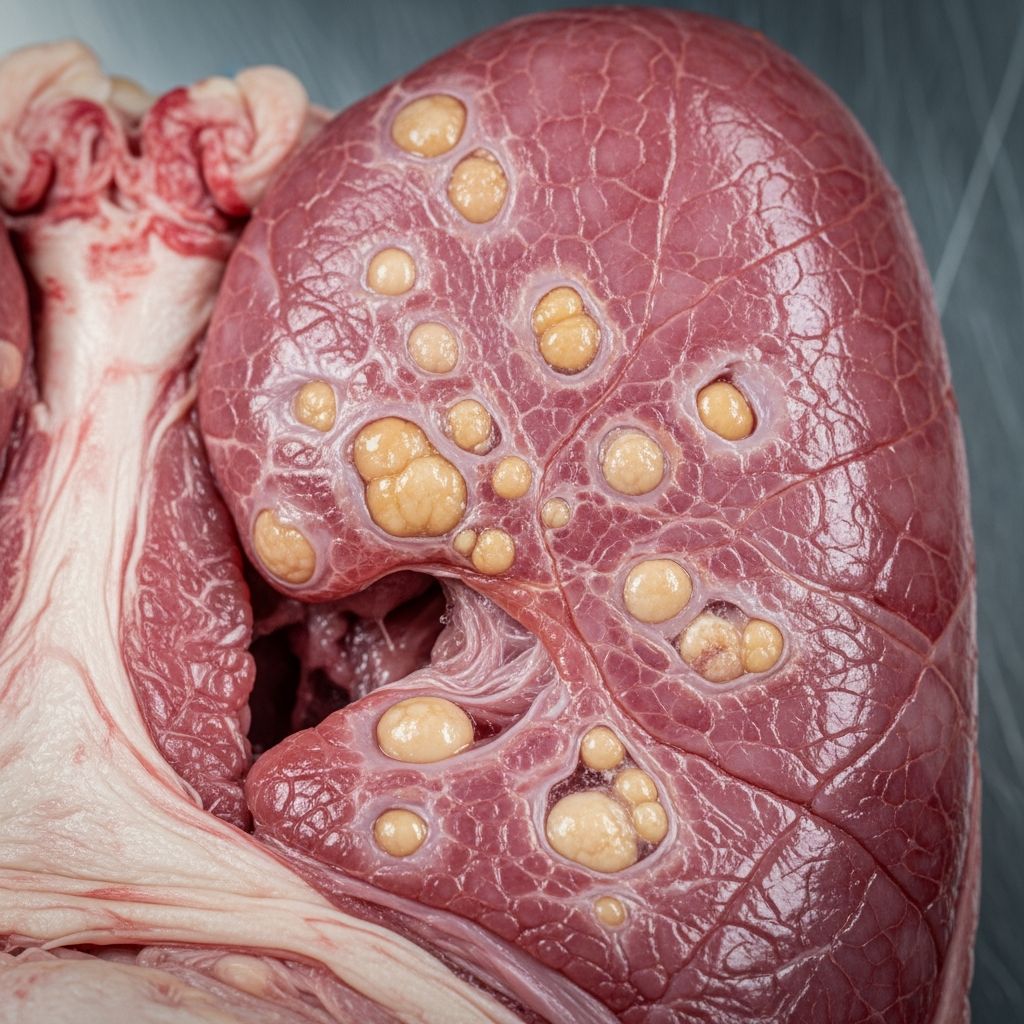
Tuberculosis (TB) in pigs represents a significant concern in veterinary practice, primarily caused by bacteria from the Mycobacterium genus. These pathogens lead to granulomatous lesions, particularly in lymph nodes, and pose challenges for diagnosis and control in commercial and backyard settings. While often subclinical, infections can impact productivity and public health through zoonotic potential.
Understanding the Pathogens Behind Porcine TB
The primary culprits are Mycobacterium bovis and Mycobacterium avium complex, with M. bovis being the most relevant due to its zoonotic risks. M. bovis transmits via inhalation or ingestion, establishing residence in lungs and lymph nodes. M. avium infections typically localize to head and mesenteric lymph nodes, rarely disseminating.
These acid-fast bacilli are resilient, surviving in environments contaminated by infected tissues or secretions. Pigs acquire infections from shared habitats with cattle, wildlife, or contaminated feed, underscoring the need for multi-species farm management.
Transmission Dynamics in Swine Populations
Infection spreads through respiratory aerosols, contaminated feed, water, or soil harboring mycobacteria. Pigs are particularly susceptible during co-mingling with bovines or exposure to wildlife reservoirs like badgers or deer. Ingestion of infected materials is common, leading to intestinal and nodal involvement.
- Aerosol transmission: Primary route in intensive housing, where coughing spreads droplets.
- Oral uptake: Via feed tainted by wildlife feces or slaughterhouse waste.
- Vertical spread: Rare, but possible in utero or via milk from infected sows.
Latent infections allow bacteria to persist without symptoms, reactivating under stress, complicating eradication efforts.
Clinical Presentation and Disease Progression
Most porcine TB cases are subclinical, detected only at slaughter. When symptomatic, pigs exhibit nonspecific signs like weight loss, lethargy, anorexia, fluctuating fever, and intermittent cough. Respiratory forms manifest as chronic cough, dyspnea, and auscultatory crackles from granulomatous pneumonia.
Generalized disease includes diarrhea, lymphadenopathy, and emaciation. M. avium often confines lesions to cervical and mesenteric nodes, while M. bovis causes more widespread granulomas in lungs, liver, and spleen.
| Form of TB | Common Sites | Key Signs |
|---|---|---|
| Respiratory | Lungs, thoracic nodes | Cough, dyspnea, fever |
| Intestinal | Mesenteric nodes, gut | Diarrhea, weight loss |
| Generalized | Multiple organs | Lethargy, lymphadenopathy |
Pathological Features at Necropsy
Post-mortem reveals miliary granulomas: caseous necrosis centers surrounded by macrophages, giant cells, and lymphocytes. Head lymph nodes (submaxillary, cervical) show enlargement with yellow-white foci; lungs display bronchopneumonia. Hepatic and splenic lesions indicate dissemination.
Microscopically, acid-fast bacilli confirm mycobacterial etiology via Ziehl-Neelsen stain. Differentiating TB from other granulomatous conditions (e.g., Rhodococcus, abscesses) requires culture or PCR.
Diagnostic Approaches for Live and Slaughtered Pigs
Antemortem diagnosis relies on tuberculin skin testing (TST). Inject 0.1 mL bovine or avian PPD intradermally (ear, neck, tail base); measure swelling at 48-72 hours. Positive reactors show >4mm increase, though cross-reactions occur with environmental mycobacteria.
Advanced tests include interferon-gamma assay, ELISA for antibodies, and PCR on tissues or blood. Slaughter surveillance is pivotal: inspect nodes for lesions, followed by histopathology and culture (4-8 weeks).
- Tuberculin Test: Gold standard; single intradermal comparative (SIC) enhances specificity.
- Molecular Methods: PCR detects DNA rapidly; culture confirms species.
- Histology: Granulomas suggestive, AFB staining supportive.
Challenges in Accurate Diagnosis
Clinical signs mimic other diseases (e.g., APP, paratuberculosis). TST sensitivity varies (70-90%), with false negatives in anergic animals or early infection. Post-slaughter, lesion visualization misses 20-30% cases without culture.
Herd-level diagnosis integrates slaughter findings, TST, and tracing exposures. ELISA outperforms TST for M. avium in some studies.
Control and Eradication Strategies
Test-and-slaughter remains cornerstone: depopulate reactors, quarantine herds. Biosecurity prevents entry: separate species, wildlife fencing, pasteurize waste.
Vaccination (BCG) shows promise experimentally but faces regulatory hurdles due to TST interference. Abattoir surveillance detects outbreaks early.
- Implement routine TST in endemic areas.
- Source verified stock from TB-free herds.
- Clean environments to reduce M. avium load.
Zoonotic Risks and Public Health Implications
M. bovis transmits to humans via unpasteurized milk or undercooked pork, rare but serious in immunocompromised individuals. Proper cooking and pasteurization mitigate risks; condemn infected carcasses.
Surveillance protects consumers; report positives to authorities for tracing.
Prevalence Trends and Epidemiological Insights
Global prevalence varies: low in accredited-free regions (e.g., UK, US), higher in developing areas (0.7-1% slaughter lesions). Multi-host cycles sustain reservoirs; RFLP genotyping links strains across species.
Future Directions in Porcine TB Management
Emerging diagnostics (rapid PCR, biosensors) and vaccines (M. bovis BCG, recombinant) offer hope. Integrated One Health approaches address wildlife interfaces.
Frequently Asked Questions (FAQs)
What are the first signs of TB in pigs?
Subtle: weight loss, cough; often none until slaughter.
Can pigs recover from TB?
Treatment unethical due to zoonosis; cull policy standard.
How to test a pig herd for TB?
Use intradermal tuberculin at ear or neck; retest reactors.
Is pig TB contagious to humans?
Yes, via M. bovis; cook meat thoroughly.
What prevents TB in swine farms?
Biosecurity, testing, species separation.
References
- Mammalian tuberculosis — World Organisation for Animal Health. 2023. https://www.woah.org/en/disease/mammalian-tuberculosis/
- Overview of Tuberculosis in Animals — Merck Veterinary Manual. 2023. https://www.merckvetmanual.com/generalized-conditions/overview-of-tuberculosis-in-animals/overview-of-tuberculosis-in-animals
- TB in Pigs — TB Hub UK. 2023. https://tbhub.co.uk/tb-in-non-bovine-animals/pigs/
- Tuberculosis in Swine: Prevalence and Basic Diagnostic Approach — ProMedsci. 2020. https://www.promedsci.org/articles/Tuberculosis%20in%20Swine%20%20Prevalence%20and%20Basic%20Diagnostic%20Approach
- NVAP Reference Guide: Tuberculosis — USDA APHIS. 2023. https://www.aphis.usda.gov/nvap/reference-guide/control-eradication/tuberculosis
- Epidemiology and microscopic diagnosis of tuberculosis in pigs — PMC (NCBI). 2021-12-01. https://pmc.ncbi.nlm.nih.gov/articles/PMC8678950/
Similar Articles








Read full bio of medha deb


