
Tuberculosis In Elephants: A Comprehensive Guide For Zoos
Exploring the diagnosis, treatment challenges, and zoonotic risks of Mycobacterium tuberculosis in captive elephants.
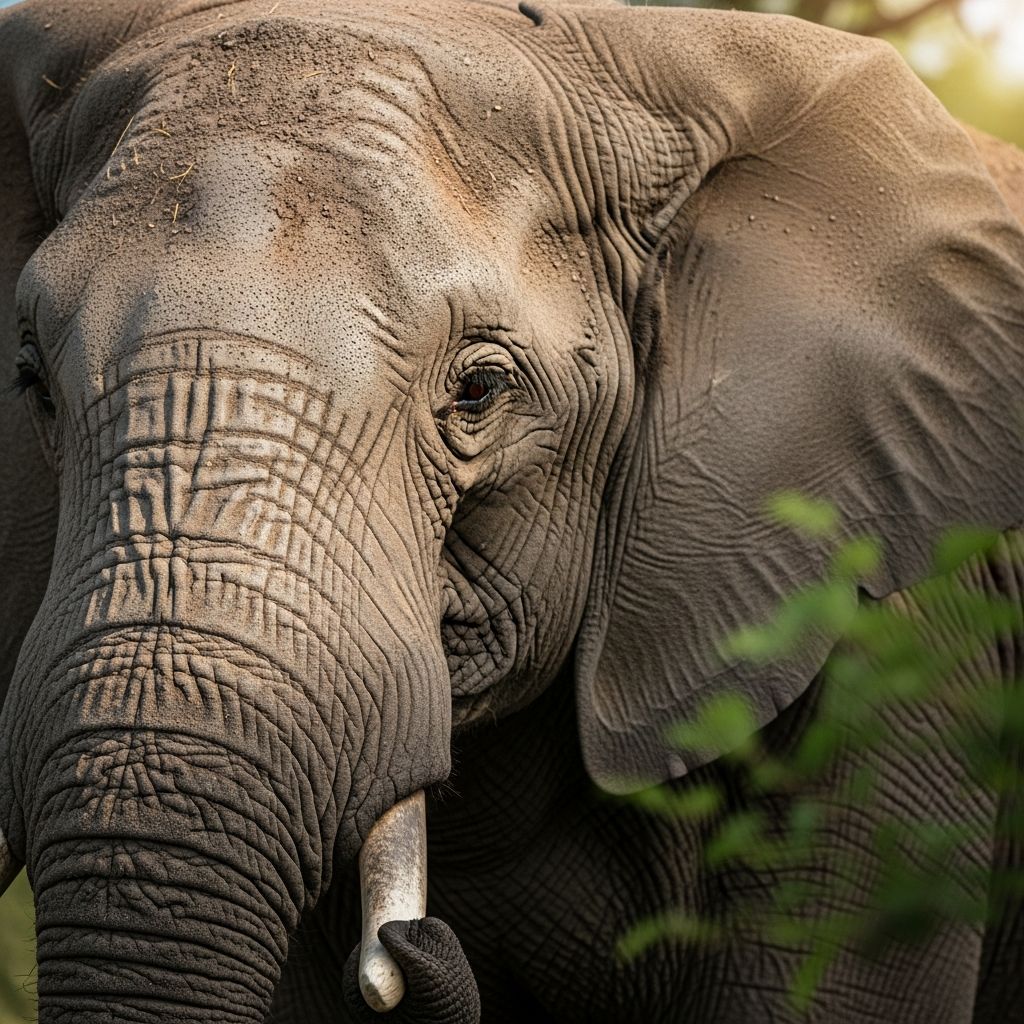
Tuberculosis (TB) caused by Mycobacterium tuberculosis poses a significant health threat to elephants, particularly in captive settings like zoos and sanctuaries. Primarily a human pathogen, this bacterium has crossed species barriers, infecting Asian elephants most commonly and occasionally African elephants with M. bovis. The disease’s insidious nature, often asymptomatic until advanced stages, complicates management, while its zoonotic potential endangers caretakers and visitors.
The Pathogen and Its Spread to Elephants
Mycobacterium tuberculosis thrives in the lungs, forming granulomas that can caseate and liquefy, leading to disseminated disease. Elephants likely acquire it through aerosolized droplets from infected humans, given the pathogen’s human origin. Close contact with handlers, some testing positive for latent TB, underscores this transmission route. Strains like the Beijing variant, prevalent in Southeast Asia, have been genotyped in infected elephants.
In captive environments, poor ventilation and high animal density amplify risks. Wild populations face emerging threats, potentially from human encroachment, endangering already vulnerable species.
Clinical Manifestations and Disease Progression
Early TB in elephants is subclinical, with no overt signs, delaying detection. Advanced cases reveal weight loss, emaciation, lethargy, reduced appetite, and respiratory distress like dyspnea. Lesions appear in lungs, lymph nodes, uterus, and abdomen, often mineralized with acid-fast bacilli (AFB).
- Subclinical phase: No visible symptoms; shedding may occur.
- Progressive phase: Weight loss, weakness, and organ involvement.
- Terminal phase: Severe debilitation, pneumonia, and death if untreated.
Postmortem findings confirm multifocal granulomatous pneumonia and lymphadenitis, highlighting the need for proactive screening.
Diagnostic Approaches: From Traditional to Innovative
Diagnosis relies on detecting the pathogen or immune responses, as clinical signs are unreliable. The gold standard is trunk wash culture, involving saline lavage to collect respiratory secretions for Ziehl-Neelsen staining, microscopy, PCR, and culture. However, sensitivity is low (due to intermittent shedding), risks operator exposure, and allows contamination.
Emerging bronchoalveolar lavage (BAL) under sedation uses endoscopy to access bronchi, yielding higher-quality samples with less contamination. A 3.5m endoscope guides saline injection and aspiration for mycobacterial testing.
Serologic tests like MAPIA (Multiple Antigen Print ImmunoAssay) and ElephantTB STAT-PAK detect antibodies to antigens such as ESAT-6 and CFP10. These identify infection years before culture positivity and monitor treatment by tracking antibody decline.
| Method | Advantages | Limitations |
|---|---|---|
| Trunk Wash Culture | Gold standard; species identification | Low sensitivity; contamination risk; operator hazard |
| BAL | Higher yield; direct visualization | Requires sedation; invasive |
| Serology (MAPIA/STAT-PAK) | Early detection; treatment monitoring | May not distinguish active from latent |
Treatment Protocols: Multidrug Strategies
Treatment mirrors human regimens but adapts to elephant physiology, using isoniazid (INH), rifampin (RIF), and pyrazinamide (PZA). Administration varies: oral via food, rectal suppositories, or less frequent dosing to improve tolerance. Courses last 12-18 months, guided by cultures, drug levels, and susceptibility testing.
Challenges include poor appetite, vomiting, depression, photosensitivity, and weight loss during therapy. Multidrug-resistant (MDR) cases historically prompted euthanasia due to public health risks, though susceptible strains respond well.
Case studies illustrate outcomes:
- One elephant treated intermittently relapsed, dying with disseminated lesions.
- Another achieved culture negativity but was euthanized for MDR concerns.
- Successful cases show sustained negativity post-therapy.
Zoonotic Risks and Public Health Implications
TB transmission from elephants to humans is documented, with shared strains between infected animals and handlers. Zoo outbreaks involved multiple elephants and staff exposure, prompting isolation and treatment.
Prevention emphasizes human screening (e.g., QuantiFERON tests for latent TB), ventilation improvements, and hygiene. Infected elephants are isolated until non-shedding, confirmed by serial testing.
Management in Captive Herds
Facilities implement routine surveillance: annual trunk washes, serology, and handler TB testing. Infected animals receive monitored treatment, often visible to public with adaptations like sunscreen for photosensitivity.
Guidelines from NASPHV recommend 12-month protocols, starting therapy immediately to halt shedding. Ventilation and sanitation reduce aerosols.
Research Frontiers and Future Directions
Ongoing studies explore immune responses, revealing antibody patterns for better diagnostics. Tools like STAT-PAK enable rapid field testing.
Wild elephant TB surveillance is critical, as the disease threatens conservation.
FAQs on Elephant Tuberculosis
What causes TB in elephants?
Primarily M. tuberculosis from humans via respiratory droplets.
How is TB diagnosed in elephants?
Trunk washes, BAL, and serologic assays like STAT-PAK.
Can elephants be cured of TB?
Yes, with 12-18 month multidrug therapy if susceptible.
Is elephant TB contagious to humans?
Yes, zoonotic transmission occurs, especially to close contacts.
What happens to infected zoo elephants?
They are treated and isolated, not routinely euthanized.
Prevention Best Practices
- Screen staff annually for latent TB.
- Perform routine elephant testing.
- Optimize facility ventilation.
- Initiate treatment promptly upon detection.
- Monitor treatment with serial cultures and serology.
References
- Tuberculosis in Elephants: Antibody Responses to Defined Antigens — Clinical and Vaccine Immunology (ASM Journals). 2006-08-01. https://journals.asm.org/doi/10.1128/CVI.00133-06
- Elephants and Tuberculosis — Southern Thailand Elephant Foundation. Accessed 2026. https://southernthailandelephants.org/elephants-and-tuberculosis/
- Transmission of Mycobacterium tuberculosis from an Asian elephant — PMC (NCBI). 2022-05-18. https://pmc.ncbi.nlm.nih.gov/articles/PMC9151603/
- Tuberculosis in Elephants — MSD Veterinary Manual. 2025. https://www.msdvetmanual.com/generalized-conditions/tuberculosis-in-various-animals/tuberculosis-in-elephants
- FAQ: Tuberculosis in Elephants — City of Albuquerque. Accessed 2026. https://www.cabq.gov/artsculture/biopark/news/faq-tuberculosis-in-elephants
- Team Studies Immune Response of Asian Elephants Infected with TB — University of Illinois College of Veterinary Medicine. 2014-07-16. https://vetmed.illinois.edu/2014/07/16/team-studies-immune-response-asian-elephants-tuberculosis/
- Diagnosis of Tuberculosis in Three Zoo Elephants — CDC MMWR. 2015-12-29. https://www.cdc.gov/mmwr/preview/mmwrhtml/mm6452a2.htm
- Guidelines for the Control of Tuberculosis in Elephants — NASPHV. Accessed 2026. http://www.nasphv.org/Documents/ElephantTB_NASPHV.pdf
Similar Articles








Read full bio of Sneha Tete


