Tube Feeding in Cats: Complete Guide
Learn about tube feeding options for cats, including nasogastric, esophagostomy, and gastrostomy tubes.
Understanding Tube Feeding in Cats
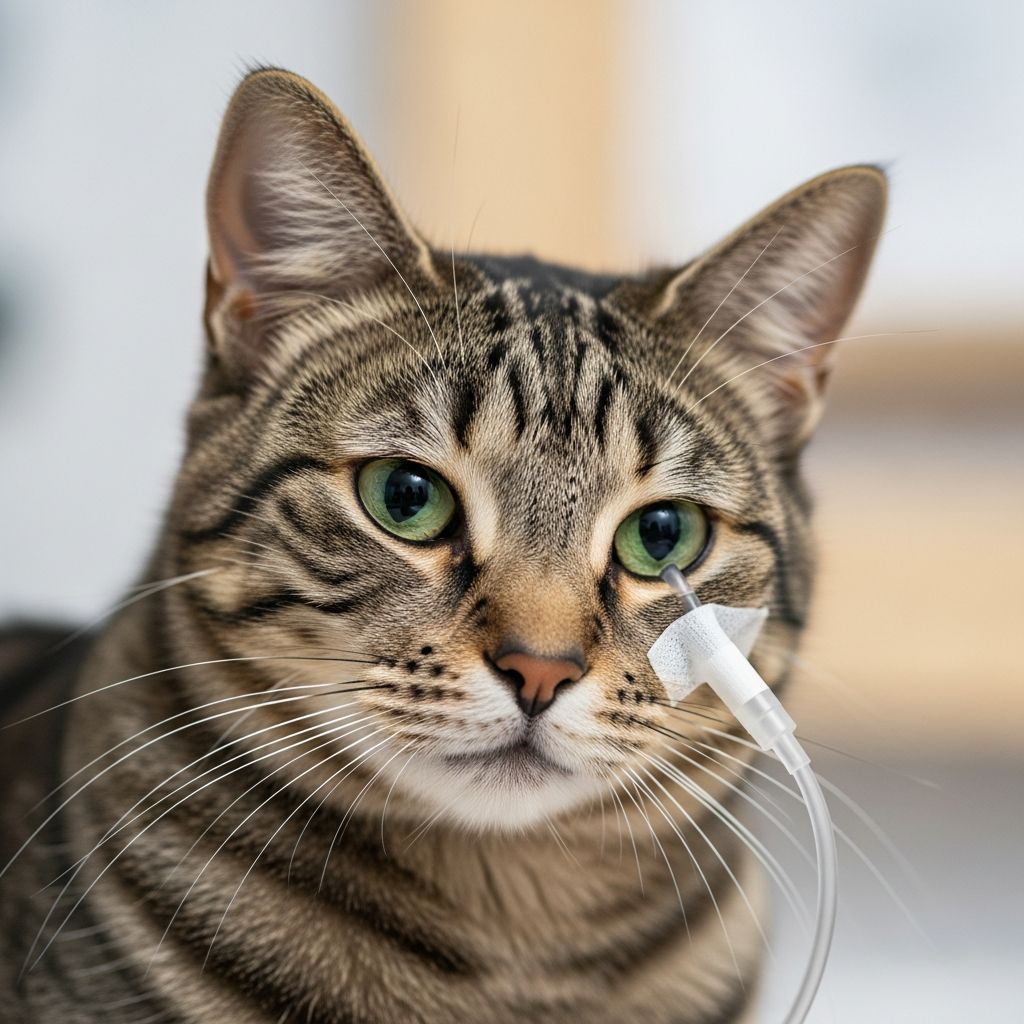
When a cat fails to respond to conservative medical treatment or blood testing indicates liver compromise or other metabolic abnormalities, your veterinarian may recommend placing a feeding tube. Tube feeding is a medical intervention designed to ensure that cats receive adequate nutrition when they are unable or unwilling to eat on their own. This can occur due to various health conditions, injuries, or surgical procedures. The most common types of feeding tubes used in feline patients are the nasogastric tube (sometimes called a nasoesophageal tube), the esophagostomy tube, and the gastrostomy tube. The specific type recommended will depend on your cat’s individual circumstances, the expected duration of tube feeding, and the underlying medical condition being treated.
Types of Feeding Tubes for Cats
Nasogastric and Nasoesophageal Tubes
A nasogastric tube is a narrow, flexible tube that is passed through the nasal cavity, into the back of the throat, and down into the esophagus until it reaches approximately the level of the ninth rib. These tubes represent the most common form of tube feeding in cats because they are the simplest to insert and can usually be placed with minimal sedation. The insertion procedure begins with the application of a local anesthetic to the sensitive lining of the nostrils. The tube is then carefully guided into the nostril and positioned appropriately. Once in place, the tube is secured to your cat’s head using stitches or surgical glue.
A protective collar is generally necessary to prevent your cat from interfering with the tube during the healing process. Because of the small diameter of the nasogastric feeding tube, only liquefied food, water, and certain medications can be administered through it. This limitation means the tube is prone to becoming clogged if not properly maintained. Nasogastric tubes are specifically used for short-term feeding situations, particularly when the cat is vomiting, when there is severe facial trauma, when the esophagus is not functioning normally, or when the cat is unconscious. These tubes can generally remain in place for up to five days.
Esophagostomy Tubes
Esophagostomy tubes are slightly larger in diameter than nasogastric tubes and enter the esophagus through a small incision made in the neck. To place this type of feeding tube, your cat must be sedated or anesthetized. The esophagostomy tube offers several significant advantages compared to nasogastric tubes. The larger diameter of the feeding tube allows thicker food to be fed, resulting in fewer clogs and other potential complications. Additionally, feeding by esophagostomy tube takes considerably less time than nasoesophageal tube feeding, making it more convenient for pet owners. The incision site heals rapidly after a few days without requiring stitches, and a simple dressing covers the wound during the initial healing phase. Esophagostomy tubes must remain in place for at least 10 to 14 days before removal, which may require a small procedure under anesthesia depending on the tube type that was placed.
Gastrostomy Tubes
Gastrostomy tubes are placed directly into the stomach through a small incision in the abdominal wall. These tubes accommodate thicker food preparations and offer extended placement duration compared to other tube types. Your cat will need to wear an abdominal wrap or protective stockinette, onesie, or T-shirt while the tube remains in place. It takes less time to feed a cat through a gastrostomy tube compared to nasogastric tubes. The risk of food leaking out of or around a gastrostomy tube into the abdomen is rare once the stomach seals to the body wall around the tube. This seal typically forms within one to two weeks of tube placement. Gastrostomy tubes may be left in place for several weeks to months, making them ideal for cats requiring longer-term nutritional support.
Is Feeding a Cat Through a Feeding Tube Difficult?
Feeding a cat through a feeding tube is easier and less complicated than many pet owners initially expect. Most people quickly learn how to prepare food and connect the syringe to the feeding tube without difficulty. Caring for the tube placement site is also straightforward and manageable. Before each feeding, it is important to confirm that the last meal has moved out of the stomach. You accomplish this by attaching an empty syringe and gently drawing back the plunger in a process called aspirating. If food remains in the stomach, you will see evidence in the syringe. Your veterinarian will advise you about what to do in this situation based on your cat’s specific condition and needs.
The feeding process itself should proceed slowly and carefully. Food should pass slowly into the tube at a rate no faster than 1 milliliter every 10 seconds to avoid causing discomfort to your cat. After completing the feeding, always flush the tube with 3 to 5 milliliters of clean water at body temperature and replace the cap or plug securely. This flushing step is essential to prevent tube blockage and ensure medications enter the stomach rather than remaining in the tube.
Selecting Appropriate Food for Tube Feeding
Your veterinarian will prescribe a personalized feeding plan specifically designed for your cat’s needs. Most commonly, you will use commercially available canned or powdered food, or a regular canned cat food that has been liquefied in a blender. A diet will be recommended by your veterinarian but must be liquefied with water before it can pass through the tube, particularly for nasogastric tubes with their small diameter.
The amount of food that needs to be fed and the frequency of meals will vary significantly, depending on several factors including the size of your cat, the food’s calorie content, whether your cat needs to gain or lose weight, and the disease or problems being treated. For esophagostomy or gastrostomy tube feeding, approximately 50 milliliters of water or a liquid diet will dilute a smaller can of food (5 to 6 ounces) to the appropriate consistency. Food should always be warmed to body temperature before feeding, which can be accomplished by placing the filled syringes of food into a jug of warm water. This warming step helps ensure your cat’s comfort during the feeding process.
Administering Medications Through the Feeding Tube
A great advantage of feeding tubes is the ability to give medications without having to place tablets or liquids directly into your cat’s mouth. Liquid medications can simply be instilled into the tube and flushed through with clean water at body temperature. When administering medications, always flush well with water after giving the medication to ensure it enters the stomach rather than remaining in the tube. Medications should be instilled and flushed slowly, remembering the 1 milliliter per 10 seconds rule to maintain your cat’s comfort and ensure proper medication delivery.
Potential Complications of Tube Feeding
There are relatively few complications associated with tube feeding once the cat is stable and the proper care routine is established. The most common complications include infection at the site of tube insertion into the skin, inadvertent removal of the tube by the cat or owner, and clogging of the tube. Understanding these potential issues allows you to take preventive measures and recognize problems early.
| Complication | Description | Prevention/Management |
|---|---|---|
| Infection at insertion site | Bacterial infection developing at the point where the tube enters the skin | Keep the site clean and dry, monitor for signs of redness or discharge, follow veterinarian’s dressing instructions |
| Tube dislodgement | The tube becomes accidentally removed by the cat or during handling | Use protective collar or wrap, secure tube properly, handle gently during feeding |
| Tube clogging | Food or medication residue blocks the tube, preventing feeding | Always flush with water before and after feeding, use appropriate food consistency, crush medications finely |
| Food leakage (gastrostomy tubes) | Food leaks around or out of the tube into the abdomen | Rare after stomach seals to body wall (1-2 weeks); follow veterinarian’s care instructions |
Your veterinarian will instruct you on how to resolve any complications or problems that arise. Most issues can be managed at home with proper technique and preventive care.
When Tube Feeding Is Not Possible
In rare circumstances, such as cats with uncontrollable vomiting or cats that are unconscious and unable to protect their airway, tube feeding may not be possible. In these challenging cases, it may be necessary to consider intravenous feeding as an alternative. However, intravenous feeding of cats is complicated, difficult, and costly, so it is only recommended when no other feeding methods are available. Your veterinarian will work with you to determine the best nutritional support option for your cat’s specific situation.
Transitioning from Tube Feeding to Oral Feeding
If tube feeding is well tolerated after four to five days, you should begin to offer small amounts of food prior to each tube feeding in order to monitor for the return of appetite. As oral feeding increases, the volume or frequency of tube feeding can be decreased accordingly. It is helpful to keep track of your cat’s weight at least every week while you are transitioning from tube feedings to feedings by mouth. When your cat is meeting the full minimum daily energy requirement orally, you should consult your veterinarian about tube removal.
Frequently Asked Questions
Q: How long can a nasogastric tube stay in place?
A: Nasogastric tubes can generally be left in place for up to five days. They are designed for short-term feeding situations.
Q: Which tube type is best for long-term feeding?
A: Gastrostomy tubes are best for long-term feeding, as they may be left in place for several weeks to months. Esophagostomy tubes can remain in place for longer periods than nasogastric tubes but typically shorter than gastrostomy tubes.
Q: Does my cat need to be anesthetized for tube placement?
A: Nasogastric tubes can usually be placed with minimal sedation, while esophagostomy and gastrostomy tubes require sedation or general anesthesia.
Q: What should I do if the feeding tube becomes clogged?
A: Always flush the tube with water before and after feeding to prevent clogging. Use food of the appropriate consistency, ensure medications are finely crushed, and follow your veterinarian’s maintenance instructions.
Q: Can I give my cat’s medications through the feeding tube?
A: Yes, liquid medications can be administered through the feeding tube and flushed through with clean water. Always flush slowly at the rate of 1 milliliter per 10 seconds.
Q: What type of food should I use in the feeding tube?
A: Use commercially available canned or powdered food prescribed by your veterinarian, or regular canned cat food liquefied in a blender. Food must be warmed to body temperature before feeding.
Q: How will I know if my cat is ready to transition back to normal eating?
A: Monitor your cat’s appetite by offering small amounts of food prior to tube feedings. Track your cat’s weight weekly. When your cat is meeting their full daily energy requirement orally, consult your veterinarian about tube removal.
References
- Tube Feeding in Cats — VCA Animal Hospitals. 2024. https://vcahospitals.com/know-your-pet/tube-feeding-in-cats
- Managing the cat with a feeding tube — International Cat Care. 2024. https://icatcare.org/resources/cat-carer-guide-managing-the-cat-with-a-feeding-tube.pdf
- Nasoesophageal & Nasogastric Tube Placement: Guide for Vets — Clinician’s Brief. 2024. https://www.cliniciansbrief.com/article/nasoesophageal-nasogastric-tube-placement
- Esophagostomy Tube Information and Care — University of Missouri Veterinary Health Center. 2024. https://vhc.missouri.edu/small-animal-hospital/small-animal-internal-medicine/diseases-and-treatments/esophagostomy-tube-information-and-care/
- Placement, Care and Use of Nasoesophageal Tubes — DVM 360. 2024. https://www.dvm360.com/view/placement-care-and-use-nasoesophageal-tubes-proceedings
- Step-by-Step Guide to Making an Enteral Nutrition Plan — Today’s Veterinary Practice. 2024. https://todaysveterinarypractice.com/nutrition/step-by-step-guide-to-making-an-enteral-nutrition-plan/
Similar Articles







Read full bio of medha deb