
Tsetse Flies: African Disease Vectors and Biology
Understanding the biology, transmission mechanisms, and impact of African tsetse flies on human and animal health
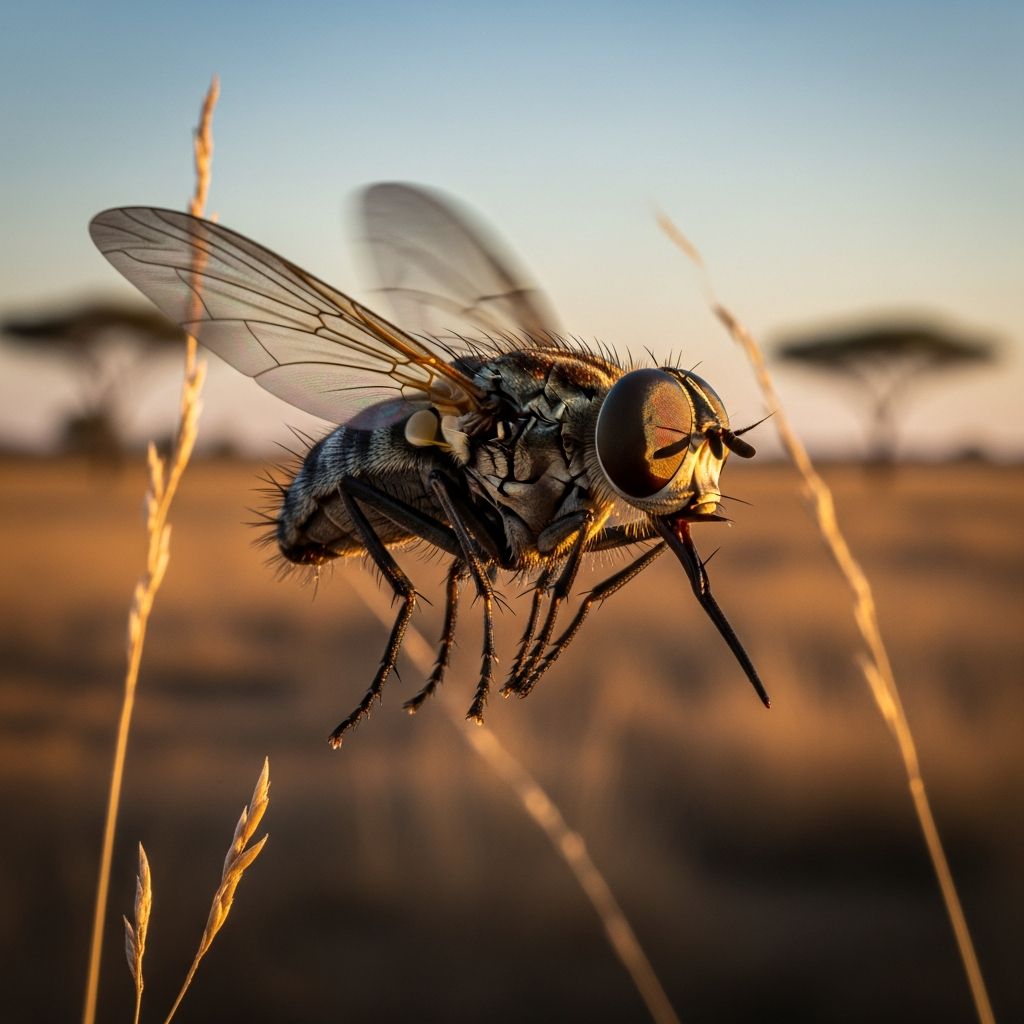
The tsetse fly, scientifically classified within the genus Glossina, represents one of Africa’s most medically and economically significant insect species. These blood-feeding insects are exclusive vectors of African trypanosomiasis, a parasitic disease that affects millions of humans and animals across sub-Saharan Africa. Understanding the biology, behavior, and transmission mechanisms of tsetse flies is essential for developing effective control strategies and disease prevention measures.
Physical Characteristics and Taxonomic Classification
Tsetse flies belong to the family Glossinidae and are characterized by their robust, relatively hairless bodies that typically measure between 6 to 16 millimeters in length. These insects possess a somewhat drab appearance compared to other fly species, yet their morphological features are highly specialized for their obligate blood-feeding lifestyle. The insects display the standard dipteran anatomy, featuring three body segments: the head, thorax, and abdomen.
One of the most distinctive features of tsetse flies is their proboscis, which is specifically adapted for piercing skin and accessing blood vessels. This feeding apparatus is flanked by maxillary palps and contains specialized structures including labellar teeth that enable the fly to penetrate the skin and create small pools of blood beneath the surface. The salivary glands, which extend from the abdomen through the thorax and into the head, open directly into the hypopharynx, allowing for the injection of saliva containing anticoagulants during feeding.
The abdominal surface of tsetse flies possesses remarkable elasticity, permitting substantial expansion to accommodate large blood meals. This anatomical adaptation directly supports their survival strategy, as each blood meal must sustain the fly and potentially support larval development in females.
Remarkable Reproductive Biology and Life Cycle
Tsetse flies possess one of the most unusual reproductive strategies among insects. Rather than laying eggs that undergo external development, female tsetse flies practice adenotrophic viviparity—a form of internal reproduction in which larvae develop completely within the female’s uterus. This reproductive adaptation fundamentally distinguishes tsetse flies from most other insects and contributes significantly to their vectorial capacity and disease transmission potential.
During larval development, which typically spans 7 to 12 days depending on environmental temperature, the developing offspring receives nourishment from specialized milk glands located on the uterine wall. This lactation-like process provides the larva with essential nutrients in a concentrated form, enabling rapid development without the need for external feeding. When the larva reaches maturity and is ready to pupate, it exits the mother’s body and immediately burrows into the soil, where it constructs a protective pupal case within one to five hours.
Adult emergence occurs several weeks after pupation, with the timing influenced by soil temperature and moisture conditions. Once emerged, males and females begin seeking hosts for blood meals. Female flies demonstrate receptivity to mating within three days of emergence, and virtually all females become inseminated by 6 to 8 days of age. Importantly, females mate only once during their lifetime, yet retain the capacity to produce viable larvae repeatedly throughout their reproductive years.
Under optimal feeding conditions, female tsetse flies produce approximately one fully developed larva every 9 to 10 days. This remarkable fecundity is contingent upon the female obtaining sufficient blood meals. When nutrition becomes scarce, females produce smaller, underdeveloped larvae that are not viable and cannot complete development. This nutritional sensitivity creates a direct link between host availability and tsetse population dynamics.
The longevity of tsetse flies differs dramatically between sexes. Male flies typically survive only 2 to 3 weeks under laboratory conditions, while females demonstrate significantly greater longevity, living 1 to 4 months. This extended female lifespan amplifies their epidemiological significance as disease vectors, as individual females may transmit parasites for extended periods.
Feeding Behavior and Host Preferences
Tsetse flies display strict obligate hematophagy, meaning both males and females feed exclusively on blood throughout their entire lives. Unlike many blood-feeding arthropods in which only females require blood, both sexes of tsetse flies depend entirely on vertebrate blood for survival and reproduction. This universal blood-feeding requirement makes every tsetse fly a potential disease vector.
The sensory mechanisms that guide tsetse flies to their hosts are multifaceted. These insects utilize visual attraction to moving objects as a primary host-seeking strategy, making them particularly active during daylight hours when visibility is optimal. Temperature significantly influences their activity patterns; tsetse flies remain active only within a relatively narrow thermal range of 18 to 32 degrees Celsius, with peak activity occurring during warmer periods.
Beyond visual cues, tsetse flies possess a highly developed olfactory system that detects carbon dioxide produced by animal respiration. This chemosensory capability enables flies to locate potential hosts at considerable distances and navigate toward concentrated breath plumes.
Host Preference Hierarchy
While tsetse flies are opportunistic feeders capable of obtaining blood meals from diverse vertebrate species, clear host preferences emerge among populations:
- Suids (wild pigs and domestic swine) represent the preferred hosts for many tsetse populations
- Bovids (cattle and other hoofed mammals) constitute significant secondary hosts
- Human blood serves as an alternative host source, contributing to disease transmission to people
- Blood from monitor lizards, hippopotami, and other mammals has been documented in wild-caught tsetse specimens
- Female flies must obtain larger and more frequent blood meals to sustain developing larvae during pregnancy
The nutritional content and volume of blood consumed directly influences larval development and viability. Females feeding on nutrient-rich blood sources produce larger, more viable larvae, while inadequate feeding results in developmental stunting and larval mortality.
Parasite Transmission and Trypanosomial Cycle
The transmission of trypanosomial parasites from host to host through tsetse flies involves a complex and precisely orchestrated biological cycle. When an infected tsetse fly takes a blood meal from a mammalian host, it injects metacyclic trypomastigotes—the infective stage of the parasite—directly into the skin tissue through its proboscis. This injection simultaneously delivers saliva containing anticoagulants that facilitate blood pooling and consumption.
Once injected into the host, trypomastigotes rapidly infiltrate the lymphatic system and subsequently gain access to the bloodstream. Within the host circulation, the parasites transform into bloodstream trypomastigotes, which undergo division through binary fission and disseminate throughout the body, invading various tissues and body compartments. This systemic parasitemia can persist for extended periods, allowing subsequent blood meals by uninfected tsetse flies to acquire parasites.
The developmental cycle within the fly vector spans approximately three weeks from initial parasite ingestion to the emergence of infective metacyclic trypomastigotes in the salivary glands. This lengthy intrinsic cycle creates an important epidemiological consideration: individual flies require an extended period between infection acquisition and becoming capable of transmitting parasites to new hosts.
Developmental Transformation Within the Vector
The transformation of trypanosomes within the tsetse fly midgut occurs through several morphologically and biochemically distinct stages:
- Bloodstream trypomastigotes are ingested during the initial blood meal
- Parasites transform into procyclic trypomastigotes within the midgut environment
- Procyclic forms undergo multiplication through binary fission in the midgut
- Parasites migrate from the midgut via the proventriculus and foregut
- Further transformation into epimastigotes occurs during migration
- Epimastigotes colonize the fly’s salivary glands
- Final transformation into infective metacyclic trypomastigotes completes the cycle
Notably, tsetse flies possess a robust innate immune system that eliminates the majority of ingested trypanosomes within the midgut. Only parasites capable of successfully navigating this immunological barrier and completing the developmental transformations become established infections capable of producing infective stages. This natural resistance mechanism explains why infection rates in wild tsetse populations remain relatively modest despite frequent parasite exposure.
Population Genetics and Vector Competence
The genetic architecture of tsetse flies reveals adaptations specifically supporting their unique reproductive and vector roles. All tsetse species examined to date possess two pairs of metacentric autosomes and a sex bivalent configuration (2N = 4 + XY), indicating relatively simple karyotypes compared to many other insects. Certain subspecies harbor supernumerary chromosomes that vary in number from zero to eight, representing structural genetic variation whose functional significance remains incompletely understood.
Genetic variation among tsetse populations influences their capacity to transmit parasites, host preferences, and ecological distribution. Different subspecies and geographic populations exhibit varying vectorial competence—their biological capacity to support parasite development and transmission. Understanding this genetic variation is essential for predicting disease transmission risk in different geographic regions and designing targeted control interventions.
Female tsetse flies produce species-specific pheromones in the waxy cuticle of their wings, facilitating male attraction and mate recognition. This chemical communication system ensures that mating occurs primarily between members of the same species and local populations, maintaining reproductive isolation between subspecies despite overlapping geographic ranges in some regions.
Environmental and Temporal Activity Patterns
Tsetse fly activity demonstrates strict diurnal behavior, with peak host-seeking activity occurring during daylight hours when visual-based host detection proves most effective. Temperature profoundly regulates their activity, with insects remaining relatively quiescent outside the 18 to 32-degree Celsius thermal range. This thermal dependency has important ecological implications, as climate variation and seasonal temperature cycles influence disease transmission risk.
The habitat preferences of different tsetse species and subspecies contribute to their geographic distribution across Africa. Some species favor riverine and forested habitats, while others prefer savanna and bushy environments. These ecological niches influence which human and animal populations face greatest exposure risk and which control strategies prove most feasible.
Disease Transmission to Humans and Animals
African trypanosomiasis, commonly referred to as sleeping sickness in humans and nagana in animals, represents the primary disease transmitted by tsetse flies. Human infection occurs through parasite transmission during tsetse feeding, with transmission risk directly proportional to the frequency of human-fly contact and the prevalence of infected flies in affected areas. Rural populations engaged in agricultural activities and animal husbandry face elevated exposure risk.
Rare instances of vertical transmission—the passage of infection from mother to offspring—have been documented, particularly with *Trypanosoma gambiense* infections transmitted during pregnancy. However, this transmission route represents an exceptional occurrence and does not constitute a significant contributor to disease epidemiology.
The economic impact of trypanosomiasis on African livestock extends far beyond direct mortality from the disease. The presence of tsetse flies and associated trypanosomiasis restricts cattle production across millions of square kilometers of potentially productive rangeland. This exclusion of livestock production from tsetse-infested areas significantly constrains agricultural development and food security in affected regions.
Frequently Asked Questions
How long does it take for a tsetse fly to transmit parasites after infection?
Approximately three weeks are required for complete parasite development and transformation within the tsetse fly. During this period, parasites undergo multiple morphological transformations within the midgut and salivary glands before becoming infective to new hosts.
Can tsetse fly larvae survive outside the mother’s body?
No. Tsetse larvae develop entirely within the mother’s uterus and are nourished through specialized milk glands. Larvae are deposited as mature forms ready to pupate and do not feed independently until after emergence as adults.
What percentage of tsetse flies carry trypanosomes?
Infection rates in wild tsetse populations typically remain modest, often below 5 percent, despite frequent exposure to infected hosts. This relatively low infection prevalence reflects the robust innate immune responses of tsetse flies that eliminate most ingested parasites.
Do both male and female tsetse flies transmit parasites?
Yes. Both sexes feed exclusively on blood and can acquire and transmit parasites. However, females may represent more efficient vectors due to their longer lifespan and greater host contact frequency.
How can tsetse fly populations be controlled?
Multiple control strategies exist, including insecticide-treated cattle, aerial spraying, trap systems, and recently, sterile insect technique programs. Integrated approaches combining multiple methods prove most effective for sustained population suppression.
References
- Tsetse Flies: Genetics, Evolution, and Role as Vectors — National Center for Biotechnology Information (NCBI), U.S. National Library of Medicine. 2009. https://pmc.ncbi.nlm.nih.gov/articles/PMC2652644/
- Basic Biology and Anatomy of the Tsetse Fly — Food and Agriculture Organization of the United Nations (FAO). https://www.fao.org/4/i0535e/i0535e01.pdf
- Tsetse Fly | African Insect, Vector of Disease — Britannica Encyclopedia. https://www.britannica.com/animal/tsetse-fly
- Deep Look Inside the Tsetse Fly — University of California, Davis. https://www.ucdavis.edu/blog/deep-look-inside-tsetse-fly
- Tsetse Flies: Genetics and Reproductive Biology — UC Agriculture and Natural Resources. https://ucanr.edu/blog/bug-squad/article/targeting-tsetse-fly
- Glossina morsitans (Tsetse Fly) — Animal Diversity Web, University of Michigan Museum of Zoology. https://animaldiversity.org/accounts/Glossina_morsitans/
Similar Articles








Read full bio of Sneha Tete


