

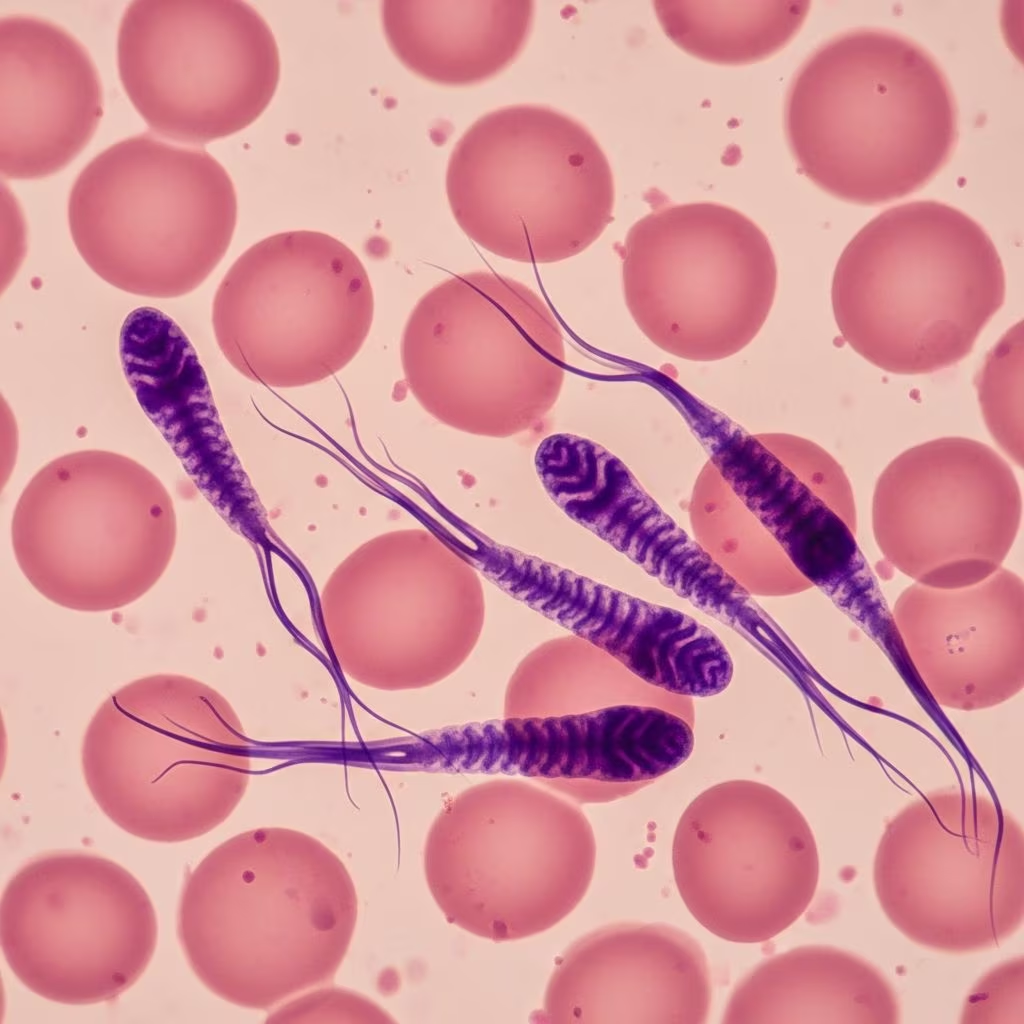
Trypanosomiasis represents one of the most significant parasitic diseases affecting animals worldwide, particularly in tropical and subtropical regions. Caused by protozoan parasites of the genus Trypanosoma, this condition leads to severe economic losses in livestock production due to reduced productivity, high mortality rates, and ongoing control costs. Domestic animals such as cattle, sheep, goats, horses, camels, and even companion animals like dogs are highly susceptible, with infections often transmitted by blood-feeding insects.
Understanding the Parasites Responsible
The Trypanosoma genus encompasses several species that infect animals, each with distinct biological behaviors and host preferences. Key pathogens include T. congolense, T. vivax, T. brucei subspecies, T. evansi, T. equiperdum, and T. cruzi. These single-celled organisms are flagellated protozoa that reside primarily in the bloodstream and tissues of their hosts.
T. congolense primarily affects ruminants and localizes in small blood vessels, causing vascular damage. T. vivax targets domestic and wild ruminants as well as horses, often leading to rapid disease progression. T. brucei brucei impacts ungulates, dogs, cats, and camels, while T. evansi and T. equiperdum are notable in camels and equines, respectively. T. cruzi, infamous for causing Chagas disease, affects a broad range of mammals including dogs.
Transmission Pathways and Epidemiology
Transmission occurs mainly through the bites of infected vectors. In Africa, tsetse flies (Glossina spp.) are the primary vectors for T. congolense, T. vivax, and T. brucei. These flies inoculate metacyclic trypanosomes into the host’s skin during blood meals, initiating infection.
- Tsetse flies acquire parasites from infected animals like cattle, sheep, goats, pigs, horses, and camels.
- Mechanical transmission via other biting flies, such as tabanids, spreads T. evansi in regions without tsetse flies.
- T. equiperdum spreads venereally among equines.
- T. cruzi is transmitted by triatomine bugs (kissing bugs) in the Americas, with possible congenital and oral routes.
Epidemiologically, the disease is endemic in sub-Saharan Africa, parts of South America, and Asia, where it constrains agricultural development by limiting livestock distribution and intensification. Factors like poor nutrition and concurrent infections exacerbate outbreaks.
Biological Mechanisms of Infection
Once inoculated, trypanosomes multiply rapidly via binary fission in the host’s bloodstream. They provoke a strong immune response, leading to the formation of immune complexes that cause inflammation, fever, and tissue damage. A hallmark of these parasites is antigenic variation: they possess multiple genes encoding variant surface glycoproteins (VSGs), allowing them to switch coats and evade antibodies. This mechanism enables chronic infections and reinfections, thwarting vaccine development.
In T. congolense cases, parasites adhere to endothelial cells in capillaries, while T. brucei and T. vivax invade organs like the heart, liver, and brain, resulting in multi-organ pathology. Parasitemia typically peaks 2-3 weeks post-infection before shifting to tissue phases.
Recognizing Clinical Manifestations
Symptoms vary by parasite species, host age, nutritional status, and infection intensity. The incubation period spans 1-4 weeks, followed by acute or chronic phases.
| Animal Group | Common Signs | Severity Notes |
|---|---|---|
| Cattle & Ruminants | Intermittent fever, progressive anemia, weight loss, lymphadenopathy, lethargy | Chronic course; high mortality under stress; trypanotolerant breeds (e.g., N’Dama cattle) show milder symptoms |
| Horses & Camels | Fever, anemia, edema, neurological signs | Often acute and fatal without intervention |
| Dogs | Lymphadenopathy, anorexia, vomiting, diarrhea, splenomegaly, rare myocarditis | Acute phase within 30 days; worse in pups under 6 months |
| Pigs & Other | Weakness, dehydration, hemolytic anemia | T. simiae highly pathogenic in pigs |
Additional lesions include pale mucous membranes, hydropericardium, pulmonary edema, myocarditis, and immune-mediated kidney damage. Chronic cases feature emaciation and relapse under stress.
Diagnostic Approaches
Diagnosis combines clinical suspicion with parasitological, serological, and molecular tests, especially in endemic areas.
- Microscopy: Wet blood smears or thick smears reveal motile trypanosomes; buffy coat technique enhances sensitivity.
- Serology: ELISA, card agglutination tests detect antibodies.
- Molecular: PCR for species identification and low parasitemia detection.
- For T. cruzi, combine signs with PCR or serology.
Presumptive diagnosis relies on endemicity, fever, anemia, and emaciation.
Treatment Strategies and Challenges
Treatment targets the parasite stage and species but faces drug resistance and side effects.
- Early-stage drugs: Suramin (IV for T. b. rhodesiense-like; side effects: renal issues, neuropathy); Pentamidine (IM/IV; hypoglycemia risk).
- Veterinary staples: Diminazene aceturate, isometamidium for animal African trypanosomiasis (AAT), but ineffective against CNS stages.
- Chagas (T. cruzi): Benznidazole (drug of choice for dogs, though availability limited in US; resistance noted); amiodarone + itraconazole combo improves survival; cardiac support essential.
Chronic cases respond slowly; supportive care includes nutrition, anti-anemia therapy, and concurrent disease management. No consensus exists for optimal T. cruzi protocols in animals.
Prevention and Control Measures
Integrated strategies focus on vector reduction, animal management, and prophylaxis.
- Vector Control: Insecticide-treated targets/traps, sterile insect technique, environmental management to eliminate tsetse breeding sites.
- Chemoprophylaxis: Isometamidium injections for high-risk herds.
- Breed Selection: Use trypanotolerant breeds like N’Dama cattle, West African Dwarf goats.
- Herd Health: Nutrition, stress minimization, quarantine.
- Vaccination: Limited success due to antigenic variation; research ongoing.
In non-tsetse areas, control tabanids and triatomines.
Economic and Global Impact
AAT alone causes annual losses exceeding $4-5 billion in Africa, reducing meat/milk yields by 20-50% and limiting land use. It perpetuates poverty in rural communities reliant on livestock. Global warming may expand vector ranges, heightening risks.
FAQs on Trypanosomiasis in Animals
What animals are most affected by trypanosomiasis?
Cattle, goats, sheep, horses, camels, and dogs are primary hosts, with varying susceptibility based on breed and region.
How do you prevent trypanosomiasis in livestock?
Combine vector control, prophylactic drugs, trypanotolerant breeds, and good husbandry practices.
Is trypanosomiasis treatable in pets like dogs?
Yes, but options like benznidazole have limitations; early diagnosis improves outcomes, with supportive care vital.
Can trypanosomiasis spread to humans from animals?
Direct zoonotic transmission is rare; human cases involve specific vectors like tsetse for African forms or triatomines for Chagas.
What is the prognosis for infected animals?
Good in early, treated cases; poor in chronic or stressed animals, especially young ones.
References
- Trypanosomiasis in Animals – Circulatory System — Merck Veterinary Manual. 2023. https://www.merckvetmanual.com/circulatory-system/blood-parasites/trypanosomiasis-in-animals
- Trypanosomiasis: Causes, Symptoms & Treatment — Cleveland Clinic. 2023-10-27. https://my.clevelandclinic.org/health/diseases/trypanosomiasis
- Trypanosomiasis — Companion Animal Parasite Council. 2023. https://capcvet.org/guidelines/trypanosomiasis/
- Current Treatments to Control African Trypanosomiasis and One Health Approach — PMC (NCBI). 2022-07-20. https://pmc.ncbi.nlm.nih.gov/articles/PMC9321528/
- African Animal Trypanosomiasis — Center for Food Security & Public Health (CFSPH), Iowa State University. 2018. https://www.cfsph.iastate.edu/Factsheets/pdfs/trypanosomiasis_african.pdf



