
Trichomonosis In Avians: Diagnosis, Treatment In 2025
Comprehensive guide to understanding, diagnosing, treating, and preventing trichomonosis in birds for pet owners and wildlife enthusiasts.
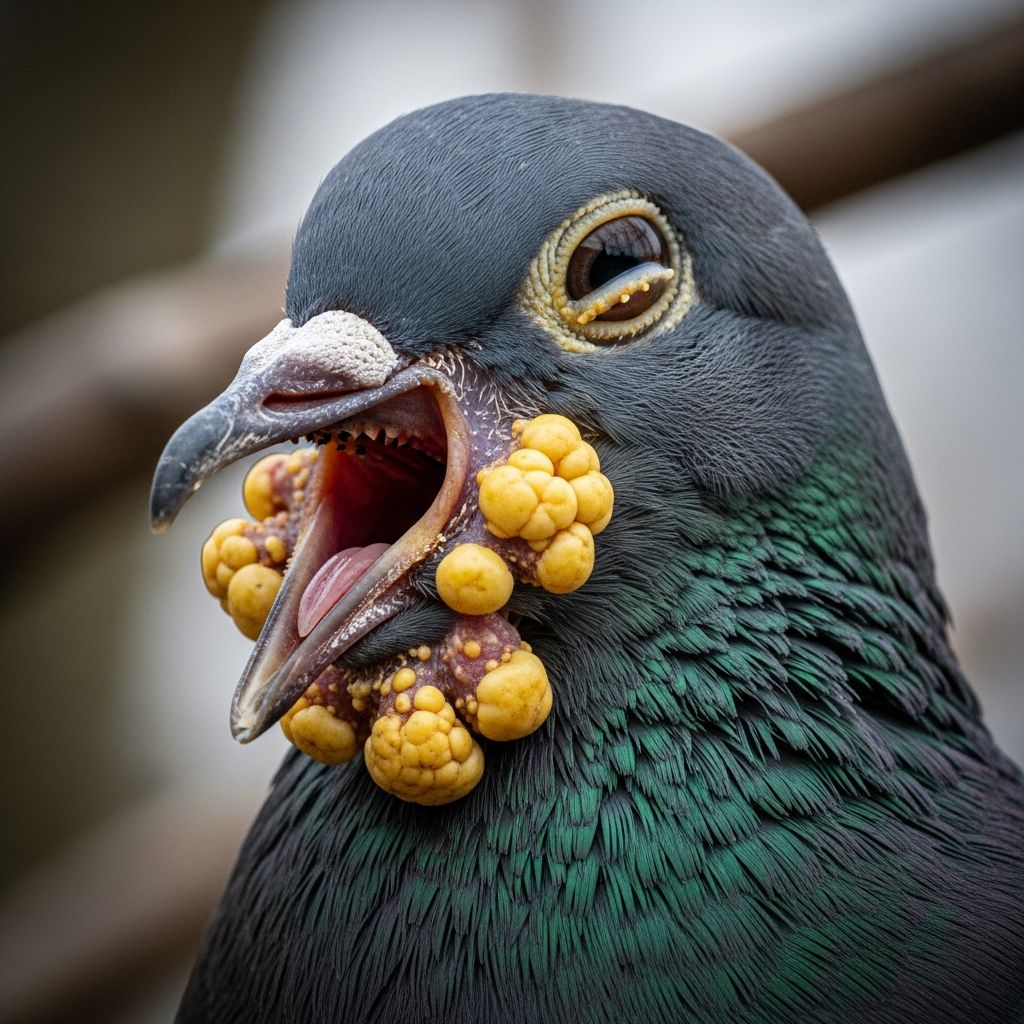
Trichomonosis represents a significant protozoal infection affecting various bird species, particularly pigeons, doves, raptors, and finches. Caused by the flagellate parasite Trichomonas gallinae, this condition leads to debilitating lesions in the upper digestive tract, often termed ‘canker’ in poultry and pigeons. Early detection and intervention are crucial for improving outcomes in both captive and wild populations.
Understanding the Etiology and Transmission Dynamics
The primary culprit, Trichomonas gallinae, thrives in the oral cavity, esophagus, and crop of infected birds. This motile protozoan spreads efficiently through direct contact, such as regurgitation during feeding young, or indirectly via contaminated water sources, feeders, and shared perches. Pigeons and doves act as key reservoirs, transmitting the parasite to nestlings and other species at bird feeders.
Transmission peaks in crowded environments like communal feeding sites, where infected saliva mixes with food and water. Young birds are especially vulnerable due to immature immune systems, with outbreaks common in spring and summer breeding seasons. Virulence varies by strain; some cause mild infections, while others lead to severe systemic disease.
Recognizing Clinical Manifestations
Symptoms emerge rapidly, often progressing from subtle signs to life-threatening complications within days. Initial indicators include excessive salivation, difficulty swallowing, and head shaking as birds attempt to dislodge irritants. Distinctive yellow-white plaques form on the tongue, palate, and esophageal lining, coalescing into obstructive masses that impair eating and breathing.
- Lethargy and fluffed feathers signaling general malaise
- Weight loss and emaciation from anorexia
- Regurgitation of food mixed with caseous material
- Watery ocular discharge potentially leading to blindness
- Open-mouth breathing, coughing, and nasal discharge in advanced cases
- Neck swelling or puffy throat due to lesion expansion
In severe instances, lesions extend to the crop, sinuses, or even liver and brain, causing neurological signs like loss of balance or seizures. Mortality rates soar in untreated nestlings, with death occurring in 24-48 hours.
Diagnostic Approaches for Accurate Identification
Diagnosis hinges on observing characteristic gross lesions and confirming via microscopy. Veterinarians perform wet mounts by scraping oral or crop lesions, mixing with saline, and examining under a microscope for the pear-shaped, jerky-moving trophozoites. Cytology smears stained with Giemsa or trichrome enhance visibility of the parasite’s undulating membrane.
Culture in specialized media like Diamond’s or PCR testing provides definitive identification, distinguishing T. gallinae from similar protozoa. Imaging such as radiographs may reveal esophageal dilation or air-fluid levels in obstructed cases. Differential diagnoses include candidiasis, poxvirus, or bacterial stomatitis, necessitating comprehensive evaluation.
Proven Therapeutic Interventions
Treatment focuses on nitroimidazole-class antiprotozoals, administered orally due to the parasite’s location. Metronidazole (25-60 mg/kg PO every 12-24 hours for 5-7 days) eliminates most infections effectively. Carnidazole (10-30 mg/kg PO once or for 1-2 days) offers convenience with rapid action, ideal for pigeons and gamebirds.
| Drug | Dosage | Duration | Notes |
|---|---|---|---|
| Metronidazole | 25-60 mg/kg PO | 5-7 days | Broadly effective; monitor for neurotoxicity |
| Carnidazole | 10-30 mg/kg PO | 1-2 days | Single-dose option; excellent for pigeons |
| Ronidazole | 6-10 mg/kg/day PO | 7-14 days | Water-medicated for flocks |
| Dimetridazole | 15-60 mg/bird PO | 5 days | Alternative for resistant cases |
Follow-up wet mounts 7-10 days post-treatment confirm clearance. Resistance, though rare, may require dosage adjustments or drug switches.
Supportive Management Strategies
Concurrent care enhances recovery by addressing dehydration, malnutrition, and secondary infections. Isolate affected birds to curb spread. Provide warmed electrolyte solutions via crop tubing if swallowing is impaired, alongside soft, hand-fed diets like soaked pellets or baby bird formula.
- Maintain 85-90°F (29-32°C) brooder temperatures to reduce stress
- Administer broad-spectrum antibiotics (e.g., enrofloxacin) for bacterial overgrowth
- Monitor weight daily and ensure clean, humidified environments
- Apply topical antiseptics to accessible lesions
Prognosis is favorable with prompt therapy; untreated cases often fatal.
Prevention Tactics for Bird Keepers and Wildlife
Biosecurity forms the cornerstone of control. Clean feeders, baths, and waterers daily with 10% bleach or quaternary ammonium, rinsing thoroughly. Remove feeders during outbreaks to disperse birds. Quarantine new arrivals for 2-4 weeks, testing high-risk species like pigeons.
Avoid overcrowding aviaries and limit wild bird access. For racing pigeons, routine deworming and water acidification deter protozoal growth. Educate communities on feeder hygiene to protect backyard flocks and native species. Emerging natural adjuncts like eugenol extracts show promise in lab trials but lack field validation.
Epidemiology and Species Susceptibility
Global reports highlight pigeons (Columba livia) and collared doves as super-spreaders, infecting raptors via predation and finches at feeders. In North America, outbreaks decimated greenfinch populations; Europe sees recurrent pigeon epizootics. Poultry like turkeys and chickens suffer ‘canker,’ impacting commercial operations.
Climate influences prevalence, with wet conditions favoring transmission. Zoonotic risk is negligible, though rare human cases occur in immunocompromised individuals handling infected birds.
FAQs on Avian Trichomonosis
Can trichomonosis spread to humans?
No, it is not zoonotic under normal conditions. Strict hygiene prevents any theoretical risk.
How long is the incubation period?
Typically 3-7 days post-exposure, with symptoms escalating quickly.
Is treatment safe for breeding birds?
Yes, but consult a vet; some drugs like carnidazole have short withdrawal periods.
What if my wild birds show signs?
Remove feeders, clean sites, and observe; treatment infeasible for free-living populations.
Are there vaccines available?
No commercial vaccines exist; prevention relies on management.
Long-Term Monitoring and Research Directions
Post-recovery, recheck monthly for carriers, as subclinical infections perpetuate cycles. Genomic studies track strain virulence, informing targeted therapies. Citizen science apps aid surveillance, mapping outbreaks for proactive interventions.
In conclusion, vigilance empowers avian enthusiasts to safeguard flocks from this pervasive threat.
References
- Avian Trichomoniasis (Canker): A Vet’s 2025 Guide to Diagnosis Treatment — Ask A Vet. 2025. https://askavet.com/blogs/news/avian-trichomoniasis-canker-a-vet-s-2025-guide-to-diagnosis-treatment-%F0%9F%90%A6
- Trichomonosis in Birds – Exotic and Laboratory Animals — Merck Veterinary Manual. 2023-10-02. https://www.merckvetmanual.com/exotic-and-laboratory-animals/trichomonosis/trichomonosis-in-birds
- How to Prevent Trichomoniasis in Birds — Really Wild Bird Food. 2025-10-02. https://www.reallywildbirdfood.co.uk/news/post/2025/10/02/how-to-prevent-trichomoniasis-in-birds
- Trichomoniasis in birds – Causes, Treatment — Vetster. 2024. https://vetster.com/en/conditions/bird/trichomoniasis
- Trichomoniasis — Michigan Department of Natural Resources (.gov). 2023. https://www.michigan.gov/dnr/managing-resources/wildlife/wildlife-disease/wdm/trichomoniasis
- Canker (trichomonosis) in Chickens — PoultryDVM. 2024. https://poultrydvm.com/condition/canker
Similar Articles








Read full bio of medha deb


