Trichobezoars in Cats: Causes, Symptoms & Treatment
Understanding hairballs in cats: causes, prevention, and when to seek veterinary care.
Understanding Trichobezoars in Cats
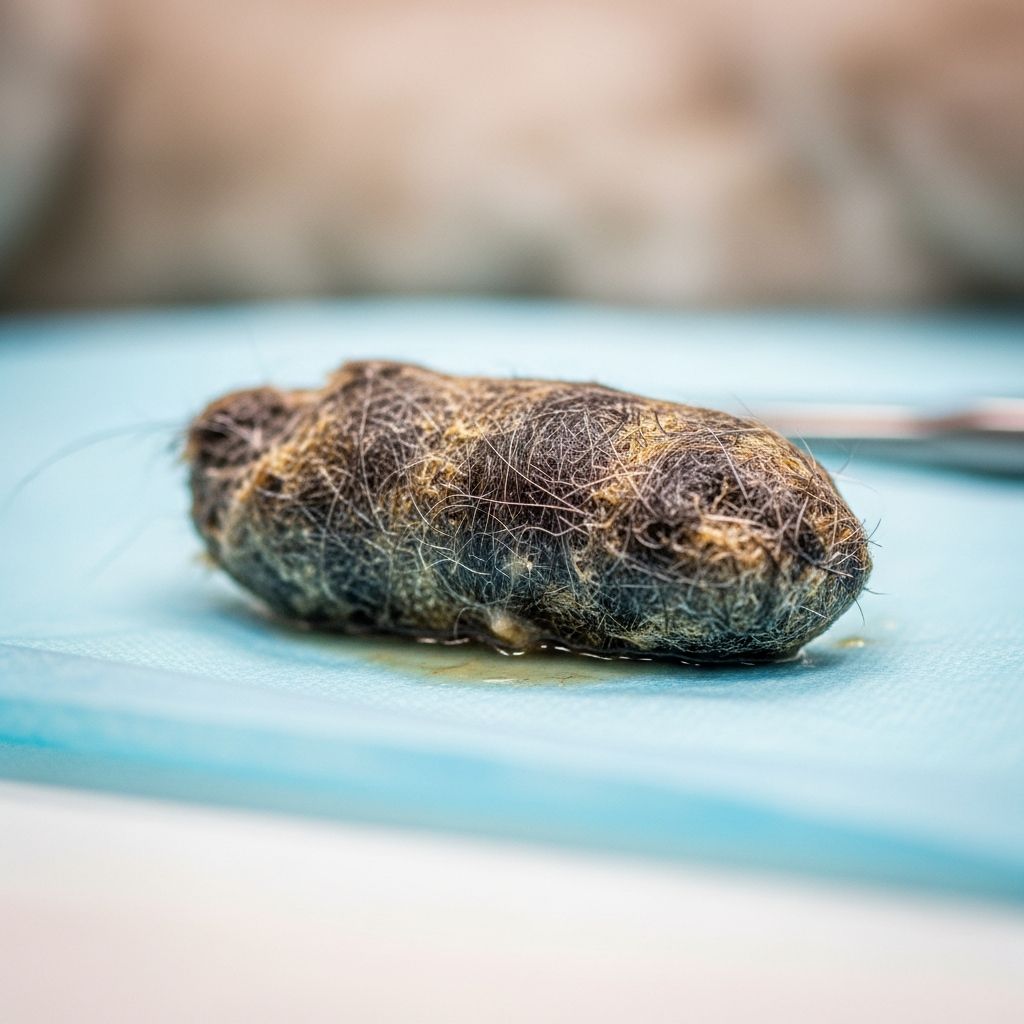
Trichobezoars, commonly known as hairballs or furballs, are cylindrical masses of ingested hair that form in a cat’s digestive system. The term “trichobezoar” derives from two components: “tricho,” meaning hair, and “bezoar,” which refers to a clumping of material held together in the gastrointestinal tract. While occasional hairball vomiting is a normal part of cat ownership, particularly for long-haired breeds, frequent or recurring trichobezoars may indicate an underlying health problem that requires veterinary attention.
Understanding trichobezoars is essential for cat owners because they represent the most common cause of vomiting in cats. While many owners view hairballs as an inevitable nuisance, they can occasionally lead to serious complications if not properly managed. This comprehensive guide explores the formation, symptoms, diagnosis, and management of trichobezoars in feline companions.
How Trichobezoars Form in Cats
Trichobezoar formation begins with a cat’s natural grooming behavior. Cats possess rough tongues equipped with tiny hook-like barbs that function like a brush, catching loose hair and foreign bodies in their coats. As cats groom themselves, they inevitably ingest hair, which is then swallowed and passes through the digestive system. Under normal circumstances, most of this ingested hair passes through the gastrointestinal tract and is eliminated in the feces.
However, the formation of trichobezoars occurs when hair accumulates in the stomach rather than passing through the digestive tract completely. Single strands of ingested hair cannot be moved by normal intestinal contractions (peristalsis), so they become enmeshed in the gastric mucosa and eventually conglomerate into solid masses in either the stomach or small intestine. Hair or hair combined with plant material, if chronically retained in the stomach, may cause pyloric outflow obstruction and can even form calcified concretions over time.
Occasionally, cats can naturally expel these hairballs through retching until the trichobezoar is vomited up. Cats can generally rid themselves of this problem through this natural vomiting reflex. However, when aggregated balls of hair accumulate to excessive levels, they can potentially cause serious obstructions that require veterinary intervention.
Risk Factors and Predisposing Conditions
While all cats are susceptible to hairball formation, certain factors increase the likelihood of developing trichobezoars:
Breed and Hair Length
Long-haired cat breeds, such as Persians and Maine Coons, have a significantly greater risk of trichobezoar formation compared to their short-haired counterparts. Short hair passes more readily through the pylorus and intestines, making short-haired cats less prone to blockages. The longer, denser coat of long-haired breeds means more hair is shed and ingested during grooming.
Excessive Grooming and Skin Conditions
Excessive amounts of hair may accumulate in the gastrointestinal tract as a result of overgrooming, which is secondary to pruritus (itching) or other dermatological conditions. Cats with flea infestations or allergies that trigger excessive grooming are at higher risk. In short-haired cats, regular vomiting of hairballs may indicate primary gastrointestinal disease, flea infestation, or other skin disease.
Gastrointestinal Motility Disorders
Gastric motility disturbances are hypothesized to cause recurrent gastric trichobezoars and trichophytobezoars. Cats with digestive tract disorders affecting normal muscle contractions may struggle to move hair through their system efficiently. Motility disorders or the presence of “retention” pockets in the digestive tract can significantly impair the ability to move food and hair through the gastrointestinal system.
Dietary Factors
Diet plays a role in trichobezoar development. Grain-based foods high in carbohydrates can alter the gut flora or bacteria in a cat’s intestinal tract, potentially affecting the ability to pass hair normally through the system. Additionally, lack of opportunity to ingest ballast material that naturally stimulates the movement of hair through the intestines can contribute to trichobezoar formation.
Recognizing Symptoms and Clinical Signs
Common Symptoms
The symptoms associated with trichobezoars vary depending on severity. The most common signs observed by cat owners include:
- Vomiting of food, mucus, and/or hairballs
- Retching, gagging, or hacking prior to vomiting
- Reduction of appetite or anorexia
- Constipation
- Abdominal pain
Clinical signs of hairballs typically include vomiting, anorexia, and abdominal pain. It can be distressing for owners to observe their cat produce a trichobezoar, and rather unpleasant to clean up afterward.
Severe Complications
In severe situations, the trichobezoar is not vomited up but remains in the stomach, hardening into a dense mass that can irritate the stomach or even cause an intestinal blockage. Long-haired breeds face a greater risk of this occurrence. When trichobezoars cause intestinal obstruction, symptoms become more alarming and may include:
- Repeated vomiting
- Ongoing retching, gagging, or hacking without producing a trichobezoar
- Abdominal pain and discomfort
- Lethargy and decreased activity
- Constipation or diarrhea
Physical examination may reveal dilated loops of small intestine proximal to the obstruction and, if the hairball is large enough, a palpable mass. Since gastrointestinal masses in cats are most commonly neoplastic (cancerous), owners may be given an erroneously poor prognosis unless appropriate investigations are undertaken.
Uncommon Complications
In rare cases, trichobezoars may pass into the nasopharynx (the upper part of the throat), producing sudden-onset sneezing, retching, and subsequent halitosis (bad breath) along with nasal discharge. Smaller hairballs may pass through the stomach and cause partial intestinal obstruction with associated discomfort but may eventually be passed in the feces, resulting in complete resolution of clinical signs.
Diagnostic Evaluation
Occasional trichobezoars vomited up by your cat are typically normal and usually do not require further diagnostics. However, veterinary evaluation is important in the following situations:
- Trichobezoars are occurring frequently
- Trichobezoars are occurring repeatedly for more than 24 hours
- Your cat is vomiting and coughing without bringing up a trichobezoar
- Your cat is in obvious pain and discomfort
- Trichobezoars represent a new occurrence in an older cat
During the diagnostic process, veterinarians should question owners about hairball elimination during history taking at routine visits and as part of the initial assessment of cats presenting with gastrointestinal signs or occult weight loss. A previous history of frequent hairball elimination should alert the veterinarian to the potential for chronic gastrointestinal disease.
Diagnostic Tests
When trichobezoars are occurring frequently or causing complications, diagnostic tests may include:
- Complete blood cell count to evaluate red and white blood cell counts and morphology
- Blood chemistry profile to evaluate kidney and liver function, serum electrolytes, blood protein levels, and blood glucose levels
- Thyroid screening using a total T4 test
- Urinalysis to further evaluate kidney function and urinary tract function
- Fecal examination to check for intestinal parasites
- Gastric endoscopy to visualize the stomach and potentially remove trichobezoars
- Imaging studies such as radiographs or ultrasound to identify obstructions
Treatment and Management Options
Prokinetic Medications
Prokinetic agents are medications that enhance gastric and intestinal muscle contractions, helping to move trichobezoars through the digestive system. These represent an appropriate component of therapy for recurrent trichobezoars:
Metoclopramide has a prokinetic effect on the stomach in cats, resulting in increased antral contractility. The typical dosage is 0.2–0.4 mg/kg administered every six hours orally. However, its practical utility as a long-term preventive treatment may be limited by its short half-life, requiring oral dosing every six hours to maintain effect. Less frequent dosing may be effective in some cases.
Cisapride is administered at 1.5 mg/kg every 12 hours orally and is not licensed for use in cats but is an effective prokinetic agent in this species, with effects at all levels of the gastrointestinal tract from lower esophageal sphincter through to the colon. In dogs, cisapride has been shown to be a more effective gastric prokinetic than metoclopramide.
Dietary Modification
Dietary management plays a crucial role in preventing and managing trichobezoars. Special commercial cat foods and treats that claim to prevent and control trichobezoars are available and are typically high in fiber, which helps bind hair and stimulate the gastrointestinal tract to move trichobezoars along. Additionally, a grain-free diet may be beneficial for cats that vomit frequently, as grain-based foods are high in carbohydrates, which can alter gut flora and affect the cat’s ability to pass hair normally through the intestinal tract.
Preventive Measures
Several preventive strategies can help reduce trichobezoar formation:
- Regular brushing and grooming to remove loose hair before it is ingested
- Maintaining flea control to reduce excessive grooming from itching
- Administering laxatives as recommended by a veterinarian to help hair pass through the system
- Ensuring adequate dietary fiber intake
- Providing environmental enrichment to reduce stress-related overgrooming
Surgical Intervention
In cases where trichobezoars cause severe obstruction or fail to respond to medical management, surgical removal may be necessary. However, recurrence after surgical removal has been reported in cats despite regular grooming, flea control, and administration of laxatives. This underscores the importance of addressing underlying causes and implementing long-term management strategies.
Prevention Strategies
While trichobezoar formation cannot be completely eliminated in cats, several strategies can significantly reduce their occurrence. Regular grooming is one of the most effective prevention methods, as it removes loose hair before cats ingest it during self-grooming. For long-haired cats, daily brushing is ideal to minimize shedding.
Maintaining effective flea control is essential, as fleas cause itching that leads to excessive grooming. Additionally, addressing any underlying skin conditions or allergies can reduce overgrooming behavior. Providing a diet with appropriate fiber content and ensuring adequate hydration supports normal gastrointestinal motility.
Environmental enrichment and stress reduction may also help, as anxious cats sometimes engage in excessive grooming. Regular veterinary check-ups allow early identification of gastrointestinal motility issues or other underlying conditions predisposing cats to trichobezoar formation.
When to Seek Veterinary Care
It is important to distinguish between normal and concerning trichobezoar activity. While occasional hairball vomiting is normal, particularly in long-haired cats, frequent occurrence warrants veterinary investigation. Cat owners should seek immediate veterinary attention if their cat experiences sudden-onset vomiting, shows signs of abdominal pain, becomes lethargic, or stops eating. A new occurrence of trichobezoars in an older cat should also prompt veterinary evaluation, as this may indicate a newly developed underlying condition.
This determination regarding whether to investigate a case further or to recommend long-term dietary modification versus instituting short-term palliative treatment for what may initially appear to be an acute gastrointestinal upset is an important clinical decision.
Frequently Asked Questions
Q: Are trichobezoars a normal part of cat ownership?
A: Occasional trichobezoars, especially in long-haired cats, are normal. However, frequent or recurring hairballs should not be considered a normal occurrence in a healthy cat and may indicate an underlying problem requiring veterinary investigation.
Q: Which cat breeds are most susceptible to trichobezoars?
A: Long-haired breeds such as Persians and Maine Coons are more susceptible to trichobezoar formation. Short-haired cats are less prone because short hair passes more readily through the pylorus and intestines.
Q: Can trichobezoars be life-threatening?
A: While occasional hairballs are typically harmless, large accumulations can cause serious intestinal obstructions that may require surgical intervention. Severe blockages can be life-threatening if not treated promptly.
Q: What is the best way to prevent trichobezoars?
A: Regular grooming, maintaining flea control, feeding high-fiber diets, and addressing underlying gastrointestinal issues are effective prevention strategies. For long-haired cats, daily brushing is recommended.
Q: What should I do if my cat frequently vomits hairballs?
A: Frequent trichobezoar vomiting warrants veterinary evaluation to rule out underlying gastrointestinal motility disorders, skin conditions, or other health issues. Your veterinarian may recommend dietary modifications, prokinetic medications, or other interventions.
Q: Are there medications to prevent trichobezoars?
A: Yes, prokinetic medications such as metoclopramide and cisapride can help enhance gastric motility and prevent trichobezoar accumulation in cats prone to recurrent hairballs. These should be prescribed by a veterinarian.
Q: Can diet help manage trichobezoars?
A: Yes, high-fiber diets and grain-free formulations may help reduce trichobezoar formation by promoting normal gastrointestinal motility and altering gut bacteria. Special commercial cat foods designed for hairball control are available.
References
- Feline Trichobezoars Technical Information — VEMEDIM. 2024. https://vemedim.com/en/3/specialized-in-pets/technical/1223/feline-trichobezoars
- Cat Hairball (Trichobezoar) Causes, Symptoms & Signs — Bow Wow Insurance. 2024. https://bowwowinsurance.com.au/pet-care/diseases-conditions/trichobezoar-hairball-obstruction/
- Hair Balls in Cats: A normal nuisance or a sign that something is wrong — National Center for Biotechnology Information, U.S. National Library of Medicine. 2024. https://pmc.ncbi.nlm.nih.gov/articles/PMC10816490/
- Hairballs, 3 Myths You Might Be Guilty of Believing — Taylor Crossing Veterinary Hospital. 2024. https://www.taylorcrossingvet.com/blog/hairballs-3-myths-you-might-be-guilty-of-believing
- Managing Hairballs in Cats — Merck Veterinary Manual. 2024. https://www.merckvetmanual.com/multimedia/table/managing-hairballs-in-cats
- The Danger of Hairballs — Cornell University College of Veterinary Medicine. 2024. https://www.vet.cornell.edu/departments-centers-and-institutes/cornell-feline-health-center/health-information/feline-health-topics/danger-hairballs
Similar Articles







Read full bio of medha deb