
Seminal Vesiculitis In Bulls: Expert Guide To Diagnosis & Care
Explore effective strategies for diagnosing and managing seminal vesiculitis in breeding bulls to safeguard herd fertility and productivity.
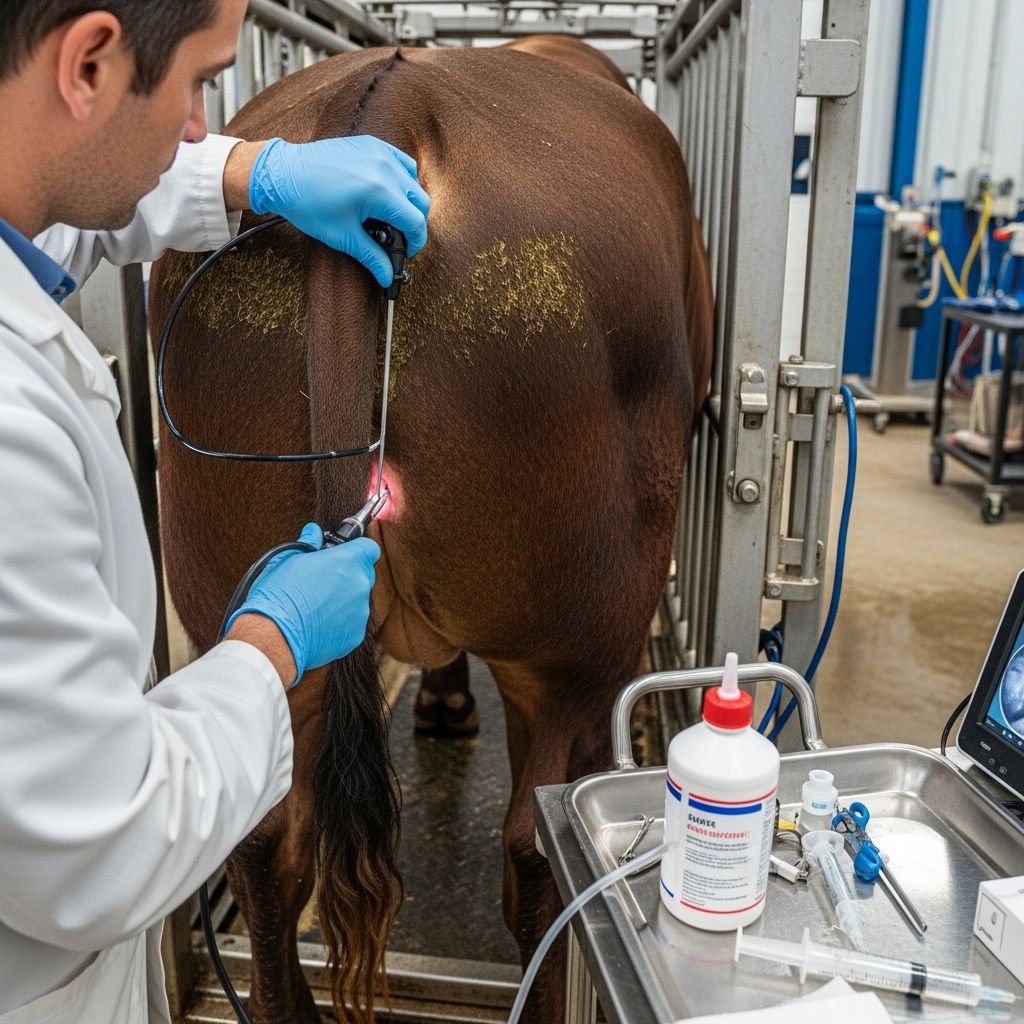
Seminal vesiculitis represents a significant challenge in bovine reproductive health, particularly affecting the fertility of breeding bulls. This condition involves bacterial infection of the seminal vesicles, paired glands crucial for producing the bulk of seminal fluid that supports sperm viability during ejaculation. Prevalence ranges from 1% to 10% in breeding soundness evaluations, with young bulls in intensive housing and high-energy feeding regimes at highest risk.
Understanding the Anatomy and Role of Seminal Vesicles
The seminal vesicles are located on the pelvic floor, adjacent to the urethra and bladder. These glands secrete a nutrient-rich fluid with a neutral to slightly alkaline pH (7.3–7.5), which constitutes up to 70% of ejaculate volume. This environment protects spermatozoa and facilitates transport in the female tract. When infected, the glands enlarge, lose their normal lobulated texture, and release pus into semen, drastically reducing fertility.
In healthy bulls, palpation reveals distinct, grape-like lobules. Infection progresses from mild swelling to fibrosis and adhesions, impairing function irreversibly in chronic cases.
Primary Pathogens Behind the Infection
Bacterial agents dominate seminal vesiculitis etiology. Common isolates include Trueperella pyogenes (formerly Arcanobacterium pyogenes), a prolific pus-producer; Brucella abortus, linked to broader herd issues; and fastidious organisms like Mycoplasma, Ureaplasma, Chlamydia, and Histophilus somni. These pathogens thrive in the alkaline glandular secretions and high-nutrient diets that alter rumen pH, promoting opportunistic invasion.
- Trueperella pyogenes: Most frequent, causes abscessation.
- Mycoplasma/Ureaplasma: Cell wall-deficient, harder to culture.
- Brucella abortus: Zoonotic risk, requires regulatory reporting.
Culture and susceptibility testing from vesicular fluid or semen are essential for targeted therapy, as empirical choices may fail against resistant strains.
Recognizing Symptoms and Risk Factors
Most cases are subclinical, detected only during routine exams. Advanced infections may show dysuria, straining, or tail wagging, with secondary spread to epididymis or testes causing scrotal edema. Risk escalates in yearlings confined together on concentrate-heavy rations, fostering rumen acidosis and bacterial overgrowth. Congenital duct anomalies mimic infection but rarely contribute significantly.
Seasonal peaks align with breeding prep, underscoring pre-sale evaluations.
Diagnostic Approaches for Accurate Identification
Breeding soundness exams (BSE) are pivotal. Rectal palpation assesses gland size, symmetry, and lobulation—normal glands are turgid yet discrete; infected ones are smooth, firm, or painful. Semen microscopy reveals leukocytes (>2 million/mL flags infection), while culture confirms pathogens.
Transrectal ultrasound enhances detection, visualizing edema, abscesses, or fibrosis unavailable to palpation alone. Differentiate from ampullitis or prostatitis via multi-site sampling. In yearlings, baseline palpation at 9–12 months catches early changes.
| Method | Description | Sensitivity |
|---|---|---|
| Rectal Palpation | Feels for enlargement, pain, lobulation loss | High for advanced cases |
| Semen Analysis | Checks pus cells, motility | Essential for confirmation |
| Ultrasound | Images internal structure | Best for subtle lesions |
| Bacterial Culture | Identifies pathogen, sensitivities | Gold standard |
Pharmacological Treatment Strategies
Antimicrobial selection prioritizes drugs penetrating prostatic/seminal tissues, given their alkaline pH and lipid barriers. Macrolides and fluorochlorophenols excel: tulathromycin (Draxxin), tilmicosin (Micotil), erythromycin, and florfenicol (Nuflor).
Studies show tulathromycin edges tilmicosin in clinical cure rates, though both succeed in ~70% of early cases at label doses. Doubling doses achieves inhibitory glandular concentrations against common bacteria. Treatment spans 5–10 days minimum, often longer for resolution.
- Tulathromycin: 2.5 mg/kg SC, single dose; favored for efficacy.
- Tilmicosin: 10 mg/kg SC; effective but monitor cardiac risks.
- Florfenicol: 40 mg/kg IM, repeat q48h x3.
- Erythromycin: Historical option, 10–20 mg/kg.
Sulfa drugs serve as adjuncts. Prognosis: fair-poor overall; 50–80% spontaneous resolution in yearlings vs. <20% in adults. Recheck BSE 1–2 months post-therapy; persistent pus mandates culling.
Surgical Interventions for Refractory Cases
For valuable yearlings with unilateral abscesses unresponsive to antibiotics, unilateral vesiculectomy offers salvage. Performed standing via subrectal access under epidural and sedation: rectum packed, gland exteriorized, excised, with hemostasis via packing (4–6 hours).
Pre/post-op antibiotics (5 days) and NSAIDs mitigate complications like hemorrhage, reinfection, or adhesions. Avoid palpation 30 days; semen re-evaluated for azoospermia or leukocytes. Success favors young, single-gland cases; bilateral or aged bulls go to slaughter.
Age-Specific Management and Prognosis
Outcomes diverge by age:
| Age Group | Spontaneous Recovery | Treatment Success | Recommendation |
|---|---|---|---|
| Yearlings (<12 mo) | High (up to 80%) | Good with antibiotics | Monitor/re-treat; surgery if needed |
| Mature Bulls | Low (<20%) | Poor | Cull promptly |
Early intervention at 9–12 months prevents progression.
Preventive Measures for Herd Health
Proactive steps curb incidence:
- Neonatal navel disinfection to block ascending infections.
- Spacious housing for yearlings; avoid overcrowding/riding.
- Balanced rations minimizing rumen acidosis—pasture-raise if possible.
- Annual BSE pre-breeding/sale, including gland palpation.
- Vaccinate against brucellosis.
These reduce prevalence by 50%+ in managed herds.
Frequently Asked Questions (FAQs)
What causes seminal vesiculitis in bulls?
Bacteria like Trueperella pyogenes, Mycoplasma, and Brucella, exacerbated by high-energy diets and confinement.
Can seminal vesiculitis resolve without treatment?
Yes, especially in young bulls; up to 80% clear spontaneously within months.
Which antibiotic is best?
Tulathromycin shows superior results, but base on culture/susceptibility.
Is surgery common?
Rare; reserved for high-value unilateral cases in yearlings.
How do I prevent it?
Good hygiene, space, nutrition, and routine BSEs.
Future Directions in Research and Management
Ongoing trials explore intraglandular antibiotics as systemic alternatives, showing promise in pilot studies. Genomic sequencing refines pathogen ID, aiding precision therapy. Integrated management—nutrition, biosecurity, tech diagnostics—promises better control. Bulls passing BSE post-treatment sire viable calves, underscoring salvage potential.
(Word count: 1678)
References
- Managing Seminal Vesiculitis In Breeding Bulls — Manitoba Co-operator. 2023. https://www.manitobacooperator.ca/livestock/managing-seminal-vesiculitis-in-breeding-bulls/
- Pharmacotherapeutics in Seminal Vesiculitis in Bulls — Merck Veterinary Manual. 2025. https://www.merckvetmanual.com/pharmacology/systemic-pharmacotherapeutics-of-the-urinary-system/pharmacotherapeutics-in-seminal-vesiculitis-in-bulls
- Update on treatment of vesiculitis in bulls — PubMed (J Am Vet Med Assoc). 2008-05-15. https://pubmed.ncbi.nlm.nih.gov/18514806/
- Seminal Vesiculitis in Bulls — American Angus Association. 2025-11. https://www.angus.org/angus-media/angus-journal/2025/11/vet-call
- Seminal vesiculitis — University of Minnesota Large Animal Surgery. N/D. https://open.lib.umn.edu/largeanimalsurgery/chapter/seminal-vesiculitis/
Similar Articles








Read full bio of medha deb


