

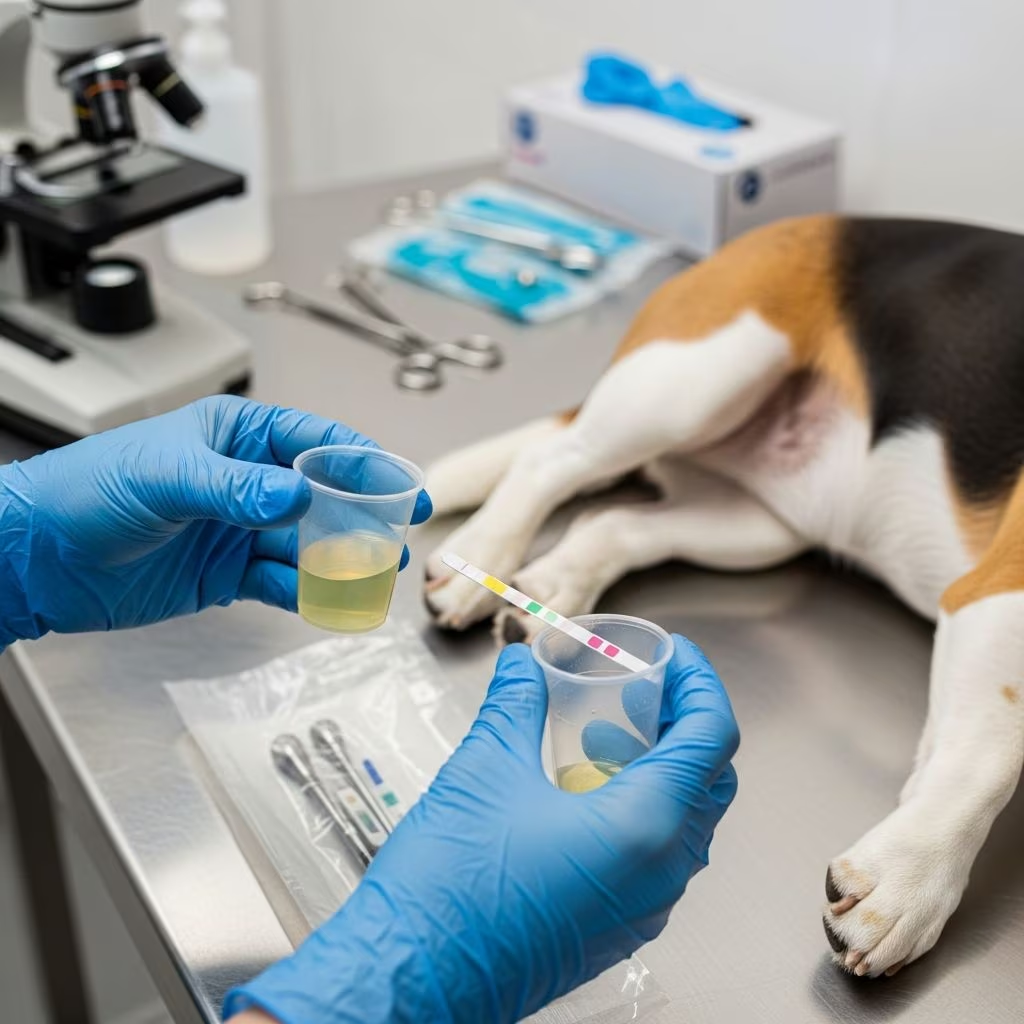
Bacterial urinary tract infections (UTIs) represent a frequent challenge in veterinary medicine, particularly among dogs and cats. These infections occur when pathogenic bacteria colonize the urinary system, leading to discomfort, potential complications, and risks of recurrence if not managed properly. Effective treatment hinges on accurate diagnosis, targeted antibiotic therapy, and addressing underlying factors to promote healing and prevent resistance development.
Understanding the Scope of UTIs in Pets
UTIs affect up to 27% of dogs over their lifetime, with cats also susceptible, especially older or female individuals. Common culprits include Escherichia coli, Proteus spp., and occasionally Pseudomonas in resistant cases. Symptoms manifest as frequent urination, straining, blood in urine, or incontinence, signaling the need for prompt intervention.
In dogs, lower UTIs predominate, but ascent to kidneys (pyelonephritis) or involvement of the prostate in males complicates prognosis. Cats often present with feline lower urinary tract disease (FLUTD), where infection may coexist with idiopathic cystitis. Early recognition through clinical signs and diagnostics is crucial for distinguishing infection from other urinary issues like stones or tumors.
Diagnostic Approaches for Accurate Identification
Diagnosis begins with a thorough history and physical exam, followed by urinalysis to detect pyuria, hematuria, or bacteriuria. However, culture and sensitivity testing from a cystocentesis sample—ideally quantitative with >105 CFU/mL—confirms the pathogen and guides therapy. This step is non-negotiable for complicated cases to avoid empirical failures.
- Urinalysis: Screens for leukocytes, nitrites, and bacteria; pH shifts may indicate specific pathogens.
- Urine Culture: Gold standard; processes samples aerobically and anaerobically.
- Imaging: Ultrasound or radiographs rule out obstructions, stones, or anatomical defects.
- Bloodwork: Assesses renal function via BUN, creatinine, and electrolytes in systemic cases.
Without culture, blind treatment risks selecting resistant strains, a growing concern in veterinary practice.
Principles of Antibiotic Selection
Antibiotic choice depends on infection type: uncomplicated (simple cystitis in healthy pets) versus complicated (with comorbidities, stones, or recurrence). Concentrate on drugs achieving high urinary concentrations, considering pharmacokinetics like time- or concentration-dependence.
| Infection Type | Preferred Antibiotics | Dosage Example (Dogs) | Notes |
|---|---|---|---|
| Uncomplicated | Amoxicillin, Cephalosporins (e.g., cephalexin), Trimethoprim-sulfamethoxazole (TMS) | Amoxicillin: 10-20 mg/kg q12h | Empirical if culture pending; short courses viable. |
| Complicated/Recurrent | Fluoroquinolones (enrofloxacin, marbofloxacin), 3rd-gen Cephalosporins (cefovecin) | Enrofloxacin: 20 mg/kg q24h | Culture-guided; prostate penetration key for males. |
| Pyelonephritis/Prostatitis | Fluoroquinolones, Aminoglycosides | Marbofloxacin: 2-5 mg/kg q24h | High-dose, concentration-dependent. |
Fluoroquinolones excel against gram-negatives like Pseudomonas and penetrate prostate tissue, ideal for intact males. Reserve them to curb resistance. Cefovecin offers 14-day coverage via injection, suiting non-compliant pets.
Optimizing Treatment Duration and Protocols
Traditional 10-14 day courses for uncomplicated UTIs are giving way to shorter regimens, mirroring human guidelines. The International Society for Companion Animal Infectious Diseases (ISCAID) recommends ≤7 days for uncomplicated cases, supported by studies showing efficacy of 3-day versus 10-14 day treatments.
- Uncomplicated: 3-7 days; e.g., 3 days TMS or enrofloxacin equivalent to longer cephalexin.
- Complicated: Up to 4 weeks, guided by resolution checks; pyelonephritis may need 4-6 weeks.
- Recurrent: Pulse therapy or low-dose prophylaxis post-resolution.
For concentration-dependent drugs (fluoroquinolones), once-daily high doses maximize peak-to-MIC ratios. Time-dependent ones (beta-lactams) benefit from frequent dosing to stay above MIC. Continuous IV infusion suits severe urosepsis.
Supportive Therapies and Adjuncts
Beyond antibiotics, multimodal care enhances outcomes. Pain relief via NSAIDs or analgesics addresses dysuria; increased water intake flushes bacteria.
- Pain Management: Anti-inflammatories like carprofen; stronger opioids if needed.
- Hydration: Encourage via wet food, fountains; IV fluids in hospitalized cases.
- Urethral Support: Phenylpropanolamine for incontinence-related UTIs.
- Probiotics/Supplements: Support gut flora; cranberry extracts debated but may acidify urine.
Dietary shifts to urinary formulas dissolve struvite stones and acidify urine, preventing relapse.
Managing Complicated and Recurrent Infections
Complicated UTIs involve diabetes, immunosuppression, or structural issues, demanding longer therapy and underlying correction. Recurrent cases (>2 in 6 months) warrant imaging for calculi or neoplasia; prostatitis in males requires lipophilic drugs.
Resistance patterns: Monitor for multidrug-resistant E. coli; stewardship emphasizes culture-first. In relapses, distinguish reinfection (new pathogen) from persistence via repeat cultures.
Prevention Strategies for Long-Term Health
Proactive measures reduce incidence: Maintain hygiene, provide ample fresh water, and schedule senior wellness checks. Neutering males mitigates prostatitis risk; weight management prevents incontinence.
- Regular urinalysis in at-risk pets (seniors, diabetics).
- Post-treatment rechecks at 7-14 days to confirm sterility.
- Avoid unnecessary antibiotics to preserve efficacy.
Frequently Asked Questions (FAQs)
What are the first signs of a UTI in my dog or cat?
Watch for increased urination frequency, accidents indoors, straining, or bloody urine. Cats may vocalize or hide.
Can I treat my pet’s UTI at home without a vet?
No—antibiotics require prescription based on culture to avoid resistance and ensure safety.
How long until my pet feels better on antibiotics?
Improvement often within 48 hours, but complete the full course.
Are fluoroquinolones safe for all pets?
Reserve for resistant cases; not first-line due to resistance risks. Safe in most but monitor for side effects.
What if the infection returns after treatment?
Recheck with culture; investigate underlying causes like stones or diabetes.
Emerging Trends and Future Directions
Research pushes shorter therapies and stewardship to combat resistance. Novel agents like pradofloxacin promise broader efficacy with lower resistance potential. Vaccines against UPEC and bacteriophage therapy are in trials, offering non-antibiotic alternatives.
Vets increasingly adopt ISCAID guidelines, prioritizing diagnostics and minimal effective durations for sustainable practice.
References
- UTI in Dogs: Knowing the Signs + Potential Treatment Options — Bond Vet. 2023. https://bondvet.com/blog/uti-in-dogs-symptoms-diagnosis-and-treatment
- Urinary Tract Infection in Dogs — Animal Hospital of Clemmons. 2020-12-18. https://www.animalhospitalofclemmons.com/site/veterinary-pet-care-blog/2020/12/18/urinary-tract-infection-in-dogs
- UTI in Dogs: Signs, Causes, and When To Call Your Vet — PetMD. 2023. https://www.petmd.com/dog/conditions/urinary/uti-dogs-signs-causes-and-when-call-your-vet
- Use of Antibiotics for Treating UTIs in Dogs and Cats — Today’s Veterinary Practice. 2023. https://todaysveterinarypractice.com/pharmacology/antibiotic-use-urinary-tract-infections-dogs-cats/
- Urinary Tract Infections (UTIs) in Dogs — VCA Animal Hospitals. 2023. https://vcahospitals.com/know-your-pet/urinary-tract-infections-utis-in-dogs
- Pharmacotherapeutics in Bacterial Urinary Tract Infections in Animals — Merck Veterinary Manual. 2023. https://www.merckvetmanual.com/pharmacology/systemic-pharmacotherapeutics-of-the-urinary-system/pharmacotherapeutics-in-bacterial-urinary-tract-infections-in-animals
- Antimicrobial Use Guidelines for Treatment of Urinary Tract Disease — PMC (Weese et al.). 2011-07-01. https://pmc.ncbi.nlm.nih.gov/articles/PMC3134992/
- ISCAID Urinary Guidelines 2019 — NDSU Veterinary Diagnostic Lab. 2019. https://www.vdl.ndsu.edu/wp-content/uploads/2022/02/ISCAID-Urinary-Guidelines-2019.pdf



