
Treating Bacterial Prostatitis in Dogs and Cats
Expert insights into diagnosing and managing prostate infections in pets with antibiotics, surgery, and supportive therapies.
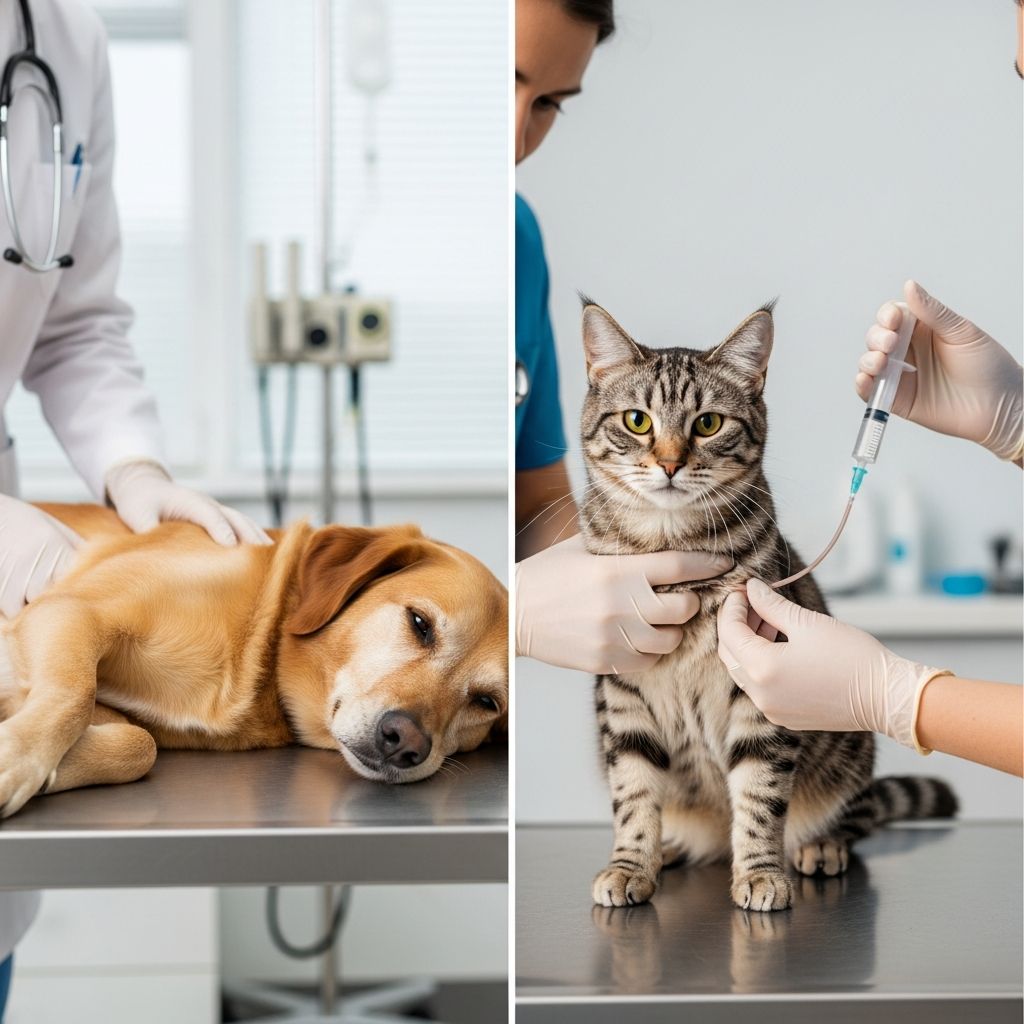
Bacterial prostatitis represents a significant health challenge primarily in intact male dogs, with rarer occurrences in cats. This condition involves infection of the prostate gland, often linked to urinary tract issues, requiring targeted antimicrobial therapy combined with hormonal management for resolution.
Understanding Prostate Infections in Companion Animals
The prostate gland in male dogs and cats serves reproductive functions but becomes vulnerable to bacterial invasion, especially in unneutered individuals. Dogs experience both acute, severe forms with systemic signs like fever and pain, and chronic, subtler versions mimicking other prostatic disorders. In cats, the prostate is underdeveloped, making infections infrequent but potentially serious when they arise.
Pathogens typically ascend from the urinary tract, with common culprits including Escherichia coli. Factors like prostatic hyperplasia exacerbate persistence due to glandular enlargement and altered secretions.
Clinical Signs and Symptom Recognition
Owners may notice straining during urination or defecation, blood in urine, or lethargy in acute cases. Chronic infections often present mildly, with recurrent urinary issues or no overt symptoms, delaying diagnosis.
- Acute indicators: High fever, abdominal discomfort, septicemia risk from palpation.
- Chronic signs: Intermittent UTIs, ejaculate abnormalities in breeding dogs.
- Cat-specific notes: Rare, but includes urethral compression and potential abscesses.
Diagnostic Approaches for Accurate Identification
Diagnosis hinges on combining clinical evaluation with targeted sampling. Rectal palpation assesses gland size and pain but carries risks in acute cases.
Key tests include:
- Urinalysis revealing blood, pus, and bacteria.
- Culture and sensitivity from urine or prostatic fluid for pathogen identification.
- Cytology from prostatic washes or ejaculate fractions, especially the third for chronic cases.
- Imaging like ultrasound to detect abscesses or hyperplasia.
- Biopsies to rule out neoplasia, though challenging.
| Test | Purpose | Species Focus |
|---|---|---|
| Urine Culture | Identifies bacteria and sensitivities | Dogs & Cats |
| Prostatic Fluid Analysis | Confirms glandular infection | Dogs (ejaculate) |
| Ultrasound | Visualizes abscesses, enlargement | Both |
| Cytology/Biopsy | Differentiates from cancer/BPH | Both |
Pharmacological Principles for Prostate Penetration
The prostate’s unique physiology poses treatment barriers. Its acidic environment (pH gradient decreasing from blood to acini) favors basic, lipid-soluble, low-protein-bound drugs via ion trapping. Acidic antibiotics like penicillins achieve poor concentrations.
Ideal agents are non-ionized at prostatic pH, highly diffusible:
- Fluoroquinolones (e.g., enrofloxacin 5 mg/kg PO q12h): Top empirical choice for E. coli.
- Trimethoprim-sulfamethoxazole: Effective for susceptible organisms.
- Tetracyclines (doxycycline) or chloramphenicol: Alternatives based on cultures.
- Others: Clindamycin, azithromycin for chronic cases.
Acute infections disrupt the blood-prostate barrier, allowing broader antibiotic access for at least 4 weeks. Chronic forms demand 4-8 weeks or longer to combat resistance risks.
Role of Neutering in Treatment Success
Castration dramatically improves outcomes by shrinking the gland, enhancing antibiotic efficacy, and preventing recurrence. In dogs, it’s standard post-infection control; many chronic cases resolve solely via neutering or BPH therapy like finasteride.
For cats, neutering reduces hormonal drivers, with recovery in 7-10 days surgically, though full effects lag 6-8 weeks.
- Breeding dogs: Consider medical castration (GnRH agonists) to preserve fertility.
Supportive and Adjunctive Therapies
Beyond antibiotics and surgery:
- Anti-inflammatories: Short-term (e.g., prednisolone) for pain/urethral relief; avoid prolonged use due to renal/cardiac risks in cats.
- Stool softeners: Ease defecation straining.
- Surgical interventions: Abscess drainage with omentalization for large collections.
- Follow-up: Reculture urine/prostatic fluid 2-4 weeks post-therapy.
Species-Specific Management Strategies
Dogs: Predominant Cases
Dogs form the bulk of cases, with chronic forms often tied to BPH. Empirical enrofloxacin bridges to culture-guided therapy; combine with castration for cures.
Cats: Rare but Challenging
Infrequent due to small prostate, but intact males at higher risk. Trial antibiotics plus neutering differentiates from BPH/cancer. Prognosis guards if abscess ruptures.
Potential Complications and Prognosis
Untreated, risks include sepsis, urethral obstruction, or abscess rupture. Chronicity fosters resistance. With combined therapy, most resolve, though recurrence possible without neutering.
Recovery timelines: 2-6 weeks medically, longer surgically. Monitor for ongoing symptoms.
Prevention Through Proactive Care
Neutering intact males markedly lowers incidence by curbing hyperplasia. Routine UTI screening in at-risk pets aids early detection.
Frequently Asked Questions (FAQs)
Can prostatitis resolve without antibiotics?
Rarely; chronic cases may improve with BPH treatment alone, but antimicrobials are essential for bacterial clearance.
Is prostatitis common in neutered dogs?
Extremely rare, as testosterone drives glandular vulnerability.
How long do treatments last?
4-8 weeks minimum; extend based on follow-up cultures.
What if my cat shows urinary straining?
Seek vet evaluation promptly; could indicate prostatitis or other issues like crystals.
Are there home remedies?
No; professional diagnosis and therapy required to avoid complications.
References
- Prostate Inflammation (Prostatitis) in Cats — PetMD. 2023. https://www.petmd.com/cat/conditions/reproductive/prostate-inflammation-prostatitis-cats
- Pharmacotherapeutics in Bacterial Prostatitis in Dogs and Cats — Merck Veterinary Manual. 2023. https://www.merckvetmanual.com/pharmacology/systemic-pharmacotherapeutics-of-the-urinary-system/pharmacotherapeutics-in-bacterial-prostatitis-in-dogs-and-cats
- Prostatitis in Dogs — Merck Veterinary Manual. 2023. https://www.merckvetmanual.com/reproductive-system/prostatic-diseases-in-small-animals/prostatitis-in-dogs
- Prostate Inflammation (Prostatitis) in Cats – Causes, Treatment — Vetster. 2023. https://vetster.com/en/conditions/cat/prostate-inflammation-prostatitis
- Prostatic Disease in Dogs — VCA Animal Hospitals. 2023. https://vcahospitals.com/know-your-pet/prostatic-disease-in-dogs
- Pharmacological treatment for common prostatic conditions in dogs — PubMed (Theriogenology). 2014-06-15. https://pubmed.ncbi.nlm.nih.gov/24947855/
Similar Articles








Read full bio of medha deb


