

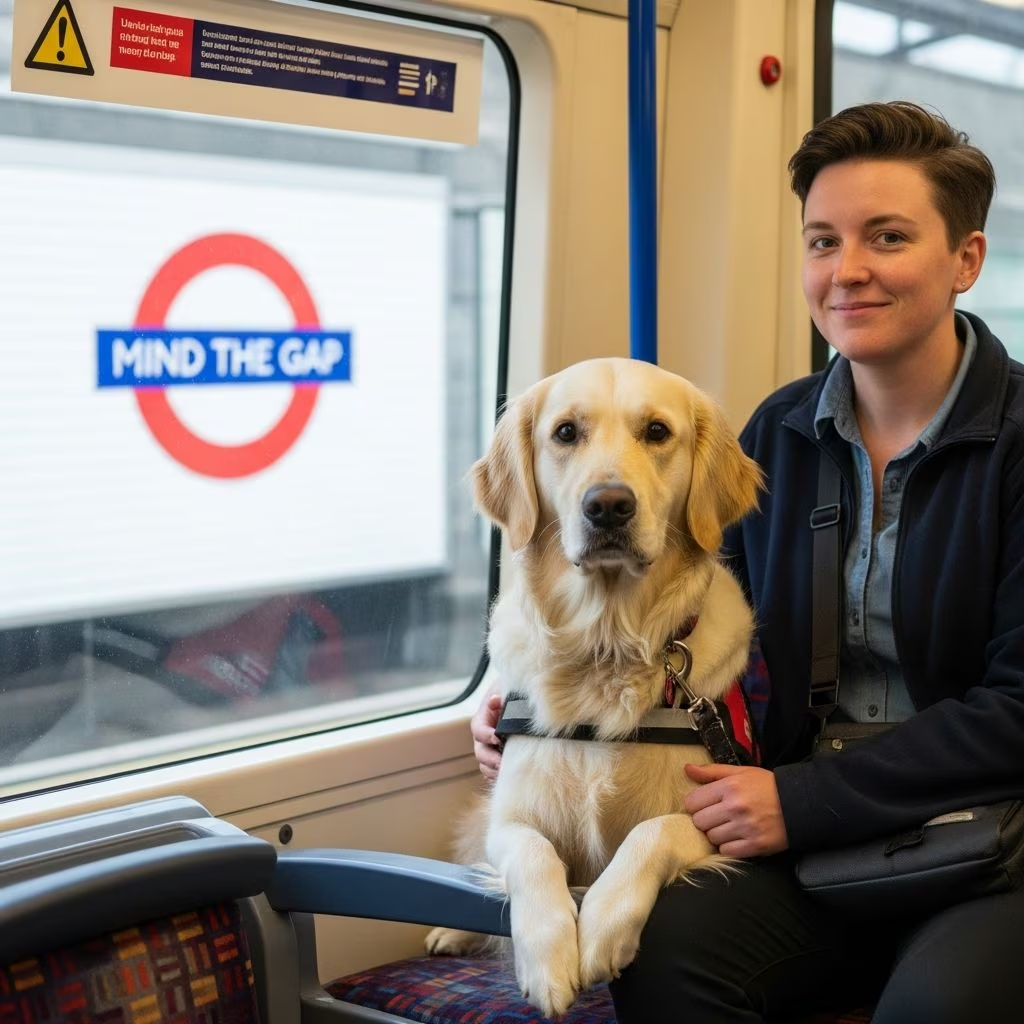
Mind the Gap: How to Travel With Your Dog on the Tube
Navigating London can be challenging, especially when you want to bring your furry companion along. The good news is that the London Underground, commonly known as the Tube, is renowned as one of the world’s most dog-friendly subway systems. Well-behaved dogs can travel on all London Underground lines for free, making it an accessible option for pet owners across the city. However, to ensure a smooth and safe journey for both your dog and fellow passengers, it’s essential to understand the rules, safety protocols, and best practices for travelling with your four-legged friend.
Helping our dogs navigate the underground environment requires patience, planning, and preparation. The sights, sounds, and crowds of the Tube can be overwhelming for dogs unfamiliar with public transport. With the right approach and understanding of TfL’s guidelines, your dog can learn that travelling with you on the Tube will always lead to fun adventures and new experiences.
Are Dogs Allowed on the Tube?
Yes, all assistance dogs and any other well-behaved dogs can travel on the Tube. According to Transport for London’s Conditions of Carriage, dogs are permitted unless there is a good reason to refuse entry, such as if the animal seems dangerous or not properly controlled. This inclusive policy makes the London Underground exceptionally accommodating for dog owners compared to public transport systems in other cities.
Station staff have the authority to deny entry if your dog is misbehaving or poses a risk to other passengers. Therefore, maintaining control of your dog at all times is crucial. Dogs that are anxious, reactive, or showing signs of aggression may benefit from additional preparation before attempting to use the Tube.
Is It Free to Bring Dogs on the Tube?
Unlike human passengers, your dog does not require their own ticket to travel on London’s transport network. All dogs travel completely free on the Tube. This cost-saving benefit means you can allocate more of your budget towards your dog’s favourite treats, toys, and other essentials. The only consideration is that station staff can refuse entry if your dog is misbehaving, so keeping your pet calm and well-controlled ensures smooth, free passage through the system.
Understanding Tube Lines and Dog-Friendly Routes
Dogs can travel on all of Transport for London’s Tube lines, including the Circle, District, Hammersmith & City, Metropolitan, and Piccadilly Lines, among others. However, it’s important to recognize that not all Tube lines offer the same experience for dogs. There is a significant difference between lines that are open and spacious, such as the District Line which spends considerable time above ground, and more cramped underground sections like the Piccadilly Line when it’s full of passengers and luggage on the way to Heathrow Airport.
When planning your journey, consider selecting routes and times that offer more comfort for your dog. During off-peak hours, trains are less crowded, providing a more relaxed environment for your pet. This approach helps reduce stress for both your dog and other passengers.
Essential Etiquette for Travelling With Dogs on the Tube
Proper etiquette ensures a pleasant experience for everyone using the Tube. Your dog must remain under control and on a lead at all times while travelling on the Tube. If your dog cannot be managed on a lead alone, they must be placed in a suitable container such as a carrier, bag, or crate. Regardless of your personal rules at home, your dog must never sit on a seat on the London Underground. This is essential for hygiene and comfort of other passengers.
Additional etiquette considerations include:
- Keep your dog at a reasonable distance from other passengers to prevent anxiety or allergic reactions
- Be prepared to move your dog if they are blocking pathways or doors
- Monitor your dog’s stress levels and consider exiting at the next station if they become overly anxious
- Clean up any accidents immediately and inform staff if needed
- Avoid taking your dog during peak commute times when possible
Safety Considerations for Your Dog on the Tube
Using a Lead, Bag, or Crate
Your dog must be on a lead, in a bag, or in a crate at all times when using the Tube. They must never freely roam around the train or station. This requirement protects your dog from accidents, ensures other passengers feel safe, and prevents your pet from becoming lost or anxious in unfamiliar surroundings.
Using a Muzzle if Required
If your dog is reactive, copes badly with strangers, or struggles in new social situations, consider using a muzzle while travelling on the Tube. A properly fitted muzzle protects not only other passengers but also you and your dog. It can prevent defensive behaviour in stressful situations and give you additional peace of mind in crowded environments.
Keeping Your Dog Behind the Yellow Safety Line
Remember that your dog’s hearing is significantly more sensitive than ours. The noise levels of the Tube can be painful for their ears if they stand near the platform edge. Additionally, dogs are much less likely to experience shock from an approaching train if they remain standing further back from the tracks. Always keep your dog well behind the yellow safety line on the platform.
Using Wide Accessibility Gates
If there is no wide-opening gate available, you can ask a staff member to help keep the barrier open for a longer period so your dog can pass through safely. Staff can also assist by carrying open the accessibility gates, making entry easier for dogs and their owners. Using these wider gates reduces the risk of your dog’s lead getting caught or causing congestion.
Identity Tags and Microchipping
Ensure your dog has an identity tag including your phone number and address. In the rare event your dog becomes separated from you, people rely on identity tags to contact you if they find your pet. Additionally, your dog is required by law to be microchipped. Microchipping provides a permanent identification method and significantly increases the chances of reuniting with a lost dog.
Navigating Escalators With Your Dog
One of the most important safety considerations when travelling on the Tube involves escalators. Only trained assistance dogs can stand with their paws on escalator steps. All other dogs risk getting their fur, nails, or skin caught in the moving steps, which can cause serious injury. Therefore, you must carry your dog while using escalators.
To make this transition smoother, try using a ‘ready-up’ cue that warns your dog you are about to pick them up, so the ground doesn’t suddenly disappear under their feet. Practice this cue outside of the Tube station context to ensure your dog is always comfortable with being picked up.
If your dog is too large to carry comfortably, you have several alternatives:
- Ask a member of staff to stop the escalator, allowing you to walk up or down it safely with your dog beside you on the lead
- Use a staircase instead of the escalator
- Take a lift if the station has one available
Staff can usually only stop escalators outside of peak times when the station is less busy, so plan your journeys accordingly if your dog cannot be carried.
Supporting Dogs With Mobility Issues
If your dog has mobility issues or struggles with stairs, the London Underground offers accommodations through step-free access stations. Step-free access means it’s seamless to step on and off Tube carriages, with lifts or ramps available—or a combination of both. Currently, 92 Tube stations, more than 60 London Overground stations, and all 41 Elizabeth line stations have step-free access. All DLR stations and tram stops are also step-free.
When planning your journey with a mobility-challenged dog, identify stations along your route that offer step-free access. This eliminates the need to navigate escalators or stairs between street level and the platform, making travel significantly more comfortable and accessible for your aging or physically limited companion.
Alternative Transport Options for Dogs in London
While the Tube is a convenient option, other TfL transport services may offer better experiences for your dog depending on your circumstances:
Buses
You can take your dog on TfL’s buses, and many dogs find this option preferable since buses operate above ground, offering better ventilation and visibility. The journey is typically shorter and less overwhelming than underground travel.
Trams
Trams are another excellent option, particularly in areas like Croydon and south London. These aren’t underground, making them feel more open and accessible for dogs. Both Manchester and Birmingham have recently started allowing dogs onboard their tram services after successful trials.
DLR and Elizabeth Line
The DLR (Docklands Light Railway) and Elizabeth Line offer dog-friendly travel with step-free access at all stations. These services combine the efficiency of rail travel with the openness of above-ground routes.
London Overground
Dogs are also allowed on the London Overground under the same rules as the Tube, with the added benefit that many routes travel above ground. This can be a more relaxed option for dogs sensitive to confined underground spaces.
What Animals Can Travel on the Tube?
According to TfL’s Conditions of Carriage, what the organization describes as “inoffensive animals” can travel on the Tube. This designation typically includes domesticated pets such as dogs, cats, and small rodents. However, you absolutely cannot take livestock such as pigs, sheep, or goats on the Tube. Non-domestic animals are also prohibited. Small animals like cats should be carried in a suitable, secure carrier to prevent escape and ensure other passengers’ comfort.
Preparing Your Dog for Tube Travel
Successful Tube travel begins with proper preparation. Start by exposing your dog to the sounds, sights, and sensations of underground travel in gradual stages. Visit a quiet Tube station during off-peak hours and allow your dog to become familiar with the environment. Practice being on a lead in crowded spaces, getting used to people moving around them, and becoming comfortable with the noise and vibrations of arriving and departing trains.
Consider these preparation steps:
- Take short practice journeys on quieter times to build confidence
- Use positive reinforcement and treats to associate Tube travel with rewards
- Practice the ‘ready-up’ cue for escalators in your home or local park
- Ensure your dog is well-exercised before travel to reduce restlessness
- Bring familiar items like a beloved toy or blanket for comfort
- Consider consulting a professional trainer if your dog shows significant anxiety
Frequently Asked Questions About Dogs on the Tube
Q: Can my dog sit on a seat on the Tube?
A: No, your dog must never sit on a seat on the London Underground, regardless of your personal rules at home. This policy ensures hygiene and comfort for all passengers.
Q: What should I do if staff ask me to remove my dog from the Tube?
A: If staff indicate your dog is misbehaving or not properly controlled, comply with their request and exit at the next station. This ensures safety for all passengers and protects your dog from stress.
Q: Can assistance dogs use escalators?
A: Yes, trained assistance dogs can stand with their paws on escalator steps. However, owners must provide a pass showing the dog has been trained to use them.
Q: What’s the best time to travel with my dog on the Tube?
A: Off-peak times are best for traveling with dogs, as trains are less crowded and less overwhelming for your pet. Avoid peak commute hours in the morning (7-9 AM) and evening (5-7 PM).
Q: Are dogs allowed on the London Overground?
A: Yes, dogs are allowed on the London Overground under the same rules as the Tube. They must be on a lead or in a container and cannot sit on seats.
Q: What if my dog is too large to carry on the escalator?
A: You can ask staff to stop the escalator so you can walk up or down with your dog on the lead. Alternatively, use stairs or a lift if available.
Q: Do I need a special pass or document for my dog to travel on the Tube?
A: No special pass is required for most dogs. Your dog just needs to be under control and on a lead. Only assistance dogs need documentation showing they’ve been trained to handle Tube travel.
References
- Using the London Underground with Your Dog — Butternut Box. 2023-06-02. https://butternutbox.com/blog/london-underground-with-a-dog
- Can I Take My Dog On Public Transport? — Holidays4Dogs. https://www.holidays4dogs.co.uk/take-my-dog-on-public-transport/
- Mind the Gap: How to Travel With Your Dog on the Tube — Kinship. https://www.kinship.com/uk/dog-lifestyle/are-dogs-allowed-on-the-tube
- Are Dogs Allowed on Trains in the UK? — Travelnuity. https://www.travelnuity.com/dogs-on-trains-uk/
- How to Travel on Public Transport With Your Dog — Dogs Trust. https://www.dogstrust.org.uk/dog-advice/training/outdoors/travelling



