
Undefined Trauma Care For Small Animals: Expert Guide
Essential strategies for stabilizing and treating injured pets in critical veterinary emergencies to improve survival rates.
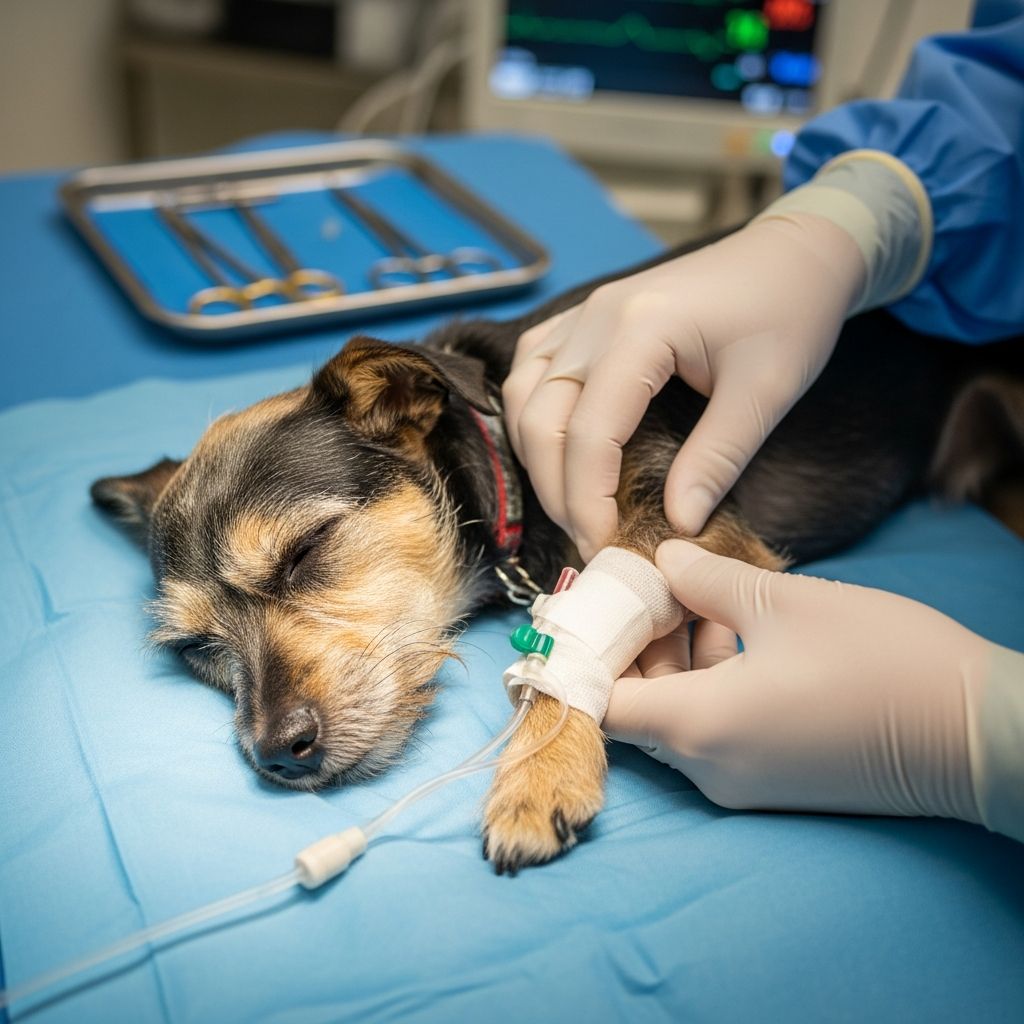
In veterinary practice, trauma represents one of the most urgent challenges, particularly for small animals like dogs and cats. These pets often suffer from high-impact injuries due to vehicular accidents, falls, fights, or animal attacks. Rapid assessment and intervention are crucial to address life-threatening conditions and prevent complications. This article delves into the systematic management of traumatized small animals, emphasizing stabilization, diagnostics, and ongoing care.
Understanding Common Trauma Mechanisms in Pets
Small animals encounter various trauma types that demand immediate attention. Blunt force injuries from car strikes or falls can lead to internal organ damage, fractures, and thoracic issues. Penetrating wounds, such as bite marks or stabs, introduce infection risks and deep tissue disruption. High-rise syndrome in cats, for instance, frequently results in pneumothorax or diaphragmatic rupture.
- Blunt trauma: Common in road traffic accidents, affecting the chest, abdomen, and spine.
- Penetrating injuries: From animal bites or impalement, often contaminating wounds.
- Crush injuries: Leading to compartment syndrome or vascular compromise.
Recognizing these patterns guides the initial triage process, allowing veterinarians to prioritize interventions based on the injury’s physics and likely consequences.
Initial Triage and Stabilization Protocols
Upon arrival, every traumatized pet must be treated as having multiple occult injuries. The primary goals are securing the airway, ensuring effective breathing, and maintaining circulation—often abbreviated as the ABCs. Oxygen therapy via flow-by or mask supports respiratory effort, while analgesics facilitate a thorough exam without exacerbating pain-induced stress.
Hemorrhage control is paramount. External bleeding requires direct pressure or tourniquets judiciously applied. Internal losses, indicated by dropping packed cell volume (PCV) and total solids, may necessitate fluid resuscitation or blood products. Hypotension should be targeted with permissive levels during damage control phases to avoid exacerbating coagulopathy.
| Parameter | Normal Range | Trauma Alert Threshold |
|---|---|---|
| Heart Rate | 60-140 bpm (dogs), 120-240 bpm (cats) | >180 bpm (dogs), >260 bpm (cats) |
| Respiratory Rate | 10-30 bpm | >40 bpm or labored |
| PCV/TS | 35-55%/6-8 g/dL | <30%/<5 g/dL |
| Lactate | <2.5 mmol/L | >4 mmol/L |
This table outlines key monitoring metrics, helping clinicians detect shock early.
Advanced Diagnostic Approaches
Beyond physical exams, diagnostics confirm injuries. Blood gas analysis reveals acidosis or hypoxia, while lactate levels predict outcomes. Coagulation profiles identify disseminated intravascular coagulation (DIC) risks. Imaging starts with thoracic and abdominal radiographs in orthogonal views to spot fractures, effusions, or hernias.
Point-of-care ultrasound (POCUS) excels for rapid abdominal (APOCUS) or thoracic (TPOCUS) evaluation, detecting free fluid or pneumothorax without radiation exposure. The modified Glasgow Coma Scale (mGCS) quantifies neurological status, and pain scales guide analgesia dosing.
- Thoracic imaging: Identifies pneumothorax, pulmonary contusions.
- Abdominal ultrasound: Detects hemoabdomen or uroabdomen.
- Neurological scoring: Tracks brain injury progression.
Respiratory and Airway Management
Thoracic trauma often compromises breathing. Pneumothorax requires thoracocentesis for air evacuation, while hemothorax demands drainage and monitoring. Diaphragmatic hernias, especially with gastrointestinal herniation, warrant prompt surgical correction to avert strangulation.
Severe cases may need intubation and mechanical ventilation. Airway patency is ensured by suctioning blood or secretions, often under sedation. Positive pressure ventilation with 100% oxygen stabilizes hypoxemic patients until definitive repairs.
Hemodynamic Support and Damage Control
Damage control resuscitation (DCR) counters the lethal triad of hypothermia, acidosis, and coagulopathy. Early transfusion of whole blood or components targets hypotensive endpoints. Damage control surgery (DCS) limits procedures to hemorrhage control and contamination prevention, deferring reconstructions until stabilization.
Fluid choices include crystalloids judiciously, balanced with colloids or blood products. The Rule of 20—a checklist of 20 vital parameters—guides holistic monitoring in critical patients.
Neurological and Orthopedic Considerations
Head trauma demands minimizing intracranial pressure through mannitol or hypertonic saline. Spinal injuries require immobilization during transport. Orthopedic assessment follows stabilization, with stressed radiographs revealing fractures. Compartment syndrome in limbs necessitates fasciotomy if pressures exceed 30 mmHg.
Continuous neurological exams using mGCS help detect deterioration, prompting CT or MRI if available.
Surgical Interventions and Post-Op Care
Surgery timing balances urgency against stability. Emergency laparotomy addresses splenic rupture or bladder avulsion. Bite wounds undergo debridement and lavage to combat infection. Pelvic fractures may be managed conservatively unless vascular compromise occurs.
Postoperatively, patients need ICU monitoring with telemetry, serial bloodwork, and pain management. Nutritional support via feeding tubes prevents catabolism.
Monitoring and Prognostic Tools
Hospitalization enables serial evaluations of perfusion, mentation, and output (urination, defecation). Veterinary Trauma Centers, certified by VetCOT, standardize care and track outcomes. Survival improves with multidisciplinary approaches in equipped facilities.
FAQs
What should I do if my pet is hit by a car?
Keep the pet calm, cover with a blanket to reduce shock, and transport on a flat board to immobilize the spine. Seek emergency vet care immediately.
How long does recovery from trauma take?
Varies from days for minor wounds to months for fractures or organ repairs, depending on injury severity and response to treatment.
Can home care suffice after initial treatment?
Only for stable cases under vet guidance; most require hospitalization for monitoring hidden injuries.
What is the success rate for traumatized pets?
Improves with rapid intervention; VetCOT data shows 70-90% survival in certified centers for appropriately managed cases.
Are certain breeds more prone to trauma?
Hunting or working breeds face higher risks from outdoor activities, but all small animals are susceptible.
Preventing Trauma in Small Animals
Prevention strategies include microchipping, leash use, secure fencing, and supervision. Neutering reduces fight-related injuries. Owner education on hazards like balconies enhances safety.
References
- Trauma in Emergency Medicine in Small Animals — Merck Veterinary Manual. 2023. https://www.merckvetmanual.com/emergency-medicine-and-critical-care/specific-diagnostics-and-therapy/trauma-in-emergency-medicine-in-small-animals
- Emergency and Critical Care — University of Missouri Veterinary Health Center (.edu). 2024. https://vhc.missouri.edu/small-animal-hospital/emergency-and-critical-care/
- Emergency and Critical Care Medicine: An Essential Component — PMC (NIH, peer-reviewed). 2017-10-01. https://pmc.ncbi.nlm.nih.gov/articles/PMC5642140/
- Small Animal Emergency and Critical Care — Michigan State University College of Veterinary Medicine (.edu). 2024. https://cvm.msu.edu/hospital/emergency/small-animal-emergency-and-critical-care
- First Aid and Transport of Small Animals — MSD Veterinary Manual. 2023. https://www.msdvetmanual.com/emergency-medicine-and-critical-care/emergency-medicine-introduction/first-aid-and-transport-of-small-animals
Similar Articles








Read full bio of medha deb


