

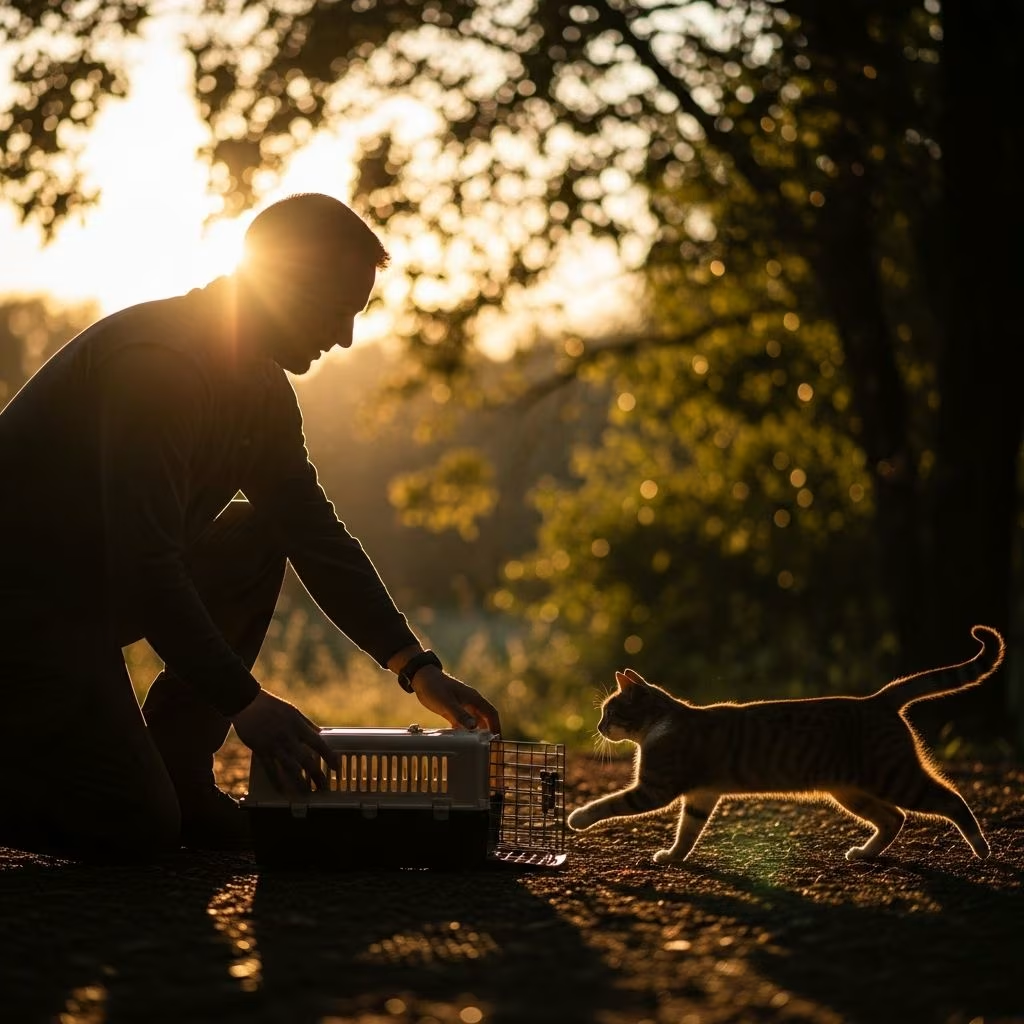
TrapKing Humane Cat Solutions represents a beacon of compassion and innovation in the world of feral cat management. Founded by dedicated animal welfare advocate Bryan Kortis, TrapKing specializes in Trap-Neuter-Return (TNR) programs, offering humane, effective strategies to stabilize and reduce community cat populations while addressing neighborhood concerns.
What is TrapKing Humane Cat Solutions?
TrapKing Humane Cat Solutions is a professional service dedicated to humane feral cat population management. Operating primarily in South Florida but with a model replicable nationwide, TrapKing provides comprehensive TNR services, including trapping, veterinary care, and ongoing colony management. The organization’s mission is to end the cycle of kitten births humanely, improve cat health, and minimize conflicts between cats and communities.
Unlike traditional animal control methods that often lead to euthanasia, TrapKing’s approach is grounded in science and compassion. They humanely trap community cats, ensure they are spayed or neutered, vaccinated, ear-tipped for identification, and returned to their familiar territories. This method, known as TNR, has been proven to stabilize colonies over time without the ‘vacuum effect’ seen in trap-and-remove strategies.
The Origins of TrapKing: Bryan Kortis’ Journey
Bryan Kortis, the founder of TrapKing, began his journey in animal welfare over a decade ago. What started as a personal commitment to helping stray cats in his South Florida neighborhood evolved into a full-fledged business. Kortis witnessed firsthand the futility of removal methods, where new cats quickly filled vacated territories, perpetuating endless cycles of overpopulation.
Inspired by successful TNR programs worldwide, Kortis trained extensively in humane trapping techniques and partnered with veterinarians to offer low-cost or subsidized surgeries. Today, TrapKing has managed hundreds of colonies, preventing thousands of kittens from being born and earning accolades from municipalities and residents alike.
Understanding Trap-Neuter-Return (TNR)
Trap-Neuter-Return (TNR) is the gold standard for managing free-roaming community cats. The process involves humanely trapping cats using box traps, transporting them to a clinic for spaying/neutering, rabies vaccination, and ear-tipping (a small clip on the left ear to indicate the cat has been altered), then returning them to their original location.
Key benefits of TNR include:
- Population stabilization: By halting reproduction, colonies naturally decline as older cats age out.
- Improved cat health: Neutered cats avoid stresses of mating, pregnancy, and related diseases, living longer, healthier lives.
- Reduced nuisance behaviors: No more yowling, spraying, fighting, or roaming, leading to better community relations.
- Cost-effective: Lowers shelter intake and euthanasia rates, saving taxpayer money.
Scientific studies validate TNR’s efficacy. An 11-year University of Florida study showed a 66% decline in campus cat numbers with no new kittens after four years. Similarly, Texas A&M reported no litters after neutering 123 cats in one year.
Why TrapKing Excels in TNR Implementation
TrapKing sets itself apart with professional-grade equipment, extensive experience, and a caregiver network. They use high-quality humane traps, provide recovery monitoring, and offer microchipping for lost cat recovery. Services include full colony assessments, customized TNR plans, and follow-up monitoring to ensure compliance and success.
In high-complaint areas, TrapKing deploys rapidly, often resolving issues within weeks. They educate residents on feeding stations, shelter provision, and legal protections for community cats, fostering harmony.
| Traditional Methods | TrapKing TNR |
|---|---|
| Trap-and-Remove (leads to vacuum effect) | Stabilizes populations long-term |
| High euthanasia rates | Humane, no-kill approach |
| Recurring complaints | Eliminates nuisance behaviors |
| Expensive for communities | Cost-saving over time |
Real-World Success Stories from TrapKing
TrapKing’s impact is evident in numerous testimonials. In one Fort Lauderdale apartment complex plagued by 50+ cats and constant complaints, TrapKing trapped and fixed 48 cats over two months. Post-TNR, the colony shrank to 20, with zero kittens and no further neighbor issues.
Another case involved a Miami business park where TrapKing managed a 30-cat colony. After TNR, spraying stopped, employees adopted socialized kittens, and the site now maintains a stable, healthy group under caregiver oversight.
These stories mirror broader data: Rome, Italy’s TNR efforts reduced colonies by 16-32% over 10 years. TrapKing replicates this success locally, partnering with HOAs, businesses, and governments.
Challenges in Feral Cat Management and TrapKing’s Solutions
Managing feral cats presents hurdles like trap-shy cats, weather, and funding. TrapKing counters with advanced baiting techniques, drop traps for wary cats, and grants from organizations like Alley Cat Allies.
They also address the vacuum effect myth debunked by TNR: removing cats invites newcomers, but TNR fills territories with managed, non-breeding cats. Legally, TrapKing navigates varying ordinances, advocating for TNR-friendly policies as endorsed by ASPCA and Humane Society.
How to Get Involved with TrapKing or Start Your Own TNR
Communities can hire TrapKing for professional services or learn DIY TNR. Steps include:
- Assess colony size and health.
- Secure traps and vet partners.
- Schedule mass trapping events.
- Monitor and maintain post-TNR.
TrapKing offers workshops, lending libraries for traps, and referral networks. Individuals can volunteer, donate, or become certified caregivers.
The Science Behind TNR: Key Studies
- University of Florida: 66% population drop over 11 years.
- Texas A&M: Zero kittens post-first-year TNR.
- Orange County, FL: Reduced shelter killings and calls.
These affirm TNR as superior to lethal control, which fails due to immigration.
Frequently Asked Questions (FAQs)
Q: What is Trap-Neuter-Return (TNR)?
A: TNR involves trapping feral cats, neutering them, vaccinating, ear-tipping, and returning to their habitat to prevent breeding.
Q: Does TNR really reduce cat populations?
A: Yes, studies show colonies stabilize and decline naturally without new kittens.
Q: Is TNR humane?
A: Absolutely; it’s endorsed by major orgs as the ethical alternative to killing.
Q: How can I contact TrapKing?
A: Visit their site for consultations in South Florida or model programs elsewhere.
Q: What if a colony is on private property?
A: TrapKing coordinates with owners for access and liability waivers.
Conclusion: A Humane Path Forward
TrapKing Humane Cat Solutions exemplifies how targeted TNR transforms challenges into successes. By stabilizing populations, enhancing welfare, and building community buy-in, TrapKing paves the way for nationwide adoption.
References
- Trap, Neuter & Return (TNR) — Town of Smithtown Animal Shelter. Accessed 2026. https://www.townofsmithtownanimalshelter.com/trap-release-tnr
- Trap-Neuter-Return (TNR) — Alley Cat Allies. Accessed 2026. https://www.alleycat.org/our-work/trap-neuter-return/
- Why Trap-Neuter-Return for Feral Cats? The Case for TNR — Alley Cat Allies. Accessed 2026. https://www.alleycat.org/resources/why-trap-neuter-return-feral-cats-the-case-for-tnr/
- Trap–neuter–return — Wikipedia (citing primary sources). Accessed 2026. https://en.wikipedia.org/wiki/Trap%E2%80%93neuter%E2%80%93return
- A Closer Look at Community Cats — ASPCA. Accessed 2026. https://www.aspca.org/helping-shelters-people-pets/closer-look-community-cats



