

Understanding Trap-Neuter-Vaccinate-Return (TNVR)
Trap-Neuter-Vaccinate-Return (TNVR) represents a transformative approach to addressing the challenges posed by community cat populations across neighborhoods and cities. This humane, non-lethal methodology has emerged as a practical and compassionate alternative to traditional lethal control methods that have dominated animal services for decades. TNVR programs recognize that community cats—often called ownerless or free-roaming outdoor cats—deserve dignified treatment while acknowledging the legitimate concerns of communities seeking to manage growing populations.
At its core, TNVR is a management technique in which community cats are humanely trapped and transported to spay and neuter clinics where they are evaluated and sterilized by licensed veterinarians. The process includes vaccination against rabies and other diseases, marking through ear-tipping for easy identification, and careful return to their original outdoor homes. This cyclical approach creates a sustainable solution that addresses the root causes of overpopulation while maintaining the dignity and well-being of the animals involved.
The TNVR Process Explained
Understanding the TNVR process is essential for community members, animal welfare advocates, and municipal authorities considering implementation. The process unfolds in several carefully orchestrated stages designed to minimize stress on the animals while maximizing the effectiveness of the program.
Humane Trapping
The first step involves humanely trapping community cats using specialized equipment designed to safely capture animals without causing injury or excessive stress. Professional guidance from experienced animal welfare organizations ensures that trapping is conducted according to established humane standards. Organizations typically provide training to volunteers and community members on proper trapping techniques, cage setup, and animal handling protocols.
Veterinary Evaluation and Sterilization
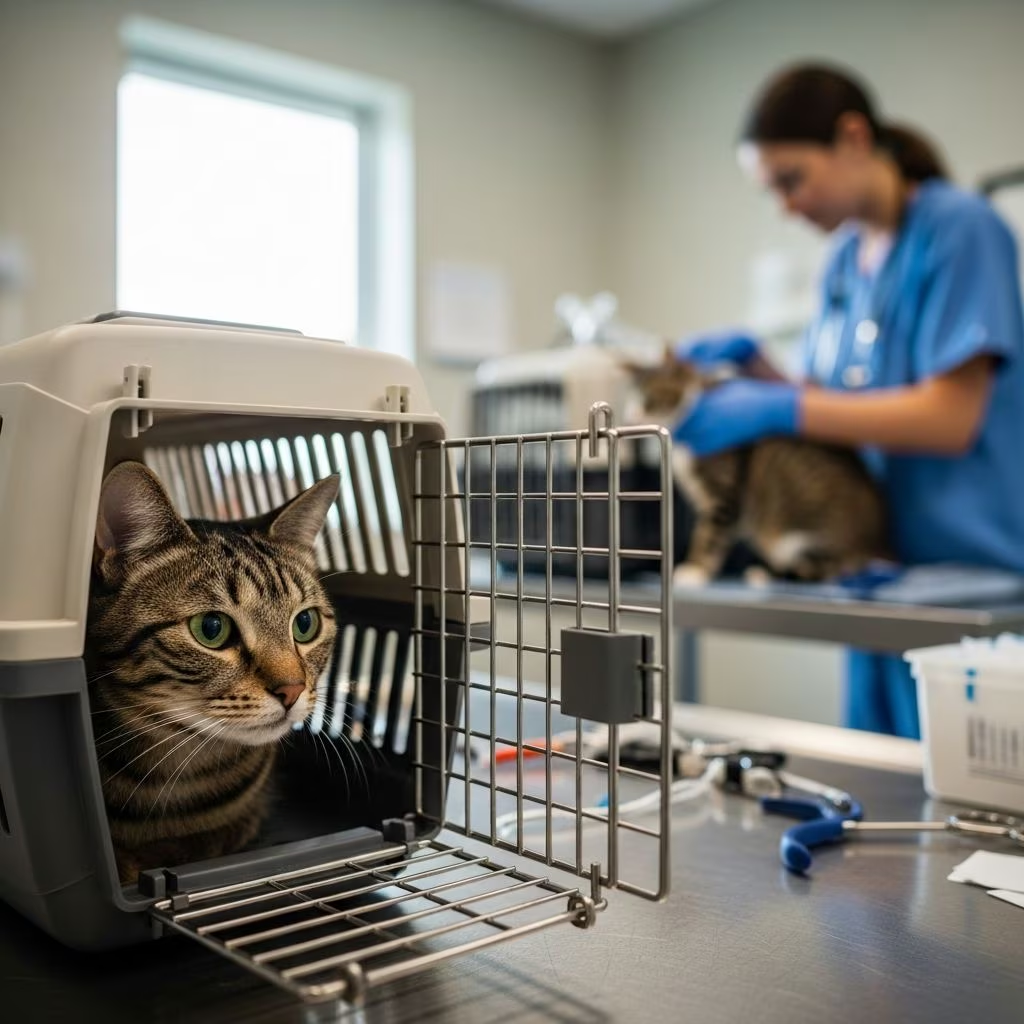
Once trapped, cats are transported to licensed veterinary clinics where they undergo comprehensive health evaluations. Veterinarians assess each cat’s overall condition, vaccinate status, and any existing medical concerns. Female cats are spayed while males are neutered, preventing future reproduction and eliminating behaviors associated with mating urges. This surgical intervention represents the cornerstone of population control within TNVR programs.
Vaccination and Disease Prevention
All cats enrolled in TNVR programs receive vaccination against rabies, a critical public health measure. Additionally, cats receive booster vaccinations for feline diseases including Feline Rhinotracheitis, Calicivirus, and Panleukopenia (FRCPC). These vaccinations protect both the cats themselves and the broader community, reducing disease transmission and improving overall public health outcomes.
Ear-Tipping for Identification
Following sterilization and vaccination, cats receive an ear-tip—a surgical removal of the tip of the left ear. This universally recognized symbol indicates that a cat has been through TNVR and is sterilized. Ear-tipping serves a critical function in program management, allowing caregivers and animal control officials to quickly identify which cats have already been processed, preventing unnecessary re-trapping and redundant medical procedures.
Return to Community
After recovery from surgery, cats are returned to their original trapping locations. This is a crucial component of TNVR philosophy—cats are not removed from their environment but rather managed in place. Community members and volunteer caregivers provide ongoing support including food, water, and shelter, ensuring that returned cats maintain good health and quality of life in their outdoor homes.
Benefits of TNVR for Community Cats
TNVR programs deliver substantial improvements to the lives of community cats while simultaneously addressing broader ecological and public health concerns.
Population Stabilization
The primary benefit of TNVR is population stabilization and eventual decline. By preventing new litters from being born, sterilized colonies maintain a stable size that gradually decreases as cats age naturally. This contrasts sharply with lethal control methods, which create a vacuum effect—removing cats only to have new ones migrate into the territory, perpetuating an endless cycle of killing that fails to reduce populations.
Health and Longevity Improvements
Spaying and neutering cats provides direct health benefits that extend their lifespans and improve quality of life. Female cats no longer experience heat cycles, eliminating the stress and health risks associated with continuous reproductive cycling. The risk of mammary gland tumors, ovarian cancer, and uterine cancer is significantly reduced or eliminated, especially when spaying occurs before the first heat cycle. Neutered males exhibit reduced aggression, decreased desire to roam, and elimination of testosterone-related behavioral issues.
Behavioral Improvements
Sterilization dramatically reduces problematic behaviors that generate community complaints. Male cats no longer mark territory with strong-smelling urine spray, eliminating one of the most common sources of conflict between communities and cat populations. Fighting between unaltered males decreases substantially, reducing injury rates and associated noise disturbances. These behavioral improvements lead to better coexistence between cats and human communities.
Disease Control and Public Health
Vaccination against rabies and other feline diseases protects both the cats and the human community. TNVR programs reduce disease transmission within cat colonies and decrease the public health risk posed by unvaccinated animals. This preventive approach is far more effective than reactive measures that often occur only after disease incidents.
TNVR Versus Lethal Control: Why TNVR Succeeds Where Killing Fails
The comparison between TNVR and traditional lethal control methods reveals why TNVR has emerged as the preferred approach among animal welfare professionals, public health experts, and increasingly, municipal governments.
Lethal control has been employed by animal services agencies for decades, yet the persistent problem of large outdoor cat populations demonstrates its fundamental ineffectiveness. Killing animals as a population control method fails because of ecological and behavioral principles. When cats are removed from an area, the territorial vacuum they leave behind attracts new cats from surrounding territories, leading to a perpetual cycle of trapping and killing that never resolves the underlying population issue. This approach wastes resources, fails to achieve its stated objectives, and perpetuates unnecessary killing.
TNVR breaks this destructive cycle by stabilizing populations at manageable levels without lethal intervention. A well-managed TNVR program creates a sterilized, vaccinated population that naturally declines over time as cats age. New cats arriving in an area are promptly trapped and sterilized, preventing population growth. This approach aligns with public values, as surveys consistently show that communities prefer humane management to killing. TNVR also reduces animal shelter admissions and operating costs, freeing resources for other animal welfare initiatives.
Community Involvement and Program Success
The success of TNVR programs depends fundamentally on strong community engagement and volunteer participation. Good Samaritans throughout neighborhoods serve as caregivers, providing ongoing food, water, and shelter for cats that have completed TNVR procedures. This continued attention improves cats’ overall health, longevity, and quality of life.
Volunteers play multiple critical roles in TNVR operations. They help trap cats, assist animal services in locating other cats in need of services, and identify newly arrived cats requiring sterilization and vaccination. Community cat caregivers monitor their areas, reporting changes in colony composition and identifying sick or injured animals requiring special attention. In well-managed programs, critical data is collected regarding population dynamics, which can support grant applications and secure funding for program expansion.
Educational outreach is another essential component of successful TNVR programs. Public education helps community members understand the difference between owned pets and community cats, the purpose and methods of TNVR, and how they can support local programs. This outreach transforms potential opponents into program supporters by demonstrating tangible benefits.
Distinguishing Community Cats from Owned Pets
A critical question often arises: what happens if someone traps an owned pet cat? TNVR programs address this concern through careful protocols. If a cat is found outdoors with a collar and identification, or possessing a microchip, the cat can be scanned and returned home immediately. Community cats, by definition, are cats found outdoors with no indication of ownership, lacking collars, identification tags, or microchips.
In successful TNVR programs, all outdoor cats found without ownership indicators are treated equally—sterilized, vaccinated, ear-tipped, and returned to their trapping location. This consistent approach is essential because the success of any community cat program depends on sterilizing the majority of, if not all, outdoor cats in a given vicinity. Differential treatment would undermine population stabilization efforts and create pockets of unsterilized cats that continue reproducing.
Program Implementation and Accessibility
Many municipalities have established TNVR programs to make services accessible to community members. Programs typically operate through partnerships with licensed veterinary clinics and animal welfare organizations. Participating agencies provide training on humane trapping techniques, assist with logistics, and often provide or loan trapping equipment.
Community members typically follow straightforward procedures to access TNVR services. These usually include identifying whether a cat qualifies for the program, scheduling appointments at partner clinics, obtaining necessary equipment such as traps, and transporting cats to veterinary appointments. Some programs offer trap rentals at minimal cost or no cost, making participation financially feasible for community members. After surgery and recovery, caregivers pick up cats and return them to their original locations, providing necessary aftercare including food, water, and shelter.
Program Costs and Financial Support
Many TNVR programs offer free or heavily subsidized services to reduce financial barriers to participation. Some programs cover all surgical and vaccination costs through public funding or philanthropic support, requiring only minimal deposits that are refunded upon trap return. This financial accessibility dramatically increases program participation and population coverage, essential for achieving program objectives.
Special Considerations for Program Participants
Community members participating in TNVR programs should understand several important considerations. Injured or diseased cats may not be candidates for return to outdoor environments and instead receive appropriate care through shelter or veterinary services. This compassionate approach ensures that only cats capable of thriving outdoors are returned, while those requiring ongoing medical care receive it.
Studies have demonstrated that generally less than one percent of community cats in TNVR programs are too sick or injured to be returned to their neighborhoods. This remarkable statistic reflects both the overall resilience of community cats and the humane care provided throughout the TNVR process.
Frequently Asked Questions About TNVR
Q: Is TNVR effective at reducing cat populations?
A: Yes, TNVR is highly effective. By preventing new litters and stabilizing colony size, TNVR populations gradually decline over time as cats age naturally. This contrasts with lethal control, which fails due to immigration from surrounding areas.
Q: Does TNVR reduce shelter admissions?
A: Yes, TNVR programs significantly reduce shelter admissions and operating costs by managing populations outside shelters, reducing euthanasia rates, and improving community cooperation with animal services.
Q: How can I identify a community cat versus a lost pet?
A: Community cats typically lack collars, identification tags, and microchips. Lost pets often wear collars with identification. If a cat appears tame or has an ear tip, it may have already been through TNVR.
Q: What if a cat is too sick to return after TNVR?
A: Cats with serious injuries or illnesses are not released back to outdoor environments. Instead, they receive appropriate veterinary care or shelter placement, ensuring humane outcomes.
Q: How long does the TNVR process take?
A: The process typically takes one to two days, including trapping, surgery, recovery, and return to the original location. Specific timelines vary by program.
Q: Can I participate in TNVR even if I don’t own a trap?
A: Many programs offer trap rental at minimal cost or provide traps free of charge. Contact your local animal services or welfare organizations for specific equipment availability.
Q: Why are cats returned rather than placed in homes?
A: Community cats are adapted to outdoor living and often cannot adjust to indoor environments. TNVR respects their nature while providing humane management that improves their quality of life.
Q: Does TNVR address abandonment and irresponsible pet ownership?
A: TNVR manages existing populations while separate initiatives address abandonment through enforcement of pet retention laws and promotion of responsible ownership practices.
References
- Trap-Neuter-Vaccinate-Return (TNVR) for Cats: FAQs — Best Friends Animal Society. 2024. https://bestfriends.org/pet-care-resources/trap-neuter-vaccinate-return-tnvr-cats-faqs
- Trap-Neuter-Vaccinate-Return Community Cat Program — San Bernardino County Department of Public Health Animal Care. 2024. https://animalcare.sbcounty.gov/tnvr/
- What is Trap-Neuter-Vaccinate-Return (TNVR) — SCRUFF Cats. 2024. https://scruffcats.org/what-is-tnvr/
- Trap-Neuter-Vaccinate-Return for Community Cats — Miami-Dade County Government. 2024. https://www.miamidade.gov/global/service.page?Mduid_service=ser1599404922449638
- Trap Neuter Vaccinate Return (TNVR) — International Cat Care. 2024. https://icatcare.org/cat-friendly-solutions-for-unowned-cats/trap-neuter-vaccinate-return-tnvr
- The Catch-Neuter-Vaccinate-Return Approach — Four Paws International. 2024. https://www.four-paws.org/campaigns-topics/topics/help-for-stray-animals/catch-neuter-vaccinate-return



