

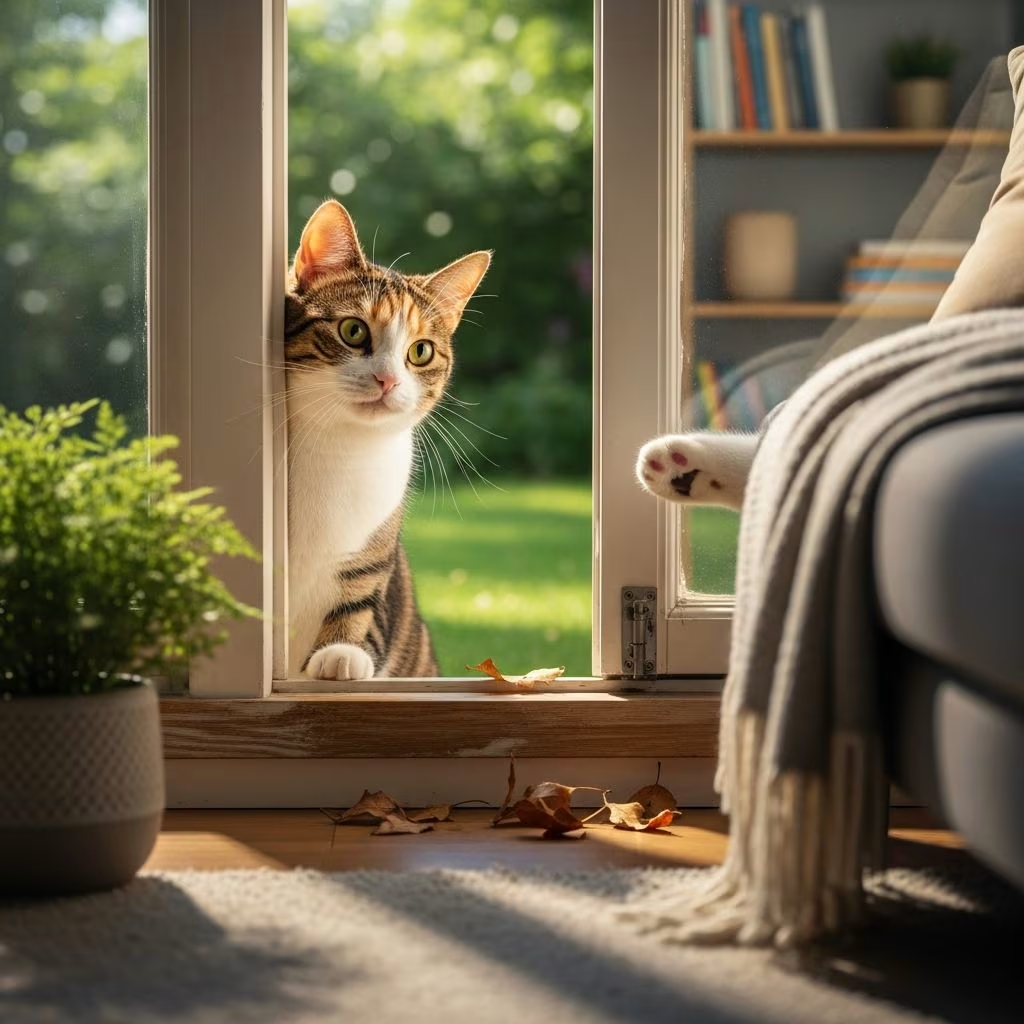
Bringing an outdoor cat fully indoors offers significant safety benefits, including protection from traffic, predators, and diseases, but it demands a thoughtful approach to prevent stress and behavioral issues. Success hinges on gradual habituation, mental stimulation, and building new routines that satisfy their natural instincts.
Understanding the Challenges of the Switch
Outdoor cats thrive on exploration, hunting, and territorial patrols, so sudden confinement can lead to frustration shown through excessive meowing, scratching doors, or destructive behavior. Their independence makes them resistant to change, unlike kittens accustomed to indoor life from the start. Adult outdoor cats may vocalize loudly at doors or windows, attempting escapes, which underscores the need for patience and structured transition plans.
Key challenges include boredom from limited space, unmet hunting drives, and disrupted routines like outdoor feeding or roaming. Addressing these proactively ensures the cat views the home as a rewarding environment rather than a prison.
Preparing Your Home for an Indoor Cat
Before restricting access, optimize your living space to replicate outdoor appeal. Vertical territories are crucial—cats feel secure climbing high, so install multi-level cat trees, wall shelves, and window perches for observation points.
- Vertical spaces: Use floating shelves or tall towers to create climbing paths mimicking trees.
- Window access: Secure bird feeders outside windows for safe ‘hunting’ views without escape risks.
- Safe enclosures: Consider a catio—an outdoor screened patio extension—for fresh air and stimuli under supervision.
Rotate toys weekly to maintain novelty: feather wands, balls, and laser pointers engage play-hunting instincts. Puzzle feeders dispense kibble through problem-solving, turning meals into interactive challenges that fulfill foraging needs.
Gradual Transition Strategies
Abrupt lockdown often backfires; instead, phase in restrictions over weeks. Start by feeding meals indoors exclusively, delaying door access post-eating to associate home with satisfaction.
- Week 1: Indoor feeding only; reward calm behavior with treats.
- Week 2: Short supervised indoor play sessions, gradually extending time.
- Week 3+: Full indoor confinement with enrichment ramps up.
Monitor for stress signals like hiding, aggression, or appetite loss. If present, slow the pace and increase comforts like soft bedding or pheromone diffusers.
Mastering Positive Reinforcement Training
Clicker training leverages positive reinforcement, marking desired behaviors with a click sound paired to treats, fostering cooperation without force. This method empowers cats, making them eager participants in their new lifestyle.
Basic Clicker Setup:
- Acquire a clicker device.
- Charge it: Click, then immediately treat repeatedly until the cat anticipates rewards.
- Select high-value treats like tuna or chicken bits.
| Training Level | Method | Example Behavior |
|---|---|---|
| Beginner | Capturing | Sit naturally; click when butt hits floor. |
| Intermediate | Luring | Spin: Lure with treat in circular motion. |
| Advanced | Shaping | Roll over: Reward incremental rolls. |
Sessions last 3-5 minutes, 2-3 times daily, preventing fatigue. Progress from basic sits to complex tricks like ‘high-five’ or ‘stay,’ building confidence and indoor focus.
Enrichment Techniques to Combat Boredom
Indoor life demands proactive stimulation. Interactive toys encourage movement, while food puzzles mimic hunting. Scatter kibble or use treat balls to promote natural searching.
- Puzzle feeders and interactive toys for mental workouts.
- Harness training for supervised outdoor walks, expanding horizons safely.
- Daily play mimicking prey chase with wand toys.
Trackers or apps monitoring activity ensure adequate exercise, aiming for 15-30 minutes of vigorous play daily.
Handling Common Behavioral Hurdles
Door-dashing attempts require management: Install baby gates or magnetic door catches. Redirect scratching to posts treated with catnip. Excessive vocalizing responds to ignoring attention-seeking while rewarding quietude.
For litter box issues, provide multiple boxes with varied litters, placing them in quiet spots. Stress from transition may cause accidents; clean thoroughly and maintain routines.
Health and Wellness Considerations
Indoor cats face obesity risks from inactivity, so monitor weight and adjust diets. Regular vet check-ups screen for indoor-specific issues like dental disease. Spaying/neutering curbs roaming urges rooted in hormones.
Vaccinations and parasite preventives remain essential, as indoor doesn’t mean risk-free from fleas tracked in.
Advanced Training for Long-Term Success
Once basics are mastered, teach ‘stay’ by rewarding prolonged sits amid distractions, desensitizing to indoor boundaries. Counter-conditioning pairs door proximity with treats, reducing escape fixation.
Shaping builds chains: Lie down, then roll, culminating in full routines that tire mentally and physically.
FAQs
Can any outdoor cat become indoor?
Most can with time, though feral or very elderly cats may need compromises like limited outdoor access.
How long does transition take?
Typically 2-6 weeks, varying by cat’s age and personality.
What if my cat hates the litter box indoors?
Experiment with box types/sizes and unscented litter; consult a vet for medical rules-outs.
Is clicker training suitable for adults?
Yes, cats of all ages respond well to positive methods.
Do indoor cats live longer?
Generally yes, due to reduced trauma and disease exposure.
Monitoring Progress and Adjustments
Journal behaviors weekly: Note play engagement, eating, and stress levels. Adjust based on responses—more vertical space if climbing persists, novel toys for waning interest. Long-term, a content indoor cat grooms normally, plays actively, and seeks affection.
This holistic approach not only succeeds in the transition but enhances the human-cat bond through shared training triumphs.
References
- Ultimate Guide to Cat Training — Outdoor Bengal. 2023. https://www.outdoorbengal.com/blogs/clicker-training-cats/cat-training-guide
- How To Train Your Cat in 5 Easy Steps — Cats.com. 2024. https://cats.com/how-to-train-your-cat
- How to Train a Cat — British Psychological Society. 2022-10-01. https://www.bps.org.uk/psychologist/how-train-cat
- Cat Behavior and Training – Enrichment for Indoor Cats — VCA Animal Hospitals. 2025. https://vcahospitals.com/know-your-pet/cat-behavior-and-training—enrichment-for-indoor-cats
- Training Your Cat To Stay Inside — Wisconsin Humane Society. 2023. https://www.wihumane.org/behavior/ask-the-experts/cat-behavior/training-your-cat-to-stay-inside
- Seven Enrichment Ideas to Keep Your Indoor Cat Entertained — Animal Humane Society. 2024. https://www.animalhumanesociety.org/resource/seven-enrichment-ideas-keep-your-indoor-cat-entertained



