

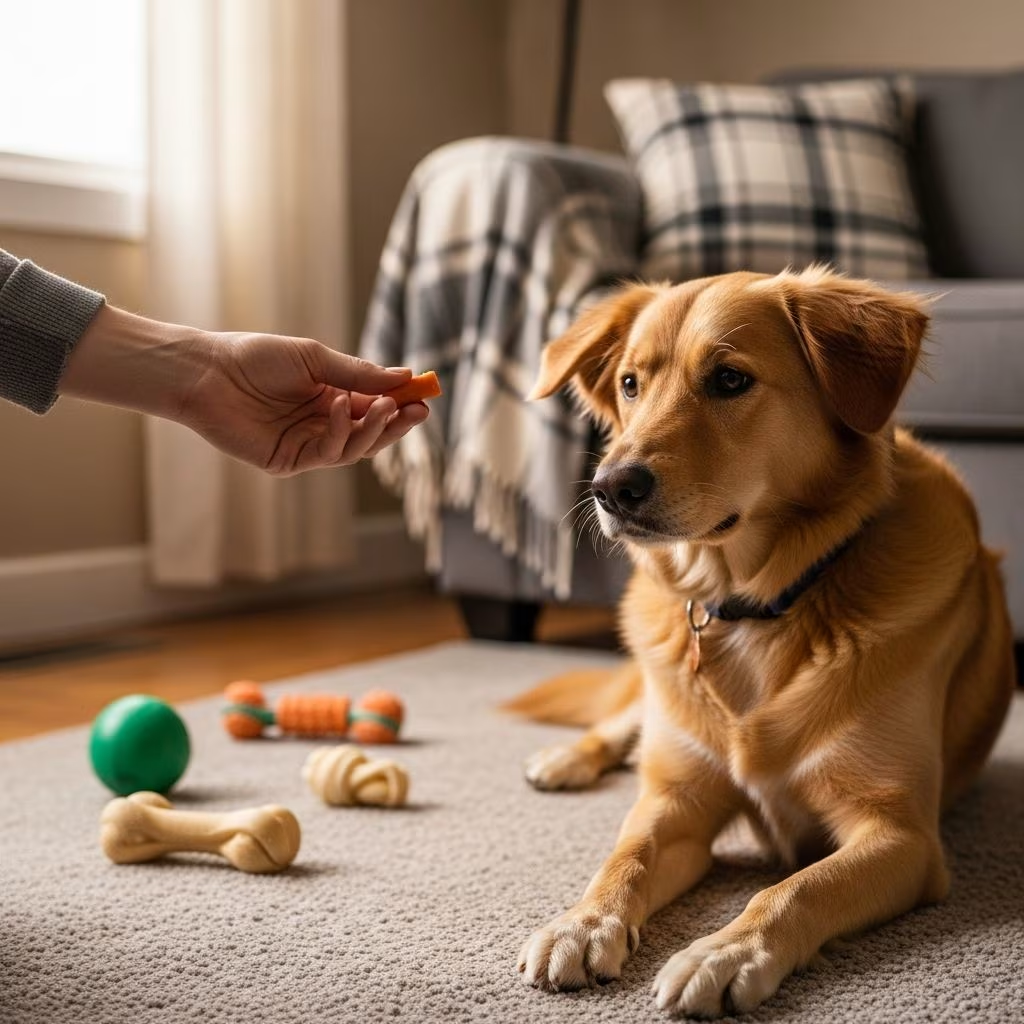
Changing unwanted behaviors in dogs doesn’t require punishment or scolding. Instead, focus on teaching alternative actions that naturally prevent the problem while building a stronger bond with your pet. This approach leverages positive reinforcement to create lasting habits, ensuring your dog chooses better options willingly.
Understanding the Roots of Unwanted Behaviors
Dogs exhibit behaviors driven by instinct, emotion, or past rewards. For instance, jumping up might stem from excitement seeking attention, while digging could fulfill a need for mental stimulation. Recognizing these triggers is the first step in effective modification.
Behaviors persist because they self-reward: barking chases away perceived threats, counter-surfing yields tasty scraps. Without addressing this payoff, simple commands like “no” fall short, often leading to frustration or fear responses.
Core Principles of Positive Replacement Training
Replacement training emphasizes incompatible behaviors—actions physically impossible alongside the unwanted one. A dog can’t dig while fetching a toy or bark while holding a treat in its mouth.
- Positive Reinforcement: Reward desired actions with high-value treats like chicken or cheese to outcompete old rewards.
- Consistency: Reinforce new behaviors every time initially, fading rewards as habits form.
- Threshold Management: Practice below the point of failure to prevent rehearsal of bad habits.
- Proactive Setup: Anticipate triggers and cue alternatives before issues arise.
According to guidelines from animal welfare organizations, force-free methods prioritizing reinforcement outperform aversive techniques, reducing stress and enhancing learning.
Step-by-Step Guide to Implementing Replacements
Follow this structured process to swap habits systematically.
- Identify the Behavior: Observe context, triggers, and payoffs precisely.
- Select Incompatible Alternative: Choose simple, rewarding actions like “sit” or “look”.
- Teach in Low-Distraction Settings: Break into tiny steps, marking success with a clicker or marker word.
- Generalize Across Situations: Gradually add distractions, maintaining high reinforcement rates.
- Extinguish Old Habits: Withhold rewards for unwanted actions while boosting new ones.
Patience is essential; old patterns may linger until new ones dominate through repeated success.
Practical Examples for Common Issues
Apply replacements to everyday challenges with these tailored strategies.
| Problem Behavior | Trigger | Replacement Strategy | Why It Works |
|---|---|---|---|
| Door Dashing | Excitement at openings | Train “wait” or “down-stay” before door opens | Physically prevents bolting; rewards patience |
| Jumping on Guests | Seeking attention | Cue “sit” and reward with treats/attention | Sitting incompatible with jumping; redirects energy |
| Barking at Doorbell | Alert to visitors | Teach “get toy” or “go to mat” on cue | Mouth occupied or position changed |
| Counter Surfing | Food scavenging | Practice “leave it” with eye contact or toy carry | Focus shifts from counter to handler |
| Digging in Yard | Boredom/stress relief | Direct to fetch or puzzle toys in designated spot | Fulfills need constructively |
Customize based on your dog’s motivations—play for high-drive pups, food for gourmands.
Advanced Techniques for Stubborn Cases
For reactive dogs, layer methods like differential reinforcement: ignore triggers while rewarding calm alternatives. Shaping absence reinforces any non-problem behavior, ideal for fear-based issues.
Put behaviors on cue counter-intuitively: teach pawing as “wave” on command, then ignore off-cue occurrences. It fades naturally outside prompted moments.
Incorporate emotional addressing: if anxiety fuels reactivity, pair triggers with counter-conditioning using ultra-high rewards at safe distances.
Tools and Resources to Enhance Success
- Clickers: Precise timing for marking exact moments of success.
- High-Value Reinforcers: Rotate meats, cheeses to maintain interest.
- Enrichment Toys: Kongs, sniff mats for self-directed alternatives.
- Training Logs: Track progress to spot patterns and adjust.
Short, frequent sessions (5-10 minutes) prevent fatigue, maximizing retention.
Overcoming Common Training Pitfalls
Avoid these errors for smoother progress:
- Pushing beyond threshold, rehearsing bad habits.
- Inconsistent rewards, confusing the dog.
- Using punishment, risking fear/aggression.
- Neglecting generalization, limiting real-world application.
If regression occurs, return to basics with higher reinforcement, ensuring the new behavior pays off better.
Long-Term Maintenance and Prevention
Once established, randomize rewards to mimic real life, preventing extinction bursts where old behaviors surge briefly.
Build a reinforcement history rich in positives, creating confident dogs eager for guidance. Regularly proof in novel environments to solidify habits.
Frequently Asked Questions (FAQs)
How long does it take to see changes?
Typically 2-4 weeks with daily practice, varying by dog age, history, and consistency.
What if my dog ignores the new cue during triggers?
Reduce intensity, increase reward value, and add guidance like luring initially.
Can this work for aggressive behaviors?
Yes, under threshold with professional oversight; focus on safety and emotional roots.
Do I need professional help?
For severe cases like bites or extreme reactivity, consult certified trainers using force-free methods.
Is ignoring effective alone?
No—pair with active teaching of alternatives to fill the behavioral void.
Building a Balanced Lifestyle for Your Dog
Integrate replacements into daily routines: morning walks with heel cues, evenings with mat settles. Combine with exercise, mental games, and socialization for holistic well-being.
This philosophy shifts from suppression to empowerment, fostering dogs that thrive in human homes.
References
- Train a Replacement Behavior to Get Rid of Annoying Behaviors — Butte Humane Society. 2023. https://buttehumane.org/train-a-replacement-behavior-to-get-rid-of-annoying-behaviors/
- #Dogthoughts: Say NO to “NO”, Ignoring and Yes to Alternative Behavours — Welfare4Animals. 2022. https://www.welfare4animals.org/blog/dogthoughts-say-no-to-no-ignoring-and-yes-to-alternative-behaviour
- A Behavior Change Guide — Chill Out Dog Training. 2024. https://chilloutdogtraining.com/behavior-modification/a-behavior-change-guide/
- Teaching an Incompatible Behavior — The Hiker Pup. 2021-07-12. https://www.thehikerpup.com/academy-classroom-blog/2021/7/12/teaching-an-incompatible-behavior
- The Eight Ways of Changing Behavior — Karen Pryor Clicker Training. 2023. https://clickertraining.com/the-eight-ways-of-changing-behavior/
- Alternative Behaviors – What They Are And Why We Use Them — Capital Canines NY. 2023. https://capitalcaninesny.com/alternative-behaviors-what-they-are-and-why-we-use-them/
- Differential Reinforcement of Alternative Behaviors — Paws and Effect Blog. 2019-09-28. https://pawsandeffectblog.com/2019/09/28/differential-reinforcement-of-alternative-behaviors-a-different-way-to-play/



