

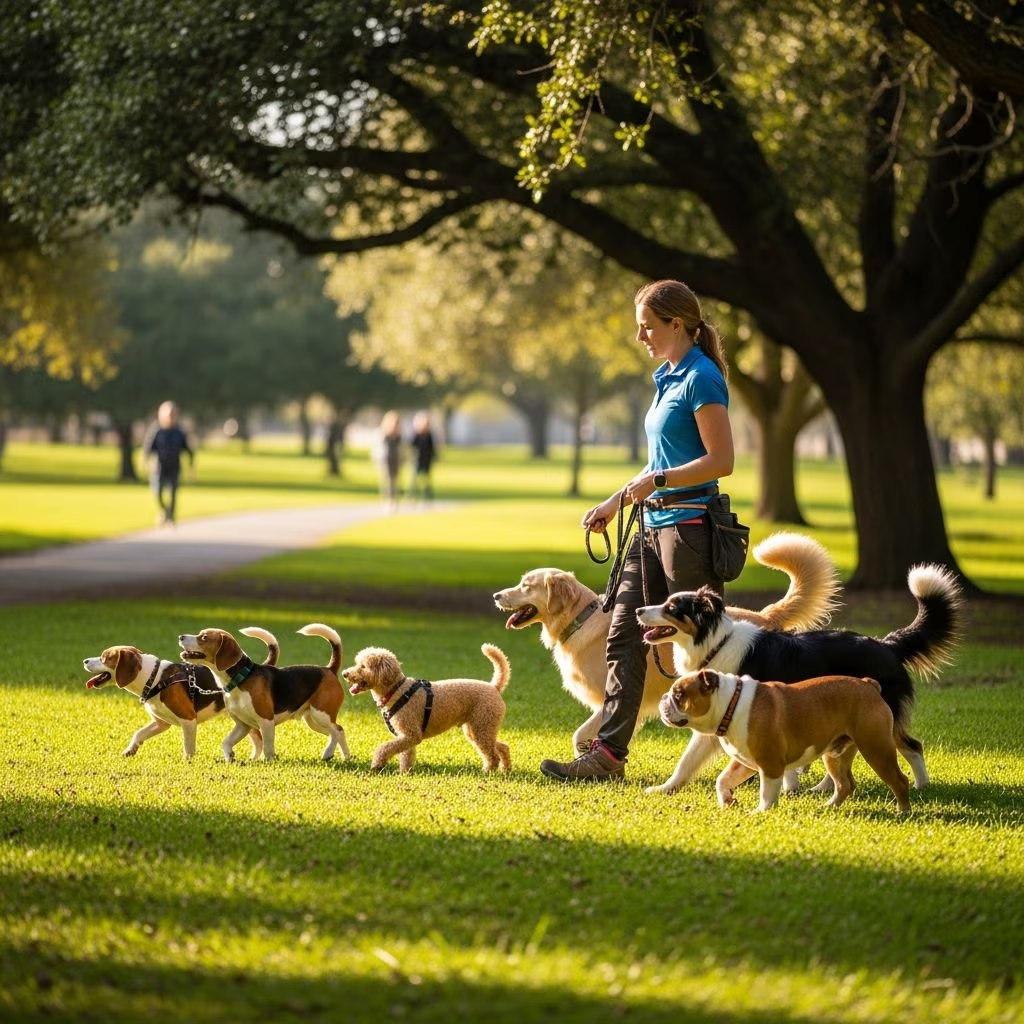
Changing a dog’s unwanted behaviors requires patience, consistency, and science-based methods that prioritize the animal’s emotional well-being. Techniques such as desensitization, counter-conditioning, and positive reinforcement help rewire responses to triggers, leading to lasting improvements without harm.
Foundations of Effective Behavior Change
Successful dog behavior modification starts with understanding the root causes of issues like fear, anxiety, or excitement. Dogs react based on past experiences and instincts, so identifying triggers—such as strangers, loud noises, or other animals—is crucial. Management comes first: avoid situations that provoke problems to prevent rehearsal of bad habits and give the dog’s brain a break.
Build a strong communication foundation by teaching basic cues like eye contact or touch. These “check-in” behaviors redirect focus and create opportunities for rewards. Consistency across family members ensures the dog receives clear signals, accelerating progress.
Core Techniques for Lasting Results
Modern approaches emphasize positive associations over punishment, which can worsen fear or aggression. Key methods include gradual exposure, reward pairing, and habit replacement, all supported by veterinary and training experts.
Desensitization: Building Tolerance Step by Step
Desensitization reduces sensitivity to triggers through controlled, incremental exposure. Start far below the dog’s stress threshold—where they remain calm—and gradually decrease distance or intensity. For a dog fearful of other dogs, begin exposures at a safe distance, rewarding calm behavior to reinforce tolerance.
- Assess the dog’s threshold: Note the point where reactions begin.
- Expose sub-threshold: Use distance, volume, or speed to stay safe.
- Progress slowly: Only advance when calm responses are consistent.
- Combine with rewards: Pair exposure with high-value treats for best results.
This method works because it prevents overwhelming the dog, allowing natural habituation over time.
Counter-Conditioning: Rewiring Emotional Responses
Counter-conditioning changes a trigger’s emotional impact by associating it with positive outcomes, like treats or play. For leash reactivity, feed treats when a trigger appears at a distance, creating a new link: “trigger = good things.” The dog doesn’t need to perform a task; the goal is shifting feelings from fear to anticipation.
Examples include:
- Thunder phobia: Play low-volume recordings paired with meals.
- Stranger fear: Toss treats when guests approach calmly.
- Vacuum anxiety: Reward while the device is off, then running.
Success hinges on keeping exposures below threshold and using the dog’s highest-value rewards.
Positive Reinforcement: Encouraging Desired Actions
Reward good behavior immediately to increase its frequency. Use treats, praise, toys, or clickers to mark precise moments of success. For jumping, ignore the behavior and reward four-on-the-floor calm.
| Behavior Issue | Reinforcement Strategy | Example Reward |
|---|---|---|
| Barking at doorbell | Reward silence or sit | High-value treat |
| Pulling on leash | Mark loose leash | Praise + play |
| Chewing furniture | Redirect to toy | Chew toy + affection |
Clicker training enhances this by providing a consistent “yes” marker, bridging the gap between action and reward.
Redirection and Response Substitution
Redirect energy to acceptable outlets before unwanted behaviors escalate. Teach alternatives like “sit” instead of jumping or “look at me” for reactivity. Practice in low-distraction settings, then generalize to real scenarios.
Shaping builds complex behaviors by rewarding approximations. For “down,” start with head lowering, progressing to full position.
Creating a Comprehensive Modification Plan
Tailor plans to specific issues, breaking them into phases: management, skill-building, and trigger reintroduction. Track progress in a journal, noting triggers, responses, and adjustments. Patience is key—changes can take weeks to months.
- Identify and Manage: List triggers; avoid them initially.
- Teach Alternatives: Build a behavior toolbox with rewards.
- Implement DS/CC: Gradually expose while counter-conditioning.
- Monitor and Adjust: Fade rewards as independence grows.
- Maintain: Reinforce sporadically to prevent regression.
For aggression or severe anxiety, consult a veterinary behaviorist (DACVB) or certified trainer (CPDT). Medications may support the process in complex cases.
Common Pitfalls and How to Avoid Them
Avoid pushing past thresholds, which reinforces fear. Punishment risks fallout like redirected aggression. Flooding—forcing exposure—is outdated and harmful.
- Inconsistency: Everyone must follow the plan.
- Impatience: Rushing leads to setbacks.
- Ignoring Health: Rule out medical issues first.
Frequently Asked Questions (FAQs)
Is behavior modification suitable for all dogs?
Yes, when applied correctly by qualified professionals, it’s effective for most issues, from reactivity to anxiety.
How long does it take to see results?
Weeks to months, depending on the issue’s severity and consistency.
Can I do this without a trainer?
Mild cases yes, but severe ones benefit from expert guidance.
What if my dog regresses?
Return to management and lower intensity; consistency rebuilds progress.
Are treats always necessary?
They speed learning but can be phased out for life rewards like walks.
Real-World Success Stories
Owners report dramatic changes: a reactive walker now ignores triggers, earning treats for focus. Another dog’s storm fear vanished after gradual audio pairings. These highlight the power of humane methods.
Integrate exercise, enrichment, and routine for holistic success. A tired, mentally stimulated dog learns faster.
References
- 8 Proven Techniques for Successful Pet Behavior Modification — Focused Dog Training. 2026-01-09. https://focuseddogtraining.com/2026/01/09/successful-pet-behavior-modification/
- 5 Proven Dog Behavior Modification Techniques That Actually Work — K-9 Specialist. N/A. https://k-9specialist.com/5-proven-dog-behavior-modification-techniques/
- What Is Behavior Modification? — Chewy Education. N/A. https://www.chewy.com/education/dog/training-and-behavior/what-is-behavior-modification
- Effective Dog Behavior Modification Techniques — Proven Dog Training. N/A. https://www.provendogtraining.com/effective-behavior-modification-techniques-for-dogs/
- Behavior Modification — Canine Cohen Dog Training. N/A. https://caninecohen.com/behavior
- Behavior Modification for Dogs — CattleDog Publishing (Christine D. Calder, DVM, DACVB). N/A. https://cattledogpublishing.com/blog/behavior-modification-for-dogs/
- Behavior Modification in Dogs — Merck Veterinary Manual. N/A. https://www.merckvetmanual.com/dog-owners/behavior-of-dogs/behavior-modification-in-dogs



