

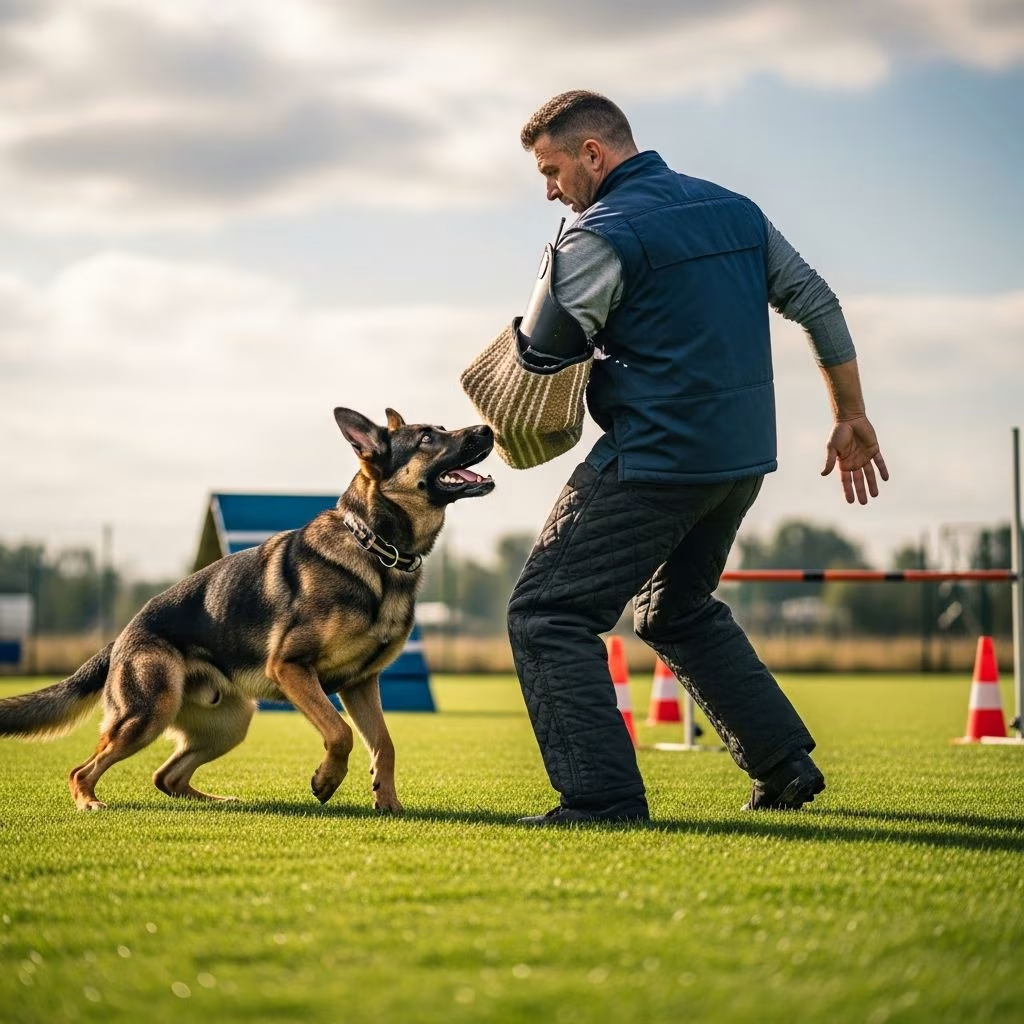
Developing a dog into an effective protector requires a structured approach that emphasizes obedience, confidence, and controlled responses to threats. This process builds a strong partnership between you and your dog while ensuring safety for everyone involved.
Selecting the Ideal Breed and Temperament
Choosing the right dog sets the foundation for successful protection training. Breeds like German Shepherds, Rottweilers, and Belgian Malinois often excel due to their intelligence, strength, and natural instincts for guarding. However, individual temperament matters more than breed alone—look for puppies or adults with stable nerves, eagerness to work, and sociability.
Assess potential dogs through temperament testing: observe reactions to strangers, noises, and handling. A good protection candidate remains calm yet alert, without excessive fear or aggression. Early evaluation prevents future issues and ensures the dog fits your lifestyle.
Building Core Obedience Skills
Obedience forms the bedrock of protection work. Start with fundamental commands to establish control and trust.
- Sit and Stay: Teach these for impulse control. Use treats to lure into position, then add duration and distance.
- Come (Recall): Practice in low-distraction areas, gradually introducing challenges like toys or people. Reward heavily to make compliance rewarding.
- Heel and Down: Ensure off-leash reliability, vital for real-world scenarios.
Positive reinforcement—praise, toys, or food—accelerates learning and boosts confidence. Sessions should be short, frequent, and fun to maintain motivation.
Socialization for Discernment
Contrary to myths, effective protectors must distinguish friends from foes. Begin socialization during puppyhood, exposing the dog to diverse people, animals, pets, environments, and stimuli.
Key goals include comfort around strangers in neutral settings and confidence in public spaces. Controlled introductions prevent overprotectiveness; aim for polite tolerance rather than instant bonding. Daily walks and puppy classes build resilience against surprises.
Desensitization complements this: gradually introduce loud sounds, crowds, and novel objects to foster calm responses, reducing false alarms.
Mastering Alert and Bark Commands
A powerful bark deters intruders without physical contact. Train “speak” by triggering natural barking (e.g., doorbell sound or toy tease), then pairing with the cue just before the bark. Reward immediately.
Balance with “quiet”: wait for silence, then reward. For persistent barkers, use a down command to interrupt. Practice in varied contexts to ensure on-command reliability.
| Command | Purpose | Training Tip |
|---|---|---|
| Speak | Alert bark | Trigger naturally, cue pre-bark |
| Quiet | Stop barking | Reward silence; use down-stay |
| Watch | Focus on threat | Target training with helper |
Defining and Patrolling Territory
Help your dog understand boundaries by walking the property perimeter regularly. Leash during guided tours, then allow supervised free roam. This imprints the area as “theirs,” triggering natural vigilance.
Combine with obedience: practice sits at corners or stays near gates. Consistent routines reinforce territorial awareness without encouraging roaming.
Stranger and Threat Response Drills
Simulate encounters to teach appropriate reactions. With dog leashed, have a trusted helper approach assertively—banging gates or calling out. Reward barking and alert posture; helper flees to reinforce success.
Progress to off-leash, then out-of-sight tests. Escalate realism gradually: add costumes, night conditions, or multiple actors. Always prioritize handler control.
Physical Conditioning and Agility
A protector needs fitness for endurance and quick action. Incorporate agility drills: jumps, tunnels, weave poles. These enhance coordination, speed, and stamina.
Daily exercise prevents boredom-induced issues. Scenario integration—protection tasks amid obstacles—mimics real threats.
Advanced Techniques: Targeting and Drives
Targeting teaches focus on specific threats: use a glove or sleeve as a target, rewarding nose-touches that evolve into grips. Develop prey and defense drives through play, transitioning to serious protection.
Phased programs include foundational obedience, skill-building, functionality, and integration across mindsets and environments.
Handler-Dog Partnership Development
Train yourself alongside the dog. Learn body language cues: stiff tail means alert; ears back signals stress. Practice clear signals and timing for commands.
Mutual respect ensures reliability; handlers must project calm authority.
Ethical Training Principles
Humane methods only: maximize positive reinforcement, minimize corrections. Avoid fear-based tactics that erode trust or cause shutdowns.
Prioritize welfare—monitor for stress, ensure rest, vet-check regularly. Ethical trainers balance motivation with precision.
Ongoing Maintenance and Refinement
Protection skills fade without practice. Weekly refreshers, plus annual evaluations, keep edges sharp. Competitions or trials provide benchmarks.
Adapt to life changes: new family members or moves require re-socialization.
Common Pitfalls and Solutions
- Over-Aggression: Solution: Robust socialization and recall.
- False Alarms: Solution: Desensitization and territory training.
- Handler Errors: Solution: Consistent cues, no mixed signals.
Legal and Safety Considerations
Know local laws on guard dogs—some require liability insurance. Never leave unsupervised with children or vulnerable people. Professional certification adds credibility.
Balance protection with family-friendliness; a good guardian protects without endangering innocents.
Frequently Asked Questions (FAQs)
Can any dog be trained for protection?
No, select breeds with working heritage and stable temperaments yield best results. Temperament testing is crucial.
How long does training take?
Basic skills: 3-6 months; advanced protection: 1-2 years with consistency.
Is professional help necessary?
For novices, yes—experienced trainers prevent mistakes and ensure safety.
What if my dog is too friendly?
Enhance through drives and scenarios; some dogs suit alert roles only.
Are shock collars effective?
Not recommended; positive methods build lasting reliability without fear.
References
- Trident Protection Dog Training Techniques Unveiled — Trident Protection Dogs. 2023. https://tridentprotectiondogs.com/protection-dog-training-techniques-unveiled/
- Our Training Methods — Protection Dogs. 2023. https://www.protectiondogs.com/training-methods/our-training-methods
- How to Train a Guard Dog — Deep Sentinel. 2024. https://www.deepsentinel.com/blogs/home-security/how-to-train-a-guard-dog/



