

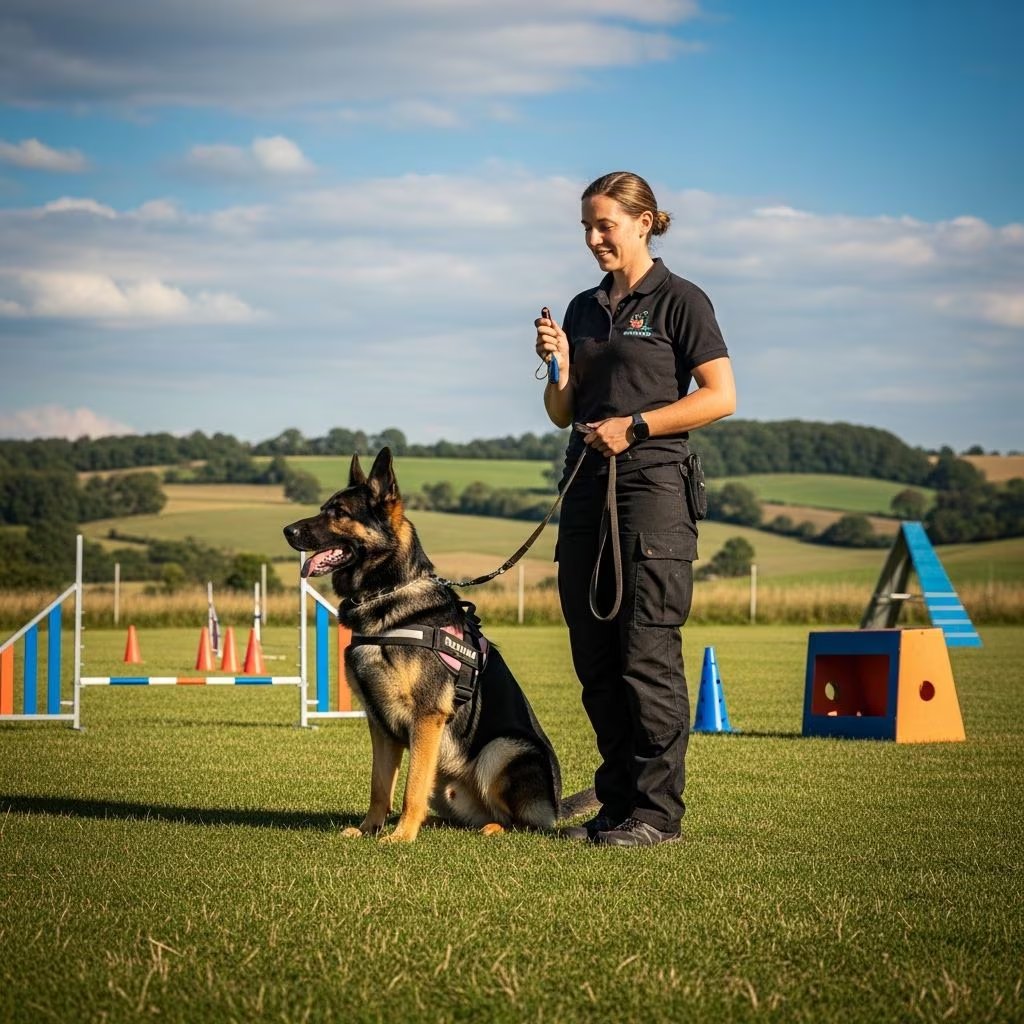
Working dogs perform critical roles in society, from detecting explosives and searching for missing persons to assisting individuals with disabilities and managing livestock. These canine professionals require specialized training that builds on their natural abilities while ensuring reliability under pressure. This guide explores effective, humane methods to prepare dogs for these demanding jobs, drawing from established behavioral science and practical applications.
Understanding the Demands of Working Dog Roles
Working dogs must excel in high-stakes environments where precision and composure are non-negotiable. Search and rescue dogs navigate rugged terrain to locate survivors, often working long hours in adverse weather. Herding dogs control large groups of animals with split-second decisions, while service dogs provide calm support in public settings crowded with distractions. Success hinges on a dog’s innate drive, physical fitness, and a strong handler partnership.
| Role | Key Skills Needed | Typical Breeds |
|---|---|---|
| Search & Rescue | Scent detection, stamina, focus | Labrador Retriever, German Shepherd |
| Herding | Agility, instinctual drive, responsiveness | Border Collie, Australian Shepherd |
| Service/Assistance | Obedience, emotional stability, discretion | Golden Retriever, Poodle |
| Detection (e.g., drugs, bombs) | Alert accuracy, discrimination, endurance | Belgian Malinois, Springer Spaniel |
Foundational Principles for Success
Effective training begins with core principles: consistency, patience, and alignment with canine learning processes. Dogs learn through association and repetition, responding best to clear communication. Start in low-distraction settings, gradually increasing complexity to build confidence. Physical health is paramount—regular veterinary checkups, balanced nutrition, and conditioning exercises prevent injuries and sustain performance.
- Assess Temperament Early: Select dogs with high drive, resilience, and sociability via temperament tests.
- Build Physical Conditioning: Incorporate swimming, running, and agility drills tailored to the role.
- Prioritize Mental Stimulation: Puzzle toys and scent games sharpen focus and problem-solving.
Positive Reinforcement: The Cornerstone Method
Positive reinforcement tops the list of recommended techniques for working dogs, rewarding desired actions with treats, toys, or praise to encourage repetition. This force-free approach fosters enthusiasm and trust, crucial for roles demanding voluntary compliance. For instance, in detection work, a dog learns to sit and alert upon finding a target scent, immediately receiving a high-value reward.
Science supports this: studies in operant conditioning show rewards strengthen neural pathways for behaviors, outperforming punishment which can induce fear. Pros include reduced stress and faster learning; cons demand precise timing to avoid confusion.
Clicker Training for Precision
A refined form of positive reinforcement, clicker training uses a distinct clicking sound to mark exact moments of success, followed by a reward. This bridges the gap between action and payoff, ideal for intricate tasks like agility sequences or precise alerts in bomb detection. Trainers “charge” the clicker first by pairing it repeatedly with treats, then deploy it during sessions.
- Best for: Complex sequences in search work or herding precision.
- Trainer tip: Use variable reward schedules to mimic real-world unpredictability, enhancing reliability.
Leveraging Science-Based Approaches
Grounded in ethology, psychology, and behavior analysis, science-based training customizes programs using learning theory. It integrates classical conditioning—pairing neutral cues with positive outcomes—to desensitize dogs to stressors like loud noises or crowds. For working dogs, this means exposure therapy for urban search scenarios, gradually introducing sirens while providing rewards.
Modern iterations incorporate wearables tracking heart rate to fine-tune sessions, ensuring low stress. This method shines for professionals handling diverse cases, blending evidence from experts like B.F. Skinner.
Relationship-Based Training: Forging the Bond
At its heart, working dog training thrives on mutual understanding. Relationship-based methods read canine body language—tail position, ear orientation, stress signals—to tailor sessions. Teach in distraction-free zones first, progressing to real-world simulations. This mirrors child education: master basics before advancing.
Emotional attunement prevents shutdowns in high-pressure roles. Dogs with strong handler bonds perform better, as trust enables risk-taking like entering collapsed structures.
Model-Rival Training for Instinctual Learning
Harnessing dogs’ social mimicry, model-rival involves demonstrating tasks via proficient dogs or handlers, letting the trainee observe and imitate. No treats needed; the activity’s intrinsic joy motivates. Common in herding—watching a skilled collie flank sheep teaches positioning—and search work, where retrieving dummies builds vocabulary like “find the sock.”.
Pros: Excites natural enthusiasm, effective for packs; cons: Needs cooperative models and manages barking.
Advanced Techniques for Specialized Tasks
Herding Drills: Channel instincts with structured play mimicking prey drive, using whistles for directional cues.
Detection Mastery: Imprint scents on cloths, progressing to hidden searches with proofing against distractions.
Service Dog Public Access: Simulate malls, buses; reward calm behavior amid triggers.
Integrate operant quadrants judiciously—focus on positive reinforcement, using negative punishment (withholding rewards) sparingly for safety.
Common Pitfalls and How to Avoid Them
- Inconsistency: Mixed signals erode progress; all handlers must align.
- Overlooking Burnout: Schedule rest; monitor for disinterest.
- Rushing Proofing: Gradually layer distractions to solidify skills.
- Ignoring Health: Joint supplements and conditioning avert issues in active breeds.
Tools and Equipment Essentials
| Category | Recommended Items | Purpose |
|---|---|---|
| Leashes/Harnesses | Long lines (30-50 ft), front-clip harnesses | Controlled freedom, no-pull walking |
| Marking Tools | Clickers, verbal markers (“yes”) | Precise behavior timing |
| Rewards | High-value treats, tug toys | Motivation in tough conditions |
| Tech Aids | Smart collars, GPS trackers | Monitor stress/performance |
Training Timeline: From Puppy to Pro
- Weeks 1-8: Socialization, basic cues (sit, stay).
- Months 2-6: Role-specific foundations (scent intro, herding basics).
- Months 6-12: Proofing, distraction work.
- Year 1+: Field trials, certification.
Patience yields pros; expect plateaus as dogs integrate learning.
FAQs
What age is best to start working dog training?
Puppies from 8 weeks benefit from socialization and basics; intensive role training ramps up at 6-12 months when physically mature.
Is positive reinforcement enough for high-drive working dogs?
Yes, it channels energy effectively; combine with shaping for complexity. Experts deem it most reliable and humane.
How do I choose the right method for my dog?
Match to temperament: high-drive dogs love model-rival; sensitive ones need relationship focus. Consult certified trainers.
Can any breed become a working dog?
Breeds with predispositions excel, but individuals vary. Test drive and aptitude first.
What if my dog regresses under stress?
Revert to basics, use desensitization. Science-based tweaks restore confidence.
Certification and Professional Pathways
Seek organizations like the American Kennel Club for herding titles or National Association of Search and Rescue for credentials. Professional trainers hold CPDT-KA or similar, ensuring ethical practices.
References
- Common Dog Training Methods and Their Pros and Cons — Astro Loyalty. 2023. https://www.astroloyalty.com/common-dog-training-methods-and-their-pros-and-cons/
- 12 Dog Training Methods Explained: A Science-Backed Guide — QC Pet Studies. 2025-10-12. https://www.qcpetstudies.com/blog/2025/10/12-dog-training-methods-explained-science-backed-guide
- Dog Training Techniques for 2024 — Gingr App. 2024. https://www.gingrapp.com/blog/dog-training-techniques-for-2024



