

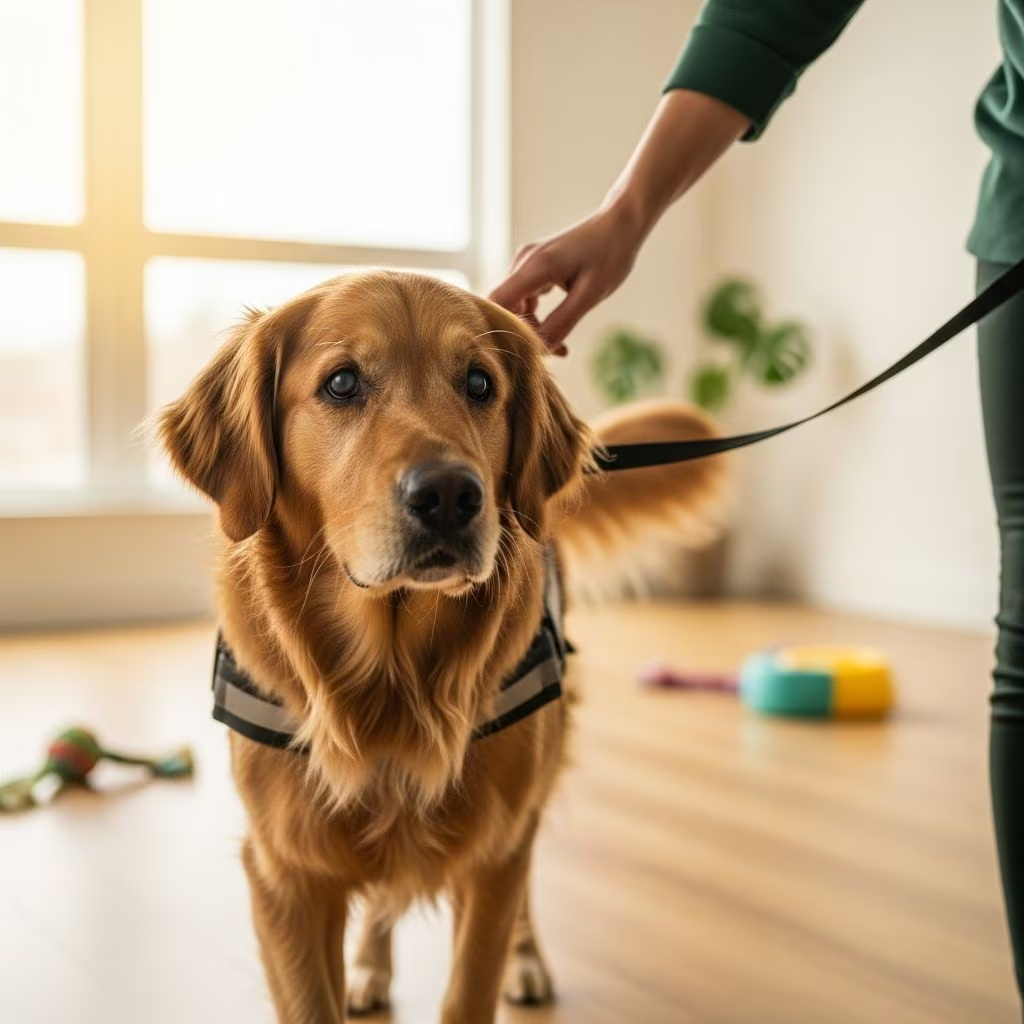
Training a blind dog may initially seem challenging, but with the right techniques and understanding of how visually impaired dogs perceive their world, it can be an incredibly rewarding experience for both you and your pet. Blind dogs possess remarkable abilities to adapt and learn, and with patience, consistency, and sensory-focused training methods, they can live full, happy lives while mastering essential commands and behaviors.
Understanding Your Blind Dog’s Abilities
Before beginning any training program, it’s important to recognize that blindness does not diminish a dog’s capacity to learn or enjoy life. Blind dogs rely on their other senses—particularly smell, hearing, and touch—which are often heightened compared to sighted dogs. When training a blind dog, you’ll leverage these alternative sensory pathways to communicate effectively and build confidence in your companion.
The key to successful blind dog training is adjusting your approach while maintaining the same expectations for behavior and obedience. Many standard training methods can be adapted for blind dogs by replacing visual cues with sensory alternatives.
Essential Training Techniques for Blind Dogs
Luring Through Scent
One of the most effective training methods for blind dogs is luring, which takes advantage of their exceptional sense of smell. This technique involves using a food item—such as cheese, treats, or meat—to guide your dog’s movements and direct them into desired positions or behaviors.
To use luring effectively, hold a highly aromatic treat close to your dog’s nose and allow them to catch the scent. Slowly move the treat in the direction you want your dog to move, guiding them through the desired behavior. For example, to teach “sit,” raise the treat slowly over your dog’s head, allowing their nose to follow the scent. As their body naturally lowers into a sitting position, immediately reward them with the treat and verbal praise.
Luring works exceptionally well for blind dogs because it provides clear, scent-based direction that doesn’t rely on visual observation. This method creates a positive learning experience and helps your dog understand exactly what behavior produces rewards.
Gentle Leash Guidance and Pressure
Leash work forms the foundation of training blind dogs, providing physical guidance and safety. When introducing leash training to a blind dog, use a short, rigid leash (typically 4-6 feet) that allows you to communicate more effectively and guide your dog around obstacles.
Introduce gentle leash pressure gradually. Rather than pulling your dog, apply mild, consistent pressure in the direction you want them to move. When your dog responds and takes a step in the correct direction, immediately release the pressure and reward them with a treat and enthusiastic praise. This release of pressure serves as a reward signal, teaching your dog that following your leash guidance leads to positive outcomes.
Over time, blind dogs learn to follow leash tension as a navigational guide. Many handlers use loose-leash walking as a starting point, then gradually introduce gentle tension as the dog becomes more comfortable with the training process. Never jerk or pull harshly on the leash, as this can create fear and undermine your training efforts.
Verbal and Auditory Cues
Since blind dogs cannot respond to visual hand signals, verbal cues become paramount in training. Use clear, distinct one-word commands that your dog can easily recognize and differentiate from other sounds in their environment.
Some effective verbal commands for blind dogs include:
– Sit- Down- Stay- Come- Step (or Step Up/Step Down for navigating stairs)- Careful (alerting to obstacles ahead)- Go See (encouraging exploration of safe objects)
Consistency is crucial—always use the same word for the same command, and ensure all household members use identical terminology. Additionally, auditory cues can be strategically placed in your home to help your blind dog navigate. Sound-emitting devices near safe resting areas, food bowls, or doorways can serve as wayfinding beacons.
Touch and Tactile Signals
Physical touch provides direct communication with blind dogs. Brief, consistent touches in specific locations can signal commands or warnings. For instance, gently touching your dog’s shoulder combined with the verbal cue “careful” alerts them to slow down or stop.
Some trainers use remote-controlled e-collars set at very low levels to provide tactile stimulation rather than pain or discomfort. When used appropriately, these devices deliver gentle vibrations that can signal “keep going” or other directional cues. However, this advanced technique should only be implemented under professional guidance.
Specialized Commands for Blind Dogs
The “Step” or “Stairs” Command
One of the most important commands to teach a blind dog is the step command, which prevents them from stumbling or falling. This command alerts your dog that they’re approaching a change in elevation.
To teach this command, position your dog at the base of a single step or low platform. Hold your dog’s front leg and gently lift it to demonstrate the step height. As you guide their leg forward, say “Step” or “Step Up” in a clear, encouraging voice. When your dog successfully steps up (or down), immediately reward them with a treat and praise.
Practice this command repeatedly in the same location until your dog consistently responds. Then gradually introduce it in different environments—different stairways, outdoor steps, curbs, and platforms. Once your dog understands the concept, use “Stairs” to indicate multiple steps or longer staircases.
The “Careful” Command
This command serves as a warning that obstacles or changes in environment lie ahead. It helps your blind dog anticipate and navigate potential hazards with confidence rather than fear.
To teach “Careful,” place your dog on a leash and approach an object such as furniture or a wall. Say “Careful” while gently applying leash pressure or placing your hand on your dog’s chest to stop their forward motion. Immediately click (if using clicker training) and reward your dog for stopping. Then gently pat the object in front of them, encouraging them to investigate at their own pace.
With repetition, your dog learns that “Careful” means something is ahead, prompting them to slow down and proceed cautiously. This command dramatically increases your blind dog’s confidence and safety.
The “Go See” Command
This command encourages your blind dog to explore objects or people they encounter, teaching them that new stimuli are safe to investigate. This builds confidence and independence.
Practice by placing a treat-filled box or platform in front of your dog. Say “Go See” in an enthusiastic tone, then encourage your dog to move forward and explore the box. As your dog discovers the treats and investigates, praise them generously. Repeat this exercise with different objects and people until your dog confidently responds to the command.
Recall and Coming When Called
Reliable recall is essential for any dog but becomes even more critical for blind dogs. Since they cannot see you, consistent vocal cues and repetition are key to building a strong recall response.
To teach recall to a blind dog, start in a safe, confined space. Use your dog’s name or a specific recall command such as “Come,” calling out repeatedly in varying volumes. When your dog orients toward your voice and moves in your direction, enthusiastically praise and reward them. Some trainers recommend using multiple repetitions of their dog’s name or the command when calling at a distance, allowing the blind dog to follow the sound of their voice to locate them.
Practice recall in multiple environments and gradually increase distance and distractions. A reliable recall ensures your blind dog can navigate back to you safely, both at home and during outdoor activities.
Creating a Blind-Dog-Friendly Environment
Maintaining Consistency and Predictability
Blind dogs thrive in environments where things remain consistent and predictable. Avoid rearranging furniture, moving food and water bowls, or changing the layout of your home frequently. Your blind dog’s mental map of their environment is built through repetition and familiarity.
Establish designated areas for sleeping, eating, and toileting. Use these anchor points to help your dog orient themselves and build confidence navigating your home.
Obstacle Awareness and Safety
While maintaining a predictable layout, ensure all potential obstacles are clearly marked or removed. Use baby gates to restrict access to dangerous areas, and consider cushioning sharp furniture corners with foam padding. Keep walkways clear of clutter and ensure your blind dog has a safe, unobstructed path through main living areas.
Outdoor Navigation
When walking your blind dog outdoors, follow the same routes consistently. This allows your dog to memorize the path, anticipate turns, and navigate with growing confidence. Use a short, rigid leash that provides clear guidance around obstacles, parked cars, and street hazards.
Communicate hazards using auditory or verbal cues. Say “Careful” before stepping over curbs, approaching intersections, or navigating uneven terrain. Over time, your dog will anticipate these cues and prepare themselves appropriately.
Positive Reinforcement and Training Philosophy
Building Confidence Through Rewards
Positive reinforcement is especially important when training blind dogs. Generous rewards—including high-value treats, enthusiastic verbal praise, and physical affection—build motivation and confidence. When blind dogs experience success and receive immediate rewards, they become willing participants in the training process and develop greater trust in their handlers.
Avoid punishment-based methods, which can create fear and anxiety in blind dogs. Instead, focus on rewarding desired behaviors and managing the environment to prevent unwanted behaviors from occurring in the first place.
Patience and Realistic Expectations
Training a blind dog requires patience and realistic expectations. Your dog may learn slightly more slowly than sighted dogs in some areas, but with consistent, sensory-based training methods, they can master the same commands and behaviors as sighted dogs.
Celebrate incremental progress and maintain a positive, encouraging attitude. Your blind dog will sense your confidence and respond with greater enthusiasm for training.
Common Challenges and Solutions
Fear and Anxiety
Some blind dogs initially experience fear or anxiety related to their vision loss. Address this by moving slowly and deliberately, providing consistent verbal encouragement, and allowing your dog to explore environments at their own pace. Avoid coaxing or forcing them into situations that provoke anxiety.
Reluctance to Move or Explore
If your blind dog seems reluctant to move or explore, build their confidence gradually. Use high-value rewards to encourage movement, start with short distances, and practice in familiar environments. As their confidence increases, gradually introduce new spaces and longer walks.
Over-Protection by Owners
Well-meaning owners sometimes over-coddle blind dogs, constantly rescuing them or expressing pity. This undermines your dog’s independence and confidence. Instead, allow your dog to develop problem-solving skills and navigate independently within safe boundaries. Your role is to guide and support, not to remove all challenges.
Advanced Training for Blind Dogs
Independent Navigation Skills
As blind dogs become more confident, encourage independence by gradually reducing physical guidance. Practice recall from increasingly greater distances, teach your dog to navigate to familiar locations in your home, and foster their problem-solving abilities.
Exposure Training
Expand your blind dog’s comfort zone by regularly visiting new environments. Introduce varied surfaces (grass, gravel, pavement, sand), different weather conditions, and new sounds. Gradual, positive exposure builds resilience and adaptability.
Frequently Asked Questions
Q: Can a blind dog be housetrained?
A: Yes, absolutely. Blind dogs can be housetrained using the same methods as sighted dogs, with consistent schedules, positive reinforcement, and designated potty areas. Many blind dogs housetrain successfully.
Q: How long does it take to train a blind dog?
A: Training timelines vary depending on the dog’s age, background, and individual learning pace. Some commands may be learned within days or weeks, while mastering a comprehensive set of behaviors and navigational skills typically takes several weeks to months of consistent training.
Q: Can blind dogs live with sighted dogs?
A: Yes, many blind dogs live successfully with sighted dogs. However, ensure the sighted dog is calm and non-aggressive, provide separate spaces if needed, and supervise interactions initially to prevent accidental injuries.
Q: Do blind dogs need special equipment?
A: While specialized harnesses exist, most blind dogs do well with a standard collar and leash. A short, rigid leash is recommended for better control and communication. Some owners use bells on the sighted dog’s collar to help the blind dog locate them.
Q: Should I take my blind dog to obedience classes?
A: Many trainers now offer classes specifically for special needs dogs, including blind dogs. If enrolling in a standard class, inform the instructor about your dog’s blindness and ask if they can accommodate your dog’s training needs with appropriate modifications.
Q: Can blind puppies be trained differently than blind adult dogs?
A: Blind puppies born without sight often require basic obedience and structure training just like any puppy, with sensory-based modifications. Adult dogs who lose vision may need retraining using adapted techniques, but they typically learn well based on their prior training foundation.
References
- How to Train a Blind Dog — Longoriahaus Dog Training. 2025-11-28. https://www.longoriahausdogtraining.com/how-to-train-a-blind-dog-4-tips-you-need-to-know-dog-training-kingwood-humble-houston-texas/
- Special Needs Training for Blind Dogs: Tips from Dog Trainers — Alpha Paws. 2025-11-28. https://www.alphapaws.com/expert-dog-trainers-share-tips-to-train-blind-dogs/
- Tips on Living With and Training a Blind Dog — Whole Dog Journal. 2025-11-28. https://www.whole-dog-journal.com/health/tips-on-living-with-and-training-a-blind-dog/
- Special Needs Training for Owners of Blind Dogs — Patrick Mahaney, DVM. 2025-11-28. https://www.patrickmahaney.com/services/dogs/blog/special-needs-training-owners-blind-dogs
- Guide Dog Training Methods — Guide Dogs for the Blind. 2025-11-28. https://www.guidedogs.com/about-guide-dogs-for-the-blind/dog-departments/guide-dog-training
- How to Care for and Train Blind Dogs or Cats — Humane World. 2025-11-28. https://www.humaneworld.org/en/resources/how-care-and-train-blind-dogs-or-cats



