

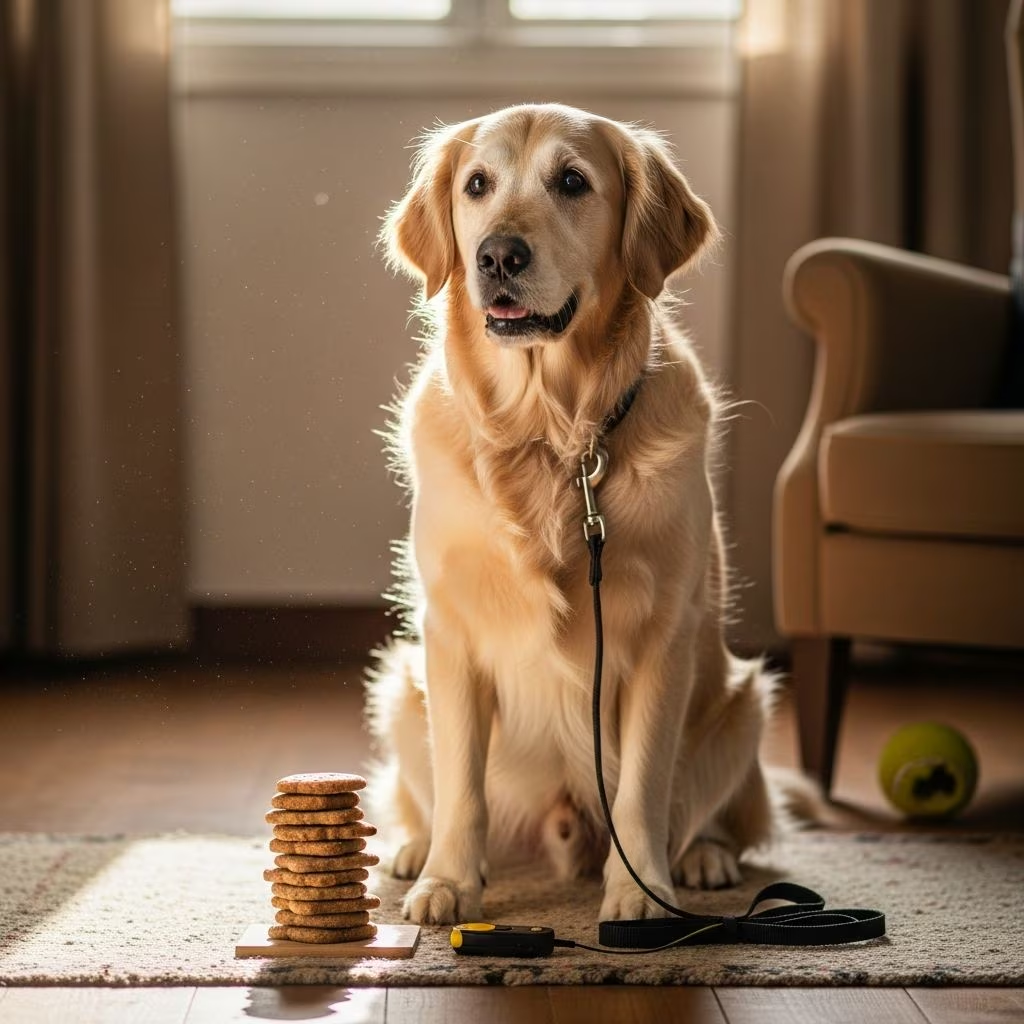
Training a mature dog presents unique opportunities and challenges that differ significantly from working with younger animals. Many pet owners believe that once a dog reaches their senior years, teaching new behaviors or reinforcing good habits becomes impossible. However, this misconception overlooks the remarkable capacity of older dogs to learn and adapt when provided with appropriate methods tailored to their age-related needs.
Senior dogs bring decades of life experience, established personality traits, and sometimes ingrained behavioral patterns into the training process. Understanding how aging affects canine cognition, physical capability, and motivation is essential for anyone seeking to improve their mature dog’s obedience or introduce new commands.
Why Age Changes Training Dynamics
As dogs progress through their senior years, several physiological and cognitive changes occur that directly impact their ability to participate in traditional training programs. Recognizing these shifts allows you to adjust your expectations and methodology rather than abandoning training efforts altogether.
Physical changes represent the most obvious age-related factor. Older dogs experience decreased muscle mass, reduced joint flexibility, and variable pain levels from arthritis or other degenerative conditions. Their stamina decreases, and activities that once seemed routine—like jumping, running long distances, or holding positions for extended periods—may now cause discomfort. Additionally, sensory changes affect how senior dogs process information, with diminished hearing and vision altering their ability to perceive cues.
Beyond physical considerations, cognitive aging also influences training outcomes. While senior dogs retain their ability to learn, their processing speed may slow, and they may experience occasional forgetfulness about previously learned commands. Their tolerance for repetition changes, and distractions that a younger dog would easily ignore might disrupt focus more readily.
Restructuring Your Training Framework for Success
Session Duration and Frequency
One of the most critical adjustments involves dramatically reducing training session length. Where younger dogs might benefit from 20 to 30-minute sessions, senior dogs typically perform optimally during brief 5 to 10-minute interactions. This modification serves multiple purposes: it prevents physical fatigue, maintains mental freshness, and allows dogs to end on a positive note before frustration sets in.
However, reducing session length doesn’t mean reducing overall training time. Instead of one extended session, distribute training throughout the day. Three short sessions spaced apart—perhaps morning, midday, and evening—provide consistent reinforcement without overwhelming your aging companion. This distributed practice approach aligns with how mature dogs’ minds process and retain new information.
Intensity and Physical Demands
Evaluate every training exercise through the lens of physical sustainability. Commands that require jumping, rapid directional changes, or sustained standing may need modification. For instance, instead of teaching a dog to jump through a hoop, you might teach them to step through at ground level. Rather than requiring them to hold a sit-stay for extended periods, gradually build duration with frequent breaks.
Pay particular attention to weather conditions. Senior dogs are more sensitive to temperature extremes. Training during cooler parts of the day and in comfortable environments prevents heat-related stress or cold-weather discomfort that could interfere with learning.
The Foundation of Positive Reinforcement Methods
Positive reinforcement becomes increasingly important when training older dogs. This approach—rewarding desired behaviors with treats, praise, affection, or toys—creates an encouraging learning environment that senior dogs find motivating without the stress that correction-based methods introduce.
For aging dogs, the nature of rewards matters considerably. While younger dogs might work enthusiastically for standard training treats, senior dogs may respond better to high-value rewards they genuinely prefer: perhaps soft, easily chewed treats, or affection from their favorite person. Some respond equally well to enthusiastic verbal praise delivered in a warm, excited tone.
Consistency in reward delivery accelerates learning. When your dog successfully follows a command—whether it’s an established behavior you’re reinforcing or a new skill being introduced—immediate positive feedback strengthens the neural pathways associated with that behavior. This immediate connection between action and reward helps bridge any processing delays typical of senior cognition.
Breaking Complex Goals Into Achievable Steps
The Principle of Incremental Progression
Rather than presenting a complete, finished behavior as the training goal, decompose it into logical substeps. If you want to teach your senior dog to walk calmly past another dog without reactive behavior, you might begin with:
- Teaching a “watch me” or attention command
- Rewarding calm sitting behavior
- Introducing the sight of another dog from a distance
- Gradually decreasing distance while maintaining calm responses
- Finally, walking past the other dog with focus maintained
This segmented approach prevents frustration for both owner and dog. Senior dogs gain confidence by succeeding at small tasks before tackling larger challenges. Each successful step provides motivation for continued learning and strengthens the human-canine bond through shared positive experiences.
Building on Existing Knowledge
Older dogs typically have years of experience with basic commands like “sit,” “stay,” and “come.” Rather than starting from scratch with unfamiliar exercises, leverage this existing foundation. Begin training sessions by briefly practicing a command your dog already knows well. This confidence-building warm-up establishes the learning mindset and reminds both of you of the communication system you share. After this brief review, introduce the new or reinforced behavior, then return to a simple, familiar command to end on a successful note.
Communication Techniques for Clearer Understanding
Verbal and Non-Verbal Cue Integration
Senior dogs benefit from clear, consistent communication that engages multiple sensory channels. Use simple, distinct verbal commands—one to two words maximum—delivered in a clear, upbeat tone. Pair these verbal cues with consistent hand signals or body positioning that reinforces the intended message.
Body language carries particular importance when working with older dogs experiencing hearing loss. If your senior dog’s hearing has diminished, hand signals become the primary communication tool. A raised hand for “stop,” an open palm gesture for “come,” or bending down to encourage approach all create clear visual messages that transcend audio limitations.
Facial expression also communicates meaning. Dogs read human expressions carefully, and a warm, encouraging face combined with an approving tone reinforces positive behaviors more effectively than neutral or stern expressions might.
Timing and Marker Words
Precise timing in delivering rewards strengthens the association between behavior and positive outcome. When your senior dog completes a command correctly, mark the moment immediately with a specific word—”yes,” “good,” or a clicker sound—before delivering the reward. This marker bridges any processing delay and creates a clear signal: “That exact action you just performed is what earns the reward.”
Environmental Considerations and Routine Building
Predictable Training Schedules
Dogs thrive on predictability, and senior dogs particularly benefit from consistent routines. Designate specific times for training—perhaps immediately after the morning bathroom break or before the evening meal. Your dog’s internal clock will begin anticipating these sessions, and they’ll approach them with eagerness rather than confusion or resistance.
A predictable environment also matters. Training in the same location initially allows your dog to focus entirely on learning rather than processing environmental novelty. Once the behavior becomes reliable, gradually introduce training in new locations to build generalization—the ability to perform the command regardless of setting.
Minimizing Distractions and Stress
Choose training environments that match your senior dog’s sensory sensitivities. If loud noises cause stress, training indoors in quiet settings initially helps focus. If your dog struggles with visual stimulation, a calm backyard may work better than a busy park. As training progresses and reliability increases, gradually introduce environmental complexity.
Addressing Age-Related Behavioral Challenges
Managing Attention Span Variations
Senior dogs often experience attention fluctuations, sometimes focusing intensely and at other times becoming easily distracted. Rather than interpreting this as stubbornness or refusal, recognize it as a normal aspect of aging. If your dog loses focus mid-session, don’t push for extended effort. Instead, take a break, perhaps with a brief walk or bathroom opportunity, then return to training when attention has refreshed.
Patience as a Primary Training Tool
Patience transcends technique; it’s a fundamental requirement for working with senior dogs. Learning may proceed more slowly, requiring additional repetitions before a behavior becomes reliable. Your emotional responses directly influence your dog’s willingness to engage. Frustration, impatience, or harsh corrections create anxiety that interferes with learning and damages the relationship you’ve built together.
Instead, approach training with genuine acceptance of your dog’s current capabilities and limitations. Celebrate small progress enthusiastically. If your senior dog masters a command 50% of the time when younger dogs achieve 90%, that represents significant cognitive effort and deserves recognition.
Strengthening Your Connection Through Training
Training as Bonding Opportunity
Training sessions represent dedicated time focused entirely on your dog’s welfare and growth. This undivided attention strengthens the bond between you, creating emotional investment in both behavior improvement and each other’s wellbeing. Your senior dog will come to associate training time as a special, valued part of your relationship rather than a chore or obligation.
Incorporating Enjoyable Elements
Blend training with activities your senior dog genuinely enjoys. If your dog loves gentle play, incorporate brief play sessions into training breaks. If they enjoy particular toys or types of treats, use these as training rewards. Some dogs respond enthusiastically to affection—gentle petting, ear scratches, or quiet companionship—as the primary motivator.
Interactive games like simplified hide-and-seek, gentle fetch games adapted to your dog’s mobility level, or slowly-paced walks during which you practice commands all integrate training into activities your dog already loves.
When to Seek Professional Support
If your senior dog exhibits specific behavioral challenges—excessive reactivity, apparent anxiety, or commands they once knew but have forgotten—consulting a professional trainer experienced with aging dogs may prove invaluable. These specialists understand the intersection of aging, cognition, and behavior, and can provide tailored strategies addressing your dog’s unique situation.
Veterinary behaviorists can rule out underlying medical conditions that might affect behavior and recommend any medical interventions that could support training success, such as pain management for arthritic dogs whose physical discomfort interferes with learning.
Practical Training Timeline Expectations
New behaviors in senior dogs typically require 3 to 6 weeks of consistent practice before becoming reliable, compared to 1 to 3 weeks for younger dogs. This extended timeline reflects normal age-related learning rate changes rather than inability to learn. Reinforcing previously learned behaviors often sees more rapid improvement, sometimes within days when using appropriately motivating rewards.
Frequently Asked Questions
Can senior dogs truly learn new behaviors?
Yes. While the pace may be slower than younger dogs, older dogs retain the cognitive capacity to learn new commands and behaviors. Their decades of experience sometimes provide advantages—they may understand human intent more readily and have refined emotional responses that facilitate learning.
What’s the ideal reward for senior dogs?
Rewards vary by individual dog. High-value treats, enthusiastic praise, affection, or play work for different dogs. Experiment to identify what genuinely motivates your particular senior dog, then use that consistently during training.
How do I train a senior dog with hearing loss?
Rely primarily on hand signals and body language rather than verbal commands. Practice in well-lit areas where your dog can clearly see your gestures. Tactile cues like gentle touches can also signal commands.
Is it ever too late to train a dog?
Training benefits dogs at any age. Even very elderly dogs can learn simple behaviors or reinforce existing commands. Training also provides valuable mental stimulation and strengthens your relationship regardless of your dog’s age.
References
- Obedience Training for Older Dogs — Proven Dog Training. Accessed February 2026. https://www.provendogtraining.com/obedience-training-for-older-dogs/
- Senior Dog Training: Adapting Training Techniques for Older Canines — Leader of the Pack Dog Training. Accessed February 2026. https://leaderofthepackdogtraining.org/senior-dog-training-adapting-training-techniques-for-older-canines/
- 7 Effective Dog Training Methods—For Old Dogs and New — Best Friends Pet Care. Accessed February 2026. https://bestfriendspetcare.com/7-effective-dog-training-methods-for-old-dogs-new-dogs/
- The Importance of Training Your Senior Dog — American Kennel Club. Accessed February 2026. https://www.akc.org/expert-advice/health/training-your-senior-dog/
- Take Small Steps. Teach In Stages. Exercise Patience. — Best Friends Pet Care. Accessed February 2026. https://bestfriendspetcare.com/7-effective-dog-training-methods-for-old-dogs-new-dogs/



