

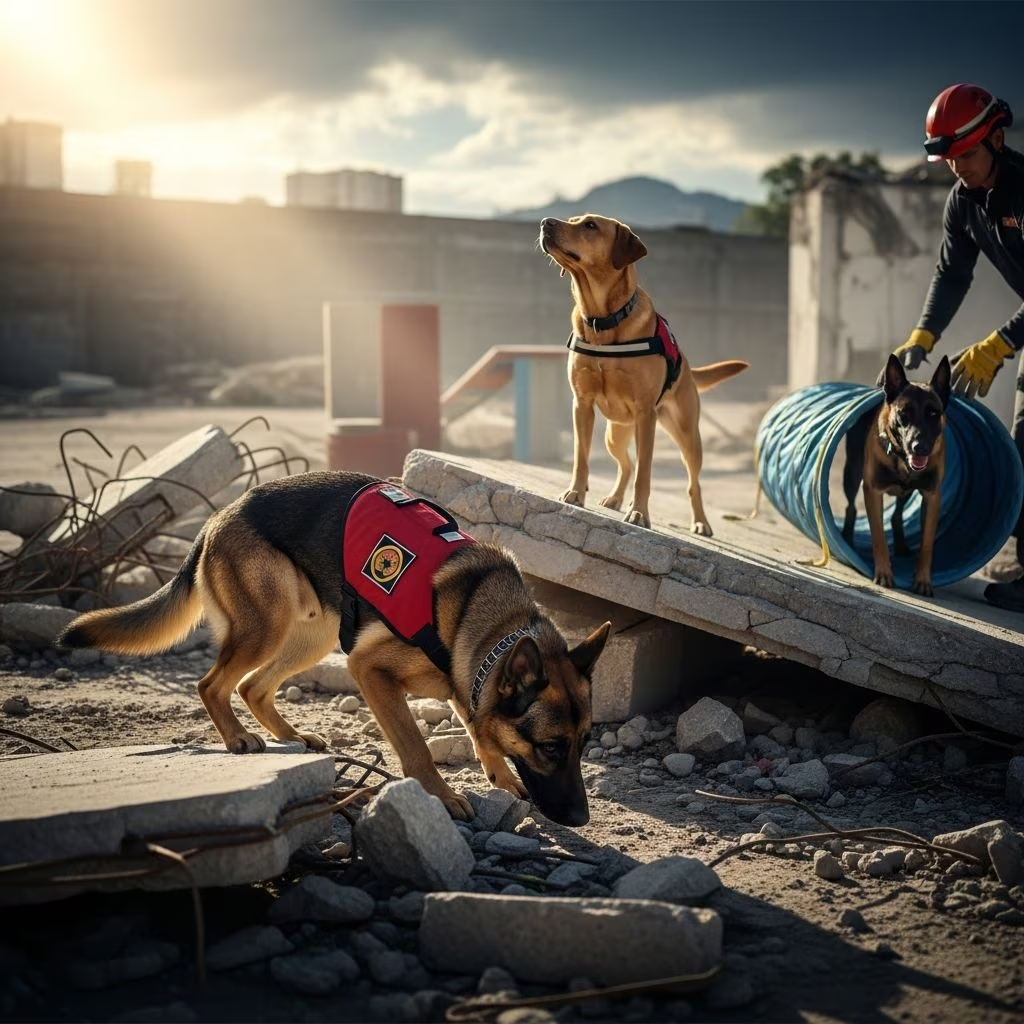
Search and rescue (SAR) dogs play a critical role in locating missing individuals during disasters, wilderness searches, and urban incidents. These highly skilled canines detect human scent under challenging conditions, navigating rough terrain or rubble piles to alert handlers to survivors. Training transforms everyday dogs into reliable partners, requiring dedication from both handler and canine over 1-2 years of consistent practice.
Selecting the Ideal Canine Partner for SAR Work
Choosing the right dog is foundational for successful SAR training. Breeds with strong olfactory abilities and high drive excel, such as Labrador Retrievers, German Shepherds, Bloodhounds, and Belgian Malinois. These dogs possess over 200 million scent receptors, far surpassing humans’ 5 million, enabling them to detect odors at concentrations as low as parts per trillion.
- High energy and drive: Dogs must sustain long searches without fatigue.
- Balanced temperament: Confident yet stable in chaotic environments.
- Physical fitness: Athletic build for agility in varied terrains.
- Age consideration: Puppies aged 6-18 months adapt best to intensive training.
Handlers should assess puppies through play tests for prey drive and resilience. Avoid dogs with fearfulness or low motivation, as SAR demands independence and focus.
Building a Strong Foundation: Obedience Essentials
Obedience forms the bedrock of SAR training, ensuring the dog remains under control in high-stakes scenarios. Handlers teach core commands using positive reinforcement, such as treats, toys, or praise, to foster eagerness.
| Command | Description | Training Goal |
|---|---|---|
| Heel | Dog maintains position beside handler at walk or jog. | Control during movement. |
| Sit/Down/Stay | Dog holds position for 5+ minutes out of sight. | Reliability in distractions. |
| Recall | Returns from 15+ meters on command. | Safety in open areas. |
| Finish | Returns to heel position after tasks. | Precise positioning. |
Practice in distracting environments progresses from quiet parks to crowded urban settings. Certification often requires off-leash execution with hand signals only, alongside other teams.
Developing Physical Prowess Through Agility Drills
Agility training enhances a dog’s athleticism, preparing them for obstacles in mountains, caves, or disaster zones. Courses mimic real-world hurdles, building confidence and handler bond.
- Jumps and walls: 1-meter high barriers, vertical climbs.
- Ramps and beams: A-frames, balance beams for stability.
- Tunnels and planks: Culverts, suspension planks for navigation.
Off-leash negotiation under voice or signal commands is standard. This not only boosts physical fitness but reduces household behavioral issues by channeling energy productively. Sessions twice weekly, increasing complexity, yield peak performance in 6-12 months.
Mastering Scent Work: Tracking and Trailing
Tracking involves following ground scent from footprints, while trailing pursues airborne human odor. Dogs wear long lines (20-25 feet) and harnesses for initial phases.
Training starts with fresh tracks, aging to 45 minutes for certification. Tracks incorporate:
- Road crossings and dead ends.
- Cross tracks, animal distractions.
- Low-scent zones like gravel (20+ meters).
- Turns indicated by behavioral changes.
Handlers read subtle cues: head changes, freezing, or sitting. Scent discrimination refines focus amid urban odors or vegetation.
Air Scenting for Broad Area Coverage
Unlike ground tracking, air scenting detects odor plumes carried by wind, ideal for wilderness or open fields. Dogs work off-leash, quartering areas in patterns.
Common patterns include:
- Linear: Straight-line sweeps.
- Expanding square: Grid expansion for coverage.
- Zig-zag or spiral: Adapts to terrain.
- Sector: Divides large zones systematically.
Environmental factors like wind direction, humidity, and temperature influence plume behavior. Handlers position upwind for optimal detection. Certification tests 200×200 meter areas for two 24-hour aged articles within 20 minutes.
Specialized Training for Disaster and Urban Scenarios
Disaster SAR dogs locate buried victims via cadaver or live scent in rubble. Urban teams handle city distractions, tracking specific individuals.
Water and cave training adds complexity, with dogs indicating submerged or trapped persons. Mock scenarios simulate collapses: hide “victims,” vary weather, and debrief performances.
Article Retrieval and Alert Behaviors
Dogs retrieve personal items (leather, cloth, metal, glass) to confirm scent. Training uses dumbbells thrown 10 meters: fetch, hold 30 seconds, release on “out.”
Alerts vary: bark, sit, or aggressive indication for live finds. Consistency prevents false positives.
Training Schedules and Handler Development
Weekly 4-8 hour sessions span 1-2 years. Group classes teach scent theory, dog body language, and equipment like GPS harnesses.
Handlers attend first aid, rappelling for mountain/cave ops. Private pros accelerate progress, emphasizing team synergy.
Certification Standards and Real-World Deployment
Organizations like SARBC certify via comprehensive tests: obedience, agility, tracking (45-min rural), air scent (20-min search). Ongoing mocks ensure readiness.
In field, teams deploy flexibly, adapting patterns to clues. Success rates soar with prepared duos, saving lives efficiently.
Benefits Beyond Rescue: Everyday Improvements
SAR training boosts confidence, focus, and fitness, curbing home destructiveness. Stronger bonds enhance obedience universally.
Frequently Asked Questions
What breeds make the best SAR dogs?
Labradors, Shepherds, Bloodhounds, and Malinois due to scent prowess and drive.
How long does SAR training take?
1-2 years of weekly practice for certification.
Can any dog become a SAR dog?
No, requires high drive, stability, and health; temperament tests essential.
What equipment is needed?
Harness, long lines, boots, GPS trackers, first-aid kits.
Is SAR training safe for dogs?
Yes, with gradual conditioning and health monitoring.
References
- Advanced Search & Rescue Dog Training: Techniques for Finding Missing Persons — Dogbase.co. 2023. https://www.dogbase.co/blog/advanced-search-rescue-dog-training-techniques-for-finding-missing-persons
- Search and Rescue Dog Training — SARBC.org. N/D. https://www.sarbc.org/sarbc/pdfs/dogtraining.pdf
- The Ultimate Guide to Search and Rescue Dogs — Highland Canine Training. 2023. https://highlandcanine.com/blog/the-ultimate-guide-to-search-and-rescue-dogs/
- Training a K9 in 1076 Simple Steps — Mountain Rescue Association. 2022. https://mra.org/training-a-k9-in-1076-simple-steps/



