

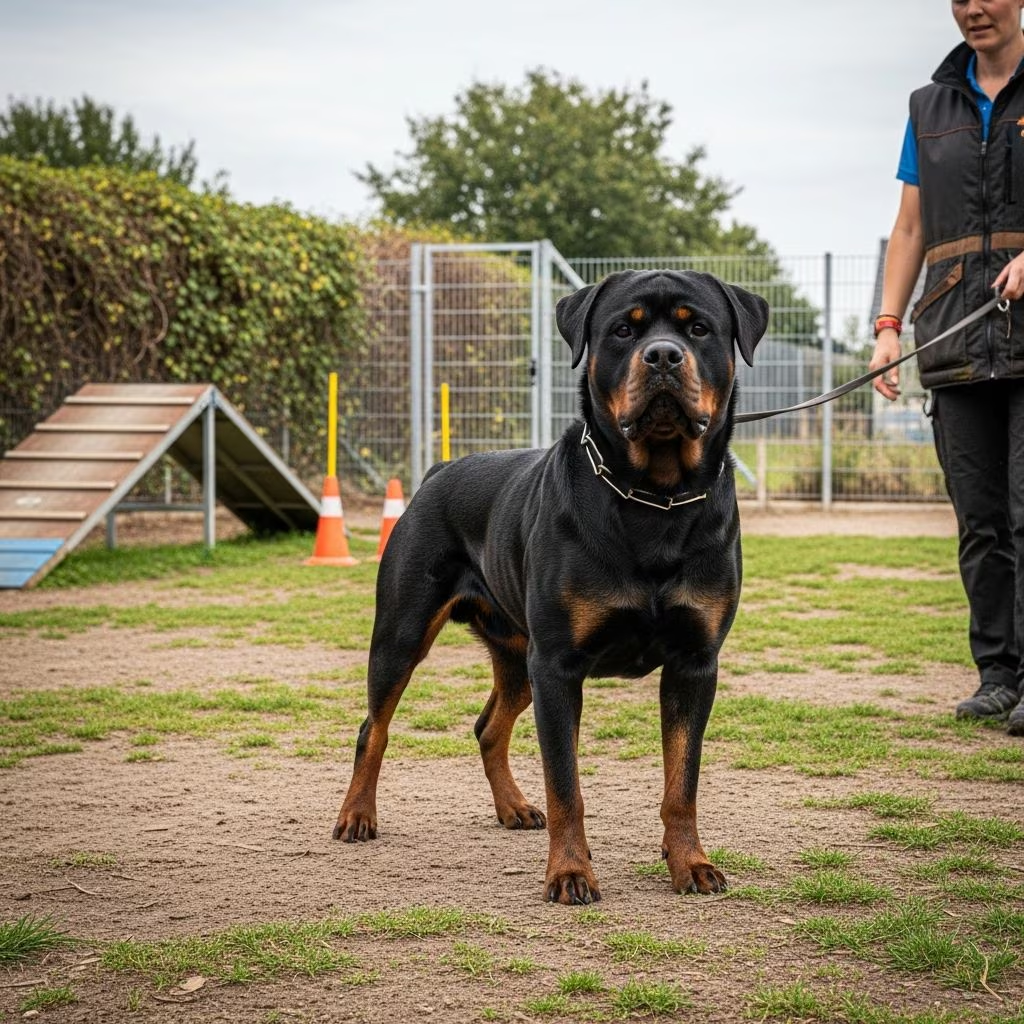
Rottweilers possess innate protective qualities that make them exceptional guard dogs when properly trained. Their strength, loyalty, and alertness can be channeled through structured methods focusing on positive reinforcement, obedience, and controlled responses to threats. This guide outlines a comprehensive approach to developing these skills from puppyhood onward.
Understanding the Rottweiler’s Protective Nature
Rottweilers were historically bred for herding and guarding, traits that manifest as territorial awareness and suspicion toward unfamiliar people. Unlike aggressive training, effective guard dog development relies on enhancing their natural vigilance without fostering fear or uncontrolled aggression. Owners must recognize that these dogs thrive on clear leadership and consistent guidance to differentiate between real threats and everyday encounters.
Key to success is starting early. Puppies as young as 8 weeks can begin learning boundaries and basic responses, building a foundation for reliable protection as adults. Professional trainers emphasize that well-socialized Rottweilers can protect property while remaining safe around family and approved visitors.
Building a Strong Foundation: Socialization Essentials
Socialization prevents overprotectiveness toward familiar people and pets. Expose your Rottweiler puppy to diverse environments, sounds, and individuals from an early age to build confidence and discernment.
- Introduce new people gradually in controlled settings, rewarding calm behavior with treats or praise.
- Arrange playdates with other dogs to teach appropriate interactions.
- Visit parks, stores, and vehicles to normalize stimuli that might otherwise trigger unnecessary alerts.
Adequate socialization ensures your dog barks at strangers only when commanded or when a genuine intrusion occurs, reducing liability risks. Aim for 100 positive exposures by 16 weeks to solidify these habits.
Mastering Obedience: The Core of Control
Obedience forms the bedrock of guard training. Commands like sit, stay, come, and quiet provide handlers with authority over the dog’s responses.
| Command | Purpose in Guard Training | Training Tip |
|---|---|---|
| Sit/Stay | Promotes impulse control during alerts | Practice daily with increasing distractions |
| Come | Recalls dog from potential conflicts | Use high-value rewards in open areas |
| Quiet | Stops barking on command post-alert | Pair with treats after initial bark |
Enroll in group classes for real-world practice. Consistency across family members prevents confusion, as Rottweilers test boundaries if rules vary. Daily 15-minute sessions yield noticeable improvements within weeks.
Defining Territories: Boundary Training Techniques
Teach your Rottweiler what constitutes ‘home territory’ to activate protective instincts naturally. Use walks to imprint boundaries.
- Leash-walk the perimeter twice daily—morning and evening—staying silent to let the puppy absorb surroundings.
- Secure a long tether (20-30 feet) in the yard, placing bed, food, and toys there to claim the space.
- Gradually increase off-leash time within boundaries while supervising.
This method fosters ownership without force. Reward alert postures toward boundary approaches from unknowns. Over time, the dog patrols instinctively.
Teaching Alert Commands: Bark and Watch
Controlled barking deters intruders without constant noise. The ‘bark’ or ‘speak’ command turns natural vocalization into a tool.
- Identify triggers like a friend’s approach; say ‘speak’ in an excited tone just before natural barking.
- Mark success with a clicker or ‘yes,’ followed by treats or play.
- Test with strangers: Point and command from beside the dog, rewarding compliance.
- Phase out treats as reliability grows, using verbal praise.
Pair with ‘watch,’ rewarding vigilant scanning of surroundings. Practice with varied people to generalize the response. Teach ‘quiet’ immediately after to control duration.
Positive Reinforcement: Fueling Desired Behaviors
Avoid punishment, which breeds fear-aggression. Reward-based training builds trust and eagerness.
Examples:
- Treat for noticing strangers at a distance.
- Praise for calm demeanor around family.
- Ignore or redirect unwanted actions like excessive jumping.
Rottweilers respond best to this, associating protection with positivity. Sessions should end on successes to maintain motivation.
Physical Conditioning and Mental Enrichment
A fit Rottweiler is a focused one. Daily exercise—walks, fetch, agility—channels energy into alertness rather than restlessness.
Mental games like puzzle toys or scent work sharpen instincts. A structured routine (e.g., 60 minutes exercise + 20 minutes training daily) prevents boredom-induced issues.
Advanced Protection: When to Seek Professionals
For personal protection beyond property guarding, consult certified trainers. Methods involve controlled scenarios with decoys, never escalating to bites without expertise. Amateurs risk legal issues or dog instability. Look for programs emphasizing IPO/Schutzhund standards.
Common Pitfalls and Solutions
| Pitfall | Consequence | Solution |
|---|---|---|
| Inconsistent rules | Dog ignores commands | Family training meetings |
| Insufficient exercise | Hyperactivity or destruction | Scheduled routines |
| Poor socialization | False alarms at guests | Early, frequent exposures |
Monitor progress weekly; adjust as needed. Patience yields a balanced protector.
Frequently Asked Questions (FAQs)
Can any Rottweiler become a guard dog?
Most can with proper training, but temperament testing via professionals ensures suitability. Stable, confident dogs excel.
How long does training take?
Basic alerts in 4-6 weeks; full reliability in 6-12 months with consistency.
Is professional protection training necessary?
For advanced work, yes. Home methods suffice for property guarding.
What if my Rottweiler is fearful?
Build confidence via socialization and rewards before protection work.
Are female Rottweilers good guards?
Yes, equally capable when trained.
Legal and Ethical Considerations
Guard dogs must not pose public threats. Check local laws on breeds and liability insurance. Train to alert, not attack, prioritizing safety.
References
- How to Train a Rottweiler to Guard — WagWalking. 2023. https://wagwalking.com/training/train-a-rottweiler-puppy-to-guard
- Unleashing The Guardian: Training A Rottweiler With Confidence — CTODogTraining. 2024. https://www.ctodogtraining.com/unleashing-the-guardian-training-a-rottweiler-with-confidence-and-care/
- An Honest, Realistic Rottweiler Training Guide — BestMateDogTraining. 2023. https://www.bestmatedogtraining.co.nz/training-rottweilers



