

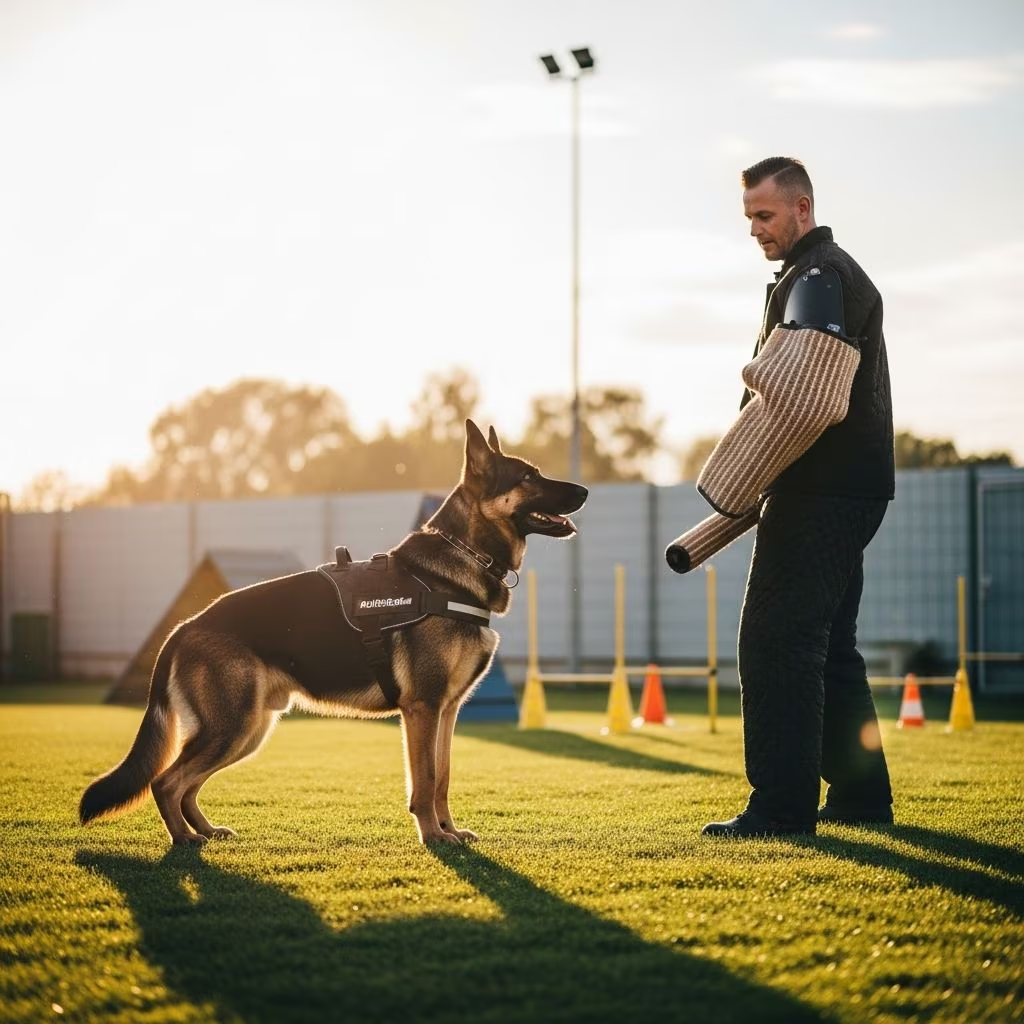
German Shepherds possess innate protective instincts, intelligence, and physical prowess that make them ideal candidates for protection roles. With structured training, owners can channel these traits into reliable guarding behavior without fostering uncontrolled aggression. This guide outlines a comprehensive approach starting from puppyhood, emphasizing obedience, socialization, and specialized drills.
Understanding the German Shepherd’s Protective Nature
German Shepherds were originally bred for herding and later excelled in police, military, and personal protection work due to their loyalty, trainability, and alertness. Their natural tendency to scan environments and alert to intruders can be honed into purposeful protection. However, improper handling risks creating a fearful or overly reactive dog. Success relies on establishing the owner as the clear leader through consistent, positive methods.
Key traits include high intelligence, requiring mental stimulation alongside physical exercise, and a strong pack hierarchy instinct. Training must reinforce your alpha position using firm commands, eye contact, and rewards, avoiding physical punishment which can breed fear-based aggression.
Building a Strong Foundation: Puppy Selection and Early Bonding
Select a puppy from lines with balanced temperaments, ideally tested for Schutzhund suitability, which evaluates tracking, obedience, and protection drives. Early bonding fosters trust; spend daily time with play, grooming, and short training sessions. Use a harness for control during initial exercises to prevent neck strain.
- Start bonding at 8 weeks with tug toys on a leash to encourage prey drive safely.
- Expose to household noises and gentle handling to build confidence.
- Avoid isolation; integrate into family routines for security attachment.
Mastering Essential Obedience Commands
Obedience forms the bedrock of protection training, ensuring the dog responds instantly under distraction. Enroll in puppy classes immediately for professional guidance. Focus on commands like sit, stay, come, and down, practiced in varied environments.
| Command | Purpose in Protection | Training Tip |
|---|---|---|
| Sit | Builds impulse control; positions dog for alerts | Use treats for stationary holds during stranger approaches |
| Stay | Maintains position amid threats | Practice with increasing distances and distractions |
| Come | Recalls dog from engagement | Reward heavily; never call off a rewarding bite without release training |
| Quiet | Controls barking | Pair with ‘speak’ first, then enforce silence |
Consistency is vital: enforce commands on first utterance, repeating teaches disregard. Positive reinforcement with treats and praise motivates these eager learners.
Socialization: Discriminating Friend from Foe
Proper socialization prevents overprotectiveness toward all strangers. Introduce your German Shepherd to diverse people, places, and situations before 16 weeks. Reward calm behavior around friendly visitors while praising alerts to suspicious actions.
- Host controlled visits: have guests ignore the dog initially.
- Walk in public; desensitize to neutral strangers.
- Use puppy classes for peer interactions, monitoring play.
Home alerts should be encouraged—praise barking at door approaches, then command quiet after acknowledgment. Off-property, ignore passersby to delineate contexts.
Developing Barking and Alerting Skills
Harness natural vigilance by teaching ‘speak’ with stimuli like door knocks, rewarding barks. Transition to ‘quiet’ for control, ensuring the dog silences on cue. Stage scenarios: a helper acts suspiciously at the door, prompting bark; upon ‘retreat,’ praise the dog.
Progress to leashed yard patrols, building confidence without free pursuit risks. Verbal cues like ‘watch’ link to scanning threats, naturally motivating most Shepherds.
Advanced Protection Drills: Controlled Engagement
Once obedience is solid, introduce protection work with professional oversight. Use a back-tied harness for safety. Begin with tug toys to develop full-mouth grips, advancing to suited decoys.
- Prey Drive Building: Tug games encourage chase and bite.
- Threat Simulation: Decoy approaches; dog barks, then engages on command.
- Release Training: Teach ‘out’ or sit-to-release for bite work.
- Distance Work: Protect from afar, like sitting guard during interactions.
Muzzles aid initial human contact desensitization. Differentiate from attack training: protection dogs deter via presence and bark, biting only as last resort under command.
Establishing Leadership and Pack Dynamics
Assert dominance humanely: eat first, control resources, use assertive posture and tone. Daily mental challenges like puzzle toys tire more than walks alone. Test obedience in high-distraction scenarios to ingrain non-negotiable compliance.
Common Pitfalls and How to Avoid Them
- Inconsistency: Mixed signals confuse; maintain rules across family.
- Skipping Socialization: Leads to fear aggression; prioritize exposures.
- Rushing Protection: Without foundation, risks liability; progress gradually.
- Physical Correction: Breeds resentment; opt for withholding rewards.
Professional Resources: Schutzhund and Trainers
Join Schutzhund clubs affiliated with national bodies for temperament-tested programs balancing all drives. Observe sessions to assess fit. Certified trainers with bite suits elevate skills safely. Avoid unverified methods promoting unchecked aggression.
Frequently Asked Questions
Can any German Shepherd become a protection dog?
Not all; select from working lines with proven drives. Temperament testing is essential.
At what age to start protection training?
Obedience from 8 weeks; protection drills post-12 months with maturity.
Is protection training dangerous?
When professional-led, no; use gear and control to minimize risks.
How to stop excessive barking?
Train ‘speak’ and ‘quiet’ commands; reward silence after alerts.
Do I need a bite suit for home training?
No for basics; pros use them for advanced work.
Daily Routine for Protection Training Success
Maintain 30-60 minutes daily: 15 obedience, 15 socialization/exercise, 15 mental games. Weekly Schutzhund or trainer sessions refine skills. Track progress in a journal for adjustments.
With patience, your German Shepherd becomes a discerning guardian, enhancing family security through controlled instincts.
References
- Schutzhund Training — German Shepherd Dog Club of America. 2023. https://www.germanshepherddog.com/about/schutzhund-training/
- How to Train a German Shepherd to Be a Guard Dog — PetCareRx. 2024. https://www.petcarerx.com/article/how-to-train-a-german-shepherd-to-be-a-guard-dog/280
- German Shepherd Protection Training Guide — Exclusive Dog Training. 2023. https://exclusivedogtraining.com/german-shepherd-protection-training-guide-and-how-ppd-motivation-is-different-from-attack-guard-and-police-dogs/
- Training German Shepherds – A Realistic Guide — Best Mate Dog Training. 2024. https://www.bestmatedogtraining.co.nz/german-shepherd-training



