
Training Fischer Lovebirds: A Complete Guide
Master the art of training Fischer lovebirds with proven techniques and patience-based methods.
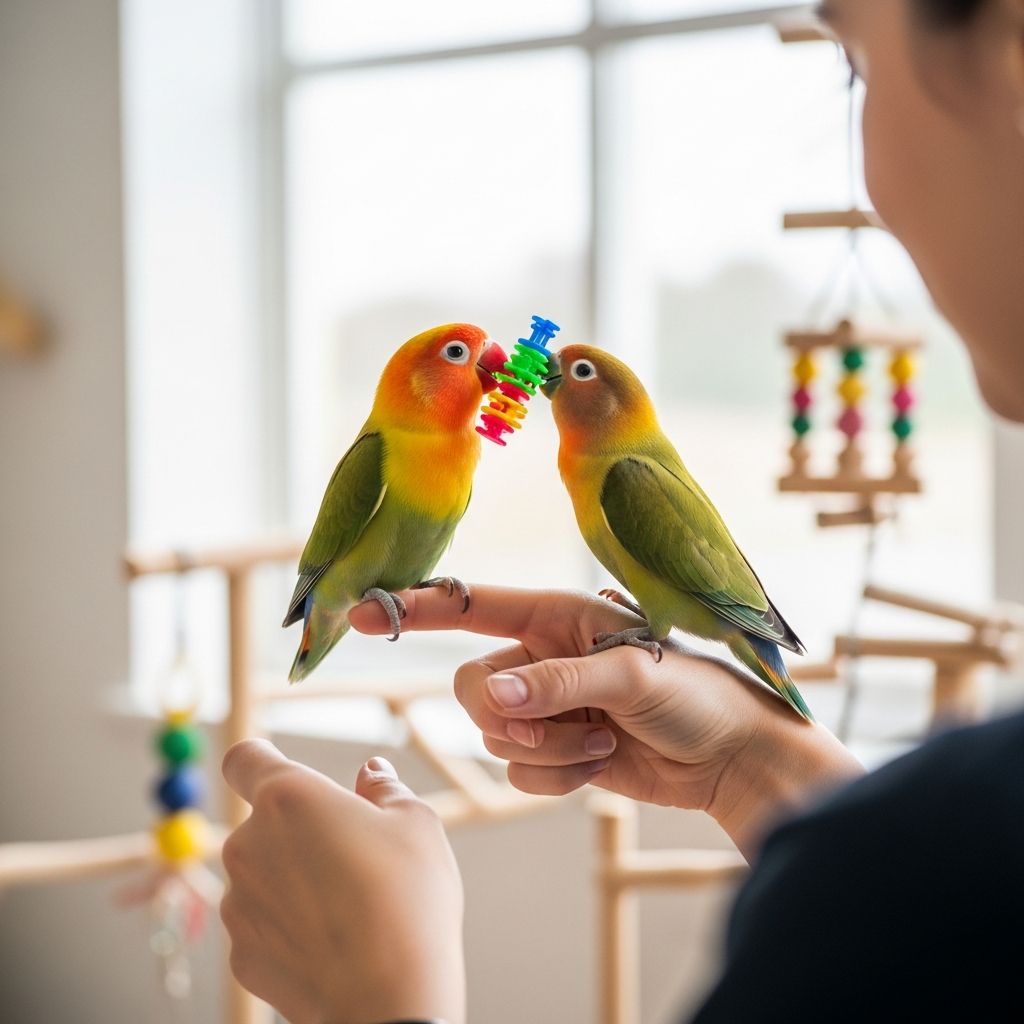
Fischer lovebirds are delightful and intelligent companions that can bring years of joy to bird enthusiasts. However, training these small parrots requires patience, dedication, and a clear understanding of their behavior and temperament. Unlike some larger parrot species, Fischer lovebirds present unique challenges and opportunities for trainers. This comprehensive guide will walk you through the essential steps and strategies needed to successfully train your Fischer lovebird, whether you’re starting with a young bird or working with an older individual.
Understanding Fischer Lovebird Behavior and Temperament
Fischer lovebirds are known for their strong personalities and affectionate nature when properly socialized. These small parrots, measuring only about 5-6 inches in length, are native to Tanzania and are characterized by their striking orange-red faces and vibrant plumage. Understanding their natural behavior is crucial for successful training.
Fischer lovebirds are naturally social birds that form strong pair bonds in the wild. This social nature can work in your favor when training, as they have the capacity to bond closely with their human caretakers. However, they can also be stubborn and territorial if not properly socialized from a young age. Their intelligence is remarkable for their size, allowing them to learn complex behaviors and respond to consistent training methods.
One critical factor in training success is the bird’s age when you begin training. Young birds that have been hand-fed or handled regularly as chicks are significantly easier to train than birds that have been raised by other birds or have had minimal human contact. Hand-raised Fischer lovebirds typically display greater curiosity toward humans and are more willing to interact and learn.
The Importance of Starting Young
When considering training a Fischer lovebird, the bird’s age at the time of acquisition plays a paramount role in determining your success. Young chicks that have been hand-raised from an early age are considerably more receptive to training than birds that have been raised by their parents or have lived in aviary settings without human socialization.
Hand-fed chicks begin their lives with positive associations toward humans. They have learned that people provide food, comfort, and security, making them naturally more inclined to interact with their human trainers. These birds typically progress through training steps more rapidly and display fewer behavioral challenges than older or parent-raised birds.
If you acquire an adult Fischer lovebird or one that was not hand-raised, do not lose hope. These birds can still be trained, but the process requires additional patience, longer timeframes, and sometimes modified approaches. Older birds may have ingrained behaviors and fears that need to be gradually overcome through consistent, gentle interaction.
Pre-Training Preparation and Setup
Before beginning any training exercises with your Fischer lovebird, proper preparation is essential for creating an environment conducive to learning and bonding.
Creating a Safe Space
Your Fischer lovebird needs a comfortable, secure cage that serves as their personal territory and safe haven. The cage should be adequately sized to allow for movement, with multiple perches at varying heights. A minimum cage size of 18x18x24 inches is recommended for a single Fischer lovebird, though larger is always better.
Set up the cage in a quiet area of your home where the bird can observe household activities without being overwhelmed. Place it away from direct sunlight, drafts, and kitchen areas where cooking fumes can be harmful. Ensure the environment remains calm during the initial adjustment period.
Establishing a Routine
Fischer lovebirds thrive on routine and predictability. Establish consistent times for feeding, cleaning, interaction, and training. This regularity helps your bird feel secure and understand what to expect, which facilitates the training process. Birds that know when to anticipate human interaction are generally more receptive to training attempts.
Building Trust Foundation
Before attempting any hands-on training, spend time near your Fischer lovebird’s cage simply being present. Speak softly and move deliberately to avoid startling the bird. Allow your bird to observe you and become accustomed to your presence. For scared or untamed birds, this initial phase may take several weeks. Patience during this period is not wasted time; it is foundational work that will accelerate progress later.
Taming Your Fischer Lovebird: Step-by-Step Process
Taming is the process of acclimating your Fischer lovebird to human contact and interaction. This is typically the first major step in training and forms the basis for all subsequent training endeavors.
Initial Cage Acclimation
When you first bring your Fischer lovebird home, allow at least one week of uninterrupted adjustment time in the cage. During this period, avoid attempting to handle or touch the bird. Simply maintain a normal routine of feeding, watering, and cage maintenance while speaking softly near the cage. This allows your bird to become comfortable with its new surroundings and accustomed to your presence and voice.
Hand Introduction Technique
After the initial week of adjustment, begin introducing your hand to the bird’s environment. Place your hand slowly and calmly into the cage, keeping it stationary and non-threatening. Your hand should remain still and relaxed, allowing the bird to investigate it at its own pace. Do not attempt to grab or touch the bird during this phase.
Each day, maintain your hand in the cage for gradually longer periods. The bird will eventually become curious and may approach your hand to investigate. This is a positive sign indicating growing trust. Do not react suddenly or make quick movements if the bird comes close to your hand. Remain calm and patient.
Finger Training and Stepping Up
Once your Fischer lovebird has become comfortable with your stationary hand, you can begin teaching the “step up” behavior. This is one of the most fundamental training exercises and forms the foundation for handling your bird safely.
To teach stepping up, gently touch the bird’s legs or lower body with your index finger while the finger is slightly above the perch. Many birds will instinctively step up onto your finger to gain a higher position. If your bird resists, do not force it. Withdraw your finger calmly and try again later.
Once the bird steps onto your finger, immediately praise the behavior verbally with an upbeat tone. You can also offer a small treat as a reward. Repeat this process multiple times daily in short training sessions lasting only 5-10 minutes. Consistency and positive reinforcement are crucial for success.
Shoulder and Body Perching
After your Fischer lovebird has mastered stepping onto your finger, you can teach it to perch on your shoulder or other parts of your body. Once your bird is comfortable on your finger, slowly and smoothly move your finger toward your shoulder. Your shoulder provides an elevated position that most birds find appealing, and your body naturally provides stabilization that helps the bird feel secure.
Many birds will naturally transition from your finger to your shoulder without additional encouragement. If your bird seems reluctant, continue reinforcing the stepping-up behavior and try again after additional training sessions. Never force your bird into uncomfortable positions, as this creates fear and undoes previous progress.
Advanced Training Techniques
Once your Fischer lovebird is comfortable with basic handling, you can introduce more advanced training techniques and behaviors.
Using Positive Reinforcement
The most effective training method for Fischer lovebirds is positive reinforcement, which involves rewarding desired behaviors. Identify what your bird finds rewarding—this might be treats, praise, petting, or play time. When your bird exhibits a desired behavior, immediately follow it with the reward.
Food rewards are particularly effective for training Fischer lovebirds. Identify nutritious treats that your bird especially enjoys, and reserve these specifically for training. Using these special treats exclusively during training creates strong motivation for your bird to participate in training sessions.
Trick Training Basics
With patience and positive reinforcement, Fischer lovebirds can learn various tricks and behaviors. Start with simple behaviors such as spinning in a circle, lowering their head, or stepping up from different positions. Each behavior should be broken into small steps, with the bird rewarded as it progresses through each step.
Keep training sessions short—5 to 10 minutes is ideal. Longer sessions often lead to frustration and diminished results. Multiple short sessions throughout the day are more effective than one long session.
Neck and Head Scratching
Many trainers consider the ability to gently scratch and massage a lovebird’s neck and head as a marker of advanced bonding and trust. Teaching your Fischer lovebird to accept this type of gentle touch requires significant trust and patience.
Begin by gently stroking the bird’s head with a single finger while it’s perched on your hand. Gentle, slow movements are essential. If your bird shows signs of enjoying the interaction—such as remaining still, closing its eyes, or leaning into your touch—continue. If the bird shows signs of stress or discomfort, stop immediately and try again later.
Special Considerations for Multiple Birds
Fischer lovebirds are social birds that often do well in pairs. However, training becomes more complex when you have multiple birds. When two birds are housed together in the same cage, the training process becomes significantly more challenging. Paired birds often prioritize their bond with each other over interaction with humans, making it difficult to establish the human-bird connection necessary for effective training.
If you intend to train your Fischer lovebirds extensively, consider housing them separately or in divided cages that allow visual contact but prevent physical interaction. This setup allows each bird to receive individual attention and training while still maintaining their social bond.
Common Training Challenges and Solutions
Fear and Anxiety
Scared or anxious Fischer lovebirds require extra patience and time to build confidence. Do not rush the process or force interaction. Allow the bird to set the pace for progress. Creating a calm, stable environment and maintaining a gentle demeanor helps frightened birds gradually overcome their fears.
Aggression
Some Fischer lovebirds may display aggressive behaviors such as biting. This is often a sign of fear, territorial behavior, or improper socialization. Do not punish aggressive behavior, as this typically increases fear and worsens aggression. Instead, remain calm, remove your hand safely, and try again after giving the bird time to calm down.
Inconsistent Progress
If your Fischer lovebird’s training seems to plateau or regress, evaluate your training methods and environment. Stress, changes in routine, or inconsistent training can all impact progress. Ensure that everyone in the household is using consistent training methods and that the bird is receiving daily training sessions.
Health and Nutrition for Optimal Training
A healthy Fischer lovebird learns more effectively and demonstrates better behavior. Provide a balanced diet of high-quality pellets, fresh vegetables, and limited amounts of seeds and nuts. Proper nutrition supports brain function and mood stability, both essential for effective training.
Regular veterinary checkups ensure that your bird is healthy and free from parasites or illness that might impact training progress. A healthy, active bird is a responsive, trainable bird.
Training Timeline and Expectations
The timeline for training a Fischer lovebird varies based on the bird’s age, prior socialization, and your dedication to consistent training. Hand-raised chicks may show significant progress within 2-4 weeks, while older or unsocialized birds may require several months to show meaningful improvement.
Set realistic expectations and celebrate small victories. Each successful step-up, each moment of calm handling, and each new behavior represents genuine progress and strengthens your bond with your Fischer lovebird.
Frequently Asked Questions
Q: How long does it take to train a Fischer lovebird?
A: The timeline depends on the bird’s age and background. Hand-raised chicks may show progress within 2-4 weeks, while older or unsocialized birds may require several months of patient, consistent training.
Q: Can you train an adult Fischer lovebird that was not hand-raised?
A: Yes, adult birds can be trained, but the process requires additional patience and time. Building trust is the first priority, which may take weeks before any behavioral training begins.
Q: Are Fischer lovebirds harder to train than other parrot species?
A: Fischer lovebirds are not inherently harder to train than other small parrots, but they do require consistent effort. Their independent nature means they need strong motivation and clear, consistent training methods.
Q: What is the best reward for training a Fischer lovebird?
A: Food rewards are typically most effective. Reserve special treats that your bird loves exclusively for training sessions to create strong motivation and positive associations with training.
Q: Can Fischer lovebirds be trained to return if let outside?
A: Yes, with extensive training and a secure indoor environment, some birds can be trained to return on command. However, outdoor flight training for lovebirds requires specialized knowledge and carries significant risk.
References
- Trained Parrot: How to Tame & Train Parrots — Trained Parrot Blog. Accessed November 2025. https://trainedparrot.com/taming/
- Lovebird Care: Tips and Best Practices — Jungle Aquatics. 2024. https://jungleaquatics.com/blogs/news/your-guide-to-lovebird-care-tips-and-best-practices
- Training Fischer Lovebirds — Lafeber Pet Birds. Accessed November 2025. https://lafeber.com/pet-birds/questions/training-fischer-lovebirds/
- How to Train a Scared Lovebird: Easy Steps — YouTube. Accessed November 2025. https://www.youtube.com/watch?v=wLmBHmPSVZ4
- How to TRAIN Your Little Lovebird Parrot: Step by Step — YouTube. Accessed November 2025. https://www.youtube.com/watch?v=brVKe4LEwu8
Similar Articles








Read full bio of Sneha Tete


