

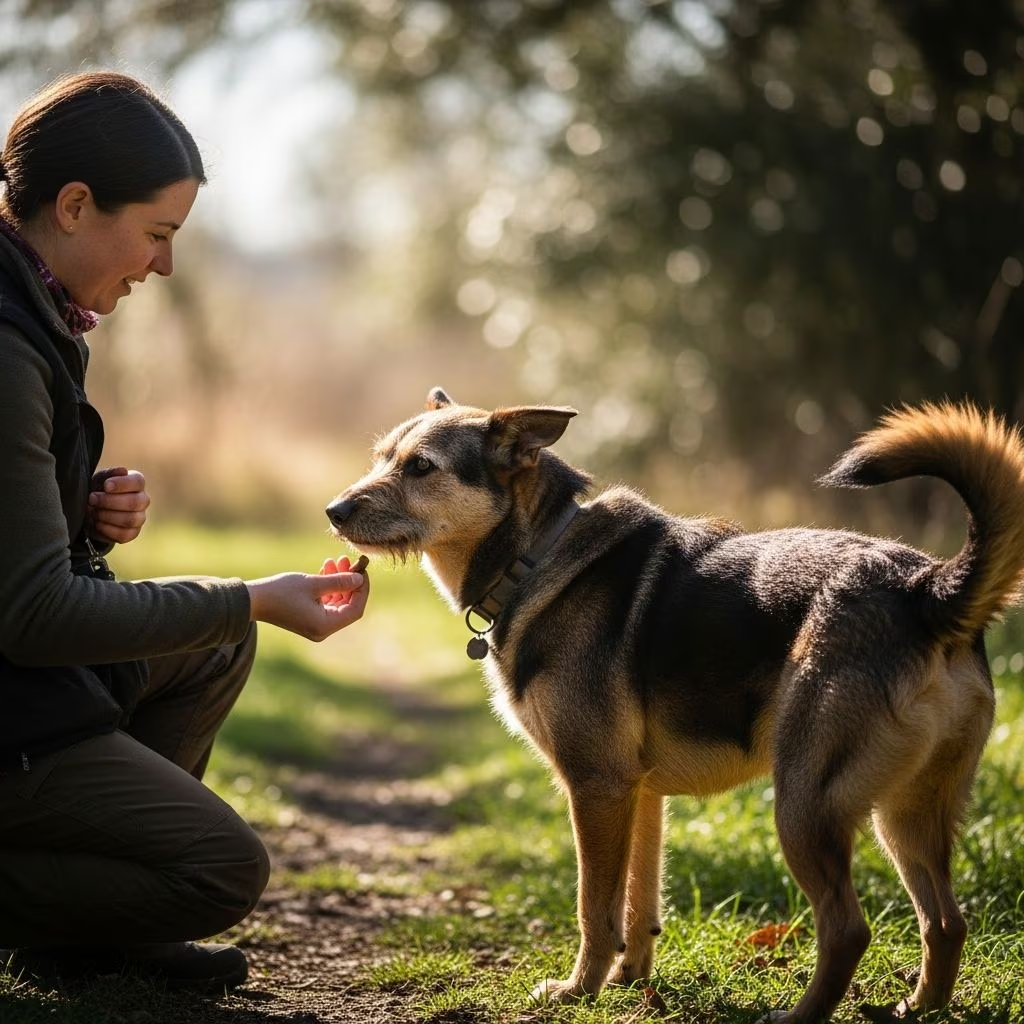
Feral dogs, shaped by generations of independence from human care, present unique challenges but also remarkable potential for rehabilitation through dedicated, patient training. With the right approaches grounded in their biology and behavior, many can transition into domesticated companions.
Defining Feral Dogs and Their World
Feral dogs represent a distinct category among canines, characterized by their self-sufficient existence without reliance on human support. Unlike domestic pets, they thrive by hunting, scavenging, and navigating social structures akin to wild canids, often exhibiting wariness or aggression toward people due to past encounters. These dogs typically form packs with defined travel routes and activity sites, active primarily at dawn, dusk, or night to avoid detection.
Their physical and behavioral adaptations include rounder tracks with prominent nail marks compared to coyotes, and diets ranging from carrion and garbage to prey like small mammals and livestock. Reproduction occurs in sheltered dens, often repurposed from other wildlife, underscoring their resourcefulness in harsh environments.
Key Distinctions: Feral Versus Stray Dogs
Understanding the nuances between feral and stray dogs is crucial for effective intervention. Feral dogs embody true wild independence, confident in canine social dynamics and adaptive survival skills, often living in family groups or packs without human dependency. They view humans as non-pack members or potential threats, maintaining distance unless provoked.
| Aspect | Feral Dogs | Stray Dogs |
|---|---|---|
| Human Interaction | Wary, independent; avoid unless necessary | Often seek human contact, more fearful or opportunistic |
| Social Structure | Pack-oriented, stable groups of 5-10 | Solitary or fluid small groups, human-adapted |
| Behavior Toward People | Protective, potentially aggressive if cornered | May approach for food, show fear-based snapping |
| Survival Skills | Hunting, scavenging mastery | Primarily scavenging near humans |
Strays, by contrast, hover on society’s edges, scavenging collaboratively with humans and displaying more tolerance for proximity, though they may lack refined dog communication skills. Feral dogs prioritize territorial defense and resource guarding, traits honed away from human influence.
Challenges in Approaching and Capturing Feral Dogs
Initial contact with feral dogs demands caution due to their heightened instincts. They may growl, snap, or flee when confronted, especially if backed into corners or chased—actions that trigger self-preservation. Safe handling avoids direct eye contact, sudden movements, or invading personal space; instead, allow them to approach on their terms.
- Maintain distance to prevent defensive reactions.
- Use calm, non-verbal signals rather than verbal commands initially.
- Employ tools like snares or traps judiciously, releasing non-target animals carefully.
Capturing often involves strategic placement at known trails or feeding sites, recognizing their nocturnal patterns and pack behaviors.
Step-by-Step Rehabilitation Process
Rehabilitating a feral dog requires a phased, trust-building protocol, starting with basic safety and progressing to socialization. Patience is paramount, as progress can span months.
Phase 1: Secure Environment and Basic Needs
House the dog in a quiet, spacious enclosure with hiding spots to reduce stress. Provide high-value food at a distance, gradually closing the gap as tolerance builds. Avoid forcing interactions; observe natural behaviors to gauge comfort levels.
Phase 2: Building Initial Trust
Incorporate a confident, social dog as a role model to demonstrate human safety. Engage normally with the companion dog nearby, allowing the feral one to watch and approach voluntarily. Toss treats without eye contact or petting to associate humans with positivity.
Phase 3: Gentle Socialization
Introduce collaborative activities like toy fetching or gentle tug games, emphasizing visual cues over words to align with canine communication. Short, positive sessions prevent overwhelm, rewarding calm behaviors with praise and food.
- Start with 5-minute interactions, increasing duration slowly.
- Use barriers like baby gates for controlled exposure.
- Monitor body language: relaxed ears and tail wags signal progress.
Phase 4: Advanced Training and Integration
Once trust forms, teach basic commands using positive reinforcement. Leash walking begins in low-stimulation areas, countering their pack-hunting instincts with structured outlets.
Address potential issues like resource guarding through desensitization: offer food in varying scenarios to normalize sharing.
Potential Roadblocks and Solutions
Feral dogs may revert to aggression under stress or exhibit fear of novel stimuli. Common hurdles include:
- Fear Aggression: Mitigate by never punishing reactions; redirect with toys or distance.
- Pack Loyalty: If from a group, initial separation anxiety requires gradual exposure to solo life.
- Health Concerns: Veterinary checks for parasites or injuries from scavenging are essential before intensive training.
Consistency from all household members prevents confusion, and professional trainers experienced in wildlife rehab can provide tailored guidance.
Realistic Expectations and Success Metrics
Not all feral dogs become lap pets; some excel as working dogs or thrive in spacious rural homes. Success indicators include voluntary proximity, relaxed demeanor around strangers, and obedience to cues without hesitation.
Studies on feral populations highlight adaptability, with many integrating into human society when given time—evidenced by their opportunistic feeding mirroring wild canids yet capable of behavioral plasticity.
Long-Term Care for Rehabilitated Feral Dogs
Post-training, maintain routines that reinforce learned behaviors. Provide mental stimulation via puzzle toys and scent games to satisfy innate hunting drives. Regular exercise prevents boredom-induced regressions.
Annual health checks address vulnerabilities from early wild life, such as dental issues from hard scavenging diets. Spaying/neutering curbs territorial instincts.
Frequently Asked Questions (FAQs)
Can all feral dogs be fully domesticated?
While many succeed with effort, extreme cases may retain wariness, best suited for sanctuary living rather than family homes.
How long does training take?
Typically 3-12 months, varying by age, prior experiences, and consistency of methods.
Is it safe to adopt a feral dog?
With proper rehab, yes—but start slow and consult experts to assess temperament.
What if my feral dog shows aggression?
Prioritize safety: muzzle train, seek professional behaviorists, and use counter-conditioning techniques.
Do feral dogs make good family pets?
Potentially, especially with older children; their loyalty, once earned, rivals any breed.
Expert Insights on Feral Dog Potential
Behaviorists emphasize that feral dogs’ intelligence and adaptability—key to their survival—translate well to training when channeled correctly. Programs pairing them with social dogs accelerate trust, proving socialization windows extend beyond puppyhood.
Ultimately, rehabilitating a feral dog not only saves a life but reveals the profound resilience within, forging unbreakable human-canine bonds.
References
- Feral Dogs – Prevention and Control of Wildlife Damage — University of Nebraska-Lincoln (pcwd.info). 1994. https://pcwd.info/wp-content/uploads/2016/12/1994DogsFeral.pdf
- Feral Dogs vs Stray Dogs | What You Should Know — Total K9 Focus. Accessed 2026. https://totalk9focus.com/rescue-dogs/feral-dogs-vs-stray-dogs/
- Street Dog or Feral Dog? — Harmony Professional Dog Training. Accessed 2026. https://www.harmony.dog/news/street-dog-or-feral-dog/
- Understanding Feral Dogs: Nature’s Resilient Survivors — Oreate AI. Accessed 2026. http://oreateai.com/blog/understanding-feral-dogs-natures-resilient-survivors/f1e6a25a0115139702ace9748a388897
- How to Help Feral Dogs Trust People — Best Friends Animal Society. Accessed 2026. https://bestfriends.org/pet-care-resources/how-help-feral-dogs-trust-people



