

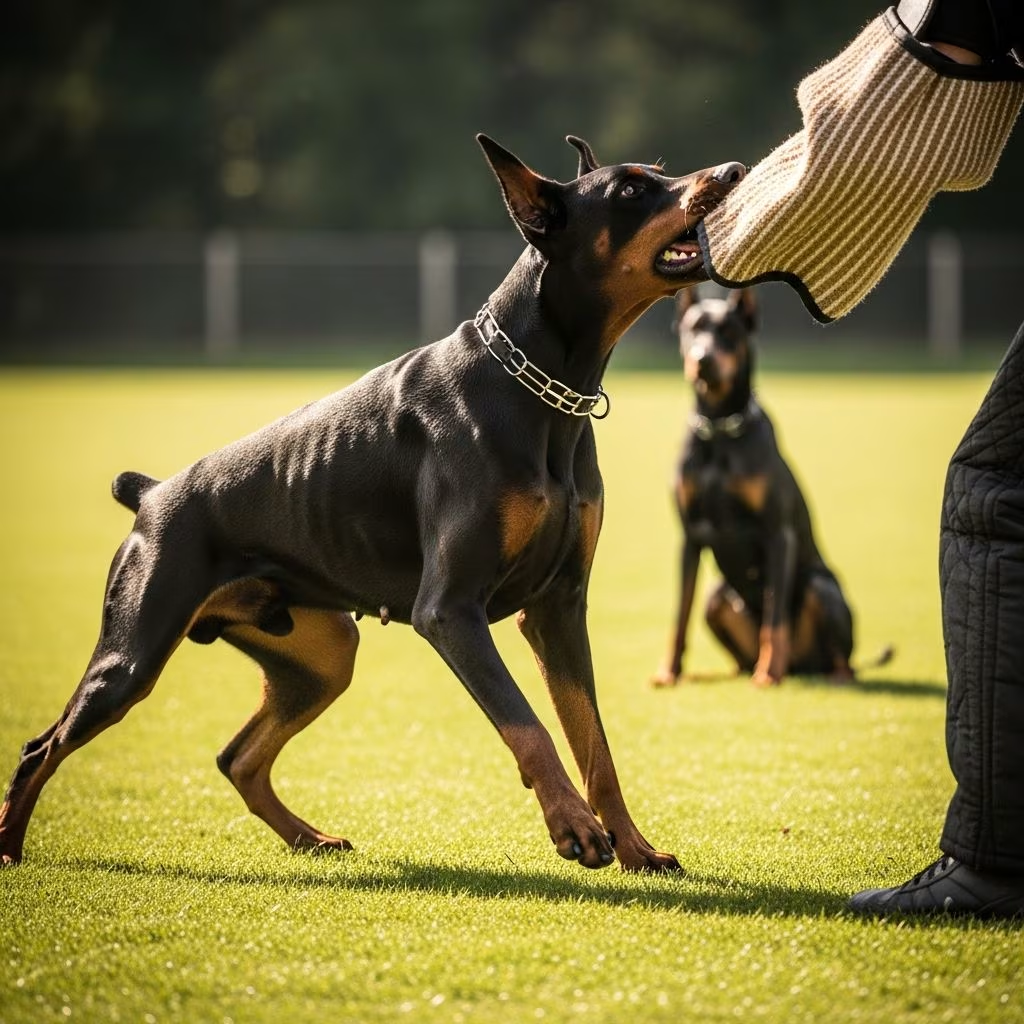
Dobermans possess remarkable intelligence, strength, and loyalty, making them prime candidates for protection roles when properly trained. This guide outlines a structured approach to developing these traits responsibly, prioritizing safety and control to create a dependable family guardian.
Understanding the Doberman’s Protective Instincts
Dobermans were originally bred in the late 19th century by Karl Friedrich Louis Dobermann as personal protection dogs, combining speed, power, and alertness. Their natural vigilance stems from this heritage, but raw instinct alone does not suffice; structured training channels these qualities into reliable behavior. Unlike aggressive breeds trained for attack, Dobermans excel as alert barkers and deterrents, distinguishing threats from everyday visitors.
Key traits include high trainability due to their working dog lineage, but they require consistent leadership to avoid overprotectiveness. Early intervention prevents fear-based reactivity, ensuring the dog responds to commands rather than acting independently.
Preparing Your Doberman for Guard Training
Before diving into protection exercises, assess your dog’s readiness. Puppies under 8 months should focus on foundational skills, as full maturity typically occurs around 2 years, allowing for advanced work. Health checks, including hip evaluations and temperament testing, are essential to confirm suitability.
- Age Consideration: Start basics at 8-12 weeks; delay protection until 18-24 months.
- Temperament Evaluation: Seek confidence without undue shyness or aggression.
- Environment Setup: Secure a quiet training space free from distractions.
Commit to daily sessions of 15-30 minutes, using positive reinforcement like treats and praise to build trust.
Building a Rock-Solid Obedience Foundation
Obedience forms the bedrock of guard training, enabling precise control in high-stress scenarios. Without it, protective instincts can lead to liability.
| Command | Purpose | Training Tip |
|---|---|---|
| Sit/Stay | Impulsivity control | Use treats; gradually increase duration to 5 minutes. |
| Come (Recall) | Emergency retrieval | Practice in distracting environments; reward heavily. |
| Heel | Leash manners | Walk with loose lead; correct pulling gently. |
| Leave It | Ignore temptations | Place high-value item down; reward disinterest. |
Daily drills in varied settings—parks, streets, homes—hone reliability. Aim for 90% success rate before advancing.
Socialization: The Key to Discernment
Far from isolating guard dogs, socialization teaches them to differentiate friends from foes. Expose your Doberman to diverse stimuli from puppyhood: children, crowds, vehicles, and animals.
Protocol includes controlled introductions: short, positive encounters with rewards. Goal: neutral calm around non-threats, alert posture toward intruders. Undersocialized dogs risk false alarms, endangering innocents. Weekly group classes or walks fulfill this, logging 100+ positive exposures by 6 months.
Mastering Alert Barking Techniques
A vigilant bark deters intruders without physical engagement. Teach “speak” and “quiet” for on-demand control.
- Trigger natural barking (doorbell, toy tease).
- Command “speak” pre-bark; treat immediately.
- Introduce “quiet” by luring silence with treats or toys.
- Practice transitions: bark on cue, hush on cue.
Combine with territory patrols: leash walks around property perimeters reinforce boundaries. Dobermans quickly associate home with duty.
Advanced Stranger and Threat Simulation
Once basics are solid, simulate intrusions. Use a trusted helper on leash approach: assertive movements, noise-making.
- Leashed Phase: Dog barks; helper retreats; profuse rewards.
- Off-Leash Progression: Repeat sans leash in enclosed area.
- Handler Absence: Test solo vigilance after 4-6 weeks.
Emphasize retreat response: aggressor flees upon bark, reinforcing non-escalation. Professional decoys elevate realism post-basics.
Handler Skills: Your Role in Success
Effective guardianship demands handler proficiency. Enroll in certification programs covering liability, signage, and restraint protocols.
Daily bonding—play, grooming—fosters implicit trust. Display “Beware of Dog” signs; muzzle in public; document all interactions for compliance.
Common Pitfalls and How to Avoid Them
Mistakes like skipping socialization breed unpredictability. Inconsistent commands erode authority; physical punishment fosters fear aggression.
- Pitfall: Rushing Protection – Solution: 3-6 months basics first.
- Pitfall: Ignoring Recall – Solution: Lifetime practice.
- Pitfall: Solo Training – Solution: Hire certified trainers.
Legal and Ethical Responsibilities
Guard dogs incur duties: local laws often mandate leashing, muzzling, insurance. Report bites; train for discrimination to avert lawsuits. Ethical training prioritizes welfare, avoiding burnout via rest days and health monitoring.
Maintenance for Lifelong Reliability
Post-training, weekly refreshers sustain skills. Rotate exercises; annual professional evaluations ensure peak performance. Nutrition, exercise (1-2 hours daily), and mental stimulation prevent boredom-induced issues.
FAQs
Can any Doberman become a guard dog?
Most can with proper breeding and training, but temperament testing identifies top candidates. Not all suit high-stress roles.
How long does training take?
Basics: 2-4 months; full protection: 6-12 months, plus ongoing maintenance.
Is professional help necessary?
Recommended for advanced phases to ensure safety and technique.
What if my dog is too friendly?
Enhance through consistent boundary drills; some dogs excel as alert-only guardians.
Are Dobermans safe around kids?
Yes, with socialization; they often bond protectively with family.
References
- Training Tips for Guard Dogs: Safety and Effectiveness — xinsurance.com. 2023-05-15. https://www.xinsurance.com/blog/training-tips-for-guard-dogs-safety-and-effectiveness/
- How to Train a Guard Dog — Deep Sentinel. 2024-02-20. https://www.deepsentinel.com/blogs/home-security/how-to-train-a-guard-dog/
- Guard Dog Training Step by Step! — YouTube (Miami Dog Whisperer). 2022-11-10. https://www.youtube.com/watch?v=wnAOz5N5oQE
- The DIY PROTECTION DOG COURSE — YouTube (Shield K9). 2023-08-05. https://www.youtube.com/watch?v=C4ptQqz4DyM
- So, You Think You Want a Protection Dog? — Nitro K-9 LLC. 2024-01-12. https://nitrocanine.com/think-want-protection-dog/



