

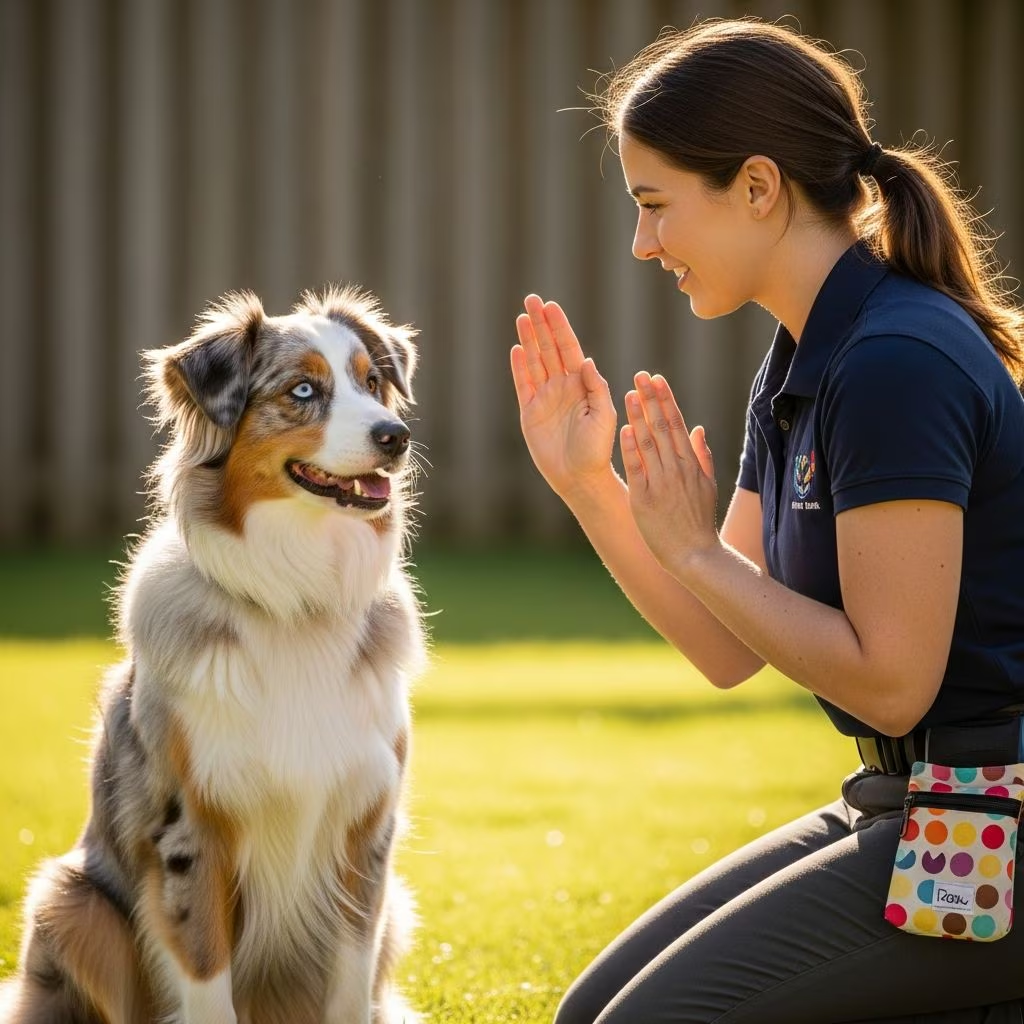
Deaf dogs can lead fulfilling, obedient lives with the right training approach focused on visual and tactile communication. Owners who adapt to their pet’s needs using positive reinforcement achieve strong bonds and responsive behaviors.
Understanding Deafness in Dogs
Deafness in canines often stems from genetics, aging, infections, or injuries, affecting one or both ears. Congenital deafness is common in breeds like Dalmatians, while acquired cases occur later in life. These dogs compensate with heightened sight, smell, and vibration sensitivity, making visual training highly effective.
Recognizing deafness early allows prompt adaptation. Puppies may fail to respond to claps or calls, while older dogs show similar signs. Veterinary confirmation via BAER testing ensures accurate diagnosis, ruling out treatable issues.
Building a Strong Foundation with Eye Contact
The cornerstone of deaf dog training is teaching reliable eye contact, or “watch me.” Start in a quiet space with high-value treats like small bits of cheese or meat.
- Hold a treat near your dog’s nose to lure their gaze upward.
- Mark the moment they look at you with a clear visual signal, such as a thumbs-up or open-hand flash.
- Immediately deliver the treat, repeating 10-15 times per session.
Progress by fading the lure: use an empty hand to guide their attention, marking and rewarding voluntary eye contact. Practice across environments to generalize the skill, turning it into a default behavior that keeps your dog focused amid distractions.
Choosing and Implementing Visual Markers
Visual markers replace verbal clicks, signaling correct behavior precisely. Popular options include:
- Thumbs-up gesture: Simple, visible from distances.
- Hand flash: Fist opens to palm and closes, mimicking a light burst.
- Flashlight or LED: Brief light pulse, ideal for low-light but avoid lasers.
Pair the marker with rewards consistently: show the signal, treat immediately. After 20-30 repetitions, the marker alone elicits anticipation. Use exaggerated facial expressions to enhance clarity, as dogs read human body language adeptly.
Essential Hand Signals for Obedience
Develop a consistent set of distinct hand signals for core commands. Begin with lure-and-reward: hold a treat to guide the position, mark success, then fade the food.
| Command | Hand Signal Description | Training Steps |
|---|---|---|
| Sit | Palm up, move hand upward from chest | Lure butt down, mark, treat. Repeat 10x. |
| Down | Palm down, lower hand to floor | Lure from sit to lie, mark, treat. |
| Stay | Open palm facing dog at chest height | Build duration gradually with rewards. |
| Come (Recall) | Wave hand toward chest or pat thighs | Start close, increase distance in safe areas. |
| Bed/Place | Point to location, then pat it | Lure to spot, mark settling. |
Consistency is key; family members must use identical signals. Practice daily in 5-10 minute sessions to prevent fatigue.
Addressing the Startle Response
Deaf dogs startle easily due to undetected approaches, potentially leading to defensive reactions. Desensitize by gently touching a safe spot—like the shoulder—followed by a treat when awake.
- Progress to touching while sleeping, rewarding upon waking.
- Use vibrations from stomping lightly or leash tugs to signal presence.
For multi-dog homes, supervise introductions and condition housemates to associate the deaf dog with positives. This builds security and reduces fear-based aggression.
Incorporating Vibration Tools Safely
Vibration collars serve as attention-getters, not corrections. Introduce gradually:
- Allow collar wear (off) for days to habituate.
- Pair low vibrations with visual cues and treats.
- Keep sessions positive and brief.
Alternatives include personal vibrating pagers clipped to the collar. Always prioritize welfare; misuse can erode trust.
Mastering Recall for Safety
Reliable recall prevents escapes and ensures off-leash freedom in secure spaces. Train in low-distraction areas:
- Start 1-2 feet away; signal “come” visually.
- Mark approach, jackpot reward (multiple treats).
- Extend distance with long lines, adding distractions slowly.
Never call for punishment; preserve the cue’s positive association. Fenced yards or buddies enable safe practice.
Daily Management and Household Integration
Visual schedules aid routine: use picture boards for mealtimes, walks, play. For outdoors, flashing lights or leashed walks alert to dangers.
- Doorways: Signal “wait” before opening.
- Multi-pet homes: Teach gentle approaches.
- Nighttime: Bedside lights or vibrations for potty breaks.
Enroll in positive reinforcement classes; many accommodate deaf dogs with handler support.
Advanced Training and Enrichment
Once basics solidify, teach tricks like spin, paw, or agility using signals. Scent games leverage their strong nose, providing mental stimulation.
Competitions like deaf dog agility showcase capabilities. Track progress in a journal to celebrate milestones and adjust methods.
Common Challenges and Solutions
| Challenge | Solution |
|---|---|
| Distractions break focus | High-value rewards, shorter sessions, gradual exposure. |
| Inconsistent family signals | Group training sessions, cheat sheets. |
| Fear of strangers | Counter-conditioning with treats at distance. |
| Recall failures | Long-line practice, never off-leash unsecured. |
FAQs
Can deaf dogs learn as fast as hearing dogs?
Yes, with visual methods, many excel due to focused attention.
Is a vibration collar necessary?
No, but useful for attention; hand signals suffice for most.
How do I train a deaf puppy?
Start with eye contact and basics early; they’re sponges for visuals.
Are deaf dogs more aggressive?
No, startle responses mimic any dog’s; training prevents issues.
What breeds are prone to deafness?
Dalmatians, Aussies, white-coated breeds; vet check recommended.
Success Stories and Motivation
Owners report deaf dogs thriving in homes, sports, and therapy roles. Patience yields loyal companions who “listen” through sight and touch.
References
- 4 Practical Tips on Deaf Dog Training — Woofz. 2023. https://www.woofz.com/blog/how-to-train-a-deaf-dog/
- Teaching and Training a Deaf Dog — VCA Animal Hospitals. 2024-01-15. https://vcahospitals.com/know-your-pet/teaching-and-training-a-deaf-dog
- Beginning Sign Training — Deaf Dogs Rock. 2022. https://deafdogsrock.com/beginning-sign-training
- How to Communicate with a Deaf Dog — Karen Pryor Clicker Training. 2023-05-10. https://clickertraining.com/how-to-communicate-with-a-deaf-dog/
- Teach Your Deaf Dog the “Watch Me” Cue — Deaf Dogs Rock. 2022. https://deafdogsrock.com/teach-your-deaf-dog-the-watch-me-command



