

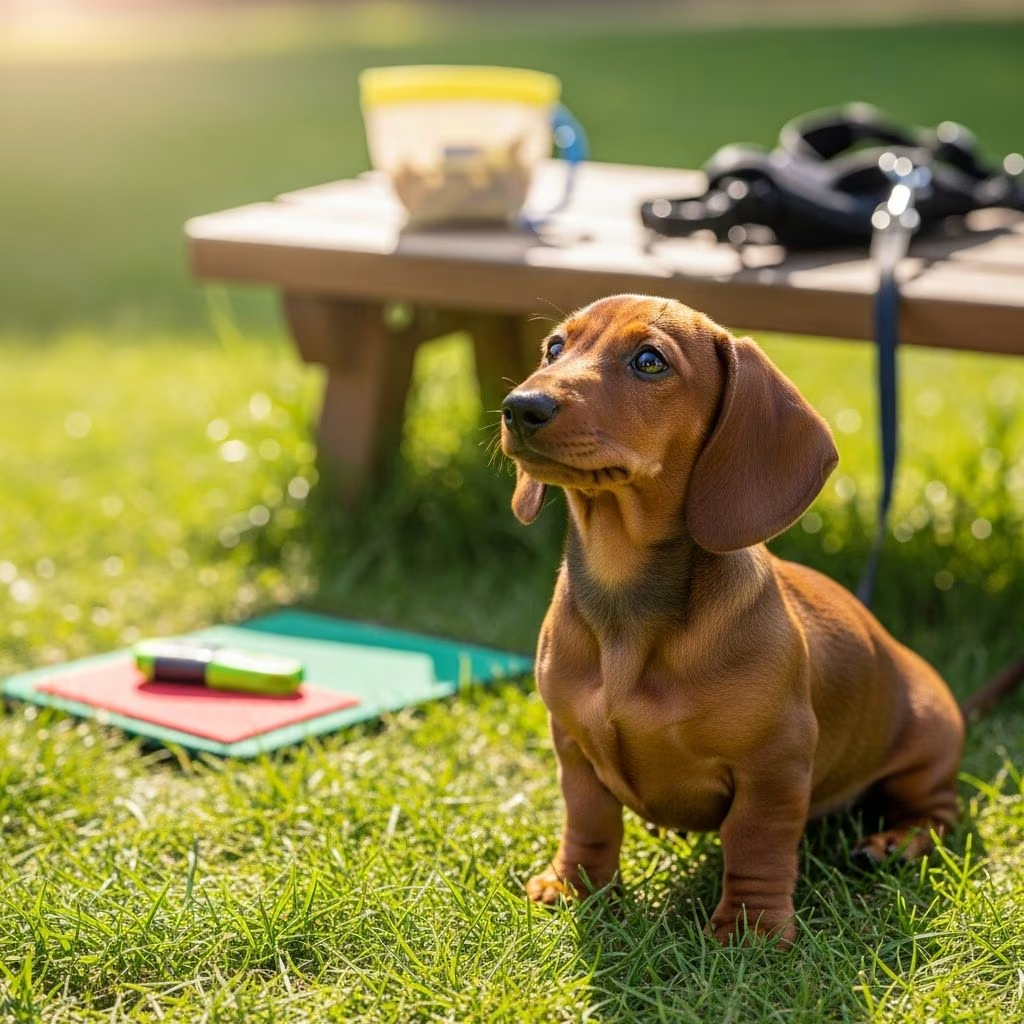
Dachshunds are spirited, intelligent dogs with personalities that far exceed their small stature. Originally bred to hunt badgers and other burrowing animals, these determined little dogs were developed to work independently and make quick decisions in challenging situations. This heritage means modern dachshunds often display remarkable stubbornness and independence—traits that can make training both challenging and rewarding. Understanding the unique aspects of dachshund temperament is essential for anyone looking to teach their wiener dog reliable obedience and good behavior.
Understanding the Dachshund Temperament
Before diving into specific training techniques, it’s important to recognize what makes dachshunds different from other breeds. These dogs were selectively bred to pursue prey into underground burrows, which required courage, determination, and the ability to make independent judgments about when to pursue quarry and when to retreat. This breeding history has created a dog that doesn’t automatically defer to authority figures the way some other breeds do.
Dachshunds possess keen intelligence combined with what many trainers describe as a strong-willed nature. They’re quick learners capable of understanding complex commands, yet they’re equally quick to recognize when they can bend the rules to their advantage. This isn’t defiance born from stupidity—rather, it’s the mark of a clever dog that has learned to evaluate situations and choose actions based on personal preference rather than blind obedience. Successfully training a dachshund requires acknowledging this trait and working with it rather than against it.
Building the Foundation: Reward-Based Training Methods
The most effective approach to dachshund training centers on positive reinforcement rather than punishment-based techniques. While aversive methods like water spray bottles or noise-making devices might produce temporary compliance through fear, they fail to build genuine obedience and can damage the trust between dog and owner. Reward-based training, by contrast, motivates your dachshund to cooperate willingly because they understand that compliance results in something valuable.
The fundamental principle of positive reinforcement is straightforward: when your dachshund performs a desired behavior, immediately follow it with a reward. This immediate connection between action and consequence helps your dog’s brain form the association you’re trying to establish. The key word here is “immediately”—research shows that dogs make behavioral connections most effectively when rewards or corrections occur within three seconds of the action.
When your dachshund fails to follow a command they clearly understand, skip punishment and instead employ gentler communication methods. These might include:
- Withdrawing attention entirely—no eye contact, no interaction, no verbal response
- Using a calm but firm verbal marker like “no” or “ah”
- Employing spatial pressure by positioning your body to encourage different behavior without physical contact
This approach teaches your dachshund that incorrect choices result in loss of connection and engagement with you, which most dogs find sufficiently undesirable to motivate behavior change.
Selecting High-Value Rewards That Motivate
Not all rewards carry equal motivational weight for dachshunds. A treat your dog can take or leave won’t effectively reinforce behavior during training sessions. Instead, you need to identify “high-value” rewards—items or activities that your specific dachshund finds irresistible. For many dachshunds, this means small, intensely flavored treats that signal something truly special is happening.
Given the dachshund’s small size, treat selection deserves particular attention. Large training treats can contribute excessive calories during multiple daily training sessions, potentially leading to obesity—a common health concern in the breed. The ideal training treat is small enough to consume in one or two bites, low in calories, and sufficiently flavorful to capture your dog’s complete attention.
Beyond food rewards, consider what else genuinely motivates your individual dachshund. Some dogs find play, praise, or access to a favorite toy rewarding enough to work for. Clicker training combined with marker words can also create a bridge between the moment of correct behavior and the delivery of rewards, providing clear communication about what earned the reward.
Timing Your Training Sessions for Maximum Effectiveness
When you conduct training sessions matters significantly for your dachshund’s motivation and capacity to learn. Training immediately before mealtime—when your dog’s stomach is empty and food motivation is highest—produces notably better results than sessions conducted after your dog has eaten. A hungry dachshund is a motivated dachshund, and that motivation translates directly into better focus and faster learning.
However, optimal timing extends beyond meal schedules. Session length is equally important. Many well-intentioned trainers make the mistake of conducting long, intensive training sessions lasting 20 minutes or more. This approach backfires with most dogs, who experience mental fatigue and frustration after approximately 5 to 10 minutes of focused training work. Learning new commands requires substantial mental and physical energy for your dog, and pushing past their natural attention span leads to diminishing returns.
Instead, conduct multiple short training sessions throughout the day. A dachshund trained with three 5-minute sessions spaced several hours apart typically learns faster and retains commands more reliably than one subjected to a single 15-minute marathon session. This approach also prevents the frustration and boredom that derail training progress. As your dachshund masters commands, you can gradually extend session length, but always remain alert to signs of fatigue or waning focus.
Creating the Ideal Training Environment
Environmental factors profoundly influence your dachshund’s ability to concentrate and learn. When beginning instruction on any new command, choose a location offering minimal distraction—typically a quiet room inside your home with no other people, pets, or electronic noise. Your dachshund’s complete focus should be directed toward you and the behavior you’re teaching.
Once your dachshund demonstrates reliable performance of a command in this controlled environment, systematically introduce mild distractions. Begin by opening the door to adjacent rooms, then progress to training in different areas of your home. Next, move training sessions outdoors to a quiet yard or uncrowded park. Finally, practice in progressively busier environments with multiple sights, sounds, and smells competing for your dog’s attention.
This graduated approach to distraction training builds genuine obedience rather than simply trained behavior that only functions in perfect conditions. Your goal is a dachshund that responds reliably whether sitting in your living room or navigating a busy downtown sidewalk.
Addressing the Challenge of Dachshund Independence
Dachshunds present a distinctive training challenge that many owners discover through sometimes frustrating experience: their independent streak can manifest as “selective hearing” or what trainers call a failure to follow reliable commands even when the dog clearly understands what’s being asked. This behavior typically indicates that your dachshund understands the command but has decided that whatever they want to do instead is more rewarding than complying.
The solution requires establishing a training system that eliminates loopholes in the rules. Dogs are remarkably intelligent at finding and exploiting inconsistencies in training approaches. If your dachshund discovers that ignoring your “come” command results in you chasing them for entertainment, you’ve inadvertently created a game that rewards the very behavior you’re trying to eliminate. Consistency in enforcing commands, combined with never rewarding incorrect choices, gradually teaches your dachshund that compliance genuinely is the best option available.
Building increased self-control in your dachshund helps combat this tendency. Rather than demanding immediate obedience, work on exercises that teach your dog to pause, evaluate options, and make deliberate choices rather than acting on impulse. Teaching commands like “wait” before providing meals or exiting doors cultivates this thoughtful mindset. Over time, this mental framework extends to all training scenarios, creating a dog that thinks before acting rather than simply reacting to stimuli.
Making Training Enjoyable for Both Handler and Dog
Your emotional state during training sessions directly influences your dachshund’s ability to learn and concentrate. Dogs are remarkably perceptive about their handler’s emotional condition, picking up on stress, frustration, and anxiety. When you’re tense or irritable, your dachshund may become confused by conflicting signals—your words saying “sit,” but your body language and tone conveying negative emotion. This confusion undermines learning and can create anxiety around training itself.
Conduct training sessions only when you’re genuinely in a positive mindset and viewing training as an enjoyable activity rather than a chore. Keep sessions lighthearted and engaging for your dachshund. Incorporate verbal praise generously, use play as a reward component, and remember that training time is bonding time between you and your dog. A dachshund trained in an atmosphere of enthusiasm and play develops enthusiasm for training and typically learns faster than one drilled through obligatory sessions characterized by tension.
Managing Behavioral Challenges in Anxious Dachshunds
Some dachshunds display anxiety or fearfulness that affects their trainability. With anxious dogs, training requires particular sensitivity and a modified approach focused on building confidence gradually. Clicker priming exercises conducted while seated on the floor create a non-threatening atmosphere that helps anxious dogs feel safe enough to engage with training.
When working with an anxious dachshund, be extremely mindful of which behaviors you’re inadvertently reinforcing. If you pet or provide attention to an anxious dog while they’re displaying fearful behavior, you’re strengthening that fearfulness through reinforcement. Conversely, consistently rewarding calm, confident behavior teaches your dachshund that relaxation and engagement produce positive outcomes. The timing of your reinforcement is critical—reward calm behavior within seconds of its occurrence to build a clear association.
Marker words that coordinate family training efforts also prove valuable with anxious dogs. A consistent verbal marker like “yes” helps your dachshund learn exactly which moment earned the reward, creating clarity that accelerates learning and builds confidence more effectively than vague praise.
Channeling Natural Instincts Productively
Dachshunds possess strong instincts stemming from their hunting heritage. Rather than attempting to suppress these instincts entirely, effective training often involves channeling them into appropriate outlets. For example, if your dachshund demonstrates a strong digging drive, you can establish a designated digging location like a sandbox and teach your dog that digging is acceptable only there. This approach acknowledges the legitimate instinct while redirecting it away from your garden and furniture.
Naming and teaching toy retrieval represents another way to productively engage your dachshund’s natural instincts and intelligence. Teaching your dog to identify and retrieve specific items by name stimulates mental engagement and creates an outlet for their problem-solving abilities.
Key Training Commands for Daily Success
While any dog benefits from basic obedience commands, certain commands prove particularly useful for managing dachshund behavior effectively. Essential commands include:
- Sit — One of the most fundamental commands, useful in countless daily situations
- Come — Critical for safety, especially given dachshunds’ hunting instincts and tendency to chase moving objects
- Down — Useful for managing excitement and establishing calm behavior in specific situations
- Wait — Valuable for teaching impulse control during transitions like exiting doors or approaching other dogs
- Leave it — Important for safety, preventing consumption of dangerous or toxic items
Each of these commands builds your dachshund’s capacity for self-control while making daily life safer and more pleasant for both dog and owner.
FAQ
Why is my dachshund so stubborn?
Dachshunds were bred to work independently in challenging situations underground, which created a dog with strong decision-making abilities and a reluctance to simply follow orders blindly. This isn’t stupidity or spite—it’s the expression of breeding traits that made them excellent hunters. Understanding and working with this trait rather than against it is key to successful training.
How long should dachshund training sessions last?
Keep training sessions to a maximum of 10 minutes, with 5-minute sessions often proving most effective. Multiple shorter sessions throughout the day produce better learning outcomes than longer, intensive sessions. Always watch for signs of fatigue or frustration and end the session on a positive note.
What treats are best for training dachshunds?
Choose small, low-calorie treats that your dachshund finds highly motivating. Because dachshunds are small and receive many treats during training sessions, calorie content matters. The treat should be appealing enough that your dog works enthusiastically for it without contributing excessive calories to their daily diet.
Can punishment-based training methods work on dachshunds?
While punishment-based methods might produce temporary behavior changes through fear, they damage the trust between dog and owner and don’t build genuine obedience. Positive reinforcement methods produce more reliable, longer-lasting results while maintaining a healthy relationship with your dog.
How do I train my dachshund to listen reliably?
Build self-control through exercises that teach your dachshund to pause before acting, use a training system without loopholes that allows exploitation, maintain consistency in command enforcement, and practice in progressively more distracting environments. Teaching your dog to think before acting rather than simply react improves reliability across all commands.
References
- 7 Tips for Training a Dachshund — YouDidWhatWithYourWiener.com. Accessed January 30, 2026. https://youdidwhatwithyourweiner.com/tips-for-training-a-dachshund/
- Helping a Pair of Fearful Dachshunds: Free Training Tips — DogGoneProblems.com. Accessed January 30, 2026. https://www.doggoneproblems.com/wally-tasha-passive-training/
- A Realistic, Honest Dachshund Training Guide — Best Mate Dog Training. Accessed January 30, 2026. https://www.bestmatedogtraining.co.nz/training-dachshunds
- Positive Training for Happy Dachshunds — YouTube. Accessed January 30, 2026. https://www.youtube.com/watch?v=PyGpD6EUyG0
- How to Train a Dachshund Puppy: Free Tips to Teach a Puppy — DogGoneProblems.com. Accessed January 30, 2026. https://www.doggoneproblems.com/alice/



