

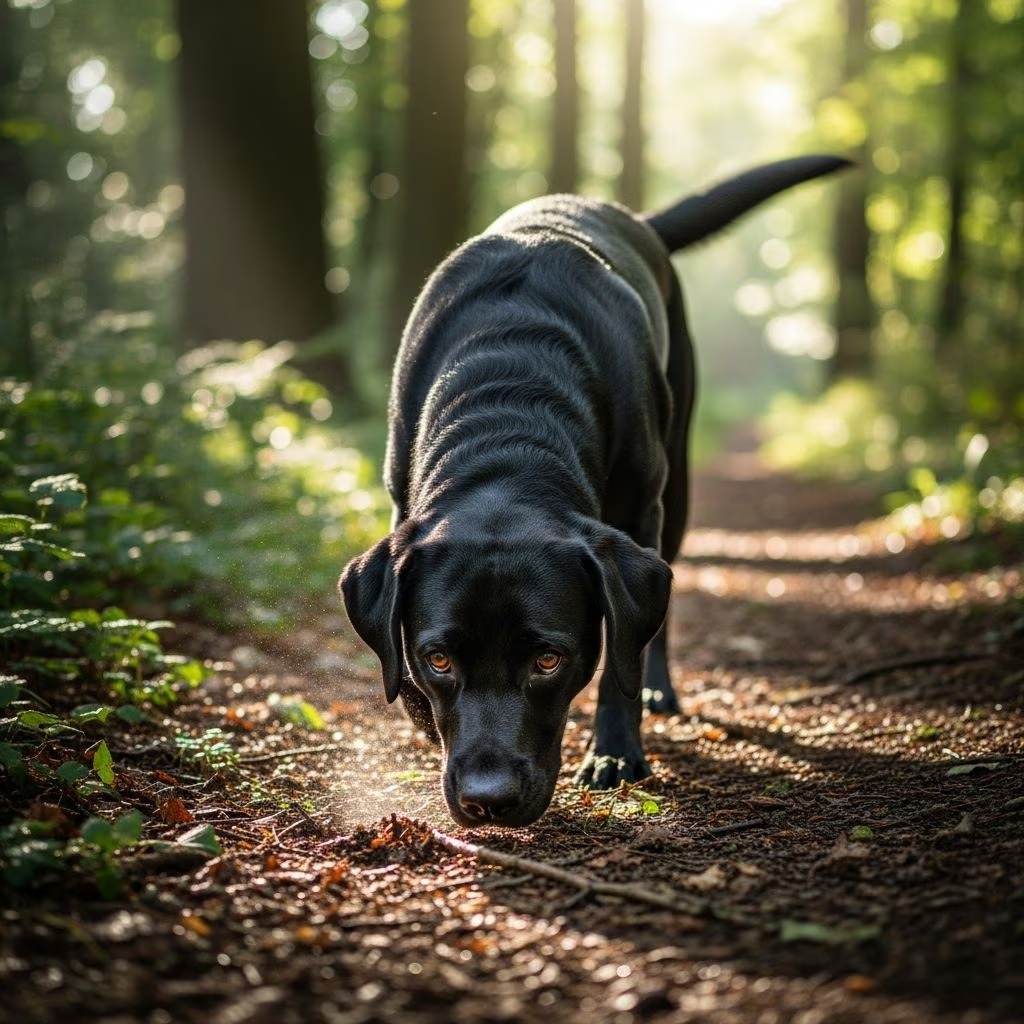
Train Your Dog to Track by Scent: A Comprehensive Guide
Dogs possess an extraordinary sense of smell that is significantly more developed than that of humans. This natural ability makes them ideal candidates for scent tracking and detection work. Whether you’re interested in search and rescue training, hunting, or simply enriching your dog’s mental stimulation, teaching your dog to track by scent is an achievable goal that can provide years of enjoyment and purpose for your canine companion. The good news is that you can teach your dog to follow a track or trail on the ground, to air scent, and to identify scented objects, and all three can be taught simultaneously because they employ similar scenting skills.
Understanding the Three Types of Scent Tracking
Before diving into training methods, it’s important to understand the three primary types of scent tracking that your dog can learn:
Ground Tracking
Ground tracking involves your dog following a scent trail left on the ground. This is the most natural form of scenting for dogs and is the foundation upon which other scenting skills are built. Dogs follow the scent molecules left by a person or object that has traveled across terrain.
Air Scenting
Air scenting is when your dog catches scent particles carried through the air rather than following a ground trail. This technique is valuable in search and rescue operations, particularly in open terrain where ground trails may be difficult to follow.
Scent Identification
Scent identification involves teaching your dog to recognize and locate specific odors or items. This skill is useful for detection work and can help your dog identify particular scents on command.
How to Train Your Dog to Track by Scent
1. Start Early in the Morning
The timing of your training sessions is crucial for success. To teach scenting a track, you need some treats and a grassy area, such as a baseball field or park. Begin early; many people start by 6 a.m. before anyone has walked on the grass. Early morning training is ideal because the scent is typically stronger due to dew on the grass and less foot traffic on the ground. Additionally, cooler temperatures in the early morning help preserve scent particles, making them easier for your dog to detect and follow.
2. Create a Treat Track
The foundation of scent tracking training begins with creating a treat track that teaches your dog to associate ground scent with rewards. Have your dog sit or lie down and stay. Take a couple of inch-long pieces of hot dog and use your shoe to mash them into the grass. Make sure to crush the grass under the hot dogs, which will release a grass scent. Then, with the hot dog residue on the bottom of your shoe, walk a straight line away from your dog. Although hot dogs are not the most nutritious food, they work best for training because their strong aroma captures your dog’s attention without overstuffing their belly. The combination of food reward and grass scent creates a powerful incentive for your dog to engage with the ground and begin following the trail.
3. Release Your Dog and Encourage Tracking
Once you’ve created the treat track, release your dog with an enthusiastic command such as “Track!” or “Find it!” Encourage your dog to follow the trail you’ve created. Most dogs will naturally begin to follow the scent as they recognize the smell of the hot dog and the crushed grass. As your dog follows the track, provide verbal encouragement and praise to reinforce the behavior. When your dog successfully completes the track and finds the reward at the end, celebrate enthusiastically with treats and praise. This positive reinforcement creates a strong association between tracking and reward, encouraging your dog to repeat the behavior.
4. Start Increasing the Length of the Track
When your dog successfully completes this trick, make another one by taking 10 steps to the side. If your dog is excited and having fun, you can do three or four short tracks per training session. As your dog improves over several sessions, make the track longer, add curves and corners, and drop several items along the way, but put the hot dog only on the one you want him to find. When making tracks longer or adding curves, use small pegs, stakes or flags to mark the track so you can tell if your dog is off track. This progressive approach prevents your dog from becoming overwhelmed while building confidence and competence in following scent trails.
Advanced Training Techniques
Understanding Scent Articles and Scent Pads
As your dog progresses in their scent tracking training, you’ll want to introduce more sophisticated techniques used in professional search and rescue work. Training will begin with the dropping of a scent article (a training bag) and the creation of a scent pad. A scent article is an item that has only been touched by the search subject and can be used for tracking and training. It helps the dog gain a thorough scent of the subject. A scent pad is when the search subject wipes their feet a few times on the ground in order to lay a heavy scent. These tools are essential for transitioning from treat-based tracking to real-world scent detection scenarios.
Creating Strong Scent Trails
To help your dog focus on the ground trail, make trails that travel in the same direction as the wind. Many trainers make L-shaped or U-shaped trails and mark the angles with flags so they can tell if their dog is following the ground trail or simply following a scent carried in the wind. When you begin to train your dog, you should make the trail as pungent as possible to teach your dog to rely on his nose and build up his confidence. Use a large bird, like a duck, to create a trail. You can intensify the scent by soaking the bird in water before dragging it through the field. Alternatively, you could rub training scents on a dummy or a pigeon to re-create the scent of the game you’ll be hunting later on.
Introducing Scent Detection Objects
Once your dog has mastered basic ground tracking, you can introduce specific scent detection training. Use cotton swabs dipped in the scent for which you are training. Hide them in a variety of environments, gradually increasing the difficulty by introducing competing scents. Add an extra layer of challenge with magnetic stash boxes. You can transition from using food-based rewards to unique odors and train your dog to search for specific scents like birch, anise, or clove, which are common in scent sports.
The Five Phases of Professional Tracking Training
For those interested in serious search and rescue or professional detection work, understanding the five phases of tracking training provides a structured approach to skill development:
Phase 1: Foundation with Scent Articles
The dog is shown a scent pad and scent article, then given the trained command to gain the scent. The handler can then command the dog to begin tracking for the search subject.
Phase 2: Tracking with Easy Hiding Locations
To set the scene for the tracking dog, the search subject should hide in an easily detectable location. The dog should begin to follow the scent and pre-placed treats leading to the search subject. The dog should be provided with treats or their favorite toy, along with enthusiastic praise to reward them for finding the search subject.
Phase 3: Varying Terrain and Difficulty
The difficulty of the hiding location is increased as training goes on. Your tracking dog should be able to find a search subject on various terrains with the use of scent articles and scent pads.
Phase 4: Unknown Search Subjects
To increase their skills, this is the point at which an unknown search subject is typically introduced. At this phase, your dog should no longer require treats to track successfully. Your dog learns to follow scent trails for people they’ve never encountered before, which is crucial for real-world search applications.
Phase 5: Tracking with Distractions
In the final phase of search and rescue training, you should now use a search subject as well as a person to act as a distraction. The scent article should still be utilized, but the search subject and the “distraction” subject should walk away together, breaking from each other at a predetermined point. To be successful, the tracking dog should be able to stay on the search subject’s track and locate them despite the distraction. When you reach phase 5, your tracking dog should be ready for their tracking certification test.
Best Practices for Scent Training Success
Encourage, But Don’t Distract, Your Dog
After you release your dog to find the trail with the cue word, you should encourage him to find the trail. Watch the way your dog behaves as he searches for the scent and finds it. Urge your dog on during the searching part, and then stay quiet when your dog finds the trail. This balance between encouragement and allowing your dog to work independently is critical for maintaining focus and building confidence.
Maintain Proper Nose Condition
Regardless of where your dog holds his nose to follow the trail, he should have a cool, damp nose to be able to pick up the scent and follow it. A dry nose can significantly impair your dog’s ability to smell effectively, so ensure your dog is well-hydrated and consider brief breaks if training in warm weather.
Use High-Value Rewards
Select treats that your dog finds highly rewarding. Hot dogs work particularly well due to their strong aroma, but you can also use other high-value treats like cheese or specialized training treats. The reward should be reserved specifically for tracking work so your dog maintains strong motivation during training sessions.
Training Environment Considerations
The environment in which you conduct scent training significantly impacts your dog’s success. Ideal training locations include baseball fields, parks, and other open grassy areas where you can create consistent tracks. These areas should have minimal prior foot traffic to avoid confusion from competing scents. As your dog progresses, you can gradually introduce more challenging environments such as wooded areas, urban settings, and locations with competing odors. Understanding how weather conditions, wind direction, and terrain affect scent dispersal will help you create optimal training scenarios that prepare your dog for real-world applications.
The Science Behind Canine Scent Tracking
Dogs perceive scents differently than humans. Beginning with the science behind odors and how dogs perceive them, professional trainers can harness that knowledge to eliminate training problems and maximize your dog’s potential. Dogs have approximately 300 million olfactory receptors in their noses, compared to about 6 million in humans. Additionally, the part of a dog’s brain dedicated to processing smell is proportionally larger than in humans. This biological advantage makes scent tracking a natural and rewarding activity for dogs when properly trained.
Troubleshooting Common Training Issues
Dog Not Following the Track
If your dog is not following the track, ensure that the scent is strong enough. Try using more pungent treats or scents, and make sure the track is clearly marked. Start with very short tracks and gradually increase length. Your dog may also need more encouragement or a higher-value reward to maintain interest.
Dog Losing Interest
If your dog loses interest during training, take a break and try again later. Overtraining can lead to boredom and decreased motivation. Keep training sessions short and fun, and always end on a positive note with a successful find and reward.
Difficulty with Wind Direction
If your dog struggles with wind direction, create tracks that run perpendicular to the wind initially. Gradually introduce tracks that cross wind patterns as your dog becomes more experienced in reading scent dispersal.
Frequently Asked Questions
Q: At what age can I start training my dog to track by scent?
A: You can begin teaching scent work to puppies as young as 8 weeks old using simple games and exercises. However, more intensive tracking training typically begins around 6 months of age when your dog has better focus and can handle longer training sessions.
Q: How long does it take to train a tracking dog?
A: Basic scent tracking can be taught in a few sessions, but developing a reliable tracking dog for search and rescue or professional detection work typically takes several months to a year of consistent training. The timeline depends on your dog’s natural ability, your experience level, and the frequency of training sessions.
Q: Can all dog breeds be trained to track by scent?
A: Yes, all dogs can be trained to track by scent. However, breeds with a stronger scenting heritage, such as Beagles, Bloodhounds, German Shepherds, and Labrador Retrievers, may take to the training more naturally. Smaller breeds and those with shorter muzzles may require adjusted training techniques.
Q: What’s the difference between tracking and scent detection?
A: Tracking involves your dog following a scent trail left by a person or object moving across terrain. Scent detection involves your dog finding and identifying a specific odor or object in a specific location. Both skills complement each other and can be developed together.
Q: How do I know if my dog is tracking correctly?
A: A correctly tracking dog will have their nose down and appear focused on the ground or air. You can mark your track with flags or stakes to verify that your dog is staying on the intended path. Your dog should show clear indicators when they detect the scent, such as increased alertness or changes in movement patterns.
Q: Can scent tracking be used for competitive purposes?
A: Yes, scent tracking and detection work are featured in various dog sports and competitions. The American Kennel Club offers titles in scent work events, and many search and rescue organizations conduct tracking tests and certifications for competitive purposes.
Q: What safety precautions should I take during scent training?
A: Always ensure your dog is in good physical condition before beginning strenuous tracking work. Provide plenty of water and take breaks during training sessions, especially in warm weather. Avoid training in areas with hazardous terrain or heavy traffic. Use appropriate identification and ensure your dog is up-to-date on vaccinations, as they may encounter unknown areas and other animals during training.
Q: Can I train my dog for scent tracking in an apartment or urban environment?
A: While initial training is best conducted in open spaces like parks and fields, you can develop scent detection skills in apartments using indoor scent games. However, ground tracking specifically requires open grassy areas. Urban environments can be used for advanced training once your dog has mastered basics in more controlled settings.
References
- The 5 Phases of Search Dog Training: How to Train a Tracking Dog — Active Dogs. Accessed 2025-11-28. https://activedogs.com/blog/the-5-phases-of-search-dog-training-how-to-train-a-tracking-dog/
- Scent Detection: The Ultimate Dog Trainer’s Guide — Ray Allen. Accessed 2025-11-28. https://www.rayallen.com/ultimate-scent-training-for-dogs-guide
- K9 Scent Training: A Manual for Training Your Identification, Tracking and Detection Dog — Dogwise. Accessed 2025-11-28. https://www.dogwise.com/k9-scent-training-a-manual-for-training-your-identification-tracking-and-detection-dog/
- A Beginner’s Guide to Scent Training for Dogs — Mossy Oak. Accessed 2025-11-28. https://www.mossyoak.com/our-obsession/blogs/how-to/a-beginners-guide-to-scent-training-for-dogs
- How to Teach Your Dog Scent Work at Home — American Kennel Club. Accessed 2025-11-28. https://www.akc.org/expert-advice/training/how-to-teach-your-dog-scent-work/
- Train Your Dog To Track By Scent — Chewy. Accessed 2025-11-28. https://www.chewy.com/education/dog/training-and-behavior/train-your-dog-to-track-by-scent



