

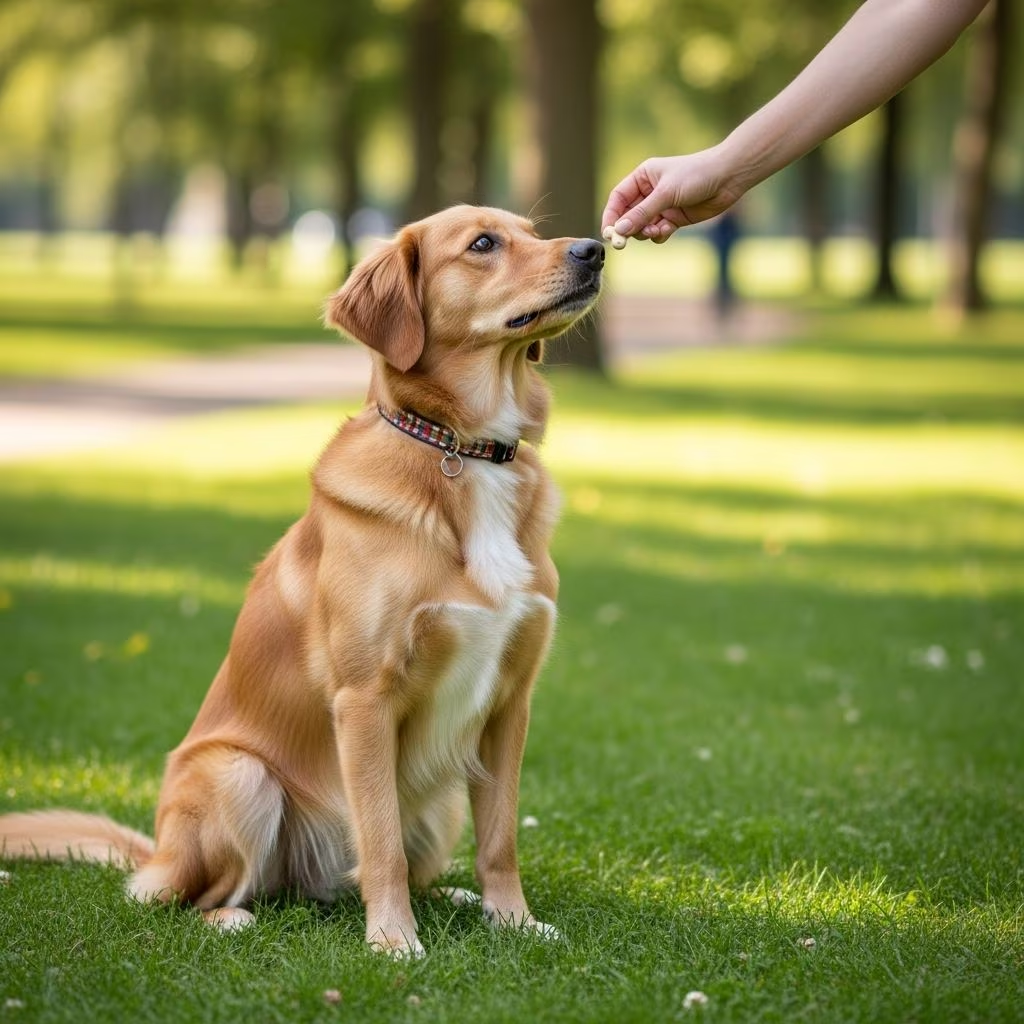
Teaching your dog to sit on cue is one of the most useful and versatile behaviors you can train. A solid sit helps your dog stay calm, improves safety in day-to-day life, and builds the foundation for more advanced manners and tricks.
This guide walks you through six clear steps to teach sit, explains how to use luring and clicker training, highlights common mistakes to avoid, and offers expert tips to keep the sit cue strong over time.
Why Teaching Your Dog to Sit Matters
A reliable sit is more than a cute party trick. It is a practical way to help your dog manage excitement and respond calmly in everyday situations. Animal behavior experts describe sit as a “cusp” behavior — a skill that opens the door to many other forms of learning and good manners.
| Benefit | How Sit Helps |
|---|---|
| Safety | Keeps your dog still at doors, curbs, and around traffic or distractions. |
| Polite greetings | Prevents jumping on guests and teaches calmer social behavior. |
| Focus | Gives your dog a simple job, making it easier to listen around distractions. |
| Foundation training | Prepares your dog for stay, go-to-mat, and other obedience cues. |
Most modern training programs for pet dogs and therapy dogs include sit among their first skills, because it is comparatively easy to learn and can be rewarded and practiced in many settings.
Methods to Help Train Your Dog to Sit
Two of the most effective, dog-friendly ways to teach sit are:
- Lure-and-reward training using food to guide your dog into position
- Clicker training to clearly mark the exact moment your dog sits
Both methods rely on positive reinforcement — rewarding behaviors you like so your dog offers them more often. Research shows that reward-based training improves learning and welfare compared with punishment-based methods.
The Lure Method Explained
With the lure method, you use a small treat in your hand as a guide to help your dog move into a sit:
- Your dog follows the treat with their nose.
- The treat moves in a way that naturally encourages their rear to lower.
- When their butt touches the ground, you mark and reward.
This technique is widely recommended by humane organizations and professional trainers because it is clear to the dog, fast to teach, and does not require any physical force.
Using a Clicker to Mark the Sit
A clicker is a small handheld device that makes a sharp, consistent clicking sound. The click tells your dog, “Yes, that behavior right there will earn a reward.”
Clicker training works in three basic stages:
- Charge the clicker: Click, then immediately give a treat, so the dog learns click = reward.
- Mark the behavior: When your dog sits, click at the exact moment their rear hits the floor.
- Reinforce: After the click, deliver a treat or other reward.
Studies on marker-based training (including clickers) show that precise, consistent signals improve communication and help dogs learn faster and with less frustration.
Step-by-Step: How to Teach Your Dog to Sit
Before you begin, choose a low-distraction area, such as your living room, hallway, or a quiet fenced yard. Have small, soft treats ready and keep sessions short and upbeat.
Step 1: Get Your Dog’s Attention
Start with your dog standing or moving freely near you.
- Say their name once in a friendly tone.
- When they look at you, calmly show them you have a treat.
- Hold the treat close to their nose so they are engaged and ready to follow your hand.
Building this habit of checking in with you is useful far beyond the sit cue — it makes future training easier and helps your dog focus amid distractions.
Step 2: Lure Into the Sit Position
With the treat between your fingers:
- Slowly move your hand from your dog’s nose up toward their forehead and slightly back over their head.
- Most dogs will naturally shift their weight back and lower their rear to keep their eyes on the treat.
- Avoid moving your hand too high or too fast, which can cause jumping instead of sitting.
If your dog backs up instead of sitting, try this against a wall or in a corner so they are less likely to step backward.
Step 3: Mark and Reward the Sit
The instant your dog’s butt touches the floor:
- Say a clear marker word such as “Yes!” or click your clicker once.
- Immediately deliver the treat to your dog at nose level while they are still sitting.
- Use calm praise and keep your body relaxed to avoid exciting them back out of the sit too quickly.
Timing matters: research on animal learning shows that rewards given within about one second of the behavior are most effective for forming strong associations.
Step 4: Repeat Until the Lure Is Smooth
Repeat the lure-and-reward sequence several times in a row:
- Practice 5–10 repetitions in a single session.
- Take brief breaks between mini-sets to keep your dog interested.
- Stop before your dog gets bored, frustrated, or tired.
Over a few short sessions, your dog should begin to understand that following your hand up and back leads to a sit and a reward.
Step 5: Fade the Food Lure
Once your dog is reliably sitting with the food lure, it is time to remove the visible treat so they do not become dependent on seeing food before responding:
- Keep your hand in the same shape and motion as before, but with no treat inside.
- Ask your dog to follow your empty hand into the sit.
- As soon as they sit, mark with “Yes!” or a click, then use your other hand to deliver the treat.
By separating the lure (empty hand motion) from the reward (treat from the other hand), you teach your dog that the gesture and cue, not the sight of food, predict reinforcement.
Step 6: Add the Verbal Cue “Sit”
When your dog consistently follows your hand signal into a sit, add the verbal cue:
- Say “Sit” once, in a calm voice.
- Pause for about one second.
- Then give your familiar hand signal to guide them into the sit.
- Mark and reward as before.
After enough pairings, the word “Sit” will start to predict the behavior for your dog, so you can gradually reduce how big the hand signal is and eventually rely mainly on the verbal cue.
Keeping Training Sessions Short and Fun
Short, positive sessions are more effective than long, exhausting ones. Dogs, especially puppies, learn best in small, frequent bursts of practice.
- Duration: Aim for 3–5 minute sessions, 1–3 times per day.
- Location: Start in quiet spaces, then slowly add moderate distractions.
- Breaks: After a short training burst, switch to a play break, sniffing game, or cuddle time.
- End on a win: Finish each session after a successful repetition, while your dog is still engaged.
This pattern helps your dog see training as a fun game with you rather than a chore. Many animal welfare and training groups advise keeping early sessions especially brief to prevent mental fatigue and frustration.
Things to Avoid When Training Your Dog to Sit
To keep your dog safe and maintain a trusting relationship, avoid the following common pitfalls.
Do Not Push or Force Your Dog into a Sit
Physically pushing on your dog’s rear or back to make them sit can:
- Cause discomfort or pain, especially in growing puppies or dogs with joint issues.
- Make your dog wary of your hands near their body.
- Slow learning, because your dog is not actively choosing the behavior.
Modern training guidelines from veterinary and behavior organizations recommend force-free methods and avoiding aversive handling whenever possible.
Avoid Making Treats a Requirement Every Time
Rewards are important, but you do not want your dog to respond only when they see food. To prevent this:
- Once the sit is consistent, switch from rewarding every single sit to rewarding most sits, at random.
- Sometimes give a single small treat; other times give a “jackpot” of several treats.
- Mix in non-food rewards: praise, petting (if your dog enjoys it), or a quick game.
This “slot machine” style of reinforcement — unpredictable but generally positive — keeps the behavior strong while gradually reducing treat frequency, a strategy commonly recommended in learning theory.
Do Not Train Past Your Dog’s Limits
Training in environments that are too distracting, or when your dog is overtired or stressed, can lead to frustration on both sides. Consider your dog’s:
- Age: Puppies and adolescents often need more frequent breaks.
- Health: If sitting appears painful or difficult, consult your veterinarian before continuing.
- Environment: Add distractions gradually rather than all at once.
Professional guidelines stress matching training expectations to the dog’s developmental stage and physical ability to safeguard welfare.
How Important Is Tone of Voice When Giving the “Sit” Command?
Many dogs are sensitive to the tone and emotion in your voice as well as the word itself. To build a reliable sit cue:
- Practice saying “Sit” in different tones — friendly, neutral, a bit louder, or softer — and reward correct responses.
- Avoid relying on one very specific pitch or word pattern that your dog may not recognize in other contexts.
- Keep your voice calm and relaxed; shouting can create anxiety and make learning harder.
Research on human–dog communication indicates that dogs can distinguish between different tones and emotional content in speech, which supports the value of practicing cues across varied vocal patterns.
Avoid Raising Your Voice When Your Dog Struggles
If your dog is not responding to “Sit,” consider:
- Is the environment too distracting for their current skill level?
- Are they tired, stressed, or physically uncomfortable?
- Have you recently changed how you cue or reward?
Instead of repeating the cue louder or sounding frustrated, lower the difficulty of the situation. Move farther from distractions, go back to rewarding more frequently, or use an easier version of the skill. This approach aligns with best practices in humane training and helps your dog stay confident.
Advanced Tips for Reinforcing Sit Over Time
Once your dog understands sit at home, the next step is to make the cue reliable in more situations.
Practice in Many Locations
Dogs do not automatically generalize behaviors to new places. To strengthen sit:
- Practice in every room of your home.
- Add quiet outdoor areas like your yard or a calm sidewalk.
- Gradually introduce busier environments: parks, pet-friendly stores, or training classes.
Change one difficulty factor at a time — either location, distractions, duration, or distance — rather than all at once.
Use Sit in Everyday Life
Look for natural moments to cue and reward sit throughout the day:
- Before going out the door or exiting the car.
- Before putting down the food bowl.
- While you clip on the leash or wipe paws.
- When greeting people, instead of jumping.
Integrating sit into daily routines reinforces the behavior without needing long formal sessions, a strategy often recommended in practical training programs.
Make Training a Game You Play Together
Think of sit practice as a fun game rather than a test your dog must pass:
- Use enthusiastic but calm praise when your dog succeeds.
- Offer short play breaks between repetitions.
- Vary your rewards to keep your dog curious about what might come next.
Keeping training playful and pressure-free helps maintain your dog’s motivation and strengthens your bond.
Frequently Asked Questions (FAQs)
Q: How long does it usually take to teach a dog to sit?
Many dogs learn the basic motion of sit in a few short sessions, but building a reliable response in different environments typically takes consistent practice over several days or weeks.
Q: Can older dogs learn to sit, or is this just for puppies?
Older dogs can absolutely learn to sit using the same positive reinforcement methods. If your dog has arthritis or mobility issues, ask your veterinarian whether a modified, partial sit or alternative stationary cue (like stand) would be more comfortable.
Q: What if my dog lies down instead of sitting?
If your dog keeps sliding into a down, reward the moment their rear first touches the floor and encourage only brief sits at first. You can also practice near a wall or with your dog next to you to reduce the space available to lie down.
Q: Should my dog always sit before getting anything they want?
It can be helpful to ask for a sit in some situations, like before crossing the street or greeting visitors, but it is not necessary or humane to require sit for every interaction. Balance structure with plenty of freely given affection and play.
Q: Do I always have to use treats for sit?
Treats are very effective when teaching a new behavior, but once your dog understands sit, you can gradually mix in other rewards like praise, toys, or access to things they want. Occasional treats will still help keep the behavior strong.
References
- MSPCA-Angell Dog Training Series: Sit — MSPCA-Angell. 2017-05-01. https://www.mspca.org/pet_corner/mspca-angell-dog-training-series-sit/
- Eight Basic Training Commands to Teach Your Dog — Kinship. 2021-09-15. https://www.kinship.com/dog-behavior/basic-training-cues-dog
- Teach Your Dog to Sit on Command — Hand in Paw. 2020-06-16. https://handinpaw.org/2020/06/16/teach-your-dog-to-sit-on-command/
- Defining, Recognizing, and Reporting Dog Welfare Problems — American Veterinary Medical Association. 2020-01-01. https://www.avma.org/resources-tools/avma-policies/animal-welfare-principles
- How to Train a Dog — American Kennel Club. 2022-03-10. https://www.akc.org/expert-advice/training/how-to-train-a-dog/
- Dogs Respond to Different Components of Human Speech — Attila Andics et al., Current Biology. 2016-08-30. https://doi.org/10.1016/j.cub.2016.07.017



