

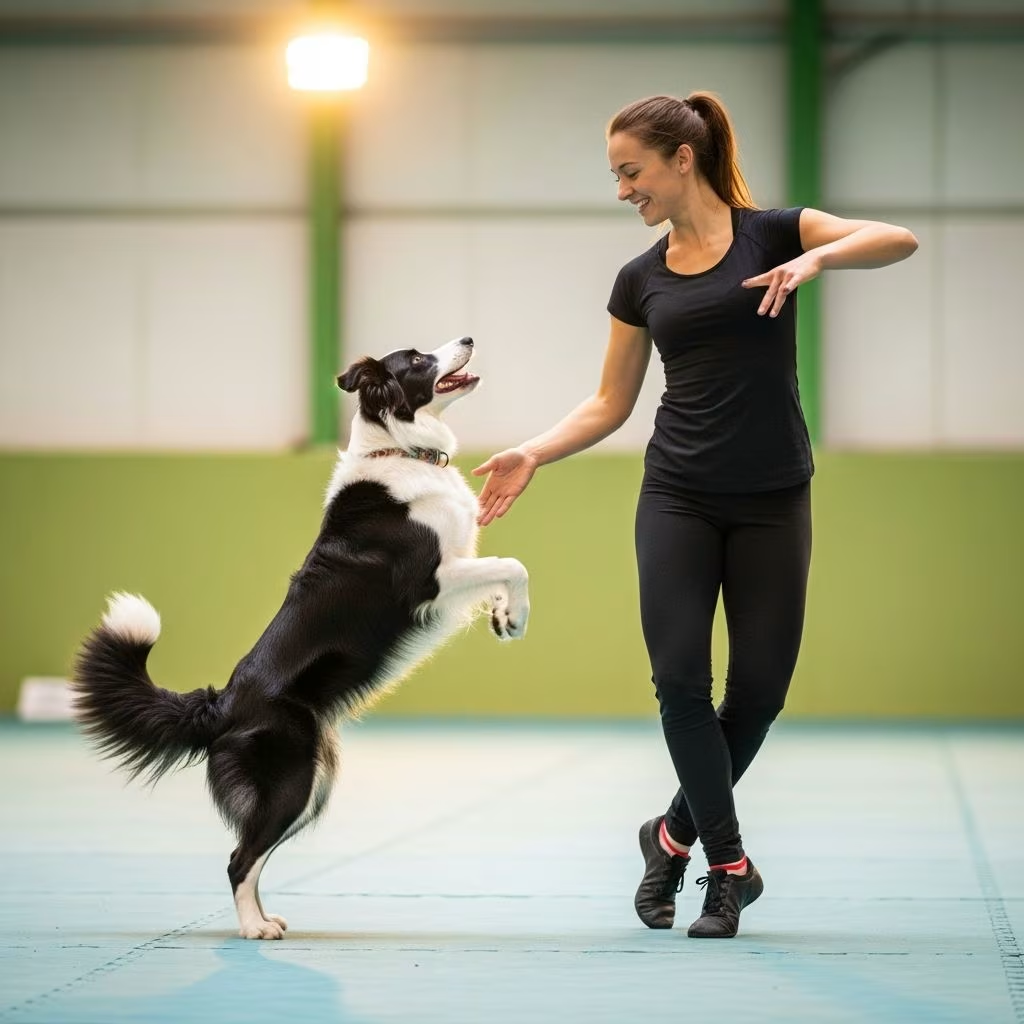
Teaching your dog to dance transforms everyday training into an exciting performance art. Canine freestyle, also known as heelwork to music or dog dancing, combines obedience, agility, and creativity to create synchronized routines. This guide provides original, detailed steps to master foundational moves like spinning, weaving through legs, and balancing on hind legs. These tricks build coordination, strengthen your bond, and prepare you for competitions or casual shows.
Why Teach Your Dog Dance Moves?
Dog dancing offers numerous benefits beyond entertainment. It enhances physical fitness by encouraging movement and balance, while mentally stimulating your dog through problem-solving. Breeds with high energy, such as Border Collies or Australian Shepherds, thrive in freestyle, but any healthy dog can learn with patience. Start in a quiet space to minimize distractions and use high-value treats like small pieces of chicken or cheese for motivation.
- Boosts confidence: Mastering tricks builds self-assurance in shy dogs.
- Improves focus: Commands require attention amid movement.
- Promotes health: Rear balances strengthen hindquarters, aiding joint stability.
- Family fun: Involves everyone in practice sessions.
Essential Prerequisites Before Dancing
Before diving into dance tricks, ensure your dog knows basic cues like “sit,” “down,” and “stay.” A solid recall prevents frustration during sessions. Sessions should last 5-10 minutes to keep engagement high. Always end on a positive note with praise and play.
| Trick Prerequisite | Purpose | Training Tip |
|---|---|---|
| Sit/Down | Resets position | Use for transitions between moves |
| Stay | Holds poses | Practice with increasing distance |
| Recall | Safety in open areas | Reward heavily for quick returns |
Mastering the Spin Trick: Twirls in Both Directions
The spin is a cornerstone of dog dancing, teaching directional movement. Begin with clockwise spins, then add counterclockwise for versatility. This move mimics circling in routines and pairs well with music beats.
- Lure the circle: Hold a treat at nose level and guide your dog in a full circle. Mark completion with a clicker or “yes!” and reward immediately.
- Elevate the lure: Raise your hand higher, making smaller circles to fade physical guidance. Repeat 10-15 times per session.
- Introduce verbal cue: Say “spin right” as you signal. Practice until response is consistent without full luring.
- Phase out signal: Use voice alone, returning to hand if needed. Sessions over days solidify this.
- Add left spins: Mirror steps for “spin left.” Progress faster with prior experience.
- Chain combinations: Cue right, left, right for fluid sequences.
Practice in varied environments to generalize the behavior. Spins enhance heelwork and prepare for circling props like cones.
Weaving Through Legs: A Playful Leg Dance
Leg weaves add flair, simulating dance partners passing under arches. This builds body awareness and trust, as dogs navigate close quarters.
- Build comfort: Step over your stationary dog repeatedly, rewarding calm behavior to desensitize.
- Lure through legs: Widen stance, use treat to draw dog between legs. Narrow gradually.
- Hand signal integration: Swipe hand downward or point through legs, fading treat.
- Verbal command: Pair “weave” or “through” with gesture. Repeat in sets of 5.
- Dynamic variations: Step over while dog weaves, or angle entries for complexity.
- Distracted practice: Add toys or mild noise to proof reliability.
Weaves shine in freestyle when synced to rhythm, often combined with spins for seamless flows.
Standing on Hind Legs: The Dance Pose
Rear-end stands, or “dance,” teach balance crucial for upright moves. Focus on hindquarter strength to avoid strain, especially in larger breeds.
- Initial lift: Lure upward with treat held high, encouraging front paws off ground. Support gently if needed.
- Extend duration: Reward longer holds, using your body for stability initially.
- Hand cue: Raise palm-up hand from waist to chest level alongside lure.
- Verbal addition: Say “dance” or “up” with gesture, reducing treat reliance.
- Mobility step: Take slow steps forward/backward while dog balances, fading support.
- Freestyle integration: Pair with spins or weaves for full routines.
Monitor for signs of fatigue; short sessions prevent injury. This trick dazzles audiences when held to music swells.
Building Full Dance Routines
Combine tricks into sequences: spin-weave-stand-spin. Add heeling, bows, or backing up for completeness. Time to 30-60 seconds matching song clips. Film sessions to self-assess timing and flow.
- Standard beginner combo: Bow, spin left/right, weave, stand, march.
- Prop use: Circle cones or chairs for variety.
- Music sync: Choose upbeat tracks; mark beats during practice.
Troubleshooting Common Challenges
Issues arise; address systematically. If spins falter, revert to luring. For stands, check health—consult vets for joint concerns. Inconsistent weaves? Increase treat value.
| Problem | Solution |
|---|---|
| Dog jumps instead of spins | Lower lure, reward partial turns |
| Leans during stand | Step back, push treat away for balance |
| Ignores cues in distraction | Gradual exposure, high rewards |
Safety and Health Considerations
Protect joints with non-slip surfaces. Puppies under 6 months avoid stands to prevent growth plate damage. Senior dogs benefit from modified low-impact versions. Hydrate and warm up with walks.
Advanced Freestyle and Competitions
Join organizations like the World Canine Freestyle Organization for events. Refine with heelwork, pivots, and emotional expression. Online courses offer structured progression.
Frequently Asked Questions (FAQs)
Can any dog learn to dance?
Yes, most breeds succeed with adapted methods. Focus on fun over perfection.
How long until my dog dances?
Weeks to months per trick; consistency key.
What treats work best?
Soft, smelly ones like hot dog bits.
Is dancing safe for large breeds?
Yes, with moderation and vet approval.
How to add music?
Practice cue sequences to beats gradually.
References
- How to Train Your Dog to Dance — WagWalking. 2021-01-08. https://wagwalking.com/training/dance
- Want to Dance with Your Dog? Here’s How! — Gun Dog Supply (Robin MacFarlane). 2025-11-14. https://www.youtube.com/watch?v=l0Qci73yDwM
- Dancing with dogs: Circling — Naturally Happy Dogs (Mary Ann Nester). 2020-08-21. https://www.youtube.com/watch?v=l4550v8QVQo
- Dancing with dogs: an introduction — Naturally Happy Dogs (Mary Ann Nester). N/A. https://www.youtube.com/watch?v=ZxZ8SEQJIzM



