

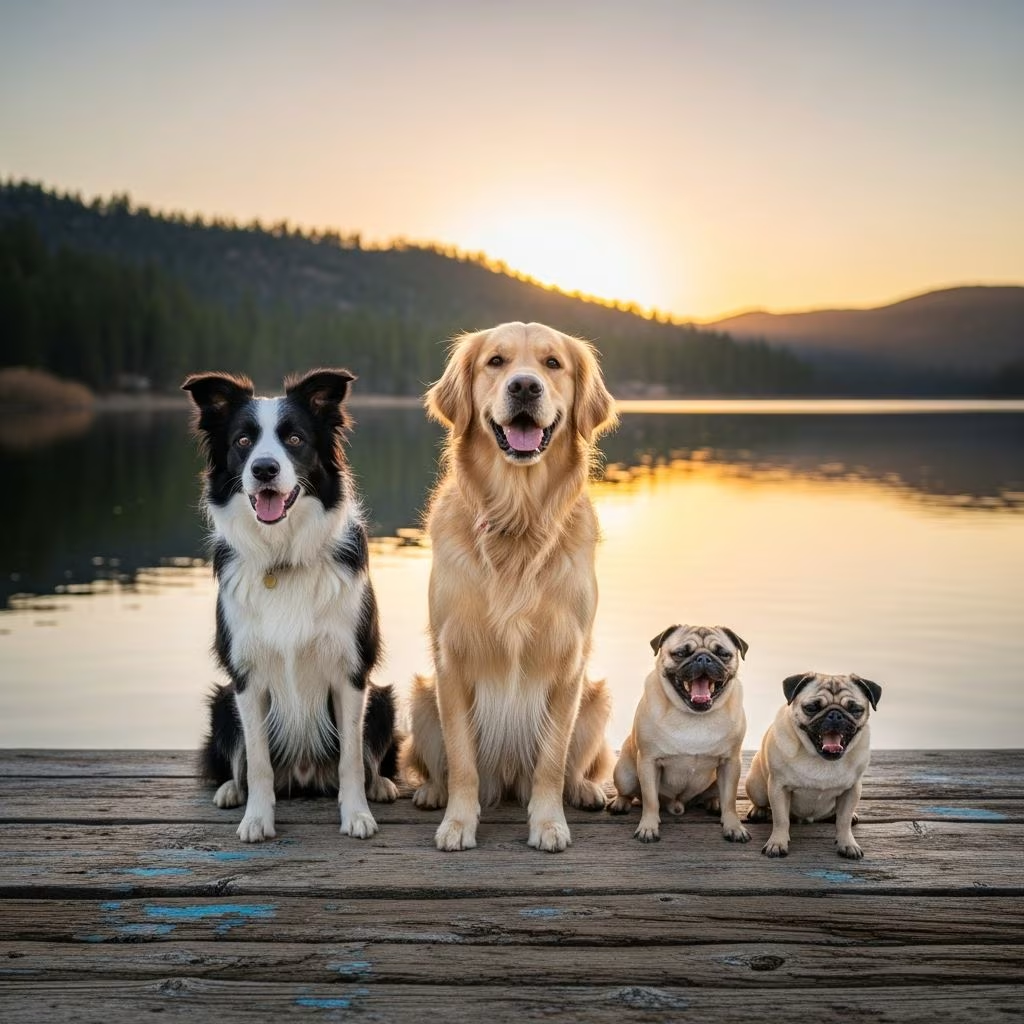
Capturing the perfect photo of your dog can be a delightful challenge that strengthens your bond and creates lasting memories. Whether you’re aiming for a professional headshot or a fun candid, training your pup to pose reliably makes the process smoother and more enjoyable. This guide breaks down essential techniques, from technical photography tips to behavioral training methods, helping you achieve those must-frame shots.
Technical Foundations for Stunning Dog Photos
Before diving into training, master the basics of photography to complement your dog’s posing skills. The difference between a cute snapshot and a wall-worthy masterpiece often lies in **backgrounds**, **lighting**, and **camera settings**.
- Choose flattering backgrounds: Opt for simple, non-distracting settings like solid-colored walls, natural grass, or blurred outdoor scenery to keep the focus on your dog.
- Prioritize natural lighting: Shoot during golden hour (early morning or late afternoon) for soft, warm light that enhances fur texture and eye sparkle. Avoid harsh midday sun or direct flashes that startle pups.
- Camera essentials: Use a portrait lens (e.g., 85mm or 50mm) from a distance to minimize intimidation. Always focus sharply on your dog’s eyes—the window to their soul and the key to emotional photos.
Shoot at your dog’s eye level for intimate, flattering perspectives. A low angle makes small dogs look heroic, while avoiding top-down shots that distort proportions. Practice these setups in short sessions to build your confidence alongside your dog’s.
Get Your Dog to Look at the Camera
Dogs perceive cameras as giant, staring eyes—a rude and threatening gesture in canine social cues. This natural wariness causes many pups to look away or flinch. Overcome this with gradual desensitization and positive associations.
Step-by-step desensitization:
- Introduce the camera slowly: Start with the device off and at a distance. Reward calm behavior with high-value treats like small pieces of chicken or cheese.
- Build proximity: Gradually bring the camera closer over sessions, pairing it with treats tossed over the top (near the lens) to direct focus upward. Repeat ‘good’ and treat to reinforce eye contact.
- Add shutter sounds: Once comfortable, turn on the camera and practice short bursts of clicks while treating. Use motion like wiggling fingers above the lens to captivate attention.
- Layer distance and duration: Practice sit-stay or stand-stay, then step back. Increase time holding the pose before rewarding.
Pro tip: For multi-dog photos, use body pressure—lean slightly to guide positioning without verbal cues, rewarding only stationary pups. Patience is key; sessions should last 5-10 minutes to prevent frustration.
Go for the Head-Tilt
The iconic **head tilt**—ears perked, eyes curious—is universally adorable and triggers our nurturing instincts. Dogs tilt to better localize sounds with their mobile ears, making unfamiliar noises your best tool.
Triggering the tilt:
- Make novel, non-threatening sounds: Kiss noises, tongue clicks, ‘woop woop,’ bird chirps, or high-pitched squeaks from toys.
- Squeaky toys work wonders—squeeze just out of sight to pique interest without movement.
- Observe what works for your dog; some hold tilts longer, others flash them briefly—keep your shutter ready!
Combine with eye contact training: Position the sound source near the camera. For prick ears, layer squeaks during stay commands. Practice daily for reliable results; soon, a single click elicits the pose.
Use Training to Direct Attention and Positioning
Even dogs with imperfect obedience can pose like pros during photos. Leverage their instincts for motion, body language, and rewards to guide behavior naturally.
| Technique | How to Use It | Why It Works |
|---|---|---|
| Motion Lures | Wiggle fingers, wave arms, or shake toys above camera | Dogs fixate on movement, holding poses longer |
| Body Language | Lean forward for stay; back away facing dog | Prevents following; encourages stationary hold |
| Treats & Toys | Use favorites (fetch balls, squeakies) over lens | Positive reinforcement builds camera love |
| Poses: Sit/Stand/Down-Stay | Practice basics, layer distance/duration | Foundation for variety; target with treats |
Keep it positive: Short, playful sessions with ample praise and play prevent photo aversion. Incorporate breed traits—herders may pose alertly with squeaks, hounds with scent games.
Embrace the Bloopers
Perfection isn’t always the goal; **authentic bloopers** often capture your dog’s true personality best. Tongues lolling, paws raised, or mid-chew moments reveal their unique charm.
- Document quirks: Habitual tongue-outs or paw-lifts become signature shots.
- During treats: Catch expectant stares or joyful grabs.
- Ignore ignores: A busy chewing pup can yield endearing candids.
These ‘imperfect’ photos foster emotional connections, reminding you of your dog’s joyful spirit. Edit lightly to enhance, but preserve essence.
Advanced Tips for Professional Poses
Expand your repertoire with structured training. Teach ‘target’ (nose to hand/your marker) for precise positioning, ideal for group shots or action poses.
Session blueprint:
- Warm-up: 2-min camera desensitization.
- Core poses: 5 reps each of sit-look, tilt-stay.
- Cool-down: Play/fetch to end happily.
For variety, explore 50+ poses like those in professional guides: dog-parent hugs, stacked sits, or playful jumps—each with execution tips.
Frequently Asked Questions (FAQs)
What if my dog hates the camera?
Desensitize gradually with treats over the lens, starting far away. Short sessions build tolerance—never force it.
How long until my dog poses reliably?
Most see improvement in 1-2 weeks with 5-min daily practice. Consistency trumps intensity.
Best treats for photo training?
High-value, tiny pieces: hot dogs, cheese, or GREENIES™ for oral health perks.
Outdoor vs. indoor photos?
Outdoors for energy; indoors for control. Always prioritize natural light and simple backgrounds.
Multi-dog posing tips?
Use body pressure and individual rewards. Practice tandem stays, treating aligned positions.
Conclusion: Capture Lifelong Memories
Training your dog to pose transforms photo sessions into fun bonding rituals. With patience, these techniques yield not just photos, but treasured glimpses of your pup’s personality. Start today—your framed masterpiece awaits!
References
- How to Train Your Dog to Pose for Photos — Kinship. 2023. https://www.kinship.com/dog-behavior/train-your-dog-pose-photos
- Training Tuesday: Teach Your Dog to Pose for Photos — YouTube (Animal Training Channel). 2023-10-15. https://www.youtube.com/watch?v=H6tIXBIfAdM
- Dog Photography Posing Guide — Hair of the Dog Academy. 2024. https://learn.hairofthedogacademy.com/Posing-Guide
- Basic Obedience Training — Kinship. 2024. https://www.kinship.com/dog-behavior/basic-obedience-training



