

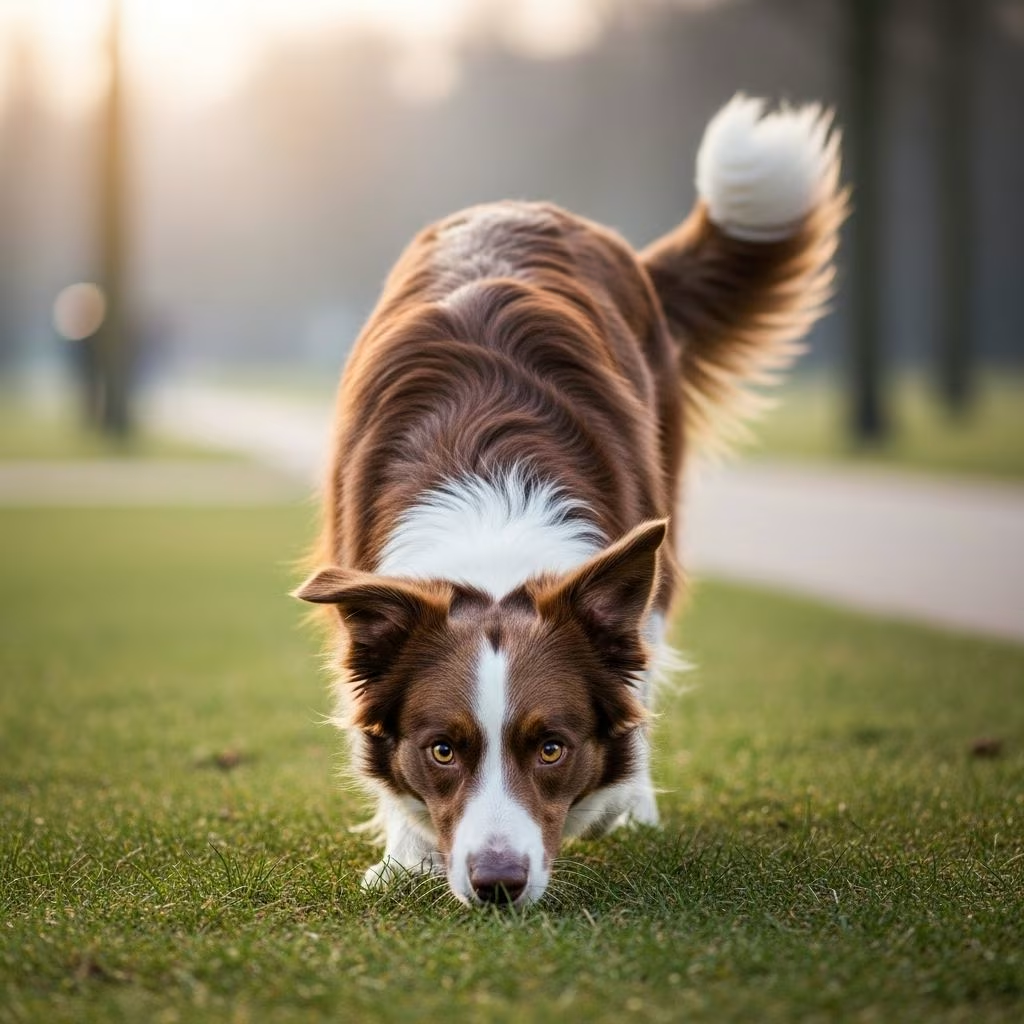
If your dog has a nose, they have what it takes to learn scent detection. Structured sniffing games channel your dog’s natural abilities into a rewarding activity that builds confidence, focus, and teamwork between you and your pup.
Why Scent Detection Is Perfect for Most Dogs
Dogs explore the world primarily through smell, not sight. Their sense of smell is estimated to be tens of thousands of times more sensitive than ours, thanks to hundreds of millions of scent receptors and a specialized olfactory brain region. This makes scent detection work both instinctive and deeply satisfying for them.
Scent detection is not just for police K9s or professional working dogs. Pet dogs of almost any breed, size, or age can enjoy it as a structured hobby, a sport, or a daily enrichment routine at home.
Benefits of Scent Detection for Your Dog
- Mental enrichment: Sniffing, problem-solving, and searching tire out your dog’s brain in a healthy way.
- Stress reduction: Slow, focused sniffing helps many dogs relax and can reduce anxiety-related behaviors.
- Confidence building: Shy or nervous dogs gain confidence from successfully finding hidden scents and earning rewards.
- Low-impact exercise: Ideal for dogs who cannot do intense physical activity (e.g., seniors or dogs with mobility issues).
- Strengthened bond: You learn to read your dog’s subtle body language while they learn to trust your cues.
How a Dog’s Nose Really Works
Understanding a bit of canine olfaction helps you appreciate why scent detection is so powerful. Dogs possess an intricate nasal anatomy and a large olfactory bulb in the brain, allowing them to separate and identify individual odor components in complex scent mixtures.
| Feature | Human | Dog |
|---|---|---|
| Olfactory receptors (approx.) | 5–6 million | Up to ~300 million, depending on breed |
| Olfactory bulb size (relative to brain) | Small | About 40 times larger than in humans |
| Primary sense used to explore | Vision | Olfaction (smell) |
Dogs can detect very low concentrations of odor molecules and distinguish between different individuals, substances, and even subtle changes in human physiology, such as stress-related odors.
How Dogs Track Scent
- They inhale scent molecules and route them to a specialized olfactory region in the nose.
- They can compare scent intensity between nostrils to help locate the direction of an odor source.
- They follow “scent plumes” carried by air currents, adjusting their path as odor strength changes.
- They use both ground scent (footprints, disturbed vegetation) and air scent (odor carried on the wind).
Is Your Dog a Good Candidate for Scent Detection?
Almost any dog who is medically stable and enjoys food or toys can participate in scent detection games. Some dogs may excel at competition-level work, while others simply enjoy casual at-home nosework.
Traits That Help in Scent Detection
- Motivation for rewards: Strong interest in food, toys, or play makes training easier.
- Curiosity: Dogs that love to investigate new smells and environments adapt quickly to search tasks.
- Persistence: Dogs willing to keep searching even when the scent is not obvious are ideal candidates.
- Comfort in varied environments: For advanced work, dogs must search confidently indoors, outdoors, around vehicles, or in busy spaces.
Dogs Who May Need Extra Support
- Very fearful or noise-sensitive dogs may benefit from starting in extremely quiet, predictable spaces.
- Dogs with severe respiratory issues, serious illness, or extreme mobility limitations should be cleared by a veterinarian first.
- Over-aroused or hyperactive dogs may need short sessions and calming routines before and after training.
Core Components of Scent Detection Training
Professional scent detection dogs perform a behavior chain that links several steps into one reliable sequence. Understanding this chain helps you build a solid foundation, even for home-based games.
The Scent Detection Behavior Chain
- Search: On cue (for example, “find it”), the dog begins exploring the area for the target odor.
- Locate odor: They identify the presence of the target scent in the environment.
- Follow to source: They move through the scent plume until they reach the strongest concentration—the actual hiding place.
- Indicate (alert): They perform a specific, trained response at the source (for example, sit, down, or stare) and maintain it until released.
- Receive reward: You deliver a high-value reward at or near the source to reinforce the behavior chain.
Many trainers build this chain by backchaining—teaching the final indication first, then gradually adding the searching elements.
Getting Started: Foundation Skills at Home
You can start scent detection in your living room with simple materials like cardboard boxes, muffin tins, or plastic containers. The goal is to let your dog learn that using their nose to find a target leads to a predictable reward.
Step 1: Choose Your Target Odor and Reward
- For beginners at home: Use a high-value food treat or a favorite toy as both the target and the reward.
- For more advanced work: Introduce a neutral odor (like a specific essential oil on a cotton swab) paired consistently with food or toys.
- Over time, your dog learns that this target odor predicts their reward, even when the reward is initially hidden elsewhere.
Step 2: Create a Simple Search Environment
- Start in a quiet, low-distraction room, such as a bedroom or hallway.
- Gather 3–6 boxes, cups, or containers your dog can safely sniff.
- Place a treat or toy openly in one container while your dog watches.
- Give your search cue (for example, “find it”) and allow your dog to move freely to the container, then reward enthusiastically.
Step 3: Hide and Seek Basics
Once your dog understands that the target odor predicts a reward, begin hiding it more subtly.
- Place the target in one container and several empty containers nearby.
- Let your dog search by sniffing each container until they identify the correct one.
- Mark (for example, “yes”) and reward as soon as they clearly show interest in the correct container—sniffing intently, pawing, or looking back at you.
- Repeat with different container positions to prevent pattern learning.
Building Difficulty Gradually
As your dog grows confident, you can increase the complexity of searches. Always raise difficulty in small steps so your dog continues to succeed frequently.
Ways to Increase Difficulty
- Change container types: Use boxes, drawers, buckets, plastic bins, or furniture gaps.
- Adjust height: Move hides from floor level to chairs, shelves, or low tables.
- Expand the search area: Use entire rooms, hallways, or eventually safe outdoor spaces.
- Add mild distractions: Toys, non-target food (that your dog is not allowed to eat), or background noises.
- Delay rewards slightly: Ask for a brief, stable indication (like a 2–3 second hold) before delivering the reward.
Common Search Setups
- Container searches: Multiple boxes or containers arranged in rows.
- Interior searches: Scent hidden in living rooms, offices, or hallways (behind cushions, under tables, near door frames).
- Exterior searches: Yards, patios, or safe outdoor spaces where scent is affected by wind and temperature.
- Vehicle searches (advanced): For dogs working toward sport-style nosework; hides placed on or around parked vehicles.
Teaching a Clear Indication
The indication or alert is how your dog tells you, “The scent is here.” For casual home games, you may accept natural behaviors (for example, intense sniffing or pawing). For more formal training, choose a specific behavior.
Examples of Indications
- Passive indications: Sit, down, nose freeze (holding their nose on or near the source), or sustained stare.
- Active indications: Pawing, scratching, barking, or nudging the source.
Passive indications are often preferred for professional detection work because they cause less disturbance to the search area and are easier to evaluate consistently.
How to Teach the Indication First (Backchaining)
- Present the target odor at nose level.
- Wait for (or lure) the dog into the indication behavior (for example, sit with nose close to the source).
- Mark and reward generously.
- Gradually introduce mild distance or partial hiding of the target while still rewarding only when the full indication is performed at source.
By establishing the indication early, you make it clear to your dog what to do once they find the scent, which improves reliability later in complex searches.
Training Strategies and Scientific Insights
Modern scent detection training draws on research in animal cognition and learning. For example, studies suggest that exposing dogs to multiple target odors within the same training sessions (an “intermixed” approach) may improve their ability to generalize and recognize slightly different versions of those odors in real-world conditions.
Practical Training Tips
- Keep sessions short (5–10 minutes), especially for beginners or young dogs.
- End each session on a successful, easy search to keep motivation high.
- Use very high-value rewards during challenging steps.
- Train in varied environments once your dog understands the basics, so they learn that the game works everywhere.
- Allow your dog to lead the search; avoid pointing or guiding them too much, to reduce accidental cues.
From Home Games to Organized Nosework
Once your dog enjoys basic scent games, you can explore organized nosework classes or sports. K9 Nose Work® and similar organizations structure training around search elements such as container, interior, exterior, and vehicle searches, gradually introducing new target odors and more complex search problems.
Why Consider Formal Nosework Classes
- Professional guidance in reading canine body language during searches.
- Safe access to new search environments, props, and hide placements.
- Clear progression toward trial-level challenges for those interested in competition.
- Social support and shared learning with other dog–handler teams.
Safety and Welfare Considerations
Scent detection training should always prioritize your dog’s physical and emotional welfare.
- Check with your veterinarian if your dog has respiratory, cardiovascular, or orthopedic issues before starting intense search work.
- Avoid using strong or potentially irritating substances as target odors; use trainer-recommended or dog-safe materials.
- Monitor your dog for signs of fatigue, stress, or frustration (for example, excessive panting, disengagement, stress yawns) and provide breaks as needed.
- Never punish your dog for incorrect searches; instead, simplify the task and help them succeed.
Frequently Asked Questions (FAQs)
Q: Can any breed learn scent detection?
A: Yes. While traditional working breeds are common in professional detection roles, research and practical experience show that pet dogs of many breeds and mixed breeds can learn scent detection games and even compete in nosework sports, as long as they are healthy and motivated by rewards.
Q: How old should my dog be to start scent work?
A: Puppies, adult dogs, and seniors can all benefit from scent training. Very young puppies may work in very short, simple sessions, while older dogs appreciate low-impact mental challenges that do not stress their joints.
Q: How is scent detection different from basic obedience training?
A: Obedience focuses on responding to your cues (sit, stay, heel). Scent detection relies more on your dog’s independent problem-solving and olfactory skills; you set the task and boundaries, but your dog leads the actual search.
Q: Do I need special equipment to start?
A: No. For beginner games, you can use household items like boxes, cups, or muffin tins, plus your dog’s regular treats or toys. Specialized equipment and specific target odors become more important if you move into formal sports or professional-level detection work.
Q: How often should I train scent detection?
A: Many dogs do well with several brief sessions per week. Consistency matters more than length. Aim for frequent, fun practice rather than long, exhausting sessions.
References
- Nosework For Dogs: Train Your Dog’s Scenting Abilities — Kinship. 2022-05-01. https://www.kinship.com/dog-behavior/nosework-for-dogs
- Weak Links in the Canine Scent Detection Behavior Chain — IAABC Foundation Journal (Lisa Gunter & colleagues). 2021-03-01. https://journal.iaabcfoundation.org/weak-links-in-the-canine-scent-detection-behavior-chain/
- How to Teach Your Dog Scent Training at Home — Kinship. 2023-04-01. https://www.kinship.com/dog-behavior/scent-training-at-home
- New research in detection “sniffer” dog training could increase accuracy — University of Lincoln / Phys.org. 2025-03-10. https://phys.org/news/2025-03-sniffer-dog-success.html
- Canine Olfaction: Physiology, Behavior, and Possibilities for Practical Applications — Tadeu et al., Frontiers in Veterinary Science. 2021-08-10. https://pmc.ncbi.nlm.nih.gov/articles/PMC8388720/
- Dogs Can Sense Human Stress, According to These Studies — Kinship. 2022-09-01. https://www.kinship.com/dog-behavior/can-dogs-smell-stress



