

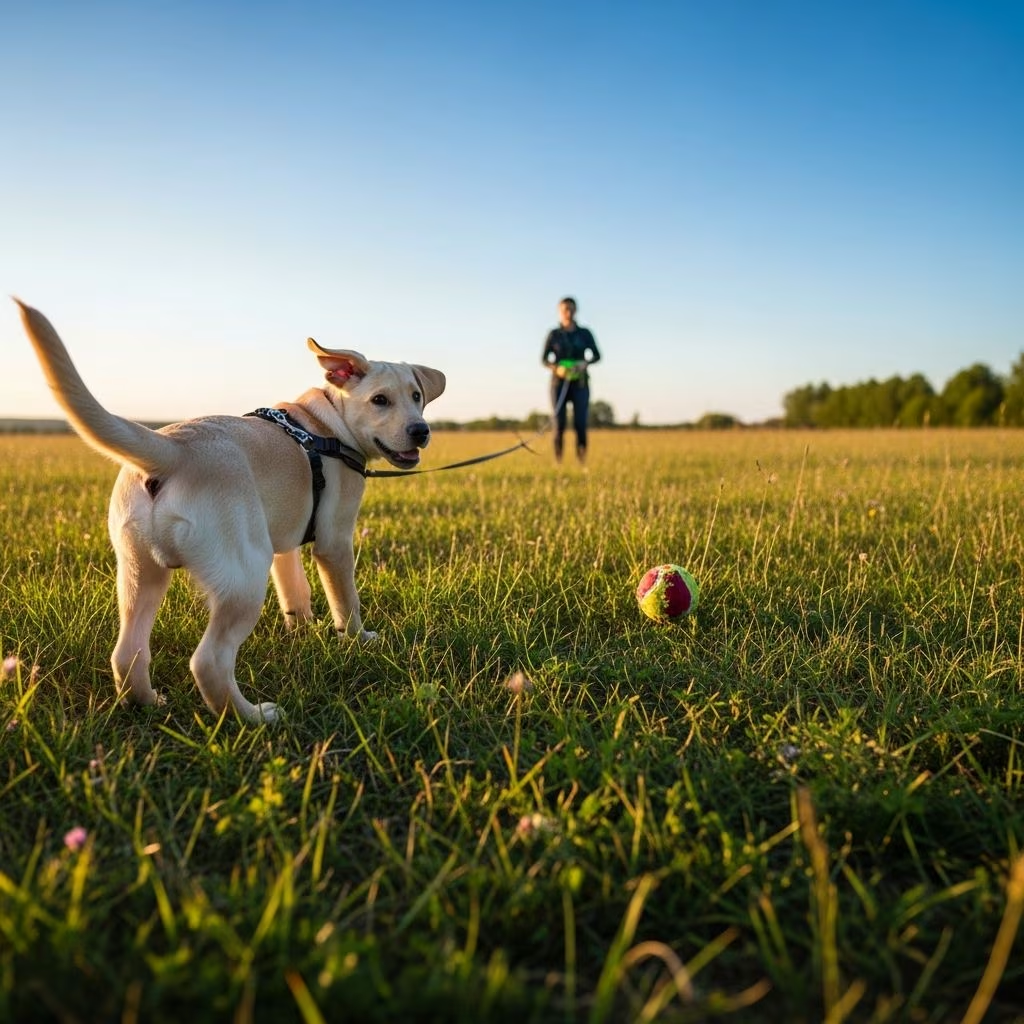
Train Your Young Dog Not to Run Away: A Complete Guide
One of the most frightening moments for any dog owner is watching their young dog bolt out the door or escape through an open gate. The panic that ensues can be overwhelming, and the potential dangers your pup could face are serious. However, this common behavioral challenge doesn’t indicate that your dog has serious issues or is untrainable. Instead, it simply means your young dog hasn’t yet learned the self-control necessary to respect thresholds like doors and gates. The good news is that with patience, consistency, and positive reinforcement, you can teach your dog that they need permission before crossing through any entryway.
This comprehensive guide will walk you through proven training techniques that help young dogs understand boundaries and develop the impulse control they need to stay safe. Whether you have a curious puppy or an energetic young dog, these methods will help you prevent escape attempts and build a stronger, safer relationship with your canine companion.
Understanding Why Young Dogs Run Away
Before diving into training methods, it’s important to understand the root causes of why young dogs dart out doors and escape through gates. Dogs don’t run away to be naughty—they’re simply following their natural instincts and haven’t learned better behavior yet. Several factors contribute to this behavior:
Lack of Training: Most young dogs haven’t been taught that they need permission before crossing thresholds. They see an open door as an invitation to explore the world beyond.
Insufficient Exercise: Dogs who lack adequate physical and mental stimulation are more likely to attempt escape. A bored, under-exercised dog has excess energy and curiosity that drives them to seek adventure.
Prey Drive Activation: Sometimes a squirrel, bird, or other animal can trigger your dog’s prey drive, causing them to bolt before thinking about the consequences.
Exploration and Curiosity: Young dogs are naturally curious about their environment. An open door represents an unexplored territory that many puppies and young dogs find irresistible.
Immediate Safety Measures: Prevent Escape While Training
While you work on training your young dog to respect thresholds, it’s crucial to implement immediate safety measures. These behavior management tools prevent accidents and keep your dog safe during the training process.
Use Dog Gates and Barriers: Baby gates, dog pens, and other physical barriers are invaluable during the training period. They make it easy to prevent your dog from running through an open door and ensure everyone stays safe while your pup undergoes training. Consider placing gates near your front door, back door, and any other frequently used exits.
Secure Your Yard: Ensure your fence is in good condition with no gaps or holes your young dog could escape through. Check gates regularly to make sure they close properly and securely.
Leash Management: When doors must be opened, keep your dog on a leash. This gives you control if your pup attempts to bolt and prevents tragic accidents.
Foundation Training: Teaching Basic Obedience Commands
Before your young dog can learn not to dart through doors, they need to understand fundamental obedience commands. These basic commands form the foundation for threshold training and give you the tools to manage your dog’s behavior effectively.
Teaching “Sit”: Start by holding a treat close to your dog’s nose and slowly move it upward and slightly backward over their head. As their nose follows the treat, their bottom naturally lowers to the ground. The moment their rear end touches the floor, say “sit,” give them the treat, and offer enthusiastic praise. Practice this command in short 10-minute sessions until your dog responds reliably.
Teaching “Stay”: Once your dog knows “sit,” introduce the “stay” command. Ask your dog to sit, then hold your hand up in a stop gesture and say “stay.” Wait just a few seconds before rewarding with a treat and praise. Gradually increase the duration and distance over multiple training sessions.
Teaching Recall (“Come”): This command is absolutely critical for door safety. Start in a small, enclosed space and show your dog a treat. Run a few steps away and say “come” in an excited tone. When your dog reaches you, reward abundantly with treats and praise. Practice this repeatedly until your dog responds instantly to your recall command.
Always use positive reinforcement during these training sessions. Treats and genuine praise are far more effective than punishment or scolding, which can damage your relationship with your dog and create fear around training.
Step-by-Step Threshold Training Program
Once your dog has mastered basic obedience, you can begin threshold training. This progressive program gradually teaches your dog that they need permission before crossing through any door or gate. Work through these steps in 10-minute training sessions—or shorter for puppies with limited attention spans—and keep the experience fun and rewarding.
Step 1: Touch the Doorknob
Begin in a controlled environment with your dog on-leash or in a confined space. Ask your dog to sit at a comfortable distance from a closed door they like to run through. With your dog holding the sit, simply reach out and touch the doorknob. If your dog maintains their sit and doesn’t jump up or get excited, immediately give them a treat and enthusiastic praise.
If your dog breaks the sit when you reach for the doorknob, simply reset them and try again. The goal is for your dog to remain calm and in position while watching you handle the door. Repeat this step multiple times until your dog can successfully hold a sit while you reach for and touch the door handle without any attempt to move.
Step 2: Turn the Doorknob
Once your dog can sit calmly while you touch the doorknob, progress to actually turning it. With your dog in a sit, slowly turn the doorknob. If your dog maintains their position, reward immediately with treats and praise. If they attempt to move, close the door and reset the training. Repeat until your dog can sit through the doorknob being turned without breaking position.
Step 3: Open the Door Slightly
The next progression is opening the door. Start by opening it just an inch or two while your dog sits. The goal is to keep the opening small enough that your dog doesn’t feel the urge to squeeze through, while still testing their self-control. If your dog maintains the sit, reward generously. If they attempt to move toward the gap, close the door immediately and try again.
Gradually increase the opening size over multiple training sessions as your dog demonstrates increasing self-control. Always reward the desired behavior—remaining seated—abundantly.
Step 4: Walk Through the Door
Now comes the challenging part: actually walking through the door yourself. Keep your dog on a leash for this step, with the loop end of the leash secured on your wrist to prevent door darting if your pup attempts to bolt. Ask your dog to sit just inside the threshold. Repeat your verbal cues (such as “stay” or “wait”), then slowly step through the door yourself.
As you cross the threshold, watch your dog carefully. If they hold the sit, immediately return and provide positive reinforcement with treats and praise. If your dog makes a break for it, close the door and try again. This step requires patience—don’t rush through it.
Pro Tip: You can also use a drag leash during this step. Clip the leash to your dog’s collar but don’t hold it—instead, let it drag on the floor. If your dog attempts to bolt, simply step on the leash to prevent escape without jerking your dog or causing injury.
Step 5: Call Your Dog to You
Once your dog can sit patiently while you’re on the other side of the door, it’s time to use that recall command you taught during foundation training. Step out your door and from the other side of the threshold, call your dog to you using your “come” command. When your dog comes to you, reward them enthusiastically—this time with a short walk as an exciting reward.
This step teaches your dog that crossing the threshold is something they do only when invited by you, and that obeying your call is rewarding.
Step 6: Call Your Dog Back Inside
The final critical step in threshold training teaches your dog to return inside immediately after crossing the door. This is your safety net in case your dog ever manages to escape accidentally. To practice this:
Step out your front door with your dog. Call your dog to you from outside. When your dog comes to you, step back inside and immediately call your dog again, using your recall command. When your dog comes back inside, provide several treats and enthusiastic praise. Build significant value around returning inside so that your dog understands coming back in is an excellent choice.
After successful repetitions, take your dog for their walk as a reward. This teaches your dog that threshold obedience leads to exciting activities, making compliance rewarding rather than restrictive.
Preventing Escape: What If Your Dog Dashes Out the Door?
Despite your best training efforts, accidents can happen. If your young dog manages to escape and get outside, knowing how to respond correctly is critical for their safety. Many dog owners make common mistakes that actually encourage the escape behavior to continue.
Don’t Chase Your Dog: This is perhaps the most important rule. Chasing your dog can scare them, confuse them, or worse—they may interpret your chase as an exciting game of tag. Instead of running after your dog, try these proven methods:
Use High-Value Treats: Keep special treats reserved only for emergencies. Sit down low to the ground and hold out these treats while calling your dog’s name in an excited, happy tone. Most dogs can’t resist high-value treats like small pieces of chicken or cheese.
Use Favorite Toys: If your dog is toy-motivated rather than treat-motivated, squeeze a favorite squeaky toy or jingle toy keys. The unusual noise often captures a dog’s attention and can draw them back to you. Make the toy sound as interesting and exciting as possible.
Enlist Help: If you have family members or neighbors available, ask them to help herd your dog back toward your house calmly and quietly. Multiple people approaching from different angles can gently guide an escaped dog back home.
Addressing Root Causes: Exercise and Mental Stimulation
Many cases of door darting and escape attempts stem from inadequate exercise and mental stimulation. Young dogs have significant energy reserves and curious minds that need proper outlets. If your dog isn’t getting enough physical and mental exercise, they’re more likely to attempt escape and may even show other behavioral problems.
Provide Adequate Physical Exercise: Young dogs should get at least twice-daily walks plus additional playtime and exercise. The amount of exercise varies by breed and individual dog, but a good rule of thumb is that a tired dog is a well-behaved dog. Consider activities like:
– Long walks or jogging sessions appropriate for your dog’s age and size- Playing fetch or other interactive games in a secure yard- Regular trips to dog parks (once fully vaccinated)- Swimming or water play, if your dog enjoys it- Structured exercise programs or agility training
Provide Mental Stimulation: Mental exercise is equally important as physical exercise. Dogs who are mentally challenged are less likely to become bored and attempt escape. Incorporate mental stimulation through:
– Training classes and learning new commands- Interactive puzzle toys that dispense treats- Scent games and hide-and-seek activities- Rotating toys to keep them interesting- Sniff walks where you allow your dog to follow scent trails- Supervised play with other dogs- Tug-of-war and other interactive games
When your young dog receives adequate physical and mental stimulation, they’re tired, content, and far less motivated to bolt out doors or escape through gates.
Building a Secure Routine
Preventing escape attempts requires building routines that minimize opportunities for door darting. Make security part of your daily habits:
– Always use a leash when doors will be opened for entry or exit- Keep barriers (gates or pens) in place near frequently used doors- Remind family members and visitors about your young dog’s escape tendencies- Practice your threshold training regularly to reinforce the behavior- Keep your dog’s collar and ID tags up to date in case escape still occurs- Consider microchipping as a permanent form of identification
Frequently Asked Questions
Q: How long does threshold training usually take?
A: The timeline varies depending on your dog’s age, temperament, and previous training. Some dogs master threshold training in a few weeks, while others may take several months. Consistency with 10-minute daily training sessions significantly speeds up the process.
Q: Can older dogs learn not to run away, or is this only for puppies?
A: Dogs of any age can learn not to run away. While puppies often learn faster, adult and senior dogs are equally capable of learning threshold respect. The same training methods apply regardless of age.
Q: What should I do if my dog ignores my recall command?
A: If your dog struggles with recall, go back to foundation training in a small, enclosed space. Practice the recall command regularly with high-value treats. Consider working with a professional dog trainer who can identify why your dog isn’t responding and help you strengthen this critical command.
Q: Is it okay to use punishment if my dog escapes?
A: No. Punishment is ineffective and can actually make escape attempts worse by creating fear and anxiety around doors. Always use positive reinforcement to teach your dog the behavior you want.
Q: Should I be concerned if my young dog still has escape urges after training?
A: Occasional urges are normal in young dogs with high prey drive or adventure-seeking personalities. Continue reinforcing threshold training and ensure adequate exercise and mental stimulation. If escape attempts are frequent despite training and exercise, consult a professional dog trainer or behaviorist.
Final Thoughts
Teaching your young dog not to run away is one of the most important investments you can make in their safety and your peace of mind. While door darting might seem like a minor behavioral issue, it can have serious consequences including lost dogs, injuries, or tragic accidents. The good news is that with patience, consistency, and positive reinforcement, virtually every dog can learn threshold respect and impulse control.
Remember that training takes time and that every dog learns at their own pace. Celebrate small victories, stay consistent with your training sessions, and don’t get discouraged by setbacks. Building strong obedience foundations, implementing practical safety measures, and providing adequate exercise and mental stimulation creates a comprehensive approach to preventing escape attempts. Your young dog has the capability to learn these important lessons—it just takes commitment and the right approach.
References
- How To Stop Your Dog From Darting Out the Door — Chewy. 2024. https://www.chewy.com/education/dog/training-and-behavior/dog-darting
- How to Leash Train a Dog: A Step-by-Step Guide — Chewy. 2024. https://www.chewy.com/education/dog/training-and-behavior/leash-train-dog
- How to Train Your Dog Not to Bark at the Doorbell — Chewy. 2024. https://www.chewy.com/education/dog/training-and-behavior/positively-trained-trick-treat-train-dog-not-bark-doorbell



