

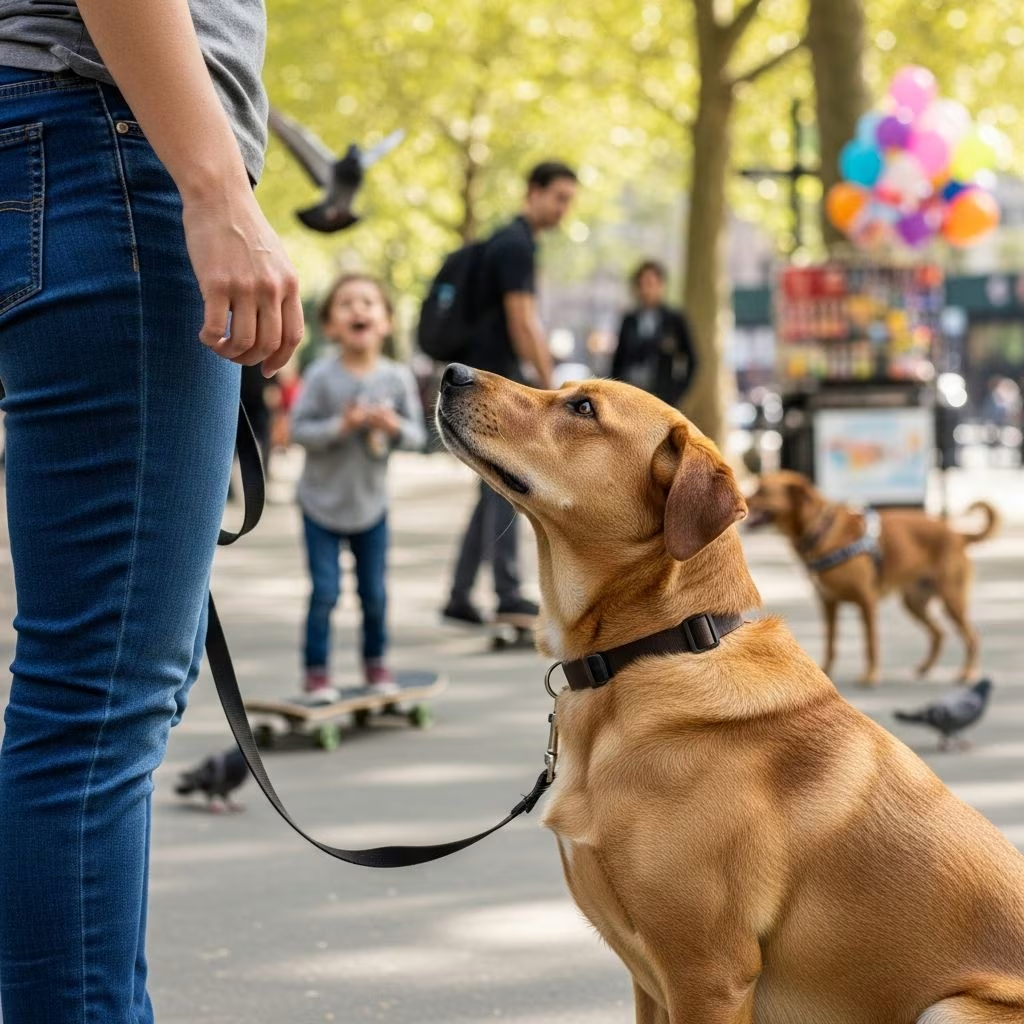
Every dog owner faces moments when their pet seems more interested in the world around them than in following basic commands. Whether it’s a squirrel darting by, the aroma of food from a nearby grill, or the chatter of passersby, distractions test the strength of your training bond. The good news is that with systematic approaches, you can teach your dog to prioritize you over these temptations, leading to safer walks, reliable recalls, and a more enjoyable companionship.
Understanding Why Dogs Get Distracted
Dogs experience the world through a barrage of sensory inputs that humans can only imagine. Their superior sense of smell picks up scents we overlook, their hearing detects distant sounds, and their curiosity drives them to investigate every movement. Distractions aren’t acts of rebellion; they’re natural responses to an engaging environment. Recognizing this helps shift your mindset from frustration to strategic training.
Common triggers include other animals, moving vehicles, enticing odors, and high-energy crowds. For young puppies or high-drive breeds like Border Collies or Labrador Retrievers, these can overwhelm developing impulse control. Building focus starts with acknowledging these instincts and channeling them productively.
Foundational Principles for Success
Effective distraction training relies on positive reinforcement, where desired behaviors earn rewards, strengthening neural pathways for attention. Key principles include:
- Start Simple: Begin in low-stimulation settings to build confidence before advancing.
- Use High-Value Rewards: Reserve top treats like bits of chicken or cheese for challenging moments to outcompete distractions.
- Maintain Patience: Progress may take weeks; regressions are part of learning.
- Control Variables: Isolate one challenge at a time, such as distance or noise level.
These tenets ensure your dog associates you with positivity, making compliance a joyful choice rather than a chore.
Building Engagement: Make Yourself the Center
Before tackling external pulls, foster a strong handler-dog connection. Engagement exercises turn you into the most captivating element in your dog’s world.
Begin with ‘Look At Me’ games indoors. Hold a treat near your eyes and say your cue calmly. When your dog makes eye contact, deliver the reward immediately. Practice in short bursts, gradually fading the treat lure to a hand signal. This cue becomes your anchor for redirecting attention anywhere.
Next, introduce two-way play. Toss a toy a short distance, call your dog back before they reach it, and reward the return. Over sessions, increase the toy’s allure or distance, teaching that checking in yields better fun. These interactions boost mutual trust and make disengaging from distractions rewarding.
Gradual Exposure: The Ladder of Distractions
Think of distraction training as climbing a ladder, each rung a slightly tougher scenario. Rushing leads to failure; steady ascent builds resilience.
| Level | Description | Example Setup | Goal Behavior |
|---|---|---|---|
| 1 – Quiet Home | Minimal stimuli | Living room, no toys out | Respond to sit/stay on first cue |
| 2 – Mild Indoor | Added noise/toy | TV on, toy nearby | Maintain focus amid low pulls |
| 3 – Backyard | Natural scents/sights | Grass, birds overhead | Recall despite mild interests |
| 4 – Controlled Walk | People/dogs at distance | Quiet street, passersby far | Heel without pulling |
| 5 – High Traffic | Full real-world chaos | Park with dogs/kids | Obey under pressure |
At each level, only advance when success rate hits 90%. If your dog fixates, increase distance or reduce intensity—no punishment, just reset.
Core Commands for Distraction Mastery
Certain cues are indispensable for refocusing a wandering mind.
Leave It
This prevents lunging toward forbidden items. Start with two treats in fists: one mediocre, one jackpot. Offer the closed ‘leave it’ fist first. When your dog backs off or looks away, reveal the better treat from the other hand. Progress to ground items, rewarding ignores.
Watch or Focus
For instant eye contact. Pair with engagement games, using it to interrupt distractions. In practice, say ‘watch’ as a mild pull arises; mark and reward the glance.
Let’s Go
Ideal for walks, signaling to move past stimuli. Use upbeat tone, quick steps forward, and treats to associate it with adventure.
Layer these: Practice ‘sit-stay’ with a ball rolling by at a safe distance, cueing ‘watch’ if needed.
Real-World Application: From Park to Public Spaces
Transitioning indoors to outdoors requires variable practice. Scout locations with predictable distractions: empty fields first, then busier parks. Simulate urban chaos at home with recordings of traffic or doorbells.
On walks, preempt pulls by changing direction abruptly before tension builds, rewarding the pivot. For recalls, use long lines in safe areas—call enthusiastically, reel in gently if ignored, then reward heavily. Always end on success to preserve motivation.
For service or working dogs, intensity ramps up: Introduce wheelchairs, crowds, or food drops at escalating proximities, emphasizing calm processing over reaction.
Common Challenges and Fixes
Regression Days: Normal, especially in novel spots. Revert one ladder rung, rebuild patiently.
High-Drive Dogs: Amp rewards (toy tugs post-success) and shorten sessions to 5 minutes.
Puppy Scatter: Puppies under 6 months have short attention spans; intersperse commands with play.
No Progress: Audit environment—too many variables? Or rewards too low-value? Adjust accordingly.
Tools and Aids for Better Results
- Long Leashes: 20-30 feet for safe recalls.
- Treat Pouches: Quick access to motivators.
- Clickers: Precise timing for marking focus moments.
- Calming Aids: Like pheromone collars for anxious dogs (consult vet).
Consistency across family members prevents confusion; everyone uses same cues and rewards.
Long-Term Maintenance
Focus isn’t a one-time skill; maintain with weekly ‘proofing’ sessions in random spots. Randomize rewards to mimic real life—sometimes jackpot, sometimes praise. Track progress in a journal to celebrate gains and spot patterns.
Ultimately, a distraction-proof dog stems from impulse control, viewing you as the ultimate reward source. This foundation enhances safety, reduces leash battles, and deepens your bond.
Frequently Asked Questions
How long does distraction training take?
Typically 4-12 weeks for basics, longer for advanced reliability. Daily 10-minute sessions yield fastest results.
What if my dog ignores me completely?
Increase distance from the trigger, use higher-value rewards, and ensure basics are solid in quiet areas first.
Are treats always necessary?
Initially yes, to build habits; fade to life rewards like continued walks or play over time.
Can older dogs learn this?
Absolutely—adapt pace to their energy, focusing on health-appropriate challenges.
What’s the role of exercise in focus?
Mentally and physically tiring your dog beforehand sharpens attention during sessions.
References
- Training a Distracted Dog: How Service Dogs Learn to Stay Focused — Putnam Service Dogs. 2023. https://www.putnamservicedogs.org/blog/training-a-distracted-dog/
- Training Your Dog to Ignore Distractions—No Matter Where You Are — American Kennel Club (AKC). 2024-10-15. https://www.akc.org/expert-advice/training/training-dogs-to-ignore-distractions/
- Dealing with Distractions: How to Keep Your Dog Focused on Walks — OVRS. 2023. https://www.ovrs.com/blog/dealing-with-distractions-how-to-keep-your-dog-focused-on-walks/
- Overcoming Distractions — Chasing the Tale Academy. 2024. https://chasingthetaleacademy.com/overcoming-distractions/
- Help! My Dog is Distracted by Everything! The Road to Disney — McCann Dogs. 2022-05-20. https://www.mccanndogs.com/blogs/articles/help-my-dog-is-distracted-by-everything-the-road-to-disney



