

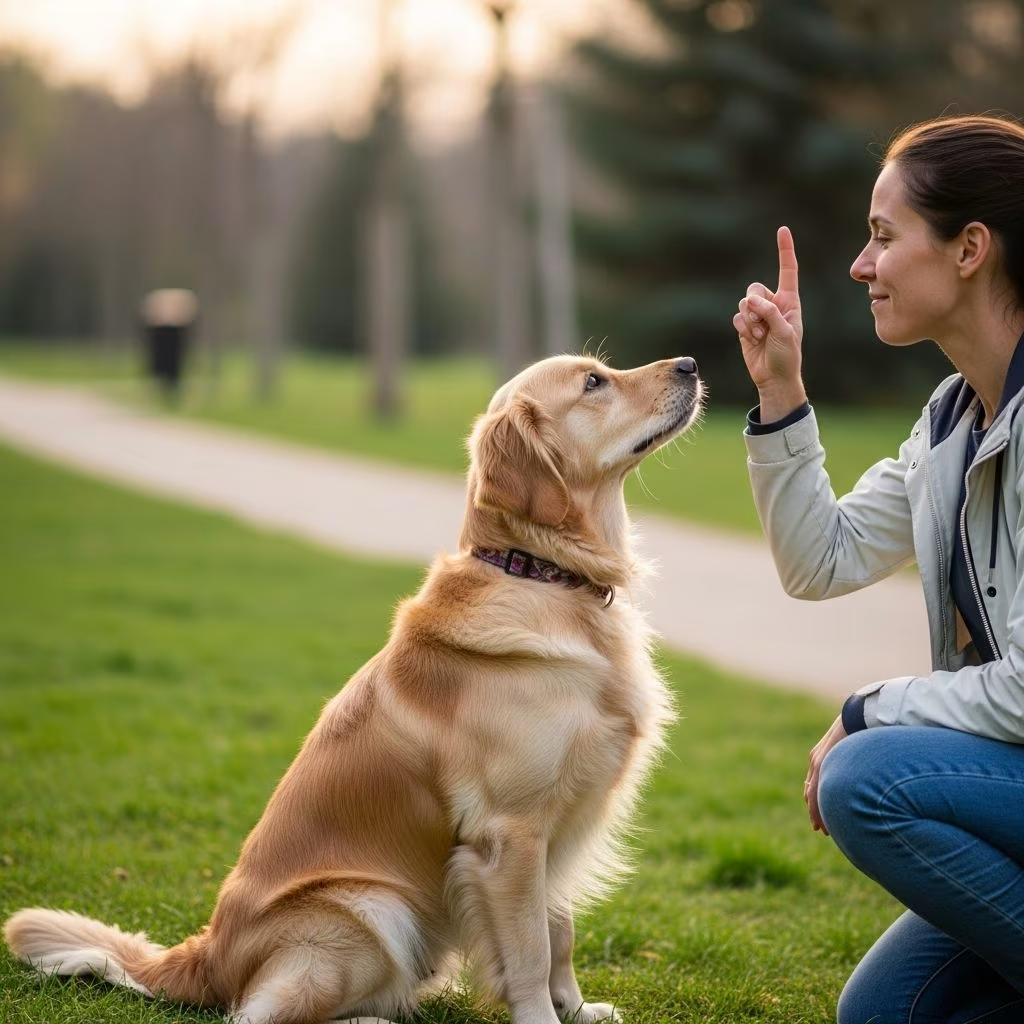
Many dog owners struggle when their pets only respond during training sessions with food incentives. Transitioning to treat-free obedience builds a stronger bond and ensures compliance in real-life situations. This guide explores practical techniques to achieve reliable behavior using alternative motivations and foundational skills.
Understanding the Treat Dependency Trap
Dogs quickly learn to associate commands with food rewards, leading to selective listening when treats are absent. This issue arises because initial training often over-relies on high-value snacks, creating an “I’ll do it if you pay me” mindset. In distracting environments like parks or homes with visitors, dogs prioritize more exciting stimuli over low-motivation treats.
Food luring effectively teaches new behaviors, such as sitting by guiding the dog’s nose upward. However, without proper fading, dogs become reliant. Professional trainers emphasize that tools like food should be temporary, similar to leashes or hands used for guidance.
Building a Strong Foundation: The Four Pillars of Treat-Free Training
Successful obedience without treats rests on four essential pillars: self-control, relationship, habits, and consistency. These elements create automatic responses rather than conditional compliance.
- Self-Control: Teach impulse management to prevent jumping, pulling, or ignoring cues.
- Relationship: Foster trust where your dog views you as the provider of valued experiences.
- Habits: Rewire behaviors through repetition for autopilot obedience.
- Consistency: Uniform enforcement ensures predictable responses.
Self-Control Exercises for Everyday Wins
Start with simple protocols to instill patience. For door manners, require a sit before opening. If the dog surges forward, close the door calmly and retry. This teaches waiting without verbal nagging.
Practice “leave it” by placing a toy or meal down and rewarding calm focus on you with access only after compliance. Progress to off-leash scenarios, building tolerance for distractions.
| Exercise | Goal | Steps |
|---|---|---|
| Wait at Doors | Prevent barging | 1. Command sit. 2. Open slightly. 3. Close if moving. 4. Release on calm. |
| Leave It | Impulse control | 1. Show item. 2. Turn away. 3. Reward eye contact. 4. Allow access later. |
| Place Command | Settling | 1. Lure to mat. 2. Add duration. 3. Fade lure with verbal cue. |
Leveraging Life Rewards for Natural Motivation
Replace artificial treats with real-life privileges like walks, play, or freedom. These high-value outcomes motivate without pouches of kibble. For instance, a leashed walk begins only after a heel position, turning daily routines into training opportunities.
Free-feeding undermines leadership perception; instead, hand-deliver meals after a down-stay. Toys become rewards for recalls, especially for high-drive dogs uninterested in food. Praise and petting add emotional reinforcement when genuine and timed correctly.
Integrating Play and Praise Effectively
Play chases or tug sessions follow successful sits or stays, mimicking pack dynamics where fun follows cooperation. Voice tone matters—excited praise for engagement, calm for relaxation cues. Combine with physical guidance, like gentle leash pressure, for balanced learning.
Phasing Out Treats: A Step-by-Step Process
Begin with frequent rewards during acquisition, then randomize delivery. Once proficient (80-90% success), intersperse non-food rewards. In low-distraction settings, test compliance sans rewards; if solid, advance to variables like guests or other dogs.
- Teach with lures or captures.
- Mark and reward intermittently.
- Introduce variable ratios (e.g., 1 in 3 successes).
- Substitute life rewards fully.
- Proof in distractions.
Avoid common pitfalls: inconsistent timing leads to confusion, while abrupt removal frustrates. Fussy eaters benefit most, as toys or access trump unavailable food.
Addressing Common Challenges in Treat-Free Training
Distractions Override Commands: Build gradually from quiet rooms to busier areas. Use higher-value life rewards, like a favorite game, to compete with temptations.
High-Energy Breeds: Channel exercise needs into training; short, fun sessions prevent burnout. Pre-walk obedience burns mental energy too.
Adult Rescue Dogs: Past habits require patience. Focus on prevention—manage environments to avoid rehearsal of bad behaviors while installing new ones.
Real-Life Applications: Manners Without Management
Around the home, enforce boundaries like no-counter surfing by withdrawing attention and redirecting to a place. Guests arrive? Dog stays in down until released. This leadership establishes you as the resource gatekeeper.
Outdoor reliability shines in recalls without treats. Practice long lines initially, rewarding returns with continued freedom rather than confinement. Over time, dogs generalize cues across contexts.
Advanced Techniques for Competition-Level Obedience
Service, police, and competition dogs thrive sans treats through precise handling and environmental rewards. Mold positions manually, use compulsion sparingly with clear releases, and layer motivations for proofing.
FAQs
Can all dogs be trained without treats?
Yes, though food-motivated pups transition easily. Low-food-drive dogs excel quicker with play or access rewards.
How long until my dog listens reliably?
Foundational skills take 2-4 weeks with daily 5-10 minute sessions; full generalization months of consistency.
What if my dog ignores non-food cues?
Revert to management (leash, barriers) while rebuilding self-control. Avoid repeating ignored commands.
Is positive-only training ineffective without treats?
No—pair with structure. Pure positivity often falters in distractions without balanced tools.
Should puppies learn treat-free from day one?
Use food for basics, fade early to prevent dependency. Pups generalize faster.
Conclusion
Treat-free training empowers dogs to obey from habit and respect, not transaction. Invest in these pillars for a harmonious life together. Patience yields a partner who listens anywhere, anytime.
References
- Training Your Dog With Real Life Rewards — Preventive Vet. 2023-05-15. https://www.preventivevet.com/dogs/training-your-dog-with-real-life-rewards
- How to Train Your Dog Without Food Treats — Dog Matters. 2022-11-10. https://www.dogmatters.com/train-dog-without-food-treats
- American Kennel Club Canine Good Citizen Program — AKC (Official .org). 2025-01-20. https://www.akc.org/dog-owner-resources/cgc/
- Self-Control and Impulse Management in Dogs — Association of Professional Dog Trainers. 2024-03-12. https://apdt.com/resource-center/self-control-training/
- Balanced Training Approaches — Thriving Canine. 2023-08-05. https://www.thrivingcanine.com/blog/help-my-dog-wont-listen-without-treats/



