

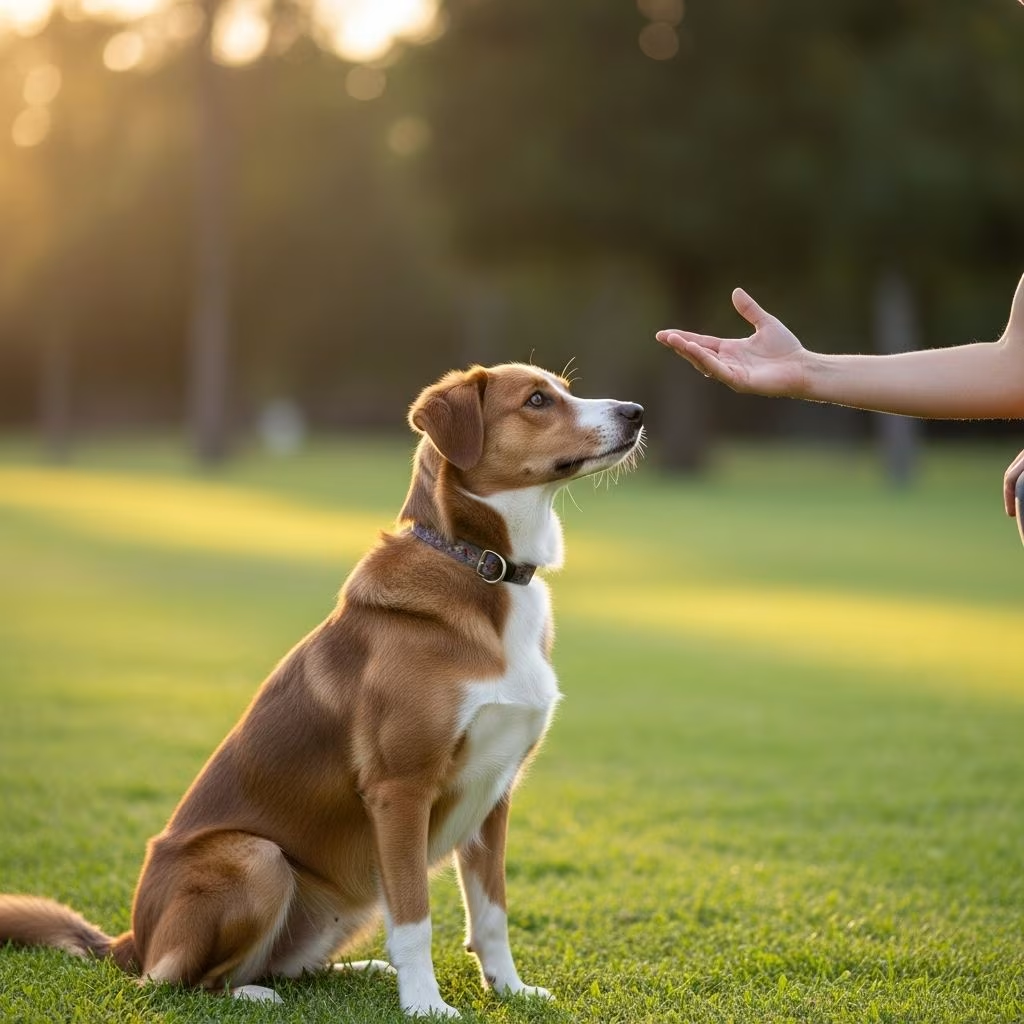
Many dog owners struggle when their pets only respond during structured sessions with food incentives. Transitioning to treat-free obedience creates dependable companions who listen in everyday scenarios. This guide explores practical approaches to foster reliable behavior through alternative motivations and foundational principles.
Understanding the Treat Dependency Trap
Dogs quickly learn to associate commands with immediate food rewards, leading to selective obedience. When treats vanish, motivation wanes, especially amid distractions like other animals or exciting environments. This pattern arises because food lures provide quick results but fail to build intrinsic drive for compliance.
Balanced training addresses this by integrating multiple motivators from the start. Petting, play, and verbal affirmation pair with initial food use, gradually reducing edible rewards. Physical guidance, such as gentle leash adjustments, teaches positions without constant handouts. Dogs trained this way develop a “show me the money” resistance, responding reliably regardless of visible incentives.
Building Self-Control as the Foundation
**Self-control** forms the bedrock of treat-independent training. Dogs must learn impulse management before advanced commands stick. Start with simple exercises where your dog waits calmly for permission before accessing desired items.
- Practice “wait” at doors: Command your dog to pause before entering or exiting, releasing only on cue.
- Use mealtime routines: Require a sit-stay until food is placed down.
- Introduce toy access rules: Dog must offer eye contact or a sit before play begins.
These drills rewire neural pathways, promoting automatic good behavior over reactive impulses. Repetition in low-distraction settings builds habits that transfer to chaotic real-world situations.
Leveraging Life’s Natural Rewards
Everyday privileges serve as powerful reinforcers, eliminating the need for carried treats. Link obedience to access freedoms dogs crave, reinforcing your role as benevolent leader.
| Problem Behavior | Life Reward Solution | Expected Outcome |
|---|---|---|
| Door darting | “Sit-wait-release” before thresholds | Polite entry/exit habits |
| Leash pulling | Forward movement only on loose leash | Smooth, enjoyable walks |
| Constant toy begging | Command compliance for play sessions | Controlled access, reduced nagging |
| Meal jumping | Four paws down until released | Calm feeding routines |
By controlling resources like walks, meals, and play, dogs internalize that listening unlocks joys. This method proves effective for household manners, requiring no special sessions or props.
The Four Pillars of Reliable Obedience
Sustainable training rests on interconnected pillars: self-control, habits, leadership, and consistency. Each counters treat training pitfalls, ensuring responses in high-distraction zones.
Pillar 1: Impulse Mastery
Begin here, as outlined earlier. Without it, dogs chase whims over cues.
Pillar 2: Habit Formation
Repetition automates compliance. Practice short, frequent sessions daily. Block bad habits by managing environments—remove temptations until good patterns solidify.
- Daily 5-minute drills in varying spots.
- Prevent rehearsal of unwanted actions, like jumping on guests.
- Reward with freedom or play upon success.
Pillar 3: Establish Leadership
Dogs thrive under clear guidance. Set boundaries calmly, providing structure through rules around resources. Consistent enforcement builds respect without force.
Pillar 4: Unwavering Consistency
Mixed signals erode progress. All household members must align on rules and cues. Inconsistent responses teach dogs to “game” the system, ignoring less rewarding handlers.
Advanced Techniques for Distraction-Proofing
Once basics solidify, proof commands amid challenges. Start indoors, progress outdoors.
- Recall Mastery: Call your dog from play, rewarding with continued fun rather than food. Gradually increase distance and distractions.
- Leash Manners: Stop walking when tension occurs; resume on slack. Pair with enthusiastic praise.
- Stay Proofing: Introduce mild interruptions like clapping or toys nearby, building duration.
Tools like clickers aid transitions: Initially pair clicks with treats, then fade to praise or play. Dogs associate the sound with success, maintaining motivation sans edibles.
Common Challenges and Fixes
Fussy Eaters: Low-food-drive dogs ignore treats anyway. Focus on play, petting, or access rewards from day one.
High-Energy Breeds: Channel vigor into games post-compliance, turning obedience into fun outlets.
Multi-Dog Homes: Train individually first, then group settings with clear leadership signals.
Patience prevents frustration. Progress may slow without treats’ instant feedback, but results endure.
FAQs
Can I ever use treats again?
Yes, sparingly for new tricks. Reserve for teaching phases, phasing out quickly.
What if my dog regresses?
Return to foundations: Boost self-control drills and consistency checks.
How long until treat-free reliability?
Typically 4-8 weeks with daily practice, varying by dog age and breed.
Does this work for rescues?
Absolutely; adapted paces suit anxious or older dogs, emphasizing trust-building.
Should puppies start this way?
Introduce pillars early, using minimal treats to avoid dependency.
Real-World Success Stories
Owners report transformations: Pullers become heelers on neighborhood jaunts; jumpers greet politely sans cookies. Police and service dogs exemplify treat-free excellence, obeying in crises via rigorous foundations.
Integrate these strategies for a harmonious home. Your dog will listen because it wants to, not because a pouch rustles.
References
- Training Dogs Without Treats – The Four Pillars — Bestmate Dog Training. 2023. https://www.bestmatedogtraining.co.nz/how-to-train-a-dog-without-treats
- How to Train Your Dog Without Food Treats — Dog Matters. 2022. https://www.dogmatters.com/train-dog-without-food-treats
- Help! My Dog Won’t Listen Without Treats — Thriving Canine. 2021. https://www.thrivingcanine.com/blog/help-my-dog-wont-listen-without-treats/
- Rewarding Your Dog Without Treats — The Drake Center for Veterinary Care. 2023. https://www.thedrakecenter.com/services/dogs/blog/rewarding-your-dog-without-treats
- Show Me The Money: Why Your Dog Doesn’t Listen Unless You’re Holding Food — Dr. Jen’s Dog Blog. 2020. https://www.drjensdogblog.com/show-me-the-money-why-your-dog-doesnt-listen-unless-youre-holding-food/



