

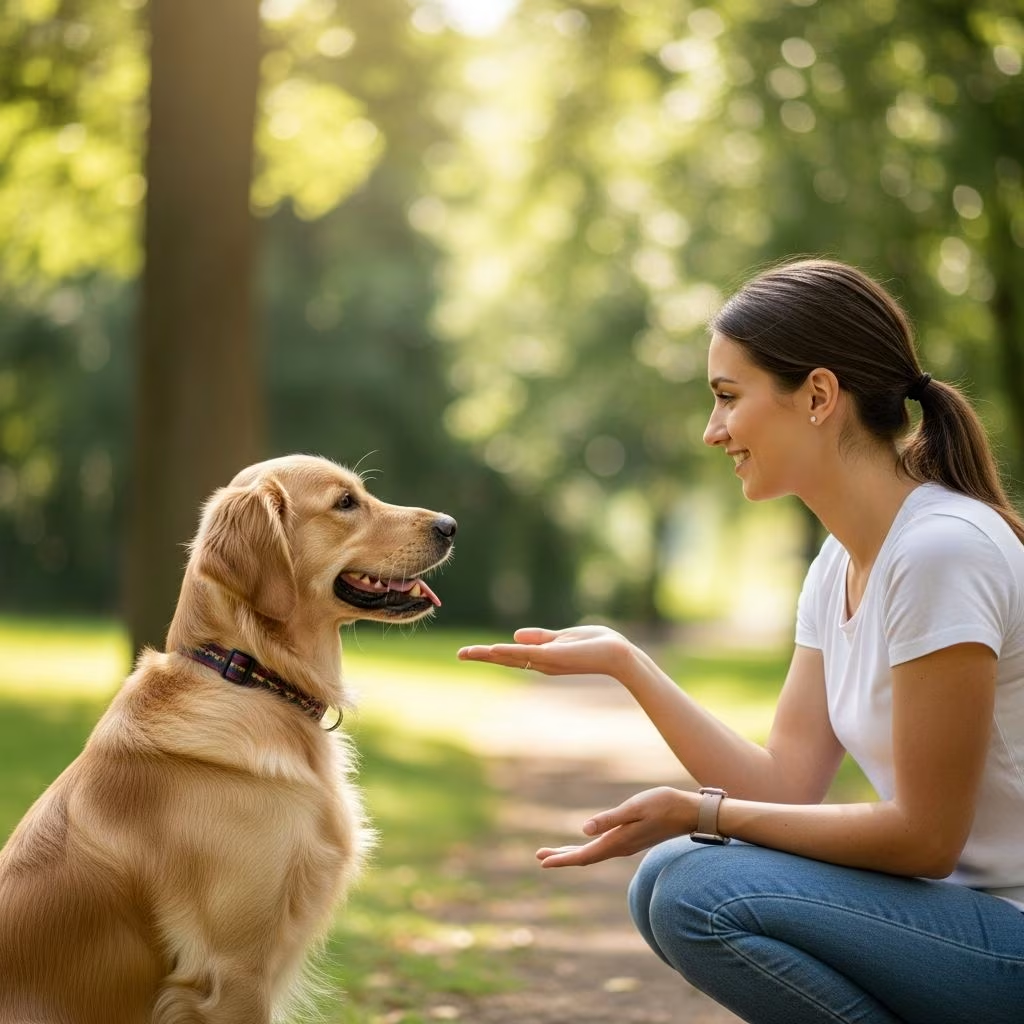
Many dog owners rely on treats to teach basic commands, but what happens when food isn’t available or your dog loses interest? Positive reinforcement doesn’t have to mean food rewards. By tapping into your dog’s natural motivations like play, praise, and environmental privileges, you can foster reliable obedience that lasts a lifetime. This approach builds a deeper bond and prevents the common “show me the money” mindset where dogs only respond for snacks.
Why Move Beyond Food Rewards?
Treat-dependent training often fails in real-world scenarios. Dogs with keen senses detect when treats are absent and may ignore commands. High-drive food lovers might work well initially, but others find kibble or even premium treats unmotivating, especially post-meal or after repetition. Swapping treats for toys or pats alone doesn’t address root issues like poor impulse control or inconsistent habits.
Instead, focus on intrinsic motivators. Research from canine behavior experts emphasizes balanced methods combining verbal affirmation, physical guidance, and play to create automatic responses. This leads to dogs that listen around distractions like guests, children, or other animals without needing constant lures.
Core Pillars for Treat-Free Success
Effective training rests on foundational elements that promote self-regulation and reliability. These pillars ensure behaviors stick without external props.
- Impulse Management: Teach your dog to pause and wait, overriding instincts like chasing or jumping.
- Repetition Building: Practice in varied settings to form neural pathways for automatic compliance.
- Unified Approach: Everyone in the household must enforce rules identically for seamless results.
- Engagement Focus: Prioritize attention to you as the primary reward source.
Implementing these creates a framework where dogs respond on “autopilot,” reducing nagging and boosting harmony.
Mastering Impulse Control Without Snacks
Start here: self-regulation is the bedrock of obedience. Dogs that can’t control urges won’t heed commands amid excitement. Begin with simple exercises in low-distraction areas.
For “wait” at doors: Stand at the threshold, cue “wait,” then open slightly. If your dog surges, close it calmly and retry. Reward with door access only—no treats. Progress to full opens and add distance.
Table of Impulse Drills:
| Exercise | Steps | Progression |
|---|---|---|
| Door Wait | 1. Cue and crack door. 2. Close if lunging. 3. Release on calm. | Full open, add people outside. |
| Leave It | 1. Drop low-value item. 2. Cue “leave it.” 3. Reward by removing temptation. | High-value items, motion. |
| Sit-Stay | 1. Cue sit. 2. Step away briefly. 3. Return and release. | Duration, distractions. |
These build patience, essential for recalls and heeling.
Life Rewards: Everyday Privileges as Motivation
The world offers endless reinforcers. Identify what excites your dog—walks, sniffs, play—and use them strategically.
- Sniff Sessions: After polite loose-leash walking, cue “go sniff” near interesting scents. This reinforces heel position naturally.
- Chase Games: Reward recalls by running away playfully, encouraging pursuit back to you.
- Outdoor Adventures: Leash walks or hikes follow successful sits; car rides for calm crate time.
Tailor to preferences: Water-loving dogs earn swims; ball fanatics get fetches. Avoid aversions like car rides for reluctant pups. List your dog’s top 5 joys and brainstorm integrations.
Play Power: Toys and Games That Teach
Play trumps treats for engagement. Toys activate chase instincts, building joy in learning.
Toy Luring for Positions: For sits, hold a squeaky toy overhead; toss on tuck. Downs: Lower toy to ground or under furniture, squeak and release on lie-down.
Tug reinforces releases: Play briefly post-command, cue “out” to drop, then resume. This teaches give-and-take.
Pro Tip: Vary toys to combat boredom, like switching from balls to squeakers.
Verbal Praise and Body Language Mastery
Words and demeanor become potent tools. Enthusiastic tones mimic treat excitement.
Use markers like “yes” or “good” timed precisely, followed by praise bursts: “Good heel!” with pets or play. Pair with physical cues—happy dance, claps—to amplify.
Wean from treats gradually: Reward every response initially, then every other, finally randomly. This fades lures while maintaining drive.
Building Habits for Lifelong Reliability
Habits automate behavior. Short, frequent sessions in real contexts solidify skills. Counter bad patterns by blocking rehearsals, like leashing jumpers.
Consistency across family prevents confusion. Track progress: Note successes daily to adjust.
Common Challenges and Fixes
Dogs ignoring cues? Return to basics—impulse drills in quiet spots. Distraction-proof by layering: Master indoors, then yard, street.
Low motivation? Audit rewards; ensure they’re high-value and timely.
FAQs
Q: Can all dogs train without treats?
A: Yes, by matching methods to personality—play for high-energy, praise for affection seekers.
Q: How long until no-treat reliability?
A: 4-8 weeks with daily practice, varying environments.
Q: What if my dog loves food most?
A: Transition slowly, using meals as training kibble before phasing to life rewards.
Q: Is physical guidance okay?
A: Gentle molding complements positives, avoiding treat dependency.
Q: Distractions ruining progress?
A: Build self-control pillars first; habits overcome them.
Advanced Techniques for Real-World Proofing
Once basics stick, test in chaos: Parks, visitors. Use variable rewards—unpredictability boosts resilience.
Integrate commands fluidly: Heel to sit to recall seamlessly. Praise bridges gaps.
This holistic system yields dogs attuned to you, not just goodies. Patience pays off in a responsive companion.
References
- Positive Reinforcement Dog Training Without Treats — Whole Dog Journal. 2023-05-15. https://www.whole-dog-journal.com/training/positive-reinforcement-training-without-treats/
- How to train a dog without treats — Bestmate Dog Training. 2024-02-10. https://www.bestmatedogtraining.co.nz/how-to-train-a-dog-without-treats
- How to Get Your Dog to Behave ANYWHERE (Without Using Treats!) — Tom Davis Dog Training (YouTube). 2023-08-20. https://www.youtube.com/watch?v=6E8_XNbeA1k
- How To Train Your Dog To Listen Without Treats — Zak George’s Dog Training Revolution (YouTube). 2023-11-05. https://www.youtube.com/watch?v=DaK-4KjByeo
- Help! My Dog Won’t Listen Without Treats — Thriving Canine. 2024-01-12. https://www.thrivingcanine.com/blog/help-my-dog-wont-listen-without-treats/



