

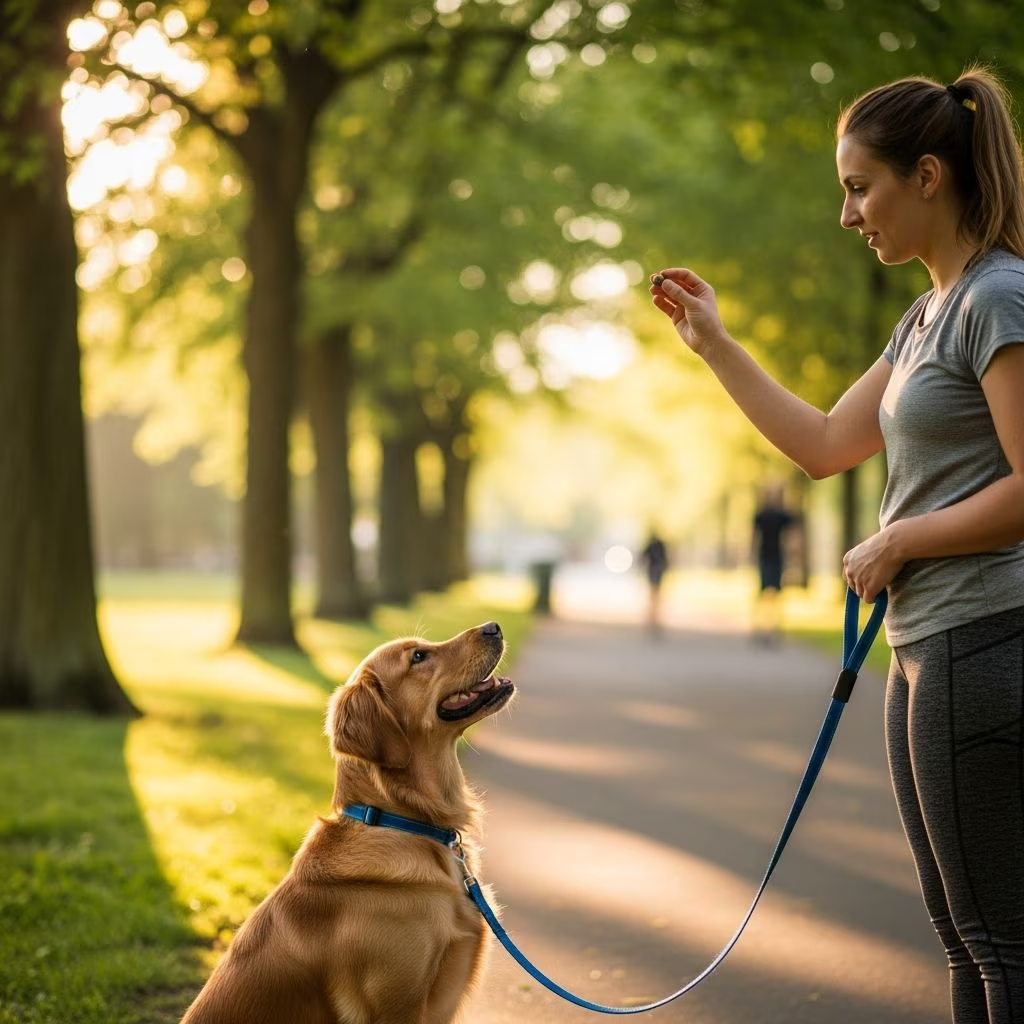
Daily walks offer unparalleled opportunities to reinforce obedience, build focus, and strengthen the bond between you and your dog. By integrating targeted exercises into these routines, owners can address common issues like pulling, distraction, and poor heel position, leading to more enjoyable outings for both parties.
Building the Basics at Home
Before venturing outdoors, establish foundational skills in a low-distraction setting such as your living room or backyard. This controlled environment allows your dog to concentrate without external stimuli interfering with learning.
Start by desensitizing your dog to leash pressure. Gently grasp the collar or harness while offering high-value treats to create positive associations. Progress to light tugs that guide forward movement, immediately rewarding any response with praise and food rewards. This builds comfort and responsiveness from the outset.
- Practice collar grabs paired with treats until your dog eagerly anticipates contact.
- Introduce gentle forward pulls, marking success with a clicker or verbal marker like “yes” followed by a treat.
- Repeat until your dog moves willingly with minimal cueing.
Consistency here prevents future resistance and sets a strong tone for all subsequent training.
Mastering Loose Leash Position
Achieving a loose leash—where the lead forms a slight U-shape without tension—is the hallmark of effective walking. Reward your dog precisely when their shoulder aligns with your leg, using treats delivered at knee level to encourage proximity.
Employ the “stop and go” method: halt immediately if tension builds, resuming only when slack returns. This teaches that progress depends on calm positioning rather than pulling.
| Technique | Description | Expected Outcome |
|---|---|---|
| Be a Rock | Freeze motion when dog pulls; reward return to side | Dog learns pulling halts fun |
| Back and Forth | Reverse direction abruptly on pull; treat catch-up | Improves attentiveness to handler |
| Random Rewards | Treat unpredictably (e.g., 2nd, 5th step) | Maintains engagement |
Gradually extend steps between rewards as proficiency grows, fading treats while preserving verbal praise.
Verbal Cues for Seamless Guidance
Incorporate clear commands to signal expectations. Use upbeat phrases like “let’s go” or “with me” to initiate movement, pairing them with forward steps and immediate reinforcement.
For turns, say your dog’s name to gain attention, followed by “this way” or directional words like “left.” Mark compliance during the pivot and reward promptly. This fosters directional awareness and prevents forging ahead.
- Practice in place first: cue, turn, treat.
- Expand to short walks, layering cues progressively.
- Use jolly tones to keep sessions fun and motivating.
According to the American Kennel Club, such cues make challenging skills accessible by clearly communicating intent.
Progressing Through Distraction Levels
Once basics solidify indoors, transition to the backyard, then quiet streets. Monitor body language for signs of overload—ears back or wide eyes—and dial back if needed.
Introduce mild distractions like mild traffic sounds, rewarding check-ins where your dog glances at you voluntarily. High-value treats (e.g., chicken bits) outweigh competing stimuli.
- Low distraction: Backyard, frequent rewards.
- Medium: Quiet park, variable intervals.
- High: Neighborhood walks, praise-dominant.
The Ontario SPCA emphasizes gradual exposure to build reliability without frustration.
Handling Common Challenges
Reactive Pullers
For dogs lunging at triggers, preempt with distance management. Spot potential distractions early, cue a heel position, and reward focus before arousal peaks. Tools like front-clip harnesses redirect naturally without discomfort.
Puppy-Specific Adjustments
Puppies tire quickly and explore voraciously. Keep sessions short (5-10 minutes), allow sniffing breaks as rewards, and use soft harnesses to avoid neck strain. Fun, silly energy from you amplifies retention.
Adult Dogs with Habits
Stubborn adults benefit from the RSPCA’s stillness protocol: stand immobile until attention returns, then reward and proceed. Repetition erodes ingrained pulling.
Enhancing Walks with Enrichment
Balance training with “off-duty” phases using a cue like “free walk” to signal sniffing freedom within leash limits. This prevents burnout and leverages natural curiosity.
Incorporate “leave it” for hazards: show a treat in one hand, close fist on distraction cue, rewarding disengagement. Pet Palace highlights its role in focus amid urban chaos.
Standard 4-6 foot leashes promote control over retractables, which foster poor habits.
Tools and Gear Recommendations
- Harness: Front-clip for pullers; back-clip for calm walkers.
- Leash: Non-retractable, 4-6 feet.
- Treats: Soft, smelly for motivation.
- Clicker: Precise marking optional.
Session Structure for Success
Pre-walk rituals prime focus: 2-3 minute games like targeting your leg or spins. End on highs to build positive anticipation.
Aim for 3-5 sessions weekly, 10-15 minutes each. Track progress in a journal noting successes and setbacks.
Advanced Integration: Multi-Skill Walks
Layer sits at corners, recalls mid-walk, or heeling bursts. Randomly vary pace to sharpen adaptability. Animal Humane Society advocates signaling shifts for balanced outings.
Frequently Asked Questions
How long until my dog walks nicely?
Typically 2-6 weeks with daily practice, varying by age and prior habits.
What if my dog ignores cues outdoors?
Revert to lower distractions; increase treat value until compliance returns.
Can I use punishment?
Avoid; positive methods yield lasting results without fear.
Best for reactive breeds?
Yes—focus on prevention and counter-conditioning.
Harnesses vs. collars?
Harnesses preferred to protect trachea.
Long-Term Maintenance
Once mastered, maintain with intermittent rewards and real-life proofing like busy markets. Walks evolve into mutual enjoyment, reinforcing lifelong partnership.
Blue Ridge Humane stresses building on solid foundations for enduring habits.
References
- How To Teach a Puppy To Walk on a Leash — American Kennel Club. 2023-05-15. https://www.akc.org/expert-advice/training/teach-puppy-walk-leash/
- Teaching Loose Leash Walking — Ontario SPCA. 2024-02-10. https://ontariospca.ca/blog/teaching-loose-leash-walking/
- Ask Crystal: Leash Walking Training Tips — Blue Ridge Humane Society. 2023-08-20. https://www.blueridgehumane.org/leash-walking-training-tips/
- How to train your dog to walk nicely on the lead — RSPCA. 2024-01-12. https://www.rspca.org.uk/adviceandwelfare/pets/dogs/training/walknicely
- 10 Essential Dog Walking Training Tips — Pet Palace Resort. 2023-11-05. https://www.petpalaceresort.com/10-essential-dog-walking-training-tips/
- Teach your dog to walk on a loose leash — Animal Humane Society. 2024-03-01. https://www.animalhumanesociety.org/resource/teach-your-dog-walk-loose-leash



