

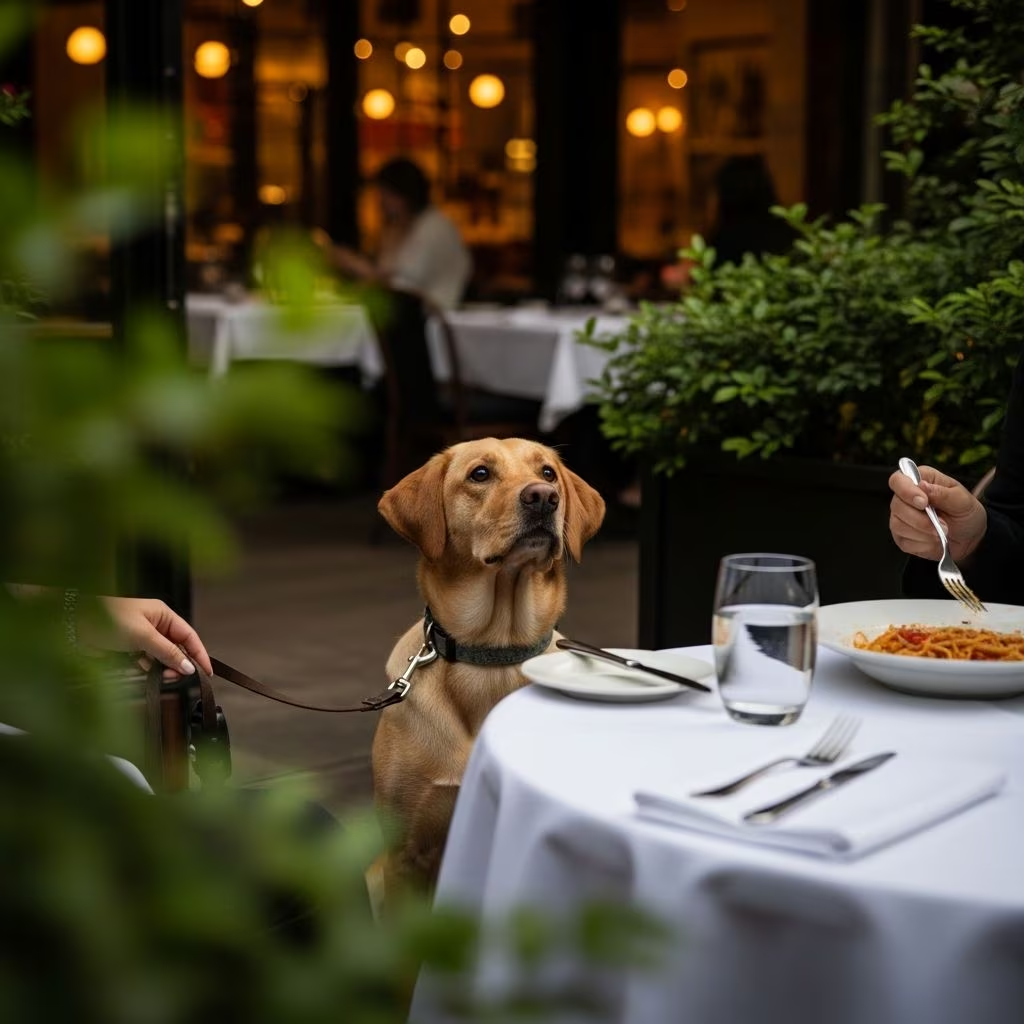
Train Your Dog to Behave at Restaurants: A Complete Guide
Taking your dog to restaurants and outdoor cafés can be a wonderful way to spend quality time together while enjoying a meal. However, not every dog is naturally equipped to handle the distractions and demands of a dining environment. The good news is that with proper training, preparation, and management, most dogs can learn to be excellent dining companions. This comprehensive guide will walk you through the essential skills your dog needs to develop, the preparation strategies to implement, and the active management techniques to ensure a pleasant experience for everyone involved.
Teach Your Dog the Must-Have Skills They’ll Need
Before your dog can successfully join you at a restaurant, they need to master several fundamental behaviors. These core skills form the foundation for all restaurant dining experiences and are non-negotiable for a positive outing.
First and foremost, your dog must be able to walk nicely on a leash without pulling, lunging, or becoming overly excited. A loose-leash walk demonstrates control and composure, both critical when navigating through a restaurant or outdoor patio filled with other diners, staff members, and potential distractions.
Second, your dog needs to greet people politely without jumping up or engaging in inappropriate sniffing behaviors. Restaurant staff and fellow patrons will appreciate a dog that maintains proper personal space and responds calmly to human interaction. This skill prevents awkward moments and helps create a positive impression.
Third, your dog must be able to remain calm in stimulating environments. Nobody wants to sit next to a barking, jumping, or overly energetic dog while trying to enjoy their meal. A calm dog is a welcome dog at any establishment.
Additionally, your dog should be proficient at the “leave it” command, resisting the urge to eat something that falls on the ground. Restaurant floors present numerous temptations, and a reliable “leave it” response is essential for your dog’s safety and the restaurant’s cleanliness.
Your dog must also be able to focus their attention on you while essentially ignoring other people, distractions, and activities happening around them. This selective attention demonstrates that your dog views you as the most interesting and rewarding presence in the environment.
Finally, your dog needs to master the “stay” command and maintain it for the entire duration of your meal. Even more specifically, teaching your dog to lie down and stay on a blanket—regardless of where you place it—provides an excellent tool for restaurant dining. Whether positioned under the table, behind your chair, or in a designated area, a mat-trained dog will have a clear understanding of their boundaries and expected behavior.
Prep Ahead of Time
Preparation is absolutely essential before attempting to take your dog to a restaurant. Think of this preparation phase as a pre-game warm-up that reminds your dog of the specific behaviors you expect from them.
Before heading to the restaurant, conduct a brief refresher training session with your dog. Spend about a minute practicing nice leash-walking, going through the “leave it” command, and working on having them “stay” on their blanket or mat. Move the blanket to different locations during this practice session, having your dog maintain their stay for a moment at each new spot. This variation helps generalize the behavior so your dog understands they need to stay in place regardless of their surroundings.
The timing of this preparation session is strategic. By doing this training right before you head out to the restaurant, you accomplish two important goals. First, you refresh your dog’s memory about the behaviors you expect from them. Second, you tire out their brain through mental stimulation, making it much easier for them to settle and relax at the restaurant rather than channeling pent-up energy into disruptive behaviors.
Set Your Dog Up for Success
Creating an environment where your dog can easily succeed is far more effective than expecting them to behave perfectly in challenging circumstances. Several strategic choices will significantly increase the likelihood of a positive restaurant outing.
The timing of your restaurant visit relative to your dog’s exercise schedule is critical. Plan to visit the restaurant after your dog has had substantial physical exercise, such as a long hike, vigorous play session, or extended interaction with another dog. A tired dog is a well-behaved dog because they have less excess energy to expend on jumping, barking, or other disruptive behaviors. Compare this to attempting a restaurant visit after your dog has been at home all day accumulating social and physical energy—the contrast in their behavior will be dramatic.
Select the most dog-friendly restaurant location you can find. Different establishments have varying levels of dog-friendliness, and choosing one that actively welcomes dogs will reduce the pressure you feel and make it easier for your dog to succeed. Staff members at genuinely dog-friendly venues understand dog behavior and are more forgiving of minor mishaps.
Avoid extremely crowded establishments for your initial restaurant visits. An overwhelming environment with excessive foot traffic, loud noises, and numerous distractions is more likely to stress your dog and trigger reactivity. You want your dog to feel comfortable, not anxious or overstimulated.
Keep your first few restaurant visits short in duration. Rather than starting with a full three-course meal, bring your dog when you simply grab a coffee or quick snack. This allows you both to get comfortable with the experience without the pressure of an extended outing. As your dog demonstrates consistently good behavior, gradually increase the length and complexity of your restaurant visits, eventually progressing to full meals.
Actively Manage the Situation
Even after extensive preparation, active management during your restaurant visit is essential. Your role as the handler is to proactively prevent problems rather than reactively addressing them after they occur.
Begin by choosing your dog’s spot carefully. Position them in an area with minimal activity from guests and staff. Look for a quiet corner or an edge location rather than the center of the dining area. Here’s an expert tip: face your dog away from the entrance rather than toward it. When your dog faces away from the constantly opening door and incoming guests, they experience less anxiety about people coming and going. This simple positioning change can dramatically reduce reactive behaviors.
Maintain constant vigilance throughout your visit. Always be on the lookout for possible challenges or distractions that might trigger unwanted behavior. The key is to intervene proactively before your dog reacts to something, not after they’ve already begun barking or lunging. This preventive approach is far more effective than correction-based training in the restaurant environment.
Provide frequent praise and physical affection throughout the meal. Don’t save all your interaction for moments when your dog misbehaves. Regularly acknowledge and reward the good behavior you’re seeing. Distribute treats and toys consistently to maintain your dog’s engagement and prevent boredom.
You can offer treats for specific requested behaviors like looking at you or rolling on their side, but you should also distribute treats to reinforce your dog’s choice to stay on their blanket and remain calm. This combination of reinforcement strategies helps your dog understand that good behavior results in positive consequences.
If possible, try to sit in the same spot each time you visit the restaurant with your dog. Consistency helps your dog develop associations and gradually transforms the specific location into their “happy place”—a spot they associate with positive experiences and relaxation.
Start Training at Home First
Building the foundation for restaurant behavior begins in your own home, where distractions are minimal and you have complete control over the environment. Mat training is particularly effective for developing the quiet, calm behavior you’ll need at restaurants.
Begin by reinforcing your dog for lying down on a portable mat, rug, or dog bed while you eat in the comfort of your own home. Start with practice sessions where you’re eating or simulating eating, and your dog learns to remain quietly on their mat during this time. The goal is to establish a strong association between the mat and calm, quiet behavior.
Importantly, avoid feeding treats to your dog from your position at the table while eating. This common mistake encourages begging behavior and creates expectations that your dog will receive food while you’re seated and eating. Instead, the correct approach is to occasionally reinforce your dog while they remain on their mat by standing up, walking away from the table, retrieving a treat from a counter, shelf, or pocket, and then delivering it to your dog as you approach from the non-table side. This method prevents your dog from developing expectations of table-side rewards.
Practice Outside Before Going Inside
Once your dog has demonstrated proficiency with mat behavior at home, the next step is to practice in the outdoor areas of restaurants before actually attempting to dine there.
Make several preliminary trips to your chosen restaurant, but focus your training activities outside the eating area. Bring your dog’s mat along and practice the mat behavior in the outdoor space. This allows your dog to acclimate to the restaurant environment, including the sounds, smells, and presence of other people, while still practicing their expected behavior in a low-pressure situation.
When your dog consistently demonstrates excellent mat behavior outside the eating zone and shows comfort with the restaurant environment, you’re ready for the actual dining experience. At this point, bring your dog and their mat into the restaurant, select an out-of-the-way table away from the main traffic pattern, invite your dog to lie down on their mat, and take your seat. Your extensive preparation will pay dividends as your dog settles into their familiar mat and displays the calm behavior you’ve trained.
Important Behavioral Considerations
It’s crucial to acknowledge that not all dogs are appropriate candidates for restaurant dining. Dogs that display reactive or aggressive behaviors should not be taken to public eating establishments. Such dogs are at risk of escalating their problem behaviors in a stimulating environment, and they pose potential safety concerns to other patrons and staff. For dogs with these behavioral issues, working with a certified professional dog trainer or veterinary behaviorist is advisable before considering public outings.
Reinforcement Techniques That Work
Research demonstrates that both social interaction and food can function as reinforcers for dogs, but food proves to be more effective for most canines. When training your dog for restaurant behavior, consider combining both forms of reinforcement. Physical affection, particularly petting, appears more effective than vocal praise alone. The combination of treats for specific behaviors, along with praise and petting for maintaining calm, creates a comprehensive reinforcement strategy that keeps your dog engaged and motivated to display good behavior.
Frequently Asked Questions
Q: What’s the minimum age for taking a dog to a restaurant?
A: There’s no universal minimum age, but your dog should be fully vaccinated and have mastered basic obedience skills before attempting restaurant dining. Most dogs under six months may lack the impulse control needed for this environment.
Q: Can all dog breeds behave at restaurants?
A: Most dogs can learn to behave at restaurants with proper training, regardless of breed. However, individual temperament and personality matter more than breed. Dogs with severe anxiety, reactivity, or aggression should not be taken to public eating establishments.
Q: How long does it typically take to train a dog for restaurant dining?
A: The timeline varies depending on your dog’s age, previous training, and individual temperament. Most dogs can begin their first short restaurant visits after 2-4 weeks of consistent preparation training at home and in outdoor practice sessions.
Q: What should I do if my dog has an accident at the restaurant?
A: Always be prepared with cleanup supplies and alert restaurant staff immediately. Don’t punish your dog after the fact, as this teaches them to fear restaurants rather than to change behavior. Instead, this is feedback that your dog needed more pre-visit exercise or that the environment was too stimulating.
Q: Are indoor restaurants appropriate for dogs?
A: Most indoor restaurants have health code restrictions that prohibit dogs (except for legitimate service animals). Outdoor patios and dedicated dog-friendly indoor establishments are the appropriate venues for dining out with your dog.
Q: How do I know if my dog is stressed at a restaurant?
A: Signs of stress include excessive panting, pacing, whining, trembling, or inability to settle. If you notice these signs, shorten your visit and reduce the environmental stimulation at future outings. A stressed dog won’t learn good behavior; they need to feel safe first.
References
- How to Train Your Dog to Behave at Restaurants—Teach Them the Skills They Need — Kinship. 2025. https://www.kinship.com/dog-behavior/train-dog-to-behave-at-restaurants
- How to Teach Your Dog to Be a Good Dining Companion — Whole Dog Journal. 2025. https://www.whole-dog-journal.com/training/greeting/how-to-teach-your-dog-to-be-a-good-dining-companion/
- Food Is Still the Best Way to Reinforce Your Dog’s Good Behavior — Kinship. 2025. https://www.kinship.com/dog-behavior/social-reinforcement-training
- Social Interaction Can Function as a Reinforcer for Dogs: Effects of Stimulus Duration and Session Parameters — Erica Feuerbacher, Caitlin Togher, and Jonathan Friedel. March 2025. DOI-based research on dog training reinforcement methods.



