

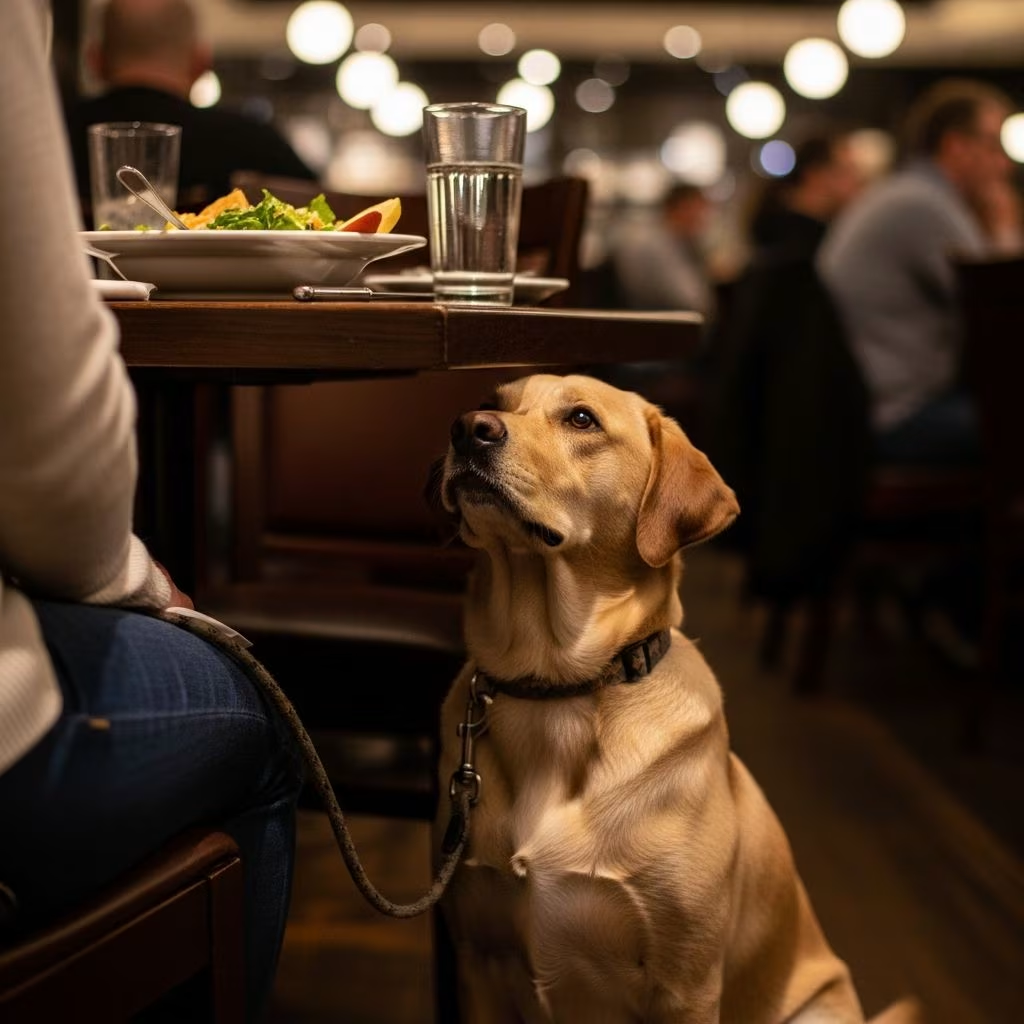
Many dog owners dream of enjoying a meal at a dog-friendly restaurant or café with their furry companion by their side. However, without proper training, outings can turn chaotic with jumping, barking, or scavenging behaviors. The good news is that with consistent practice using positive reinforcement, most dogs can learn to be well-mannered dining partners. This guide outlines the essential skills your dog needs and shares five key strategies to ensure success, drawing from certified animal behaviorist expertise. Whether you’re grabbing coffee or a full meal, these steps will help your dog stay calm, focused, and polite.
Teach Your Dog the Must-Have Skills They’ll Need
Before venturing to any restaurant, your dog must master foundational behaviors to avoid embarrassing mishaps. Imagine your pup jumping on diners, lunging at dropped food, or barking at passersby—these scenarios ruin the experience for everyone. Start training at home and progress to real-world distractions.
**Core Skills for Restaurant Success:**
- Loose-Leash Walking: Teach your dog to walk beside you without pulling. Use positive reinforcement by rewarding with treats when the leash stays slack. Practice in varied environments to build reliability.
- Polite Greetings: Dogs must ignore strangers without jumping or sniffing excessively. Cue “focus” or “watch me” to redirect attention to you, rewarding calm behavior.
- Leave It Command: Essential for resisting dropped food. Hold a treat in your closed fist, say “leave it,” and reward from your other hand only when they back off. Gradually introduce higher-value temptations.
- Stay and Place: Train a rock-solid stay, ideally on a mat or blanket. Place the blanket in different locations, cue “place,” and build duration up to 30-60 minutes. This keeps them settled under the table.
- Calm Focus: Reward eye contact and relaxation amid distractions. Use a clicker or marker word followed by treats to reinforce ignoring people and noises.
Practice these daily in short 5-10 minute sessions. Positive reinforcement—praising and treating desired behaviors—increases compliance far more effectively than punishment, as supported by research showing dogs respond best to rewards. A study on reinforcement found that combining petting with food yields even stronger results than social praise alone. Over time, fade treats to random intervals to maintain behaviors without luring.
Prep Ahead of Time
Preparation turns potential disasters into smooth outings. Treat the pre-restaurant routine like a warm-up to refresh skills and expend mental energy, making your dog more settleable.
Just before leaving, run through a quick training circuit:
- 1-2 minutes of loose-leash walking around the block.
- Practice “leave it” with household items or toys.
- Set up the blanket in various spots, cueing stay for increasing durations.
This mental workout tires their brain, reducing reactivity. According to behavior experts, pre-exercise training reminders strengthen neural pathways for good manners. Pack essentials: a familiar blanket, high-value treats (soft, pocket-friendly), toys, and water. Review house rules too—no begging at home means no begging out.
For puppies or high-energy dogs, incorporate play breaks. Positive reinforcement hierarchies suggest starting with 100% rewards for new behaviors, then randomizing to keep engagement high. This prep phase sets a positive tone, boosting success rates on the first try.
Set Your Dog Up for Success
Success hinges on smart choices that minimize challenges. A rested, exercised dog is far more likely to behave than one bursting with pent-up energy.
**Key Setup Strategies:**
| Factor | Do This | Why It Works |
|---|---|---|
| Exercise | Long hike or play session beforehand | Drains physical energy, promotes calm |
| Venue Choice | Quiet, dog-friendly spots first | Reduces overwhelm from crowds/staff |
| Trip Length | Start with coffee/snacks, build to meals | Gradual exposure prevents burnout |
| Timing | Avoid peak hours | Fewer distractions = easier focus |
Research emphasizes environmental management in training; overwhelming stimuli undo progress. Scout patios with space for your dog’s blanket away from high-traffic areas. Repeat visits to the same spot build positive associations—your dog’s “happy place.”
Actively Manage the Situation
Even trained dogs need oversight. Proactive management prevents issues before they arise.
Upon arrival:
- Select a low-distraction spot, facing away from entrances to curb entrance-watching anxiety.
- Position the blanket strategically—under the table or behind your chair.
Stay vigilant: Scan for triggers like servers or other dogs, intervening early with cues like “focus” or “place.” Interrupt unwanted sniffing by redirecting to a toy.
Maintain engagement:
- Praise lavishly for calm staying.
- Dispense treats randomly for eye contact, down-stays, or relaxation.
- Offer chew toys or stuffed Kongs for self-entertainment.
- Pet and talk softly to reinforce social bonds—studies show petting rivals food as a reinforcer.
Consistency is key; same spot each visit reinforces routines. If issues arise, calmly remove to a quiet area and retry. End on a high note with praise.
5 Ways to Make Sure Your Dog Behaves When You Bring Them to a Restaurant
Summarizing the blueprint:
- Master Must-Have Skills: Leash, greetings, leave it, stay.
- Prep with Drills: Quick sessions to refresh and tire mentally.
- Setup Smartly: Exercise, quiet venues, short trips.
- Manage Proactively: Spot selection, constant rewards.
- Use Positive Reinforcement: Treats, praise, pets for lifelong habits.
These steps, from expert Karen B. London, PhD, transform chaotic pups into patio pros. Patience pays off—most dogs improve within weeks of daily practice.
Frequently Asked Questions (FAQs)
What if my dog barks at restaurants?
Identify triggers (e.g., movement), preempt with “focus” cues and high-value treats. Desensitize gradually at home with recordings of restaurant noises.
How long until my dog is restaurant-ready?
2-4 weeks of consistent training for basics; full meals may take months. Progress at your dog’s pace.
Can any dog learn this?
Yes, with positive methods. High-drive breeds need more exercise; seniors benefit from shorter sessions.
What treats work best?
Soft, smelly ones like cheese or hot dog bits. Vary to prevent pickiness.
Is punishment okay?
No—positive reinforcement builds reliable behaviors without fear. Studies confirm rewards outperform corrections.
With these tools, restaurant outings become cherished rituals. Your well-behaved dog enhances the joy of dining al fresco, strengthening your bond through shared adventures.
References
- How to Train Your Dog to Behave at Restaurants — Kinship (Karen B. London, PhD, CAAB, CPDT-KA). 2025-03-15. https://www.kinship.com/dog-behavior/train-dog-to-behave-at-restaurants
- How to Use Positive-Reinforcement to Train Your Dog — Kinship. 2024-11-20. https://www.kinship.com/dog-behavior/positive-reinforcement-dog-training
- Food Is Still the Best Way to Reinforce Your Dog’s Good Behavior — Kinship. 2025-03-01. https://www.kinship.com/dog-behavior/social-reinforcement-training
- Dog Behavior Training Tips — Kinship. 2025-01-10. https://www.kinship.com/dog-behavior



