

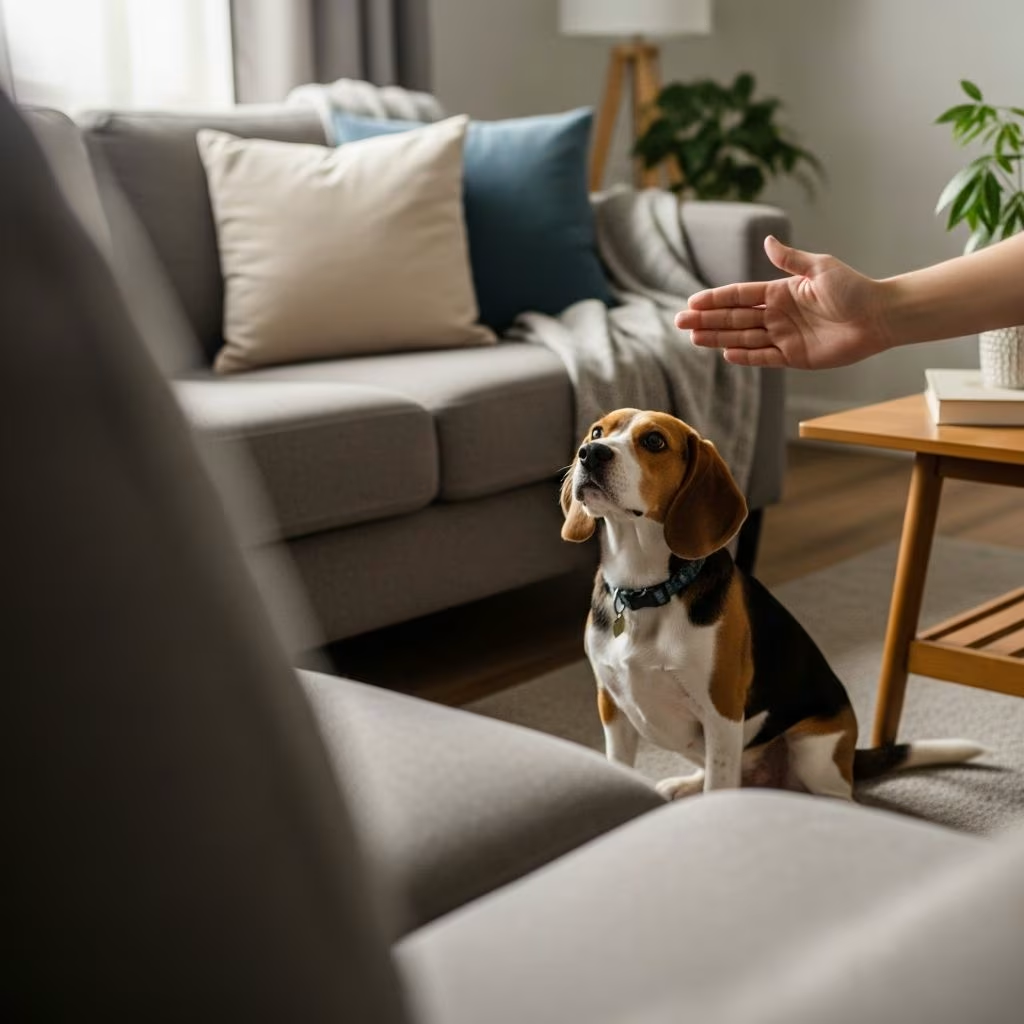
Establishing clear boundaries around household furniture helps maintain cleanliness, safety, and order in your home while respecting your dog’s natural behaviors. Dogs often gravitate toward sofas and chairs due to comfort, scent association, and instinctual needs for elevation and security.
Understanding Why Dogs Claim Your Furniture
Dogs are drawn to furniture for several instinctual reasons rooted in their evolutionary history. In the wild, canines sought elevated or sheltered spots for safety, allowing them to survey surroundings and rest securely. Modern sofas mimic this by providing softness, height, and often the lingering scent of family members, making them irresistible.
Your scent on cushions signals comfort and connection, especially when you’re away. Dogs may burrow into bedding or couches to feel close to absent owners, turning these spots into emotional anchors. Comfort plays a key role too; dogs intelligently choose plush surfaces over hard floors for rest, demonstrating their preference for luxury.
- Comfort and Elevation: Soft, raised surfaces feel secure and cozy.
- Scent Attraction: Family smells evoke security and presence.
- Instinctual Nesting: Mimics wild den-building for protection.
However, unchecked access can lead to issues like resource guarding, where dogs view furniture as personal territory, potentially resulting in growls or aggression when displaced.
Assessing Your Household Dynamics
Before implementing rules, evaluate your dog’s personality, size, and behavior alongside your lifestyle. Large breeds may dominate space, while small ones sneak unnoticed. Consider if allergies, cleanliness, or guest visits necessitate strict boundaries.
| Factor | Impact on Rules | Example |
|---|---|---|
| Dog Size | Large dogs take more space; stricter limits needed | Great Dane crowding sofa |
| Behavior | Aggressive responders lose privileges | Growling when told to move |
| Household | Kids or allergies demand no-access | Flea transfer risks |
| Training Level | Novices need consistent basics | Doesn’t know “off” command |
Leadership is crucial; controlling resources like furniture reinforces your role without harshness. Inconsistent rules confuse dogs, fostering entitlement.
Core Training Principles for Furniture Boundaries
Success hinges on consistency, positive reinforcement, and prevention. Start young if possible, but retraining works for all ages with patience.
Step 1: Teach the “Off” Command
Use a firm, calm tone: Lure dog down with a treat, say “off,” and reward immediately upon compliance. Practice daily from various spots. Progress to no lure, using verbal cue alone.
- Hold treat at nose level, guide to floor.
- Say “off” as paws touch ground.
- Jackpot reward (multiple treats) for quick response.
- Repeat 5-10 times per session.
If defiance occurs, apply gentle leash pressure downward without force. Never chase; it becomes a game.
Step 2: Provide Appealing Alternatives
Dogs abandon furniture when better options exist. Invest in orthopedic beds matching couch height and texture.
- Elevated cots for cooling and oversight.
- Cozy crates with blankets for nesting.
- Interactive toys to redirect energy.
Pair bed use with high-value rewards, making it the superior choice.
Different Approaches to Furniture Access
Tailor rules to your preferences, ensuring enforceability.
- Strict No Access: Easiest for consistency; block with barriers like upside-down runners or boxes when unsupervised.
- Invitation Only: Teach “up” and “off;” pat spot to invite, ignore uninvited jumps. Challenging but bonding.
- Selective Furniture: Allow sofa but ban bed; clear, consistent rules speed learning.
- Free Reign: Only for perfect behavior; rare due to risks.
Choose based on dog’s understanding: If “off” is optional, add balanced corrections.
Overcoming Resistance and Aggression
Growling signals resource guarding; revoke privileges immediately. Consult trainers for aggression—never risk bites.
Common pitfalls:
- Inconsistency: Family members allowing jumps undermines training.
- No Alternatives: Dogs default to furniture without options.
- Attention Reinforcement: Scolding mid-jump rewards with focus; preempt instead.
For stubborn cases, use tethers: Leash to furniture leg, reward floor stays. Gradually increase freedom.
Preventive Measures from Puppyhood
Set rules early: No puppy couch time prevents habits. Crate train for security, associating confinement positively.
Hygiene matters; regular flea preventives avoid infestations spreading to upholstery. Vacuum frequently, wash covers.
Long-Term Maintenance and Troubleshooting
Reinforce weekly; fade treats to verbal praise. Monitor for regression during stress like moves.
Troubleshooting table:
| Problem | Solution |
|---|---|
| Jumps when alone | Supervise or confine; use motion deterrents. |
| Ignores “off” | Revisit basics; add leash guidance. |
| Guarding signs | Remove access; seek professional help. |
| Begging stares | Ignore, redirect to bed with toy. |
Benefits of Furniture-Free Living
Beyond cleanliness, boundaries build respect, reduce jealousy in multi-dog homes, and curb separation issues by promoting independence. Healthier coats stay off dust traps; less shedding on fabrics.
Frequently Asked Questions
Is it okay to let my dog on the couch sometimes?
Invitation-only works if consistent, but full bans simplify training.
What if my dog growls at me?
Cease access immediately; aggression demands expert intervention.
How long until training sticks?
1-4 weeks with daily practice; lifelong upkeep needed.
Will my dog feel unloved?
No—ample floor affection preserves bonds without territory claims.
Best bed for furniture alternatives?
Match couch firmness; elevated for big breeds.
References
- Why Do Dogs Like Furniture — Wagwalking. 2023. https://wagwalking.com/behavior/why-do-dogs-like-furniture
- Should Dogs Be Allowed on the Furniture 2020 — YouTube (Thriving Canine channel). 2020. https://www.youtube.com/watch?v=ZSZRQnnTwys
- Should Dogs Be Allowed on Furniture? — Thriving Canine. 2023. https://www.thrivingcanine.com/blog/should-dogs-be-allowed-furniture/
- Owner’s Guide to The Psychology Of Dogs and Their Dog Toys — Holiday Barn. 2024. https://holidaybarn.com/blog/psychology-of-dogs-and-toys/
- Out of the Doghouse and onto the Couch — Psychology Today. 2000-05-01. https://www.psychologytoday.com/gb/articles/200005/out-of-the-doghouse-and-onto-the-couch



