

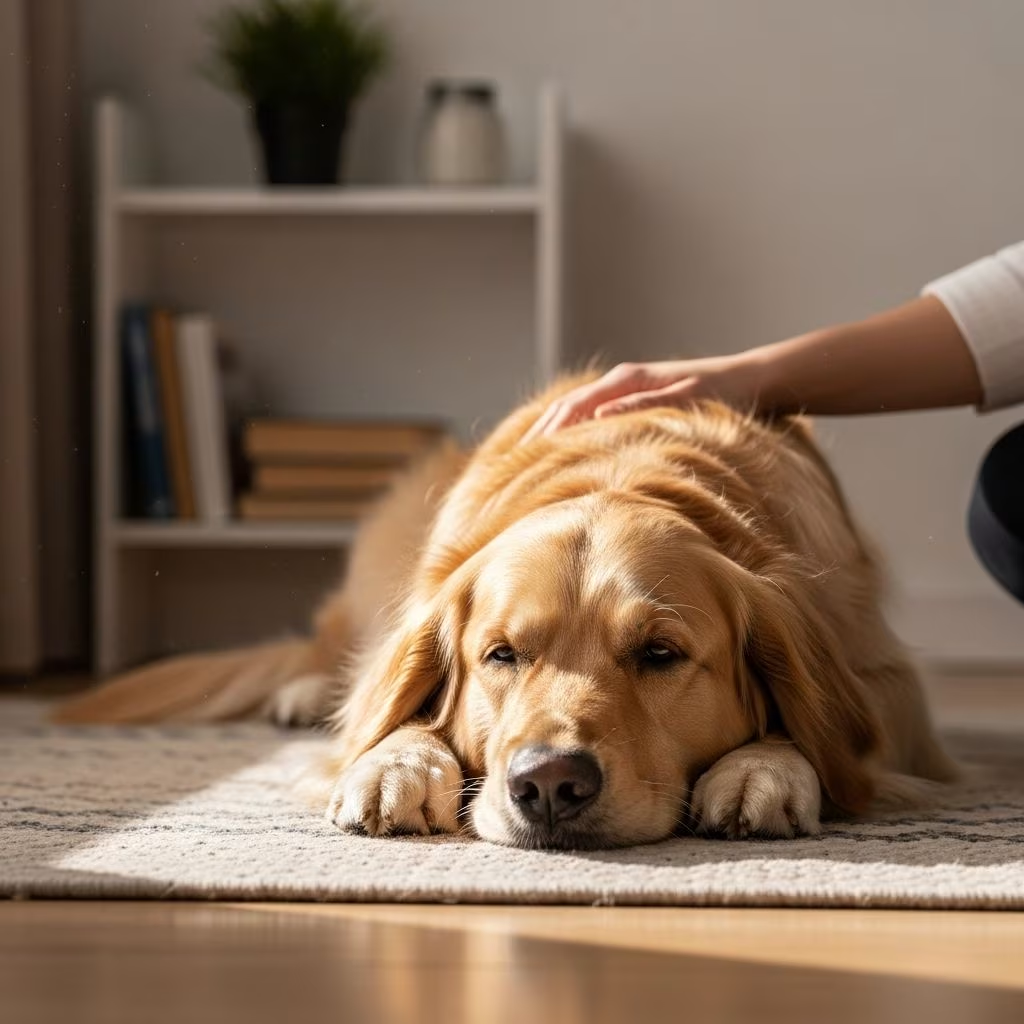
Teaching your dog to settle down on cue transforms chaotic moments into peaceful ones, fostering a stronger bond and reducing stress for everyone involved. This skill helps dogs self-regulate their energy, making everyday activities like family gatherings or quiet evenings more enjoyable.
Why Relaxation Training Matters for Dogs
Dogs thrive when they learn to switch from high alert to calm states voluntarily. High-energy dogs often struggle in stimulating environments, leading to unwanted behaviors like jumping or barking. By prioritizing relaxation as a core skill, owners create opportunities for positive reinforcement, enhancing overall obedience and emotional balance.
Regular practice builds your dog’s confidence in handling impulses. It addresses root causes of restlessness, such as unmet needs for mental engagement, rather than just suppressing symptoms. Owners report fewer incidents of overexcitement after consistent sessions, leading to harmonious households.
Preparing for Successful Settle Training
Before diving into exercises, set up your environment for success. Choose a quiet space free from major distractions, like a living room corner with a comfy mat or bed. Use a leash tethered to your foot or a stable object for gentle management without constant handling.
Gather high-value rewards such as kibble or soft treats. Maintain a serene demeanor—your calm energy signals safety to your dog. Sessions should last 5-10 minutes, 3-5 times daily, ideally when your dog is moderately tired from exercise but not exhausted.
- Select a designated spot like a bed to associate with relaxation.
- Prepare 20-30 small treats per session.
- Ensure your dog has had a short walk to burn initial energy.
- Breathe deeply to stay relaxed yourself.
Foundation: Making Down the Best Position
Begin by associating the down position with rewards, turning it into your dog’s preferred default. Sit comfortably, step on the leash to prevent wandering, and gently guide your dog into a down if needed.
Mark successes softly with “yes” or “good,” then drop a treat between their paws. Repeat 8-10 times, pausing 2-3 seconds between rewards. End each round by tossing a treat away with “go find it” to reset. Practice until your dog offers a down eagerly after resets, typically over 3 sessions.
This phase conditions relaxation as rewarding. Watch for subtle signs like sighing or cheek resting, reinforcing true calm over mere positioning.
Shifting to Self-Initiated Calm
Once the down holds value, encourage voluntary settling. Give your dog 15-20 seconds to lie down naturally. Reward only self-offered downs, ignoring nudges or stands.
Deliver treats slower as relaxation deepens—every 4-5 seconds initially, stretching to 10. Look for advanced indicators: eyes half-closed, body rolling sideways, or rhythmic breathing. Reset frequently to build repetitions without fatigue.
Pro Tip: Duration trumps speed. A dog lounging loosely for 30 seconds earns more than a tense 60-second hold.
Expanding Skills Across Environments
Generalization prevents location-specific behaviors. Move training to new spots: kitchen counters, quiet patios, or empty bedrooms. Keep criteria easy—same short durations, minimal distractions.
Vary setups slightly: different mats, lighting, or times of day. If regression occurs, revert to prior steps briefly. Aim for proficiency in 4-5 locations before advancing.
| Location | Purpose | Tips |
|---|---|---|
| Living Room | Baseline | Familiar scents aid quick success |
| Bedroom | Low Stimulation | Builds independence |
| Backyard | Mild Outdoors | Introduce breezes/sounds gradually |
| Kitchen | Daily Relevance | Prep for mealtimes |
Introducing the Settle Cue Effectively
Verbal cues amplify control but add them late—after uncued reliability. Say “settle” softly just as your dog begins lowering, then reward the full down.
Repeat 5 times per session, generalizing across spots. Avoid overusing; let natural settling remain primary. This cue signals expectation without demanding constant prompts.
Overcoming the Three Ds: Distraction, Duration, Distance
Building Duration
Extend calm periods incrementally. Start with 20-second holds, adding 10 seconds per success. Space treats wider, rewarding check-ins. If arousal spikes, dial back.
Handling Distractions
Introduce mild stimuli: footsteps, toy squeaks, or soft voices. Reward maintained settles. Escalate slowly—family chatter before doorbells.
Increasing Distance
Tether first, step away briefly, return to reward. Build to 5-10 feet over sessions. Combine Ds only after mastering each solo.
Troubleshooting Common Hurdles
Restlessness? Lower criteria or add exercise. Overexcitement? Model zen with slow movements and pauses. Stalls signal rushed progress—review basics.
For puppies, shorten sessions; seniors may need softer surfaces. High-drive breeds benefit from pre-training games.
- Arise too soon: Ignore, reward later.
- Pawing for treats: Wait for stillness.
- Environmental triggers: Desensitize separately.
Advanced Applications in Real Life
Integrate into routines: pre-meal settles, guest arrivals, car rides. Pair with mat training for portability. Track progress in a journal for motivation.
Benefits extend to reactivity reduction and better focus for other commands. Well-settled dogs adapt faster to novelties like vet visits.
FAQ
How long until my dog settles reliably?
Basics in 1-2 weeks with daily practice; fluency in 4-6 weeks.
Does age matter for this training?
Puppies learn quickest; adults adapt well with patience.
What if my dog ignores the cue outdoors?
Practice indoors first, then bridge with high rewards.
Can this help anxious dogs?
Yes, by teaching self-soothing; consult pros for severe cases.
Tools needed beyond treats?
Leash, mat; clicker optional for precision.
References
References
- Teaching Your Dog to Settle — Maddie’s Fund. Accessed 2026. https://www.maddiesfund.org/teaching-your-dog-to-settle.htm
- 5 Steps to Teach Your Dog to Settle — Urban Pawsibilities. Accessed 2026. https://www.urbanpawsibilities.com/dog-training-blog/5-steps-to-teach-your-dog-to-settle
- Training Your Dog to Settle or Relax — Rum River Veterinary Clinic. 2022-02. https://rumrivervet.com/wp-content/uploads/2022/02/TrainingYourDogToSettleOrRelax.pdf
- How to Train a Dog to Lay Down — K9 Mania Dog Training. Accessed 2026. https://k9maniadogtraining.com/how-to-train-a-dog-to-lay-down/



