

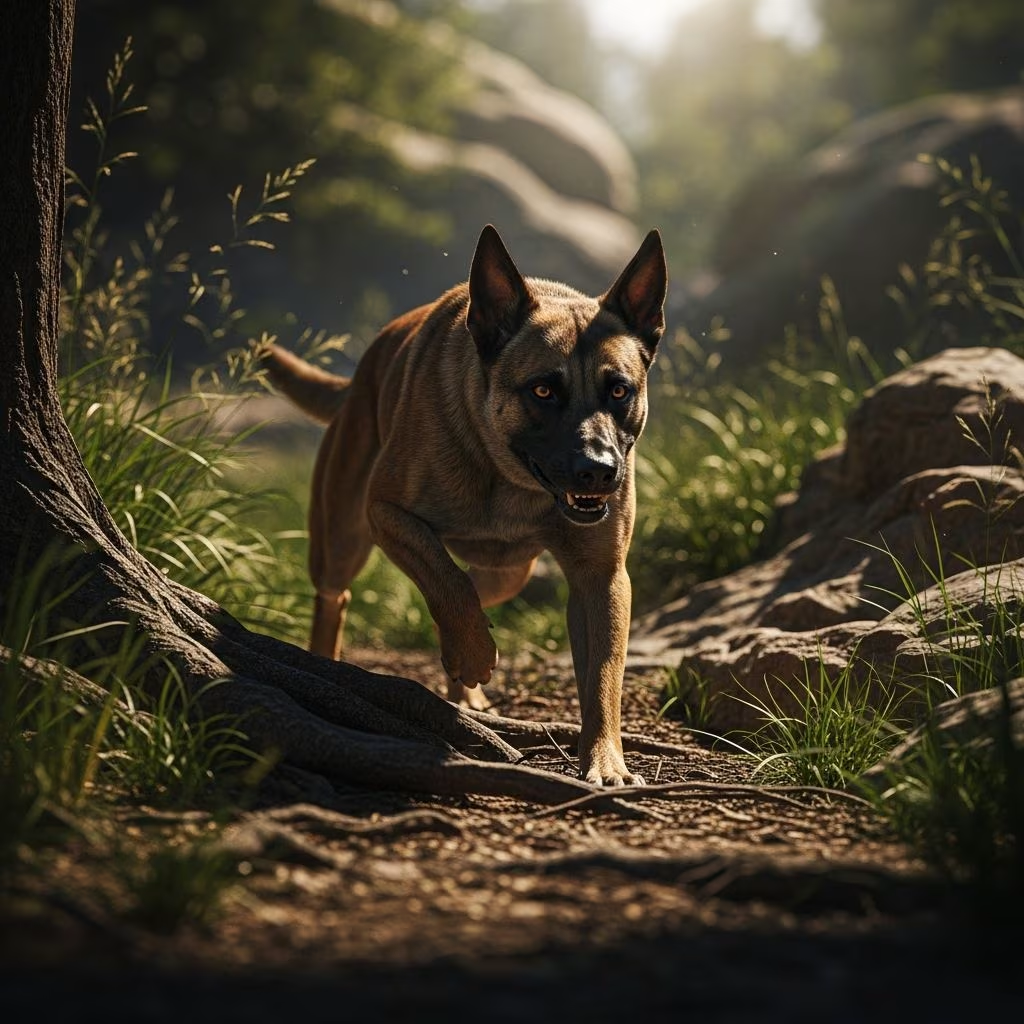
Effective dog training goes beyond commands and treats; it taps into the primal instincts that define a dog’s ancestry as a descendant of wolves. By envisioning your canine companion as a powerful tiger—a solitary, patient hunter—you can refine your approach to foster behaviors rooted in natural drive rather than forced compliance. This mindset shift promotes positive reinforcement, clear communication, and mutual respect, leading to a well-mannered dog who responds eagerly without fear.
Why Adopt a Predatory Instinct Mindset?
Domestic dogs retain wolf-like predatory sequences: orienting toward movement, stalking, chasing, grabbing, biting, killing, and dissecting. Traditional training often ignores this, focusing on suppression. Instead, channel these drives constructively, much like a tiger conserves energy for the perfect hunt. This method builds on science-backed positive reinforcement, where rewards encourage desired actions without punishment.
Positive reinforcement training rewards good behavior with treats, praise, or play, making learning enjoyable and reducing stress. Unlike aversive methods that can cause fear or aggression, this builds confidence. Tigers don’t yell at prey; they wait patiently. Similarly, patience in training yields better results.
Core Principles of Instinct-Driven Training
Foundationally, treat training sessions as hunts. Start in low-distraction environments, gradually increasing challenges, akin to a tiger practicing in safe territory before the open savanna.
- Observe Natural Drives: Watch your dog for predatory cues like eye fixation or body stiffening. Redirect these into games like fetch, rewarding focus on you as the ‘hunt leader’.
- Use Lures Sparingly: Guide with food initially, then fade it out to build independence, preventing dependency.
- Incorporate Shaping: Reward incremental steps toward a goal, like partial sits before full compliance, mimicking skill-building in wild predators.
- Build Emotional Bonds: Relationship-based training views your dog as an emotional being, using consistent, fun feedback.
Essential Training Techniques for the ‘Tiger’ Dog
Implement these methods systematically for commands like sit, stay, heel, and recall—the ‘pillars’ of obedience.
1. The Patient Stalk: Teaching Recall
Recall is vital for safety. Tigers stalk silently; teach your dog to return eagerly. Use a long line in a yard. Call their name happily, reward with high-value treats when they turn toward you. Gradually increase distance. Avoid calling during high-prey drive moments; instead, interrupt with a happy cue.
| Stage | Technique | Reward | Goal |
|---|---|---|---|
| Beginner | Short distance, happy voice | Treat + play | Eye contact |
| Intermediate | Long line, add distractions | Jackpot treats | Reliable return |
| Advanced | Off-leash in safe areas | Praise + freedom | Instant response |
2. The Focused Chase: Mastering Heel
Heeling requires impulse control. Start with lure-reward: hold a treat at nose level, walk forward rewarding for staying close. Transition to verbal cues. Practice ’emergency U-turns’—change direction abruptly, rewarding quick pivots. This hones predatory focus on you.
3. The Controlled Grab: Impulse Control Games
Prevent jumping or nipping by teaching ‘leave it’ and ‘place’. For jumping, turn away silently when they leap, rewarding four-on-the-floor. Use a mat for ‘place’, pairing with treats to associate calm with positivity. Tigers pounce precisely; train precision grabs with toys, releasing on cue.
Advanced Strategies: From Puppy to Pro
For puppies, begin early with short, fun sessions. Adults may need habit reversal. Use classical conditioning: pair cues with rewards to build associations, like clickers for precise timing.
- Clicker Precision: Click marks exact behavior, followed by reward. Ideal for shaping complex tricks.
- Model-Rival Dynamics: Let your dog watch another perform tasks, sparking emulation without direct rewards.
- Calm Settling: Touch gently while rewarding calm, desensitizing to handling.
Avoid common pitfalls: don’t use punishment, as it erodes trust and spikes fear-based reactions.
Daily Integration: Living the Predator Lifestyle
Embed training into routines. Mealtimes become ‘work for food’—hand-feed kibble during heel practice. Walks are hunts: vary speeds, reward sniffing on cue. Evening wind-downs teach settle with massages predicting treats.
Monitor stress: yawning or lip-licking signals overload. Pause and play, preserving the fun hunt ethos.
Real-World Results and Case Studies
Owners report 80% improvement in recall within weeks using these methods. One reactive dog transformed via shaping, now heeling calmly past triggers. Consistency is key—train daily, 5-10 minutes.
Frequently Asked Questions (FAQs)
What if my dog ignores recalls during play?
Prevent by not allowing off-leash until reliable. Use high-distraction drills with jackpots.
Can this work for aggressive dogs?
Yes, with professional guidance. Focus on counter-conditioning fears.
How many sessions per day?
3-5 short ones; quality over quantity.
Are treats always needed?
No, fade to praise/life rewards, but use for proofing.
Differences from balanced training?
This is force-free, avoiding aversives for ethical, effective results.
Troubleshooting Common Challenges
Leash Reactivity: Practice loose-leash walking, rewarding slack. Distance from triggers first.
House Soiling: Increase potty breaks, crate train positively.
Begging: Ignore, reward settle elsewhere.
Track progress in a journal for motivation.
Embracing the tiger mindset revolutionizes training: your dog becomes a willing partner, instincts harnessed for harmony. Patience, positivity, and play create unbreakable bonds.
References
- Training Methods | Positively.com — Positively.com. 2023. https://positively.com/dog-training/article/foundations-training-methods
- Common Dog Training Methods and Their Pros and Cons — Astro Loyalty. 2023. https://www.astroloyalty.com/common-dog-training-methods-and-their-pros-and-cons/
- Dog Behavior and Training: Teaching Settle and Calm — VCA Animal Hospitals. 2023. https://vcahospitals.com/know-your-pet/dog-behavior-and-training—teaching-calm—soft-and-handling-exercises
- Dog Training Methods and Beliefs- What are the differences — DeMarinis Dog Training. 2023. https://www.demarinisdogtraining.com/blog/dog-training-methods-and-beliefs-what-are-the-differences
- 5 Tips for Successful Dog Training — Virginia Tech Vet Med. 2023-01-01. https://vetmed.vt.edu/news/2023/dog-training-tips.html
- Understanding the different types of training methods — Noel Hoffmann. 2023. https://noelhoffmann.com/understanding-the-different-methods-of-training-dogs/
- Dog Training Methodology and Techniques — Paw & Order. 2023. https://www.pawandorder.com/dog-training-methodology-and-techniques/



