

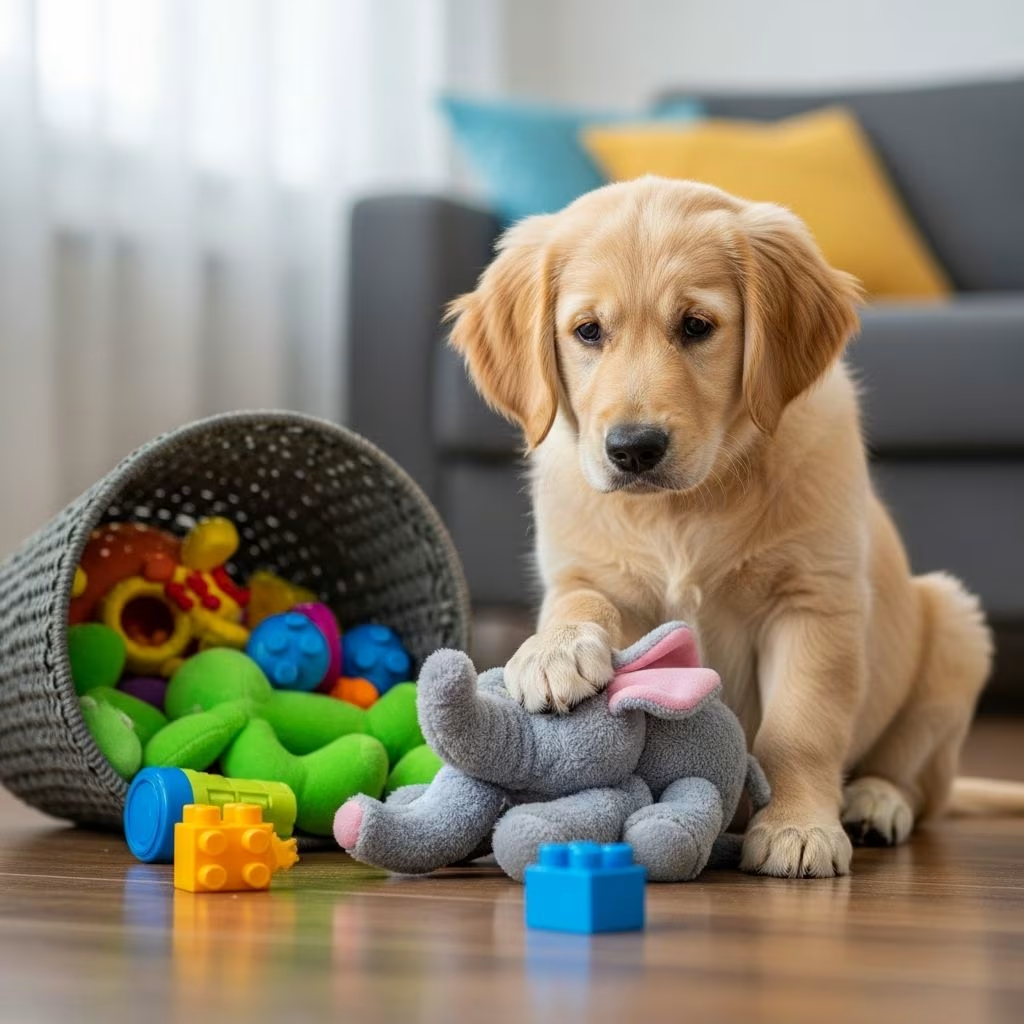
How to Train Your Dog That Toys for Kids Are Off-Limits
Living in a household with both children and dogs requires careful management and training to ensure everyone stays safe and happy. One common challenge pet owners face is preventing their dogs from playing with or destroying children’s toys. This behavior can pose serious safety risks to your dog, including choking hazards and intestinal blockages, while also damaging expensive toys and creating unnecessary frustration for parents. Learning how to effectively train your dog that kids’ toys are off-limits is an essential skill for multi-pet, multi-child households.
Understanding Why Dogs Are Attracted to Children’s Toys
Before you can successfully train your dog to avoid children’s toys, it’s important to understand why dogs find these items so appealing. Children’s toys are often small, squeaky, colorful, and smell interesting to dogs. They may also contain treats or peanut butter, making them even more irresistible. Additionally, when a dog grabs a child’s toy and the resulting commotion ensues—with children chasing or adults redirecting—the dog receives attention, which reinforces the behavior. Dogs learn that taking forbidden items results in an exciting interaction, even if it’s negative attention.
Why This Training Matters
Training your dog to respect children’s toys isn’t just about protecting toys from destruction. The stakes are much higher when it comes to your dog’s health and safety. When dogs consume pieces of destroyed toys, they risk serious health complications including choking, intestinal blockages, and bowel obstructions. Symptoms of these dangerous conditions include vomiting, lethargy, and abdominal pain. In severe cases, these conditions may require emergency veterinary surgery. By teaching your dog that children’s toys are off-limits, you’re protecting your pet from potentially life-threatening situations while also maintaining a more harmonious household.
Foundation Training: Essential Commands
Before your dog can understand that children’s toys are off-limits, they need to master some foundational commands. These basic skills form the building blocks for more advanced boundary training.
The “Leave It” Command
The “leave it” command is perhaps the most important tool in your training arsenal when managing your dog’s access to children’s toys. This command teaches your dog to deliberately ignore items they encounter, even if those items seem appealing. To teach “leave it,” start with low-value items and gradually increase difficulty. Place a treat on the floor and cover it with your hand. When your dog loses interest and looks away, immediately reward them with a different, higher-value treat. Once your dog consistently ignores the covered treat, you can uncover it and practice with the treat increasingly closer to your dog. Only add the verbal cue “leave it” once your dog reliably performs the behavior. Keep training sessions short and positive, typically five to ten minutes, and practice consistently before attempting this command in new environments with actual children’s toys.
The “Drop It” Command
The “drop it” command is equally valuable for situations where your dog has already grabbed a forbidden item. Teaching drop it gives you a way to safely retrieve toys or other objects from your dog’s mouth without creating a dangerous game of tug-of-war. Start by offering your dog a toy they enjoy. When they have it in their mouth, show them a high-value treat close to their nose. When they release the toy to take the treat, immediately praise them enthusiastically and give the treat. Practice this repeatedly, adding the verbal cue “drop it” just before they naturally release the toy. Never punish your dog for dropping items, as this will discourage them from complying in the future.
Additional Important Commands
Beyond “leave it” and “drop it,” teaching your dog commands like “wait” helps reinforce patience and reduces anxiety around exciting stimuli. “Down” and “stay” can also be useful for keeping your dog away from areas where children are playing with toys. Each command adds another tool to your training toolkit and strengthens your dog’s understanding of household rules and boundaries.
Boundary Training and Management
While training commands are essential, managing your dog’s physical access to children’s toys is equally important. Boundary training teaches your dog which areas of your home are off-limits, while management prevents opportunities for your dog to make the wrong choice.
Using Physical Barriers
Baby gates and dog pens are invaluable tools for creating physical boundaries in your home. Use baby gates to restrict your dog’s access to playrooms, bedrooms, or other areas where children frequently leave toys scattered around. Dog pens can create safe play areas where children can play with their toys while your dog remains in a separate, supervised space. These physical barriers eliminate the need for constant vigilance and prevent your dog from having the opportunity to grab forbidden items. Consistency with these barriers is key—they should always be in place during times when your dog and children are in different areas of the home.
Creating an Off-Limits Zone
Designate specific areas of your home, such as the nursery or playroom, as completely off-limits to your dog. Use positive reinforcement to teach this boundary by rewarding your dog when they choose to avoid these areas. When your dog respectfully turns away from a baby gate leading to an off-limits room, praise them enthusiastically and offer a treat. This positive reinforcement teaches your dog that respecting boundaries is rewarding, rather than teaching through punishment, which can create anxiety and fear.
Providing Appropriate Alternatives
One of the most effective strategies for preventing your dog from accessing children’s toys is ensuring they have an attractive array of their own toys. Dogs are more likely to engage with toys that belong to them if those toys are more interesting and rewarding than alternatives.
Selecting Dog-Appropriate Toys
Choose toys specifically designed for dogs based on your pet’s age, size, breed, activity level, and chewing intensity. For heavy chewers, invest in durable, reinforced toys that can withstand vigorous play without breaking apart. Puzzle toys and slow feeders provide mental stimulation and can be filled with treats or peanut butter to increase their appeal. Soft and squeaky toys work well for gentler dogs but require supervision. For teething puppies, offer durable nylon bones and rubber toys that are safe for weeks of chewing. Always ensure toys are sized appropriately—they should not be small enough to fit behind your dog’s rear molars, creating a choking hazard.
Toy Rotation and Management
Rotate your dog’s toys weekly to maintain novelty and interest. By limiting your dog to two or three toys at a time and rotating them throughout the week, you help them learn which items are theirs and which should be left alone. This strategy also prevents toy boredom and reduces destructive behavior. When rotating toys, put the old ones away where your dog cannot see them, then reintroduce them the following week as exciting “new” toys.
Engagement and Attention
Simply providing toys isn’t enough—you need to actively engage your dog with their toys and reward them for appropriate play. Many dogs learn that grabbing children’s toys results in exciting interactions with family members, even if those interactions involve chasing and redirecting. Instead, play games of fetch, tug-of-war, or other interactive activities with your dog’s own toys. Give your dog attention and praise specifically for playing with their own toys. This teaches them that appropriate toy play results in rewarding interactions with you, making their own toys far more desirable than forbidden items.
Exercise and Mental Stimulation
Dogs that receive insufficient physical exercise and mental stimulation are more likely to engage in destructive behaviors, including grabbing and destroying toys. A well-exercised dog is a well-behaved dog.
Daily Physical Exercise
Provide daily walks and runs tailored to your dog’s age, health status, and breed. The duration and intensity should be appropriate for your individual dog. Regular exercise prevents obesity, maintains cardiovascular health, and helps burn off excess energy that might otherwise be directed toward destructive activities like toy destruction. Consider your dog’s specific needs—high-energy breeds like Border Collies or Australian Shepherds require more intense exercise than lower-energy breeds.
Mental Stimulation Activities
Mental exercise is just as important as physical activity. Engage your dog in activities that stimulate their mind, such as short daily training sessions using positive reinforcement, hiding treats around your home for your dog to find, or allowing your dog to sniff and explore during walks in new environments. Interactive toys filled with treats or puzzle toys that require problem-solving provide excellent mental enrichment. Exploring new parks, hiking trails, or neighborhoods during walks provides novel sensory experiences that engage your dog’s mind and help satisfy their natural curiosity.
Safety Considerations for Toys
Regardless of whether toys belong to children or dogs, safety should always be the primary consideration. Understanding which toys are safe and which pose risks will help you make better choices for your household.
Toy Safety Guidelines
Always check toy size to ensure they cannot become choking hazards. Avoid toys with dangerous fillings such as nutshells or polystyrene beads. Choose toys that are safe if accidentally ingested by your dog. Soft toys should be machine washable for hygiene, and you should immediately discard any toys that begin to break into pieces or show signs of tearing. Rawhide chews should be avoided, as they can become stuck in a dog’s throat and cause serious complications. Regularly inspect your dog’s toys for damage and replace them when they show wear.
Positive Reinforcement Training Approach
The most effective and humane approach to training your dog to respect children’s toys involves positive reinforcement rather than punishment. Punishment-based training can create anxiety, fear, and distrust, and may actually increase behavioral problems rather than solving them.
Reward-Based Training Methods
When your dog chooses to ignore children’s toys or responds appropriately to commands like “leave it” or “drop it,” immediately reward them with praise, treats, or play. This positive reinforcement teaches your dog that respecting boundaries results in good things happening. Keep training sessions short, typically five to ten minutes, to maintain your dog’s focus and enthusiasm. Start with easy scenarios and gradually increase difficulty as your dog becomes more reliable with the behavior.
Frequently Asked Questions
Q: What should I do if I catch my dog with a child’s toy?
A: Stay calm and avoid chasing or creating an exciting interaction. Use the “drop it” command if your dog knows it, or trade the toy for a high-value treat. Never punish your dog, as this can create anxiety around giving up items.
Q: How long does it take to train a dog that kids’ toys are off-limits?
A: Training timelines vary depending on your dog’s age, temperament, and prior experience. Most dogs show improvement within 2-4 weeks of consistent training, but solidifying the behavior may take several months of ongoing practice.
Q: Can older dogs learn to respect children’s toys?
A: Yes, dogs of any age can learn new behaviors. While older dogs may take slightly longer to learn new commands than puppies, they are often highly motivated by treats and praise, making training achievable at any age.
Q: What if my dog has already swallowed part of a toy?
A: Contact your veterinarian immediately. Pieces of toys can cause serious internal damage, including intestinal blockages that may require emergency surgery. Describe what your dog ingested and follow your vet’s recommendations.
Q: Should I use punishment to discourage toy stealing?
A: No, punishment is ineffective and counterproductive. It creates fear and anxiety without teaching your dog what behavior is desired. Positive reinforcement is far more effective and maintains a healthy relationship with your pet.
Q: How can I manage toys when we have visitors with children?
A: Ask guests to keep their children’s toys in designated areas away from your dog. Use baby gates to restrict access, and ensure your dog has engaging toys of their own available. Supervise all interactions between your dog and visiting children.
References
- Stop Your Dog From Stealing Baby’s Toys — Dog Meets Baby. 2021-12-18. https://www.youtube.com/watch?v=pUJqM8ArVpM
- How to Keep Kids’ Toys from Becoming Dog Chews — Humane Society of Siletz Indians. https://www.hshv.org/how-to-keep-kids-toys-from-becoming-dog-chews/
- Why Do Dogs Destroy Toys and How to Prevent? — BeaRegards. https://bearegards.com/blogs/news/why-do-dogs-destroy-toys
- Playtime vs Training: How to Set Boundaries with Your Dog & His Toys — Tails in the City Liverpool. https://tailsinthecityliverpool.co.uk/playtime-vs-training-set-boundaries-dog-toys/
- How to Get Your Dog Used to a New Baby — Outward Hound. https://outwardhound.com/furtropolis/pet-parenting/how-to-get-your-dog-used-to-a-new-baby



