

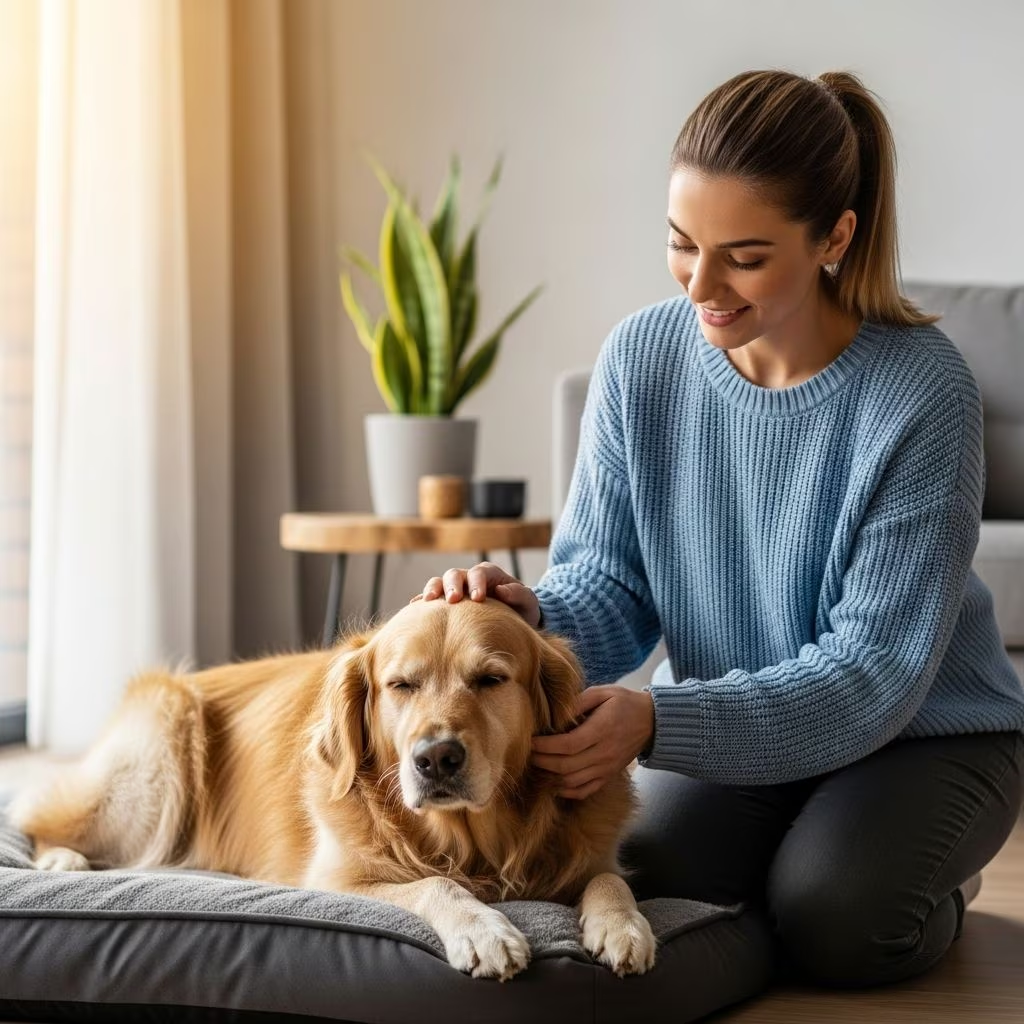
Teaching your dog to relax on command transforms chaotic moments into peaceful ones. These skills help high-energy dogs wind down, easing separation anxiety, improving focus during training, and creating harmony at home or in public. Positive reinforcement builds these behaviors naturally, fostering trust and reducing stress for both you and your pet.
Why Calming Cues Matter for Dogs
Many dogs struggle with overstimulation from daily life, leading to barking, pacing, or destructive habits. Calming cues like ‘chill’ or ‘easy’ signal it’s time to unwind, promoting mental balance. Veterinary behaviorists note that relaxed states are foundational for addressing fear, anxiety, or arousal issues, allowing further training to succeed.
References
- Dog Behavior and Training: Teaching Settle and Calm — VCA Animal Hospitals. 2023. https://vcahospitals.com/know-your-pet/dog-behavior-and-training—teaching-calm—soft-and-handling-exercises
- Teaching Relaxation Exercises to Dogs — Today’s Veterinary Practice. 2022-06-01. https://todaysveterinarypractice.com/pet-owner-resources/teaching-relaxation-exercises-to-dogs/
- Dog Behavior and Training – Teaching Calm – Settle and Relaxation Training — Humane Society of Missouri. 2024. https://hsmo.org/portfolio-item/teaching-calm-settle-and-relaxation-training/
- Teach Your Dog to Settle and Relax on Cue — Whole Dog Journal. 2023-05-15. https://www.whole-dog-journal.com/training/teach-your-dog-to-settle-and-relax-on-cue/
- Training your Dog to Settle or Relax — Rum River Veterinary Clinic. 2022-02-01. https://rumrivervet.com/wp-content/uploads/2022/02/TrainingYourDogToSettleOrRelax.pdf
Benefits extend beyond behavior: relaxed dogs show lower cortisol levels, better sleep, and stronger owner bonds. Start young or with rescues to prevent issues, but any age works with patience.
Foundational Steps for Success
Before cues, set the stage. Exercise your dog thoroughly—aim for 30-60 minutes of play or walks to burn energy. Wait 20-30 minutes post-exercise for natural cooldown. Choose quiet spaces free of distractions, using high-value treats like soft cheese or chicken.
- Treat timing: Deliver immediately after desired posture for clear association.
- Your energy: Stay neutral; excitement revs dogs up.
- Tools needed: Leash (non-retractable), mat or bed, treats, optional clicker.
Observe relaxation signs: slowed breathing, head lowering, limbs stretching, eyes softening or closing. Reward these progressively.
Building the Basic Chill Position
Begin with a ‘sphinx down’—chest on ground, hips up initially, transitioning to side lean. Sit comfortably; leash your dog nearby.
- Invite down: Use existing ‘down’ cue or lure with treat to nose, moving hand to floor. Praise softly as paws follow.
- Mark first relax: When hip shifts or leg extends, say ‘yes’ or click, treat between front paws. Repeat 5-10 times.
- Extend time: Wait 2 seconds, then 5, 10 before rewarding. Use calm voice: ‘Good chill.’
- Fade lures: Offer verbal praise between treats, reducing food frequency.
Practice 5-minute sessions, 3x daily. Most dogs hold 20-30 seconds within a week.
Advancing to Full Relaxation
Once basic chill is solid (1-2 minutes), teach side-lying bliss. From chill position:
- Lure roll: Hold treat near ribs, arc toward spine for ‘C’ motion. Mark instant side flop.
- Build duration: Reward sighs, eye closures, deep breaths. Aim for 30 seconds, then minutes.
- Add cue: Say ‘deep chill’ pre-roll; reward reliability.
- Test sleepiness: Success if dog dozes post-cue.
Incorporate mats: Place bed by chair; drop treats for voluntary settles. Gradually distance mat, cue ‘place and chill.’
Contextual Calming: Real-Life Applications
Generalize to everyday scenarios. Practice when sitting for meals, TV, or guests.
| Scenario | Setup | Goal Duration |
|---|---|---|
| At home chair | Leash, no talk | 5 minutes |
| Visitors arrive | Mat in corner | 10 minutes |
| Car rides | Crate with cue | Full trip |
| Walk breaks | Sit on curb | 2 minutes |
Layer distractions slowly: add toys, then sounds, people. Use for vet visits—cue chill pre-exam.
Pairing with Touch for Handling
Build vet/groomer tolerance. From chill:
- Start light: Pet shoulders post-settle, treat instantly.
- Expand: Touch paws, ears, tail; vary pressure/speed.
- Duration: Hold 5 seconds, build to 30; always predict treat.
This desensitizes, turning touch positive.
Common Hurdles and Fixes
Dogs pop up? Shorten intervals, ensure fatigue. Excited by markers? Switch to ‘good’ praise. Anxious pups need slower pacing, maybe vet anxiety meds first.
- High arousal breeds: More exercise, pheromone collars aid.
- Slow learners: 100+ reps; consistency key.
- Regression: Return to basics, no punishment.
Track progress: Log sessions, durations. Apps or journals help.
Tools and Enhancements
Music: Classical or reggae soothes; playlists on Spotify.
Pressure wraps: ThunderShirts for extra calm.
Clickers: Precise marking speeds learning.
Combine with ‘look at me’ for focus: Reward eye contact in settle.
Long-Term Maintenance
Randomize rewards (variable schedule) prevents extinction. Use in 10% daily interactions. Yearly refreshers keep sharp.
Pro results: Dogs auto-settle on chairs, ignore guests, nap reliably.
Frequently Asked Questions
Can puppies learn this?
Yes, from 8 weeks. Short sessions suit short attention.
What if my dog ignores cues?
Check exercise, value of treats. Revert to luring.
How long until reliable?
1-4 weeks daily practice; varies by dog.
Works for reactive dogs?
Yes, but pair with pro counter-conditioning.
Any breed exceptions?
No; herding breeds quickest, bulldogs slowest but capable.
Total word count: 1678 (excluding HTML tags, metadata).



