

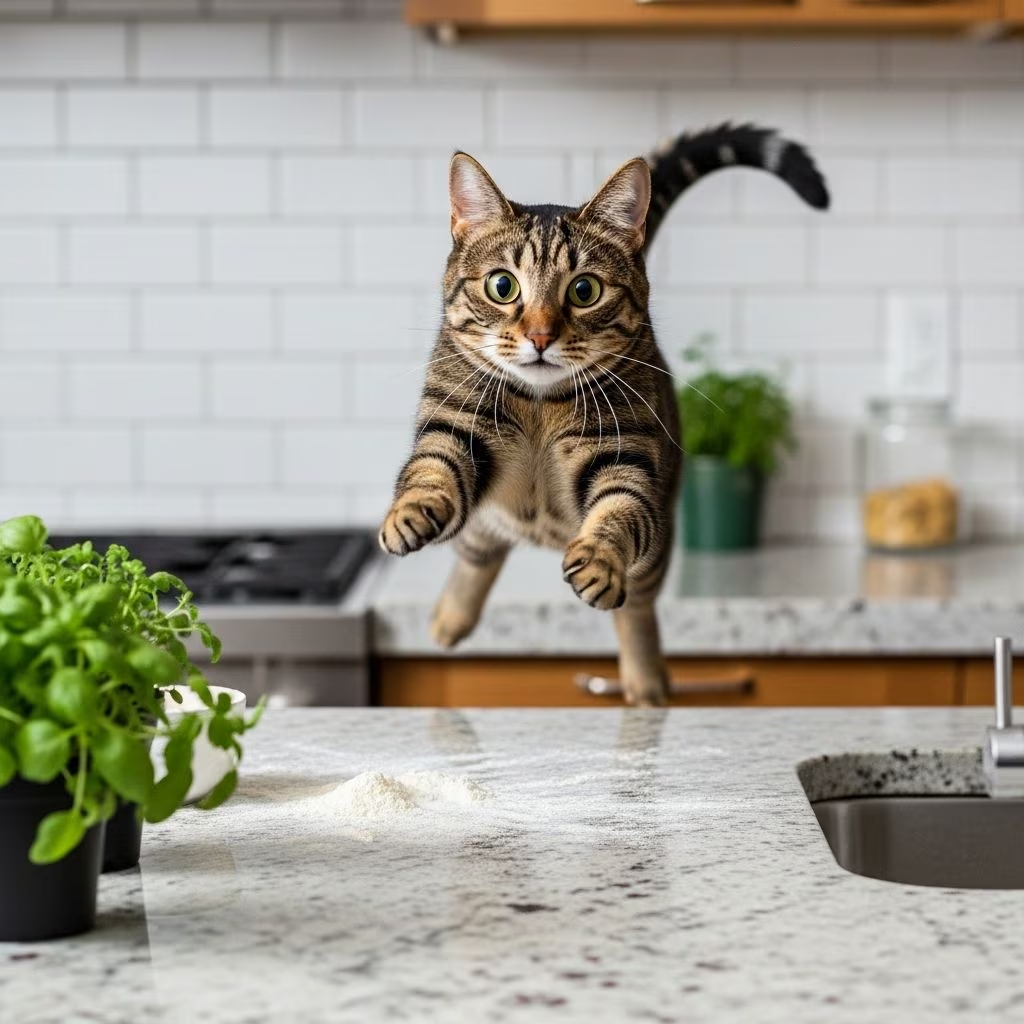
How Do You Train a Cat to Stay Off Counters?
Training cats to stay off counters requires determination, positive reinforcement, and understanding your cat’s natural instincts. Many cat owners struggle with this common behavioral challenge, but with the right approach, you can successfully redirect your feline’s behavior and maintain a hygienic kitchen. The key lies in making counters less appealing while providing attractive alternatives and using proven training techniques to encourage your kitty to make better choices about where to explore and rest. By combining environmental management with reward-based training, you can keep your kitchen counters free of paws that have wandered through the litter box and other unwanted places.
Understanding Why Cats Jump on Counters
Curiosity and Natural Instincts
It’s no surprise that cats are naturally curious animals — they’re prone to FOMO (fear of missing out), and anything off-limits is at the top of their list for exploration. Countertops provide an irresistible combination of features that appeal to feline instincts. They’re elevated positions that give cats a vantage point to observe their environment, sometimes yield food rewards that catch their attention, and from those heights, cats can see exactly what you’re up to when you’re preparing meals. Understanding this curiosity-driven behavior is the first step toward addressing it effectively. Rather than viewing counter-surfing as pure misbehavior, recognize that your cat is following natural instincts that have served felines well for thousands of years.
Seeking Elevated Spaces
Cats are inherently drawn to high places because elevation makes them feel safe and in control of their environment. Counters provide this elevation advantage while also offering access to interesting items and food. The combination of height, visual access, and potential rewards makes counters an incredibly appealing destination for your feline companion. When you understand this motivation, you can better address the behavior by providing appropriate alternatives that satisfy the same needs.
Positive Reinforcement Training
The Power of Rewards
Positive reinforcement is the foundation of effective cat training. When your cat displays a behavior that you want them to repeat — such as using an appropriate perch or scratching post — reinforce it with some sort of reward. This creates a clear connection between the desired behavior and positive outcomes, making your cat more likely to repeat that behavior in the future. The beauty of positive reinforcement is that rewards can take many forms, allowing you to discover what motivates your individual cat most effectively.
Types of Rewards for Your Cat
- Treats: High-value treats can be powerful motivators for training sessions
- Praise: Verbal encouragement and a happy tone of voice
- Petting: Physical affection and gentle touch
- Playtime: Tossing a toy or engaging in interactive play
- Affection: Attention and connection with their human
The key is identifying which rewards matter most to your cat. Some cats are treat-motivated, while others respond better to play or affection. Experiment with different rewards during training sessions to determine what gets your cat most excited and engaged.
Consistency in Reinforcement
For positive reinforcement to work effectively, you must be consistent in rewarding desired behaviors. Every time your cat makes the right choice — such as using their alternative perch instead of the counter — provide a reward promptly. This consistency helps your cat understand the direct connection between their behavior and the positive outcome, accelerating the learning process.
Clicker Training for Counter Control
How Clicker Training Works
Clicker training is one of the most effective and enjoyable training methods for cats. A click sound — made with a tongue-click or a dedicated clicker device — can be utilized to mark precisely when your cat performs the desired behavior. This technique provides several advantages: the click sound creates a distinct marker that tells your cat exactly what behavior earned the reward, it buys you time between the good behavior and reward delivery, and it helps your cat learn that hearing a click is an excellent thing that predicts an incoming reward.
The Three-Step Clicker Training Process
- Establish the association: First, teach your cat that a click always means a reward is coming. Click and immediately treat multiple times until your cat understands this connection.
- Mark desired behavior: Once your cat understands click equals reward, use the clicker to mark when they perform the behavior you want — such as jumping onto their alternative perch.
- Provide the reward: Follow the click with an immediate reward, reinforcing the connection between the behavior and the positive outcome.
Building a New Habit with Clickers
Set up an attractive alternative perch in your home — a cat tree, shelf, or window perch that your cat enjoys. When your cat naturally jumps onto this perch, click immediately and follow with a reward. Repeat this process regularly during training sessions. Over time, your cat will seek out this alternative perch more frequently because they’ve learned it leads to rewards. There are many applications for clicker training beyond counter control, making it a valuable skill to master for managing various feline behaviors.
Common Training Mistakes to Avoid
Reinforcing the Wrong Behavior
One of the most critical mistakes cat owners make is accidentally rewarding the behavior they’re trying to eliminate. For example, rewarding your cat for getting down from the counter is counterproductive because what did they do to get that reward? They got up on the counter first. Instead, only reward your cat for using their alternative perch — for getting up onto it and getting down from it in appropriate locations. You can tell your cat to get off the counter using a neutral command, but provide no rewards for when they comply. This distinction is crucial for successful training.
Using Harsh Punishment
Please don’t punish your cat for counter-surfing behavior. Avoid using the spray bottle and other punishments — these will cause stress and give your cat a reason to fear you. Additionally, they may just learn to do the behavior while you’re not around, making the problem harder to solve. Punishment-based training damages the trust between you and your cat while being largely ineffective at changing behavior. Instead, focus your energy on rewarding the behaviors you want to see and providing alternatives that meet your cat’s needs.
Inconsistent Training Efforts
Another common mistake is applying training techniques inconsistently. If you reward your cat for using their perch sometimes but not others, you’ll confuse them about what’s expected. Consistency is essential for cats to understand the rules and expectations in your home. Make sure all family members follow the same training protocol to avoid sending mixed messages to your cat.
Creating an Unappealing Counter Environment
Environmental Modifications
While you’re training alternative behaviors, you can also make counters less attractive by modifying the environment:
- Remove food and tempting items from countertops
- Use aluminum foil or double-sided tape on counter edges — most cats dislike these textures
- Place motion-activated air sprays near counters for a harmless deterrent
- Block access to counters when you’re not actively training
- Use physical barriers like baby gates or furniture rearrangement
Balancing Restriction and Opportunity
The goal is to reduce opportunities for counter-surfing while simultaneously providing attractive alternatives. Don’t just punish or restrict — offer your cat somewhere better to go. When you make their alternative perch more rewarding and more accessible than the counter, your cat will naturally prefer it.
Setting Up Effective Alternative Perches
Choosing the Right Alternative
Your alternative perch should offer similar benefits to what the counter provides: elevation, visual access, and safety. Cat trees, window perches, wall-mounted shelves, or furniture placed near windows can all serve as excellent alternatives. Position the alternative perch in a location where your cat can observe household activity and feel secure.
Making Alternatives Irresistible
Invest in quality alternative perches and make them appealing by:
- Placing them in high-traffic areas of your home
- Adding catnip or pheromone sprays to attract your cat
- Ensuring they’re stable and comfortable
- Using them as the location for clicker training sessions and rewards
- Making them more rewarding than the counter through consistent positive reinforcement
Understanding Your Individual Cat
Recognizing Your Cat’s Motivation
Every cat is unique, with individual preferences and motivations. Some cats are treat-motivated, while others respond better to play, affection, or praise. Spend time observing your cat to understand what truly excites them. This insight will help you choose the most effective rewards for your training efforts. A cat who shows little interest in treats might be incredibly motivated by a few minutes of play with a feather wand or laser toy.
Training Multiple Cats
If you have multiple cats, you’ll find that cats learn from observing each other. Cat behaviorists call this observational learning, which happens when a cat observes the behavior of the other cats in their household and then mimics this new behavior. If you successfully train one cat to use the alternative perch instead of counters, your other cats will likely follow suit as they observe the rewarded behavior. This can actually accelerate your overall training success when managing a multi-cat household.
Building a Stronger Bond Through Training
Clicker training and positive reinforcement training increase the bond between you and your cats because of the engaged, interactive nature of the whole process. Through these training sessions, you establish a heightened sense of awareness about how your cat communicates with you and their individual quirks and idiosyncrasies. In turn, your cat reaps the rewards of mental stimulation and enrichment by learning new behaviors and receiving focused attention from their human. This mutual benefit makes training a rewarding activity for both you and your feline companion.
Frequently Asked Questions
Q: How to clicker train a cat to stay off counters?
A: You can use clicker training to train your cat to stay off counters by setting up an alternative perch, then clicking when they use it, and immediately following the click with some sort of reward. Clicker training is an effective and fun way to train your cat to express an endless number of good behaviors. Start by teaching your cat that a click equals a reward, then use the clicker to mark the moment they jump onto their alternative perch, and follow immediately with a treat or other reward.
Q: What rewards work best for counter-training a cat?
A: After your cat gets into the habit of using their perch, you don’t have to reward them every time — and positive reinforcement doesn’t have to be a treat. You can give your cat pets, affection, verbal praise, or sweet-talk instead. Different cats respond to different rewards, so experiment to find what motivates your individual cat most.
Q: How long does it take to train a cat to stay off counters?
A: The timeline varies depending on your cat’s age, temperament, and how consistently you apply training techniques. Some cats show progress within days, while others may take weeks. Consistency is key — ensure all family members follow the same training protocol and reward structure.
Q: Will punishment ever work for counter training?
A: No, punishment will not work effectively and can damage your relationship with your cat. Punishment may only teach your cat to avoid counters when you’re watching, leading to them counter-surfing when you’re not around. Positive reinforcement and environmental management are far more effective approaches.
Q: Can I train an adult cat to stay off counters?
A: Yes, cats of any age can be trained. While starting with kittens may be easier, adult cats can absolutely learn new behaviors through positive reinforcement and clicker training. The same techniques apply regardless of your cat’s age.
Q: Should I use a spray bottle to keep my cat off counters?
A: No, avoid using spray bottles and other punishment-based deterrents. These methods cause stress and fear without effectively changing behavior long-term. Your cat may simply learn to avoid counters only when you’re around. Instead, focus on positive reinforcement and providing attractive alternatives.
References
- How Do You Train a Cat to Stay Off Counters? — Kinship. 2025. https://www.kinship.com/cat-behavior/how-to-train-a-cat-to-stay-off-counters
- How to Train Your Cat: Tips and Cues for Kittens — Kinship. 2025. https://www.kinship.com/cat-behavior/how-to-train-your-cat
- Train Your Cats to Stay Off Countertops Through Rewards-Based Training — Chirpy Cats. 2025. https://www.chirpycats.com/clicker-train-cats-off-countertops/
- Counter-Surfing Cats: Is Your Kitty a Professional? — Feline Behavior Solutions. 2025. https://felinebehaviorsolutions.com/counter-surfing-cats/



