

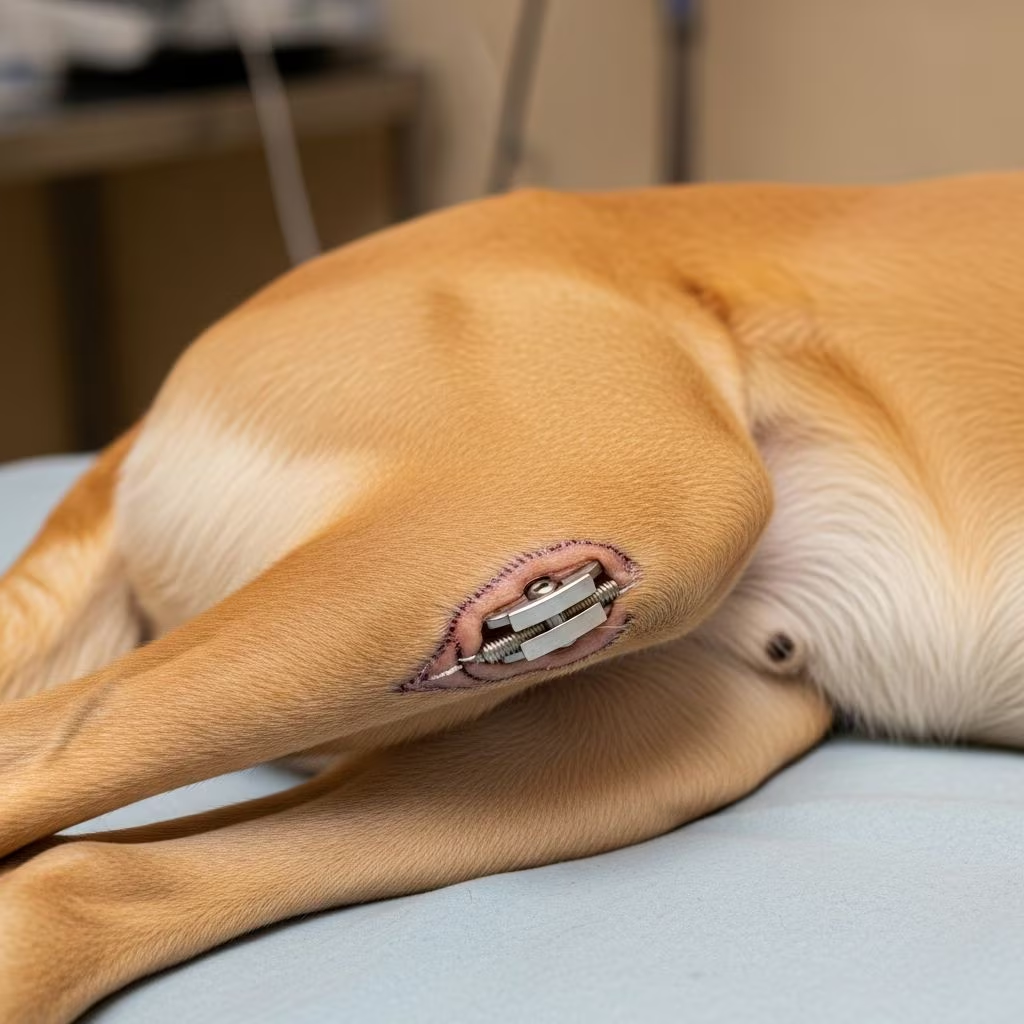
What is TPLO Surgery for Dogs?
TPLO, which stands for Tibial Plateau Leveling Osteotomy, is one of the most effective surgical treatments available for dogs suffering from a torn cranial cruciate ligament (CCL), which is similar to the ACL in humans. This common orthopedic procedure has revolutionized canine knee surgery and offers pet owners a reliable long-term solution for addressing this painful injury. When a dog tears their CCL, it causes significant pain and instability in the knee joint, leading to limited mobility and difficulty bearing weight on the affected leg.
The knee joint in dogs is naturally complex, constantly bent at approximately 110 degrees and bearing considerable load and tension, which makes it vulnerable to injury. When the CCL tears, the femur will rub against the back of the tibia, causing discomfort, inflammation, and instability. TPLO surgery fundamentally changes how the knee joint functions by altering its biomechanics, eliminating the need for the damaged ligament altogether. Rather than attempting to repair or replace the torn ligament, TPLO reshapes the tibia to create a more stable joint that can function normally without the support of the cruciate ligament.
Understanding the TPLO Procedure
TPLO surgery involves a sophisticated surgical technique that has been refined over years of orthopedic practice. The procedure begins with the surgeon making a curved cut in the tibia, much like half a smiley face, extending from the front to the back of the bone. This specialized cut allows the surgeon to isolate and manipulate the top section of the tibia bone with precision.
Once the cut is made, the top portion of the tibia is carefully rotated backward until the angle between the tibia and femur reaches an appropriate level, typically between 2 and 14 degrees, with 5 degrees being considered ideal. To visualize how this works, imagine a car parked on a hill; the parking brake (cruciate ligament) must be applied to prevent the car from rolling down. However, if you park the car on a flat surface, the brake is no longer necessary. This is exactly what TPLO accomplishes—by leveling the tibial plateau, the joint becomes stable without requiring the damaged ligament.
After the tibia is positioned correctly, a strong metal bone plate and screws are placed to secure the bone in its new position and allow it to heal properly. A piece of the tibia is removed and repositioned so that the femur won’t be able to slide backward, which is the main problem that occurs with a torn CCL. This stabilization is crucial for preventing the shearing motion known as cranial tibial thrust or “drawer” movement that causes additional cartilage wear and pain.
Why TPLO is the Preferred Treatment
Veterinarians consider TPLO the most reliable technique for treating CCL disease in dogs. The procedure has earned this distinction through consistently high success rates and the ability to provide faster recovery and return to normal activity compared to other surgical options. Unlike traditional repair methods, TPLO doesn’t attempt to replace the damaged ligament but instead changes the biomechanics of the entire knee joint.
This approach is revolutionary because it leverages the body’s own ability to create scar tissue to help stabilize the joint. By altering the forces that act on the joint, TPLO makes the damaged ligament far less important for stability, effectively allowing the dog to return to normal function without the support that the CCL would normally provide. Research consistently shows that dogs undergoing TPLO surgery experience excellent functional outcomes and decreased development of osteoarthritis compared to untreated CCL tears.
The TPLO Recovery Timeline
Understanding what to expect during the recovery period is essential for pet owners considering TPLO surgery. Recovery timelines can vary based on your dog’s size, age, and breed, but most dogs follow a predictable healing pattern.
Immediate Post-Operative Period
Most dogs are hospitalized for pain control for just one night after surgery, after which they receive typed discharge instructions describing post-operative care and medications. Remarkably, about half of all canine patients begin walking on their injured leg within just 24 hours of surgery, demonstrating the effectiveness of the procedure. Your veterinarian will send you home with detailed care instructions and a medication plan to manage pain and inflammation.
Weeks 1-2: Initial Confinement
The first two weeks following surgery are the most critical period for recovery. During this time, exercise must be strictly restricted, with most dogs confined to a crate or small room and only taken outside for bathroom elimination needs. This confinement is crucial for allowing the bone to begin healing in its new position without disruption.
Weeks 2-8: Progressive Activity
After the two-week recheck appointment, your veterinarian will begin gradually increasing your dog’s activity level. Most patients will start progressive leash walking and a physical therapy plan designed specifically for their recovery needs. By eight weeks post-surgery, dogs are typically doing 40 minutes of leash walking two to three times daily. Two weeks after surgery, most dogs bear moderate to complete weight on the affected leg, and by ten weeks, most dogs do not have an appreciable limp or gait abnormality.
Months 3-6: Return to Normal Function
Full recovery for a dog may take anywhere from 8 weeks to 6 months, depending on individual factors. By four months after the operation, most dogs can begin walking and playing normally, with only the most stressful activities like high-impact running and jumping still restricted. Within six months, most dogs can resume full physical activity and return to their normal lifestyles with confidence.
Post-Operative Care and Management
Successful recovery depends largely on proper post-operative care at home. Pain management during and after knee surgery is critical, so it’s essential to give all prescribed medications as directed and continue them until they are finished. Your veterinarian may also recommend post-operative physical rehabilitation, such as therapeutic exercises, hydrotherapy, or laser therapy, which can improve healing and speed the time it takes for your dog to return to normal activity.
Your dog will need several recheck examinations and X-rays to ensure the area is healing properly and that the bone plate and screws remain secure. These follow-up visits allow your veterinarian to monitor progress and adjust the exercise plan as needed. Maintaining strict confinement for several weeks after surgery is crucial to avoid potential complications that could delay healing.
Potential Complications and Success Rates
While TPLO surgery has an excellent overall safety profile, it’s important to understand potential complications. The most common complication after TPLO is infection, and studies assessing outcomes have shown various complication rates averaging roughly 10-30%, with smaller dogs tending to show fewer postoperative problems. Despite these potential risks, the vast majority of dogs experience successful outcomes and return to normal function.
Reports consistently indicate that dogs undergoing TPLO surgery have an excellent functional outcome and decreased development of osteoarthritis. A potential reduction in the progression of arthritis is an additional benefit that many dog owners appreciate, as it can lead to better long-term joint health and quality of life for their pets.
Cost Considerations
TPLO surgery is an investment in your dog’s long-term health and mobility. While costs can vary by location and veterinary facility, TPLO procedures typically range from $2,500 and upward, depending on your dog’s size, the complexity of the case, and your local market rates. This cost typically includes the surgical procedure, anesthesia, post-operative medications, and initial follow-up examinations. Many pet owners find that the high success rate and long-term benefits justify the investment, particularly when considering the alternative of managing a permanently lame dog or dealing with progressive arthritis.
Frequently Asked Questions
Q: How do I know if my dog has a torn CCL?
A: Signs of a torn CCL include sudden or gradual lameness in the hind leg, difficulty putting weight on the affected limb, swelling around the knee, and pain when the knee is manipulated. Your veterinarian can diagnose a CCL tear through physical examination and X-rays, which may show osteoarthritic changes and joint swelling.
Q: Is TPLO surgery right for my dog?
A: TPLO is the most commonly recommended surgical treatment for CCL tears in dogs and is suitable for most dogs of various ages and sizes. However, your veterinarian will consider your dog’s overall health, age, size, and lifestyle to determine if TPLO is the best option for your specific situation.
Q: How long does the TPLO surgery itself take?
A: The actual surgical procedure typically takes 1-2 hours, depending on the complexity of the case and the surgeon’s experience. Your dog will be under general anesthesia during the entire procedure.
Q: Will my dog need surgery on both knees?
A: Many dogs that tear one CCL will eventually tear the other one as well, sometimes within months or years. Some veterinarians recommend bilateral (both knees) surgery at the same time, while others prefer to wait and monitor the other knee. Discuss this with your surgeon.
Q: What are the alternatives to TPLO surgery?
A: Other surgical options include Tibial Tuberosity Advancement (TTA) and Extracapsular Repair, though TPLO remains the most commonly performed and highly successful procedure. Conservative management with rest, pain medication, and physical therapy is sometimes attempted but typically results in chronic lameness and progressive arthritis.
Q: Can my dog go swimming during recovery?
A: Swimming and water therapy can be beneficial during later stages of recovery, typically starting around 8 weeks post-surgery under your veterinarian’s guidance. However, avoid swimming during the first 6-8 weeks when the surgical site is still healing.
Q: How successful is TPLO surgery?
A: TPLO surgery has a very high success rate, with most dogs returning to normal function and activity levels. Studies show consistent excellent outcomes, with the vast majority of dogs experiencing pain relief and restored mobility.
References
- TPLO Surgery in Dogs — Banning Veterinary Hospital. 2022-07-15. https://www.banningvet.com/site/blog/2022/07/15/tplo-surgery-dogs
- Cranial Cruciate Ligament Injury and TPLO Surgery for Dogs — Bridger Veterinary Specialists. https://www.bridgervetspecialists.com/services/tplo-surgery.html
- What Dog Owners Should Know About TPLO Surgery — Virginia Veterinary Centers. https://www.virginiaveterinarycenters.com/blog/what-dog-owners-should-know-about-tplo-surgery
- Tibial Plateau Leveling Osteotomy (TPLO) — VCA Animal Hospitals. https://vcahospitals.com/know-your-pet/cranial-cruciate-ligament-repair-tibial-plateau-leveling-osteotomy-tplo
- TPLO Surgery for Dogs — Animal Medical Center of the Antelope Valley. https://www.animalmedicalcenterav.com/tplo-acl-surgery-starting-at-2500.html



